Overloaded Truck Fines: Checks to Make Before Dispatch
Avoid overloaded truck fines with a pre-dispatch routine: real cargo weights, payload margin, axle-load estimates, partial-load traps and weighbridge checks.
Road freight · · 5 min read
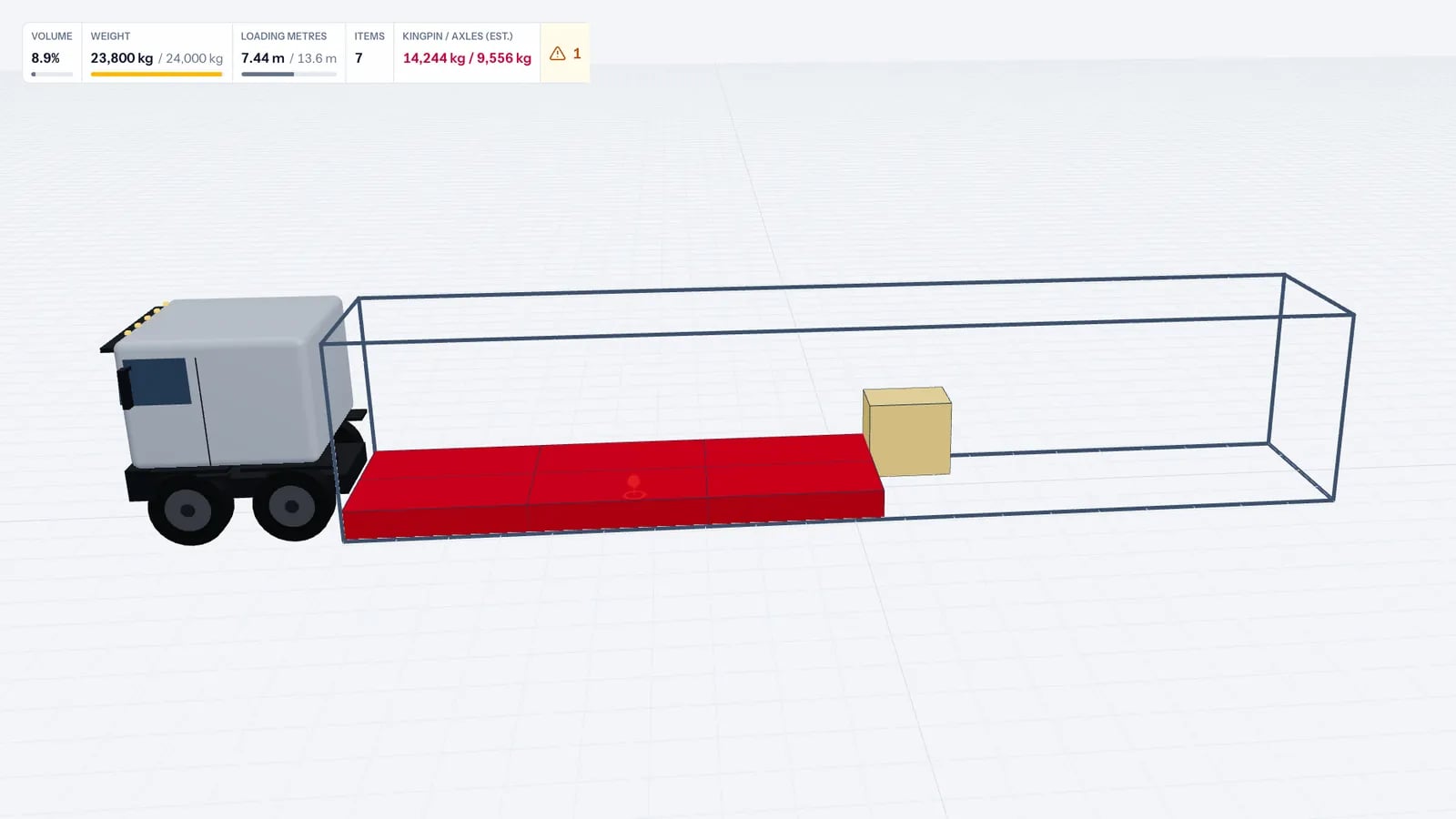
The way to avoid overloaded truck fines is to catch the overload before the truck leaves: use real cargo weights, check them against the payload of the actual vehicle, estimate the axle loads from where the cargo sits, and weigh the truck whenever the plan is close to a limit. Most overloads come from wrong input weights or badly placed partial loads, not from deliberate overloading.
Fines and enforcement practice differ by country, and in some countries the consignor or loading site can be fined as well as the carrier. The checks below are the same everywhere.
Where overloads actually come from
- Nominal weights. The order system says 500 kg per pallet because that is the product weight; the pallet itself, stretch wrap and packaging add 25–40 kg more.
- Moisture and product variation. Timber, paper, bulk bags and fresh produce can weigh noticeably more than their catalogue figure.
- Wrong vehicle data. Planning with a "24 t payload" when the tractor on the day has a tail lift, a crane or extra tanks.
- Partial loads at the front. A gross weight well under the limit, but most of it on the drive axle.
- Last-minute additions. "Just two more pallets" added at the dock after the plan was approved.
- Multi-drop shifts. Axle loads change after each delivery; see multi drop loading.
Pre-dispatch checklist
- 1Confirm the vehicle. Registration, tractor and trailer combination, plated gross and axle weights, and any equipment that reduces payload.
- 2Use gross cargo weights. Product plus pallet plus packaging. For pallets, add the pallet's own weight (a wooden Euro pallet is commonly around 20–25 kg) if your data is net.
- 3Check total weight against payload, keeping a margin for the uncertainty in your data. The less reliable the weights, the bigger the margin.
- 4Estimate axle loads from the position of the cargo, especially for partial loads, heavy items and mixed loads.
- 5Check the strictest country on the route, not just the country of loading. See EU axle weight limits.
- 6Weigh when close. If the plan is within your margin of any limit, send the truck over a weighbridge before it leaves the site or on the way.
- 7Record it. Keep the load plan, cargo weights and weighbridge ticket with the shipment documents.
Worked example: payload and a partial-load trap
Say you are loading 26 industrial pallets of bagged product, each listed at 850 kg net, into a curtainsider with a 24,000 kg payload.
- 1Net weight: 26 × 850 = 22,100 kg. It looks fine.
- 2Add the pallets: if each industrial pallet with wrap weighs about 35 kg, that is 26 × 35 = 910 kg, so the gross cargo weight is 23,010 kg.
- 3Margin: 24,000 − 23,010 = 990 kg, about 4% of payload. With bagged product whose weight can vary, this load should go over a weighbridge.
Now take a different load on the same trailer: 12 Euro pallets of 900 kg (10,800 kg in total), placed in the first 4.8 m from the front wall because "that is where the forklift put them". The gross weight is less than half the payload, but in a simple two-support model the kingpin carries most of that cargo.
Assume, for illustration, that the kingpin is 1.0 m and the centre of the trailer axle group 9.0 m behind the front wall. The cargo's centre of gravity is at 2.4 m, so the kingpin carries (9.0 − 2.4) ÷ (9.0 − 1.0) = 6.6 ÷ 8.0 = 82.5% of the cargo, about 8,910 kg. Spread evenly over the full length instead, centre of gravity at 6.8 m, the kingpin share drops to 2.2 ÷ 8.0 = 27.5%, about 2,970 kg. Most of the kingpin load lands on the tractor's drive axle, so the front-loaded version is the classic drive-axle overload.
Good to know
Real axle loads depend on the vehicle's own weight, fifth-wheel position and suspension. The figures above illustrate the lever effect; they are not a substitute for weighing. The theory is in weight distribution in a trailer.
Using a weighbridge well
- Weigh axle by axle or axle group by group where the weighbridge allows it. A gross-only ticket will not tell you about the drive axle.
- Weigh with the driver and full fuel as the truck will travel.
- If an axle is over, move cargo rather than removing it, when the gross is fine. Shifting a heavy pallet a few rows back often solves it.
- Keep the ticket. It shows due diligence if the vehicle is stopped later.
Documentation that helps at a roadside check
- The CMR or delivery notes with gross weights per line.
- The load plan showing where each item is, and the weight per stop for multi-drop runs.
- The weighbridge ticket, if the truck was weighed.
- For containers, the verified gross mass (VGM) declared for sea transport, which should match the road weight.
Building it into the routine
The checks only work if they happen on every load, not just the ones that "feel heavy". Make the payload and axle check part of releasing a load: no plan, no dispatch. Clean weights in your item master pay off on every shipment after that; see packing list to load plan.
Tip
In EveryLoading the optimizer never loads past the payload you set, the stats bar shows the weight against payload and an axle-load estimate, and items moved by hand that would exceed the payload are refused. See weight, axle loads and centre of gravity.
Frequently asked questions
Who pays the fine for an overloaded truck?
Usually the driver or carrier, but in some countries the consignor or the company that loaded the vehicle can also be fined. Rules vary by country.
Is there a tolerance on truck weight limits?
Some countries apply a measurement tolerance at roadside checks, but it is not a loading allowance and it differs by country. Plan to the limit, not to the tolerance.
How do I check axle loads without a weighbridge?
Estimate them from the cargo positions with a lever calculation or a planner that shows an axle estimate. Use it as an early warning, and weigh on a weighbridge when you are close to a limit.
Why do partial loads cause overloads?
When a few heavy pallets are loaded against the front wall, most of their weight goes to the kingpin and the tractor's drive axle. The gross weight can be low while one axle is over its limit.
Keep reading
Road freight · · 5 min read
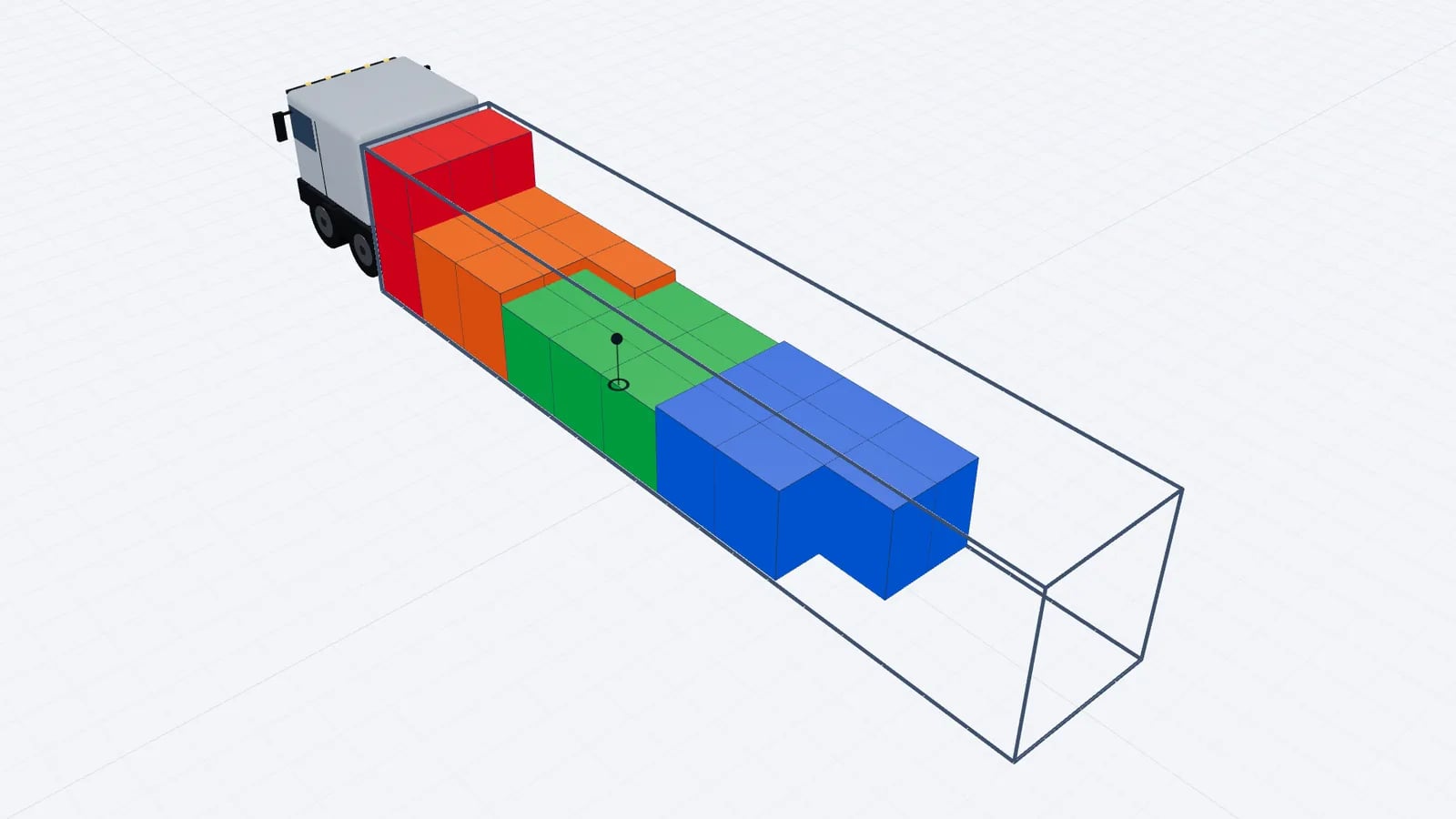
Multi Drop Loading: How to Plan a Truck for Several Stops
Plan a multi-drop truck so every stop unloads without moving other cargo: LIFO order, lanes, stop numbers, axle loads after each drop and a worked example.
Read article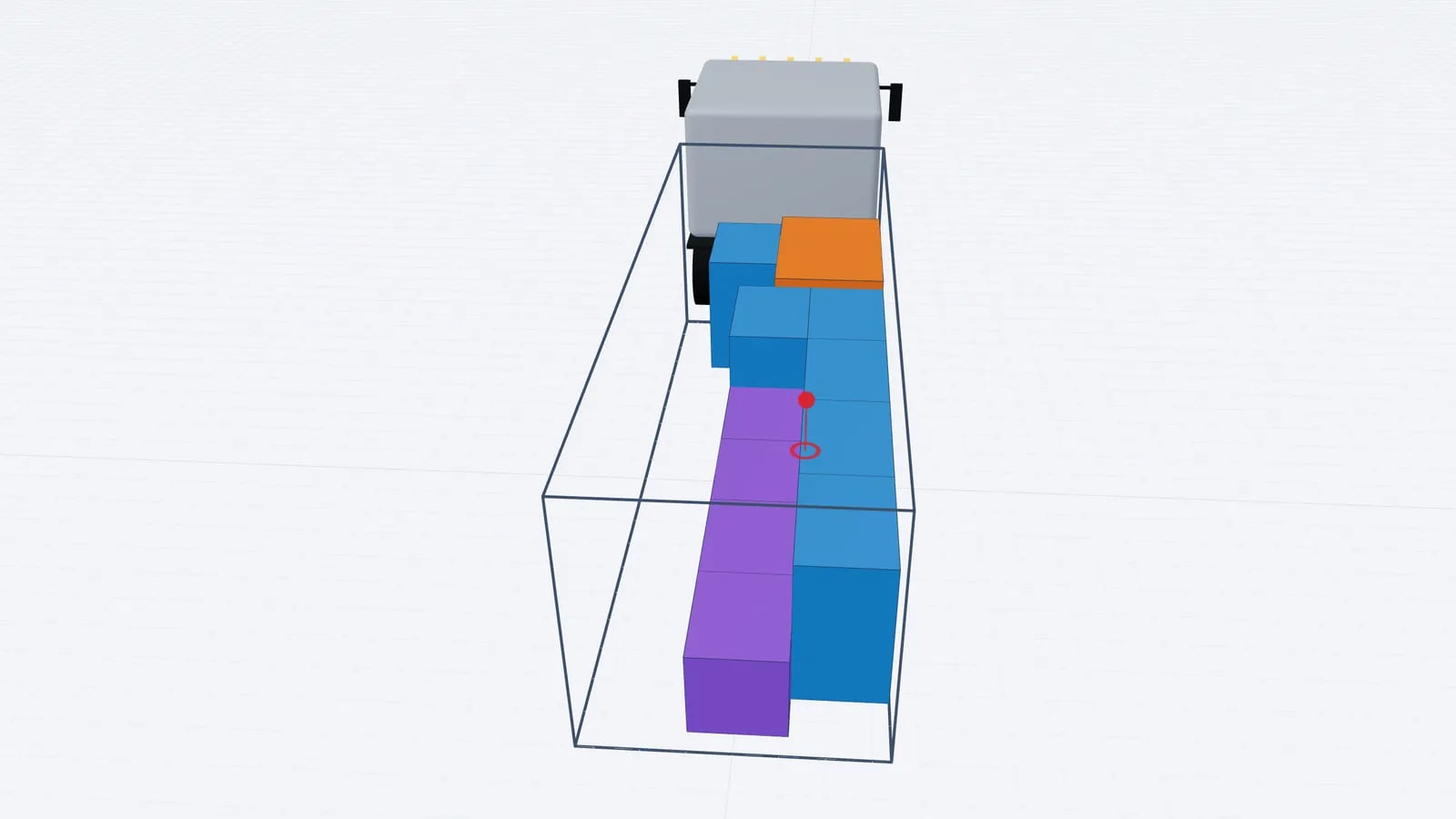
Road freight · · 5 min read
Load Securing Basics: EN 12195-1, Friction, Lashing, Blocking
The principles of load securing under EN 12195-1: design forces, friction, blocking, lashing, body strength, and how a gap-free load plan cuts securing effort.
Read article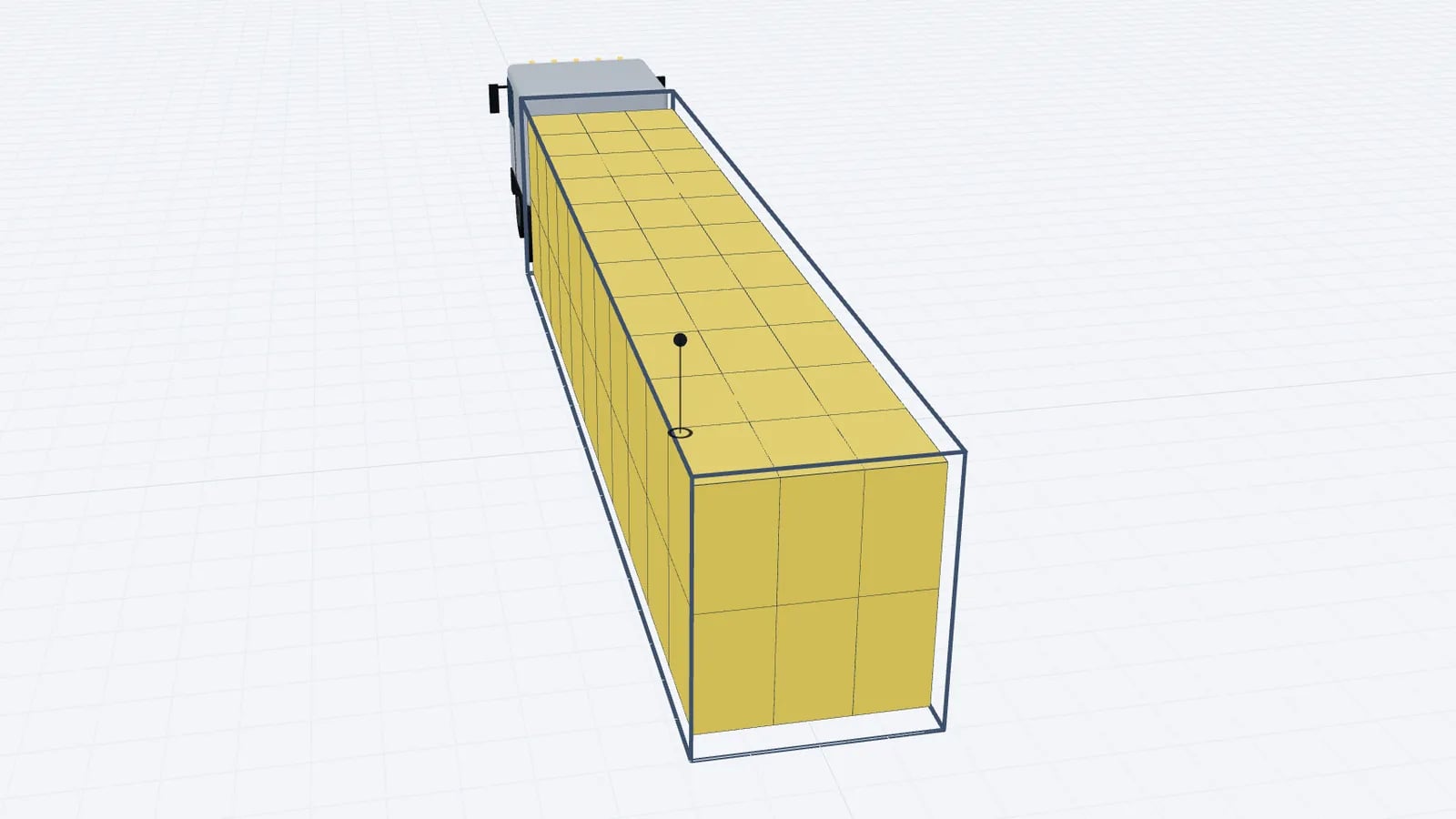
Road freight · · 5 min read
Double Stacking Pallets in Trailers: Height, Weight, Stability
When you can double stack pallets in a trailer: maximum pallet heights in standard and mega trailers, weight on the bottom pallet, payload and stability.
Read article