Container Utilization: How to Measure and Improve Fill
Measure container utilization by volume, weight and floor area, see why 100% is unrealistic, and use rotation, mixed lanes and box choice to load more.
Sea containers · · 5 min read
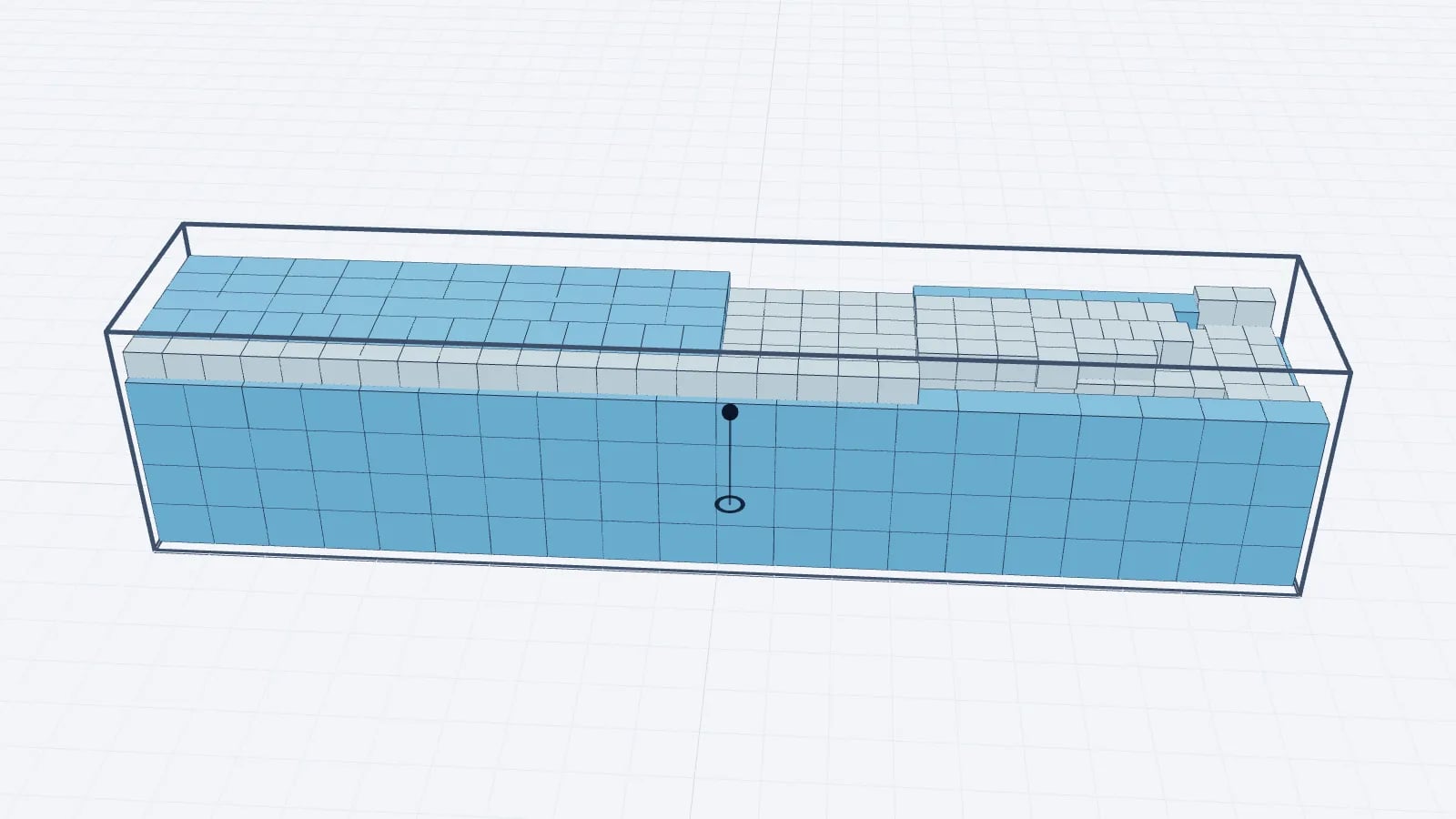
Container utilization is the share of a container's capacity that your cargo actually uses, measured by volume, by weight against payload, and often by floor area. A well-planned load reaches its limit on at least one of the three. Volume utilisation of 100% is not realistic, because carton sizes rarely divide the container's inside dimensions exactly and the door, stacking rules and weight limits all take their share.
Three ways to measure utilization
Measure: Volume utilisation
- Formula
- cargo volume ÷ internal volume × 100
- Tells you
- How much of the cube is used
Measure: Weight utilisation
- Formula
- cargo gross weight ÷ payload × 100
- Tells you
- How close you are to the weight limit
Measure: Floor utilisation
- Formula
- floor area covered ÷ internal floor area × 100
- Tells you
- How well non-stackable cargo uses the box
| Measure | Formula | Tells you |
|---|---|---|
| Volume utilisation | cargo volume ÷ internal volume × 100 | How much of the cube is used |
| Weight utilisation | cargo gross weight ÷ payload × 100 | How close you are to the weight limit |
| Floor utilisation | floor area covered ÷ internal floor area × 100 | How well non-stackable cargo uses the box |
Report the one that limits the load. A container of steel parts at 98% of payload and 40% of volume is full; filling it with more volume is not possible. A container of furniture at 30% of payload and 80% of volume is also full. Looking only at volume would call the first load wasteful when it is not.
Measure cargo volume from the outside dimensions of each package or pallet, including the pallet base. The CBM method is covered in CBM calculation; truck-side fill rate KPIs are in truck fill rate KPI.
Why 100% volume is unrealistic
- Dimensions don't divide evenly. The inside width of about 2.35 m leaves a strip unused for almost any pallet or carton size.
- Height leftovers. The space above the top layer is wasted if it is less than one carton high.
- Door height. Pallets must fit through a door that is lower than the inside height.
- Stacking limits. Fragile, non-stackable or top-heavy items leave the space above them empty.
- Weight. Dense cargo reaches payload with space left; that space cannot be used.
- Tolerances. Forklifts, overhanging cartons and bulging packaging need a few centimetres to load and unload.
- Securing. Some voids are deliberately left for blocking and airbags. See container dunnage.
Even a perfect pallet layout loses space. Twenty-four Euro pallets in a 40' cover 24 × 0.96 = 23.04 m² of the 28.3 m² floor: about 81%. If those pallets are 1.5 m high and cannot be stacked, the volume used is 23.04 × 1.5 = 34.6 m³ of 67.7 m³, about 51%, and the box is still full.
Worked example: the same cartons, three plans
Say you are shipping cartons of 50 × 40 × 30 cm (0.06 m³ each, 14 kg), which must stay upright but may be turned on the floor. The container is a 40' with typical inside dimensions of 12.03 × 2.35 × 2.39 m.
Plan: A: all cartons the same way, 40' standard
- Per layer
- 24 × 5 = 120
- Layers
- 7
- Cartons
- 840
- Volume used
- 50.4 m³
- Utilisation
- about 74%
Plan: B: mixed lanes, 40' standard
- Per layer
- 90 + 48 = 138
- Layers
- 7
- Cartons
- 966
- Volume used
- 58.0 m³
- Utilisation
- about 86%
Plan: C: mixed lanes, 40' high cube
- Per layer
- 138
- Layers
- 8
- Cartons
- 1,104
- Volume used
- 66.2 m³
- Utilisation
- about 87%
| Plan | Per layer | Layers | Cartons | Volume used | Utilisation |
|---|---|---|---|---|---|
| A: all cartons the same way, 40' standard | 24 × 5 = 120 | 7 | 840 | 50.4 m³ | about 74% |
| B: mixed lanes, 40' standard | 90 + 48 = 138 | 7 | 966 | 58.0 m³ | about 86% |
| C: mixed lanes, 40' high cube | 138 | 8 | 1,104 | 66.2 m³ | about 87% |
- Plan A: 50 cm along the length (1,203 / 50 = 24), 40 cm across (235 / 40 = 5, using 200 cm). 35 cm of width is wasted along the whole box.
- Plan B: three lanes with the 50 cm side across (40 cm along, 30 per lane) plus two lanes with the 40 cm side across (50 cm along, 24 per lane). Width used: 3 × 50 + 2 × 40 = 230 cm. That is 18 more cartons per layer, 126 more in the box.
- Plan C: the high cube allows 8 layers of 30 cm (240 cm) inside 2.69 m. Weight is 1,104 × 14 = 15,456 kg, within payload.
In both boxes about 29 cm is left above the top layer, less than one carton. That leftover is a direct result of the carton height, which is why packaging design matters as much as the load plan.
How to improve utilization
- 1Allow rotation where the goods permit it. Turning cartons on the floor (keeping them upright) is the biggest single gain in most carton loads.
- 2Mix lanes. Combine orientations across the width, as in plan B, and for pallets mix crosswise and lengthwise lanes. See how many pallets fit in a container.
- 3Use small items to fill gaps. Put smaller cartons in the side strips and top layer instead of leaving voids.
- 4Choose the right box. A high cube only helps if your cargo can use the height; a 20' is better for dense cargo. See 20ft vs 40ft container.
- 5Check stacking data. Many items marked "do not stack" can take a light load on top; ask the shipper for a maximum top load rather than a blanket no.
- 6Design packaging to the box. For regular flows, choose carton dimensions that divide 1,200 mm pallet sizes and container inside dimensions well.
- 7Consolidate. Combine part loads from several orders or suppliers rather than shipping a half-empty box.
Measuring it consistently
For reporting across many shipments, use the same internal dimensions and payload for each container type, and record which limit was reached (weight, volume or floor). That shows where improvement is possible: volume-limited loads benefit from better plans, weight-limited loads do not.
A load planner calculates these figures for you. In EveryLoading the stats bar shows volume used and weight against payload for the selected container, and the optimizer tries the allowed rotations of each item. Running the same packing list in a 40' and a 40' high cube takes a minute and shows whether the bigger box earns its rate.
Frequently asked questions
What is a good container utilization rate?
There is no single target, because it depends on the cargo. A load is effectively full when it reaches the weight limit, the floor area for non-stackable goods, or the practical volume limit for its package sizes.
How do you calculate container utilization?
Divide the total cargo volume by the internal volume of the container and multiply by 100. Do the same with weight against payload, and report whichever is higher as the limiting factor.
Why is my container full at only 75% volume?
Usually because package sizes do not divide the inside width and height evenly, items cannot be stacked, or pallets must clear the door height. Mixed orientations can often recover part of the loss.
Does a high cube container improve utilization?
Only for cargo that can use the extra height, such as stackable cartons. For single-tier pallets the floor area is the same, so utilisation by volume actually drops.
Keep reading
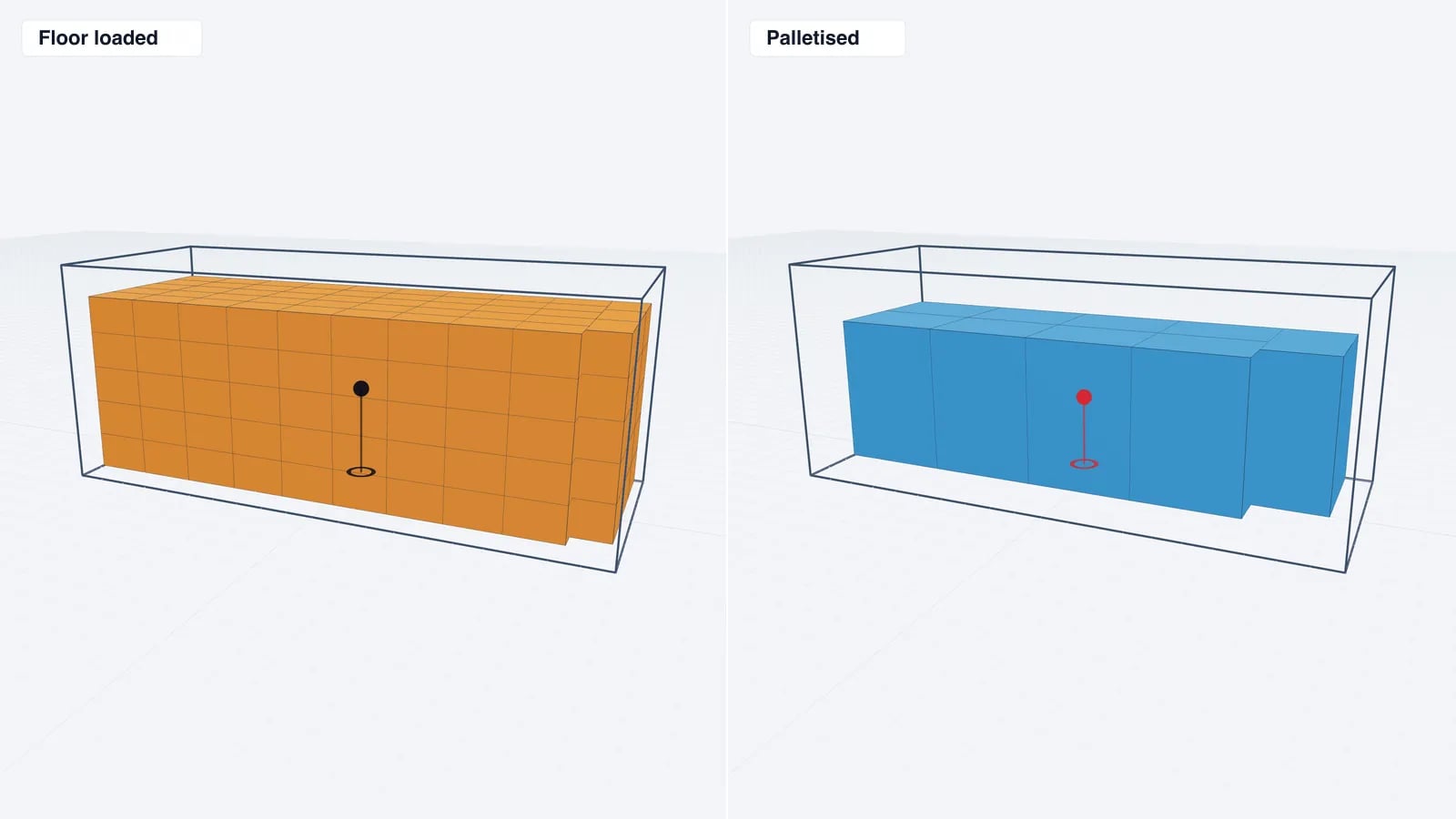
Sea containers · · 5 min read
Floor Loading Cartons in a Container vs Palletised Loads
When to floor load cartons instead of palletising, how to orient and stack them, how to check carton strength, and a worked 40ft high cube comparison.
Read article
Sea containers · · 5 min read
Reefer Container Loading: Airflow, Red Line and Pallet Plans
How reefers move air, why the T-floor and red load line limit your plan, chilled vs frozen stowage, pre-cooling, and a worked 40ft reefer pallet plan.
Read article
Sea containers · · 6 min read
Container Dunnage: Airbags, Blocking, Bracing and Void Fill
How to secure container cargo with airbags, timber blocking, bracing, lashing and void fill, and how to plan the load so there are fewer gaps to fill.
Read article