Floor Loading Cartons in a Container vs Palletised Loads
When to floor load cartons instead of palletising, how to orient and stack them, how to check carton strength, and a worked 40ft high cube comparison.
Sea containers · · 5 min read
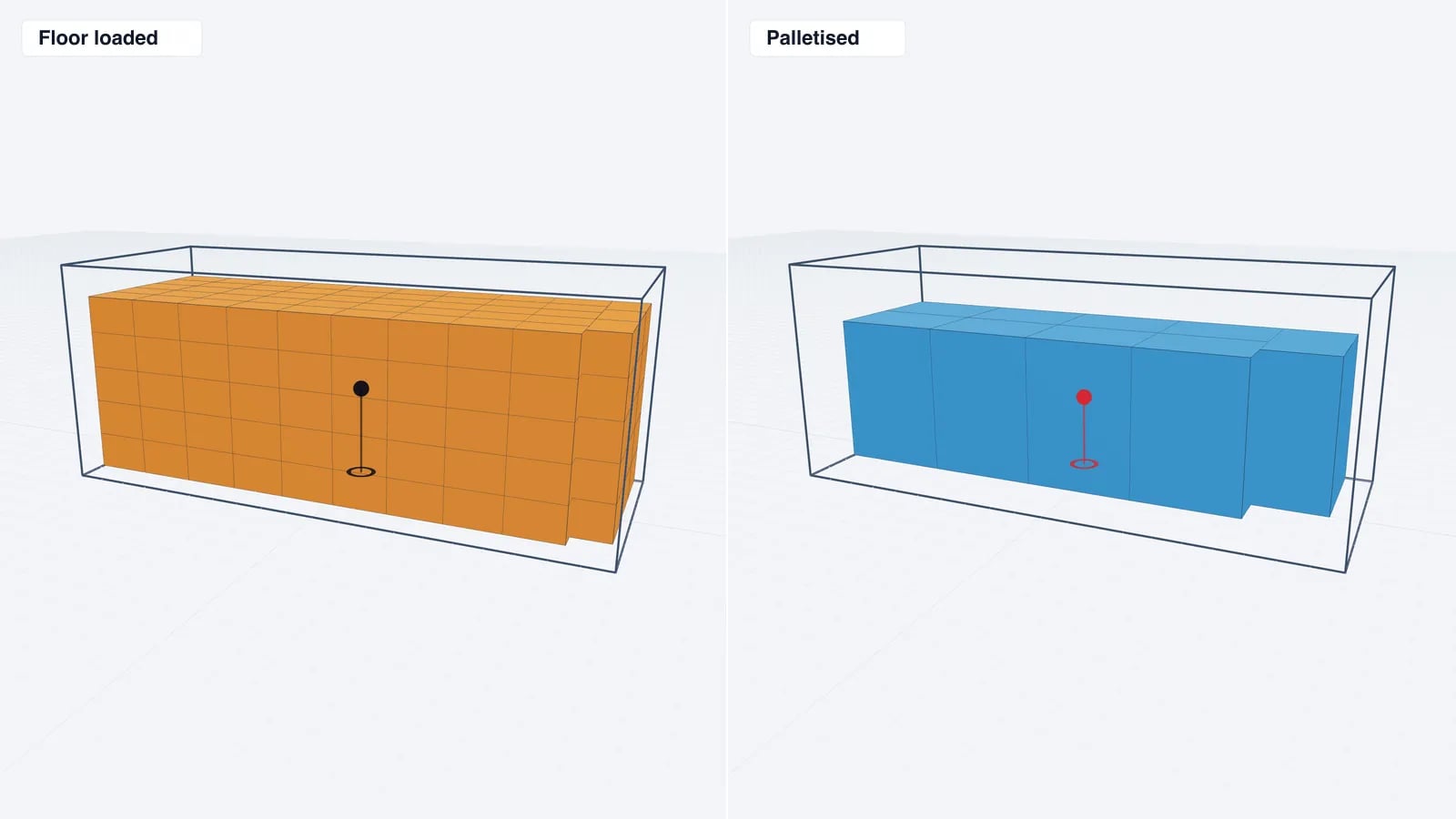
Floor loading means stacking cartons directly on the container floor instead of on pallets. It usually fits noticeably more cartons in the same box, because it removes the pallet bases and the gaps between pallets, but it takes much longer to load and unload by hand and puts more demand on carton strength. Floor load when container space is the main cost; palletise when handling speed and damage risk matter more.
Floor loaded or palletised: the trade-off
Space use
- Floor loaded
- High: walls of cartons to the ceiling and wall to wall
- Palletised
- Lower: pallet bases, gaps between pallets, door-height limits on stacking
Loading and unloading
- Floor loaded
- Manual, slow, needs labour at both ends
- Palletised
- Forklift, fast
Damage risk
- Floor loaded
- Higher crush risk in bottom layers; cartons can shift if walls are loose
- Palletised
- Lower if pallets are well wrapped; risk moves to pallet stability
Receiver
- Floor loaded
- Must accept loose cartons and have staff to unload
- Palletised
- Can put pallets straight into racking
Typical use
- Floor loaded
- Long-haul imports of consumer goods, textiles, light cartons
- Palletised
- Regular flows, heavy cartons, goods going straight to distribution
| Floor loaded | Palletised | |
|---|---|---|
| Space use | High: walls of cartons to the ceiling and wall to wall | Lower: pallet bases, gaps between pallets, door-height limits on stacking |
| Loading and unloading | Manual, slow, needs labour at both ends | Forklift, fast |
| Damage risk | Higher crush risk in bottom layers; cartons can shift if walls are loose | Lower if pallets are well wrapped; risk moves to pallet stability |
| Receiver | Must accept loose cartons and have staff to unload | Can put pallets straight into racking |
| Typical use | Long-haul imports of consumer goods, textiles, light cartons | Regular flows, heavy cartons, goods going straight to distribution |
Some receivers specify one or the other in their routing guide. Check before you decide, because a floor-loaded container sent to a dock that expects pallets can mean waiting time and charges.
Worked example: how many more cartons?
Say you have cartons of 60 × 40 × 40 cm, 12 kg each, that must stay upright. The container is a 40' high cube with typical inside dimensions of 12.03 × 2.35 × 2.69 m and a door height of about 2.58 m.
- 1Floor loaded: three lanes with the 60 cm side across (40 cm along the length, 30 cartons per lane) plus one lane with the 40 cm side across (60 cm along, 20 cartons). Width used: 3 × 60 + 40 = 220 cm. That is 110 cartons per layer. Six layers of 40 cm (240 cm) fit under the ceiling: 660 cartons, 7,920 kg.
- 2Palletised on Euro pallets: four cartons per layer fill a 120 × 80 cm pallet exactly. A pallet with five layers is 0.14 + 2.00 = 2.14 m tall, holds 20 cartons and still clears the door; a second tier is not possible. With 24 pallet positions that is 480 cartons.
- 3Difference: 660 − 480 = 180 cartons, or about 38% more in the floor-loaded box. Whether that saves money depends on whether the shipment would otherwise need a second container, and on the cost of manual handling at both ends.
The general method for comparing plans like this, and why no plan reaches 100%, is in container utilization.
Carton orientation
- Respect "this way up". Arrows and orientation marks usually protect the contents (liquids, appliances) and the carton's strength.
- Keep the flutes vertical. In a standard corrugated box the flutes run vertically in the side walls, which is where the compression strength comes from. Laying a carton on its side puts the flutes horizontal and makes it much weaker in the stack.
- Turn cartons on the floor, not on their side. Rotating about the vertical axis (swapping length and width) keeps the strength and is usually allowed. That is what the mixed-lane layout above does.
- Keep identical cartons together. Uniform walls of the same carton are more stable and easier to count at destination.
Stacking strength: will the bottom layer survive?
The bottom carton in a floor-loaded stack carries everything above it for the whole voyage. Corrugated board loses strength over time under load and in humid conditions, both of which apply in a container at sea.
Packaging suppliers express carton strength as a box compression test (BCT) value: the load at which an empty carton fails in a short laboratory test. Because long duration, humidity and stacking pattern all reduce real-world strength, packaging engineers apply a safety factor, commonly in the range of 3 to 5 or more for long sea transport. Ask your packaging supplier which factor they recommend.
In the example, the bottom carton of a six-layer stack carries five cartons: 5 × 12 = 60 kg. With a safety factor of 4, the carton needs a BCT of at least 60 × 4 = 240 kg. If the supplier quotes less, reduce the number of layers, choose a stronger board, or let the product itself carry part of the load.
- Column stacking (each carton directly above the one below, corners aligned) keeps the most compression strength.
- Interlocked or brick stacking makes walls more stable but reduces the load each carton can take, because corners no longer sit on corners.
- Heavy at the bottom, light on top. If the shipment has several carton types, put the heavier and stronger ones in the bottom layers.
Building a floor-loaded container
- 1Start at the front wall and build complete walls across the width and up to the planned height, one wall at a time.
- 2Keep each wall tight against the previous one; fill side gaps with dunnage rather than leaving cartons free to lean.
- 3Put lighter cartons and any odd sizes in the top layers and the last walls.
- 4Secure the final wall at the door end with bracing, a load-securing net or a bulkhead so it does not rest on the doors. See container dunnage.
- 5Record the count per wall; it speeds up tallying at both ends.
To compare floor-loaded and palletised options quickly, enter the carton once in EveryLoading with rotation set so it stays upright, run the optimizer in the container preset, then try the same carton count as pallets. The cargo settings guide shows how to allow turning on the floor while keeping cartons upright, and the 3D views give side and rear drawings for the loading crew. For the overall stuffing method, see container stuffing plan.
Frequently asked questions
What does floor loaded mean in shipping?
The cartons are stacked directly on the container floor without pallets, usually in walls from the front of the container to the doors.
How much more fits when you floor load?
It depends on carton and pallet sizes, but removing pallet bases, gaps between pallets and door-height limits often adds a substantial number of cartons. In the worked example it was 660 cartons against 480.
How high can I stack cartons in a container?
As high as the container allows, provided the bottom carton can carry the load above it with a suitable safety factor for a long sea voyage. Check the BCT value with your packaging supplier.
Can I lay cartons on their side to fit more?
Only if the contents allow it and the carton is strong enough that way. Most corrugated cartons are much weaker on their side because the flutes run horizontally.
Keep reading
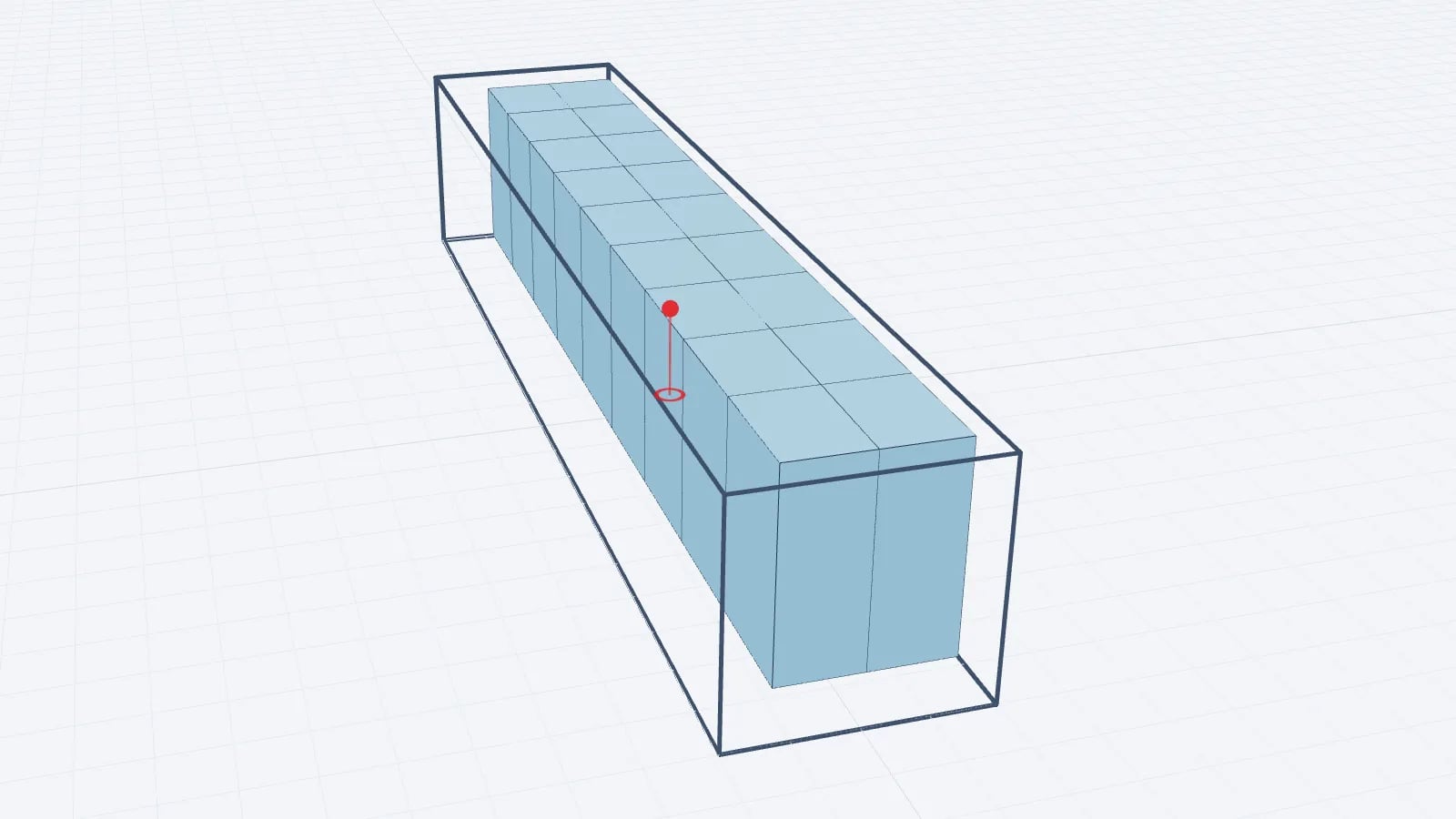
Sea containers · · 5 min read
Reefer Container Loading: Airflow, Red Line and Pallet Plans
How reefers move air, why the T-floor and red load line limit your plan, chilled vs frozen stowage, pre-cooling, and a worked 40ft reefer pallet plan.
Read article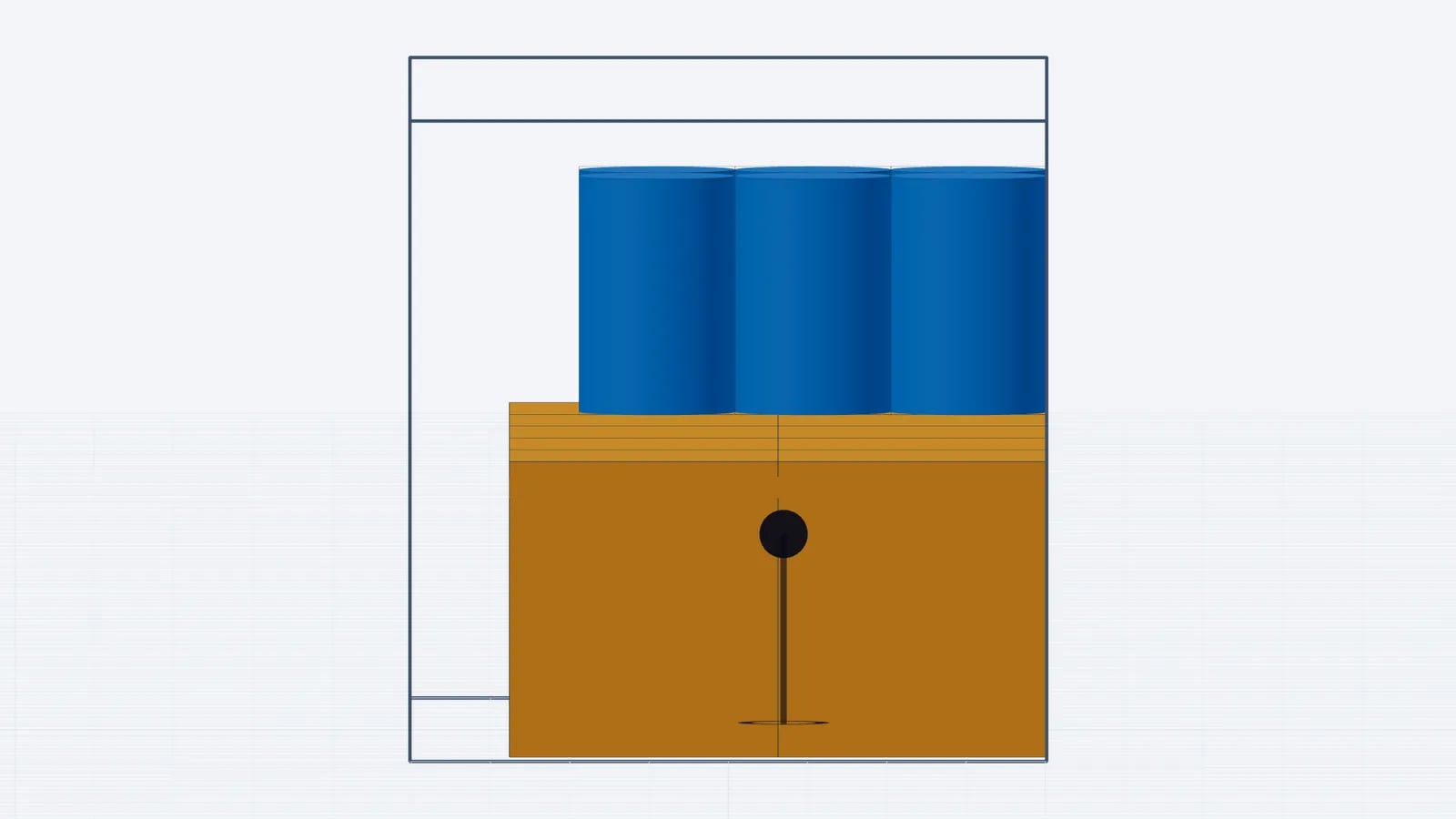
Sea containers · · 6 min read
Container Dunnage: Airbags, Blocking, Bracing and Void Fill
How to secure container cargo with airbags, timber blocking, bracing, lashing and void fill, and how to plan the load so there are fewer gaps to fill.
Read article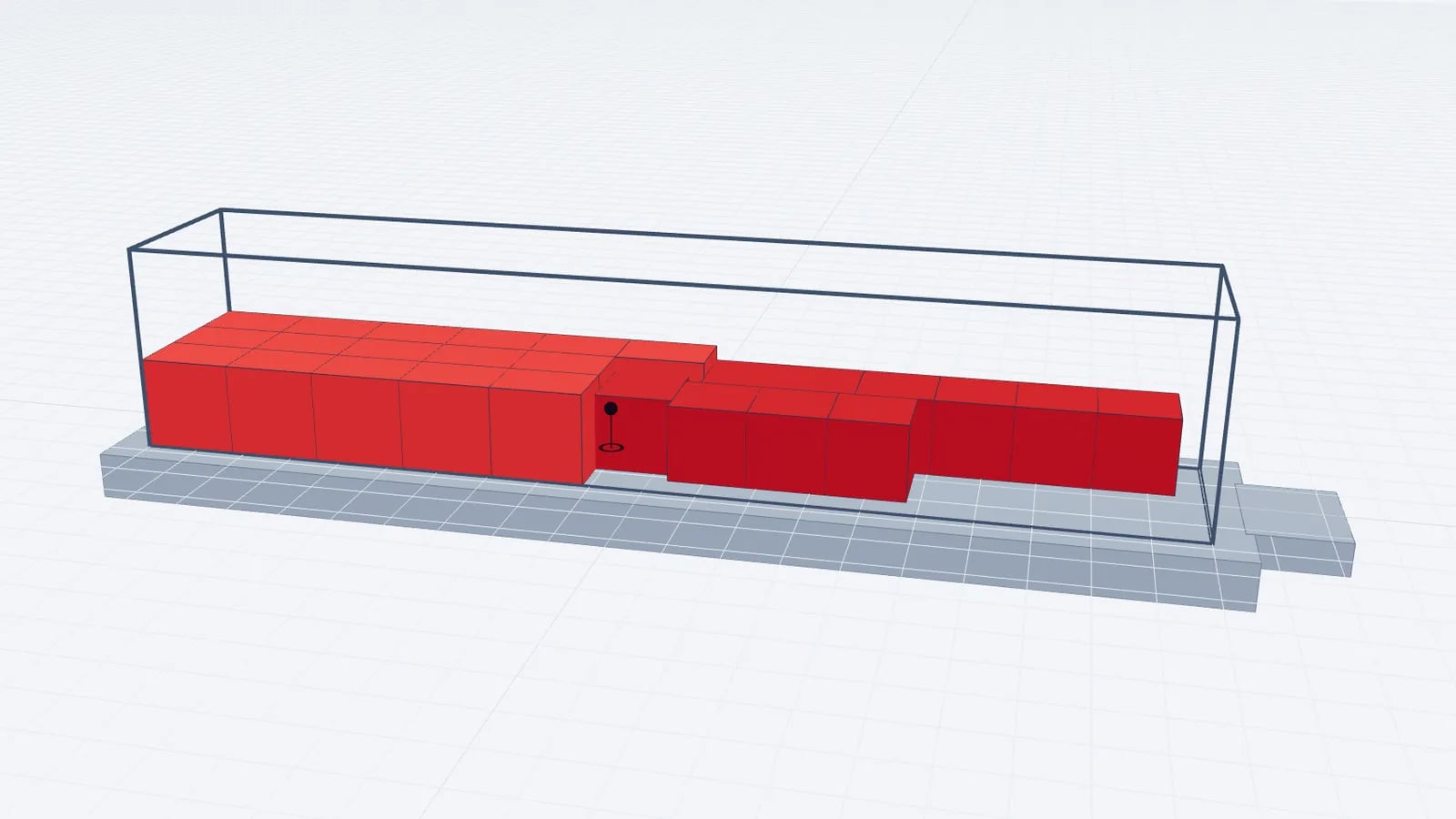
Sea containers · · 6 min read
Shipping Container Dimensions: 20', 40', 40' HC and 45' HC
Internal size, door openings, tare, payload and cubic capacity of 20', 40', 40' high cube and 45' containers, with the limits that matter when you plan a load.
Read article