How to Make a Container Stuffing Plan That Holds Up at Sea
A step-by-step method for planning container stuffing: heavy goods low and central, even weight along the length, door-end cargo last, securing and photos.
Sea containers · · 6 min read
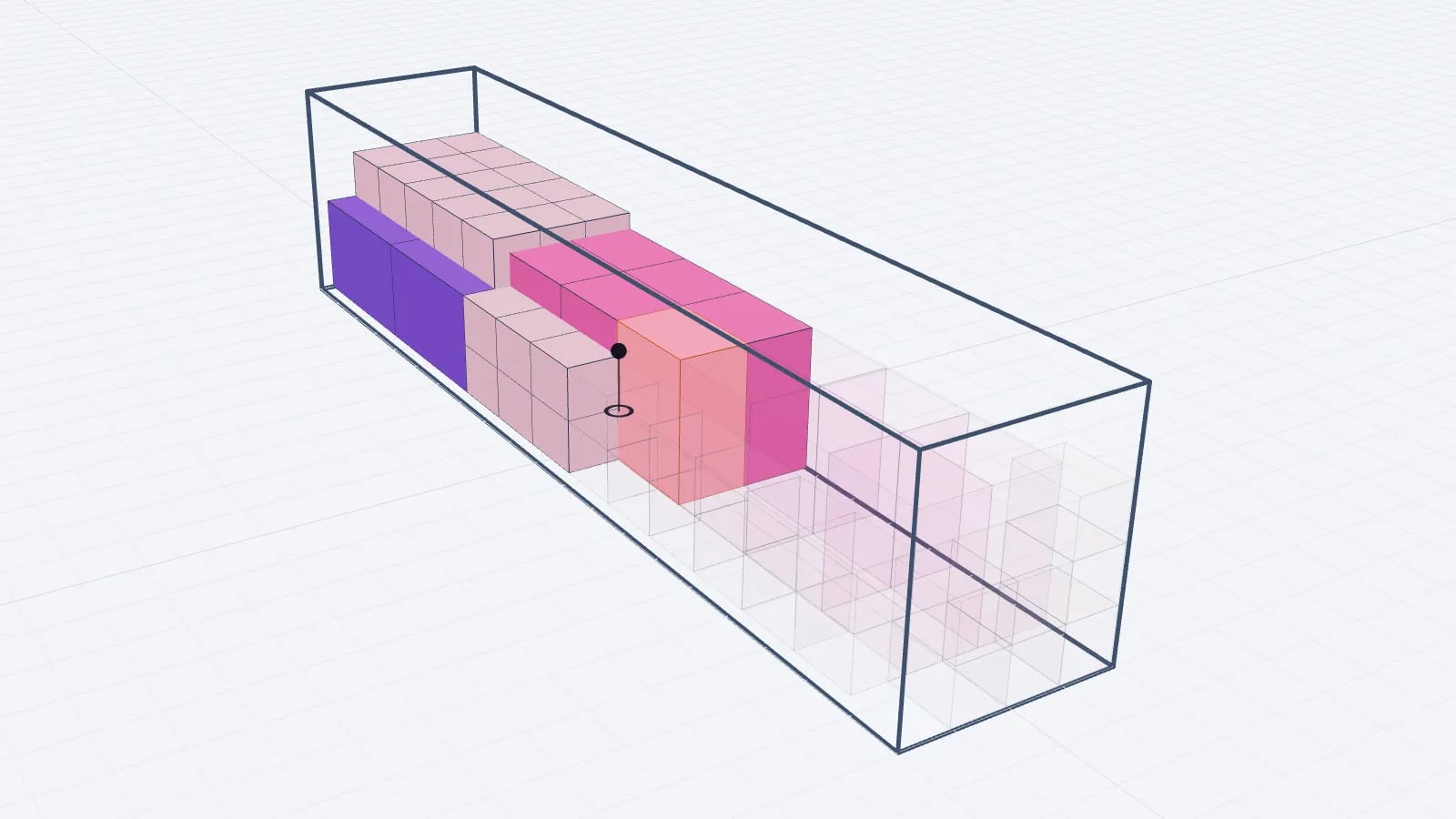
A container stuffing plan shows exactly where each item goes in the box, in what order it is loaded and how it is secured. A good plan puts heavy goods on the floor and spread evenly along the length, keeps the centre of gravity close to the middle, fills gaps so nothing can move, and leaves the door end for items that must come out first or need to be inspected.
The reference for safe packing is the IMO/ILO/UNECE Code of Practice for Packing of Cargo Transport Units (CTU Code). It is guidance rather than a single law, but carriers, insurers and surveyors use it to judge whether a container was packed properly. This article is practical advice, not legal advice.
Why a container needs a plan, not just a count
A container is lifted by cranes and straddle carriers, rolls and pitches at sea, and is braked hard on a road chassis. Cargo that is fine standing still in a warehouse can shift several centimetres at each movement and end up crushed against the doors. Badly distributed weight also makes a box hard to handle: a container that is much heavier at one end tilts when lifted and overloads one axle of the road chassis.
- Damage: voids let cargo slide and topple; heavy on light crushes the bottom layers.
- Safety: cargo leaning on the doors can fall on whoever opens them at destination.
- Weight declarations: the verified gross mass must be right before the box is loaded on a vessel. See VGM and SOLAS.
- Speed at the dock: a loader with a sequence and a drawing works faster than one improvising.
The planning steps
- 1Collect accurate data. For every line: dimensions, weight per piece, quantity, whether it can be stacked, how much it can carry on top, and whether it may be turned or tipped. Weigh rather than estimate where you can.
- 2Choose the box. Compare total weight with payload and total volume with capacity, then check the floor and door height. Shipping container dimensions has the typical figures.
- 3Put heavy and strong items on the floor. Heavy crates, drums and dense pallets go low; light and fragile goods go on top or at the end.
- 4Spread the weight along the length. Do not put all heavy items at the front wall. Aim to keep the centre of gravity near the middle of the box (see the example below).
- 5Keep it balanced side to side. Avoid one heavy lane and one light lane; mix them so each side carries a similar weight.
- 6Plan the door end. Items that must come out first, need customs inspection, or are lighter and easier to restrain go last, at the doors.
- 7Plan the gaps. Note where voids remain and what will fill them: blocking timber, airbags or extra cartons. See container dunnage.
- 8Write down the sequence. Number the items in loading order so the warehouse can stage them in that order.
Weight distribution along the length
A widely used rule of thumb from container packing guidance is that no more than about 60% of the cargo weight should sit in either half of the container length. A simpler way to check is to calculate the longitudinal centre of gravity: the weighted average of each block's position. The more general method is in centre of gravity of a load.
Say you are stuffing a 20' (about 5.90 m inside, centre at 2.95 m) with three blocks of cargo, loaded heaviest first against the front wall:
Block: A: steel crates
- Weight
- 6,000 kg
- Occupies (from front wall)
- 0–1.8 m
- Centre
- 0.9 m
- Weight × centre
- 5,400 kg·m
Block: B: palletised parts
- Weight
- 3,000 kg
- Occupies (from front wall)
- 1.8–4.2 m
- Centre
- 3.0 m
- Weight × centre
- 9,000 kg·m
Block: C: cartons
- Weight
- 1,000 kg
- Occupies (from front wall)
- 4.2–5.8 m
- Centre
- 5.0 m
- Weight × centre
- 5,000 kg·m
Block: Total
- Weight
- 10,000 kg
- Occupies (from front wall)
- Centre
- Weight × centre
- 19,400 kg·m
| Block | Weight | Occupies (from front wall) | Centre | Weight × centre |
|---|---|---|---|---|
| A: steel crates | 6,000 kg | 0–1.8 m | 0.9 m | 5,400 kg·m |
| B: palletised parts | 3,000 kg | 1.8–4.2 m | 3.0 m | 9,000 kg·m |
| C: cartons | 1,000 kg | 4.2–5.8 m | 5.0 m | 5,000 kg·m |
| Total | 10,000 kg | 19,400 kg·m |
The centre of gravity is 19,400 / 10,000 = 1.94 m from the front wall, about 1 m forward of the middle. Roughly 7,400 kg (74%) sits in the front half, well over the 60% rule of thumb.
Now load the light cartons first (C at 0–1.6 m, centre 0.8 m), the steel crates in the middle (A at 1.6–3.4 m, centre 2.5 m) and the pallets at the door end (B at 3.4–5.8 m, centre 4.6 m). The sum becomes 800 + 15,000 + 13,800 = 29,600 kg·m and the centre of gravity moves to 2.96 m, practically the middle. The front half now carries about 5,500 kg (55%).
Tip
With very heavy, compact cargo (a single machine, a few coils), the CoG check matters even more because a small number of items carries all the weight. Put the item in the middle and block it from all sides rather than pushing it against the front wall.
Securing as part of the plan
Securing is easier when the plan already leaves few and regular gaps. The CTU Code expects cargo to be prevented from moving forwards, backwards, sideways and upwards. In a container that usually means:
- Tight stowage: packages placed against each other and the walls, with gaps filled.
- Blocking and bracing: timber or other blocking at the end of each row and against the doors, so the doors are not the restraint.
- Lashing: to the lashing rings in the floor rails and corner posts for heavy or irregular items; check the rated capacity of the rings in the container markings.
- Friction: anti-slip mats under heavy items increase friction and reduce lashing effort.
- Floor loads: container floors are designed for forklift traffic but not for concentrated point loads; heavy items with small feet need timber to spread the load.
Documentation and photos
The plan is also the start of the evidence trail if a claim arises. Keep it with the shipment file and add what actually happened at the dock.
- Photo of the empty container, including floor and door seals, before loading.
- Photos at roughly each quarter of the load, showing stowage and securing.
- Photo of the door end before closing and of the closed doors with the seal number visible.
- The container number, seal number, verified gross mass and the method used to obtain it.
- Any deviations from the plan, with the reason.
Making the plan in software
For mixed shipments, a 3D plan is quicker and more reliable than a spreadsheet. In EveryLoading you pick a container preset, paste the packing list, set stacking and rotation rules per line and click Optimize load. The optimizer fills the floor first and works from the front wall, and you can drag items to adjust the result. The stats bar shows weight against payload and a centre of gravity estimate, and the loading sequence slider shows the order item by item. You can then export a PDF with the drawings and sequence for the warehouse.
Good to know
Any software centre-of-gravity figure is only as good as the weights you enter, and it covers the cargo, not the container itself. Weigh the packed box for the VGM and use the plan to check balance, not to replace securing.
Frequently asked questions
What should a container stuffing plan include?
The container type and number, a drawing or 3D view of where each item goes, the loading order, item weights and total gross mass, and how the cargo is secured. Photos and the seal number complete the record.
Should heavy cargo go at the front of the container?
Heavy cargo should go on the floor, but spread along the length so the centre of gravity stays near the middle. Pushing all the weight to the front wall makes the box nose-heavy when lifted and on the road chassis.
Can the container doors hold the cargo in?
No. Doors are not designed as a restraint, and cargo leaning on them can fall out when they are opened. Block or brace the last row so it is held independently of the doors.
Is the CTU Code mandatory?
It is a non-mandatory code of practice in most places, but it is the reference carriers, surveyors and insurers use, and some countries have adopted parts of it in national rules.
Keep reading
Sea containers · · 5 min read
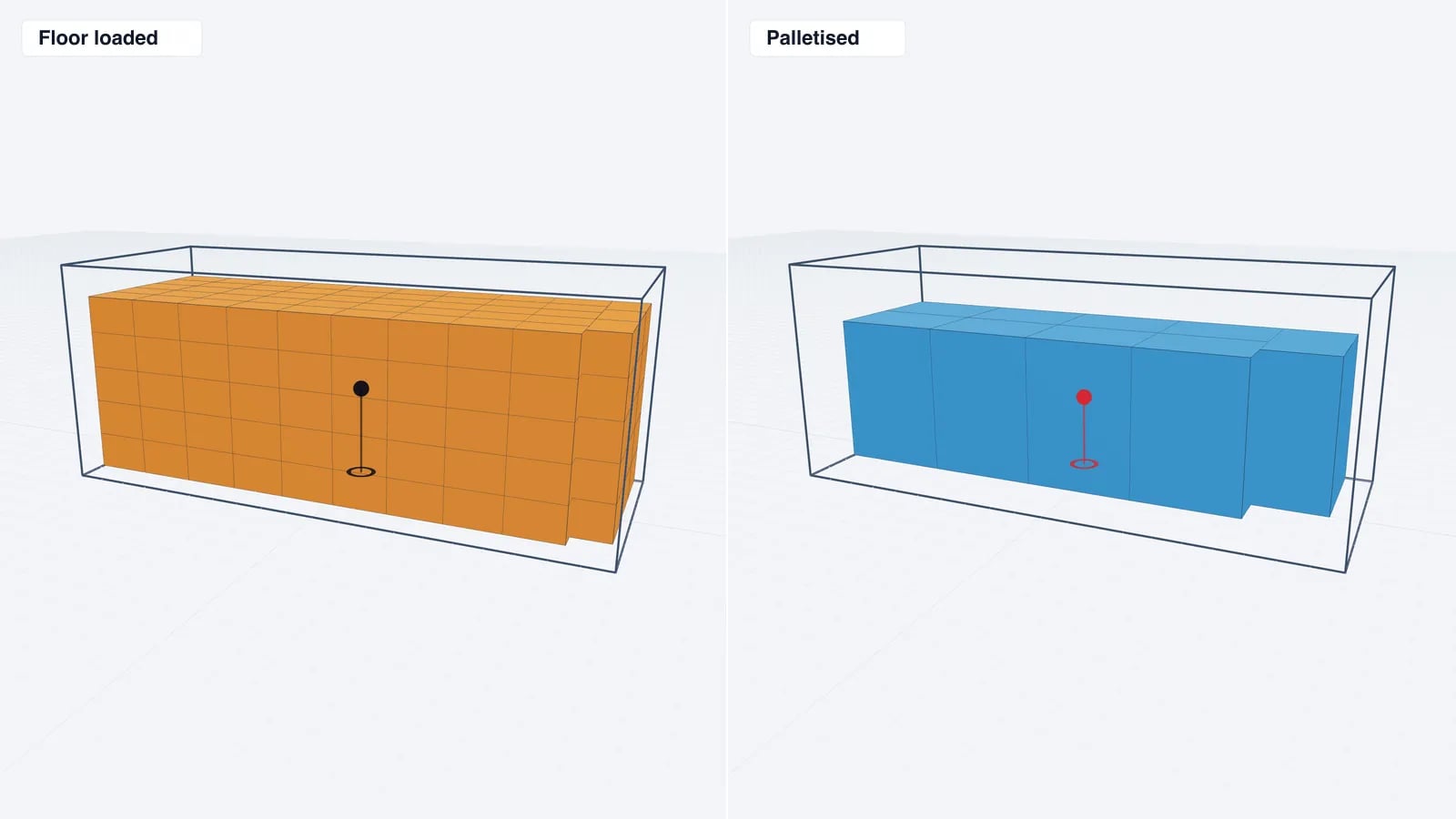
Floor Loading Cartons in a Container vs Palletised Loads
When to floor load cartons instead of palletising, how to orient and stack them, how to check carton strength, and a worked 40ft high cube comparison.
Read article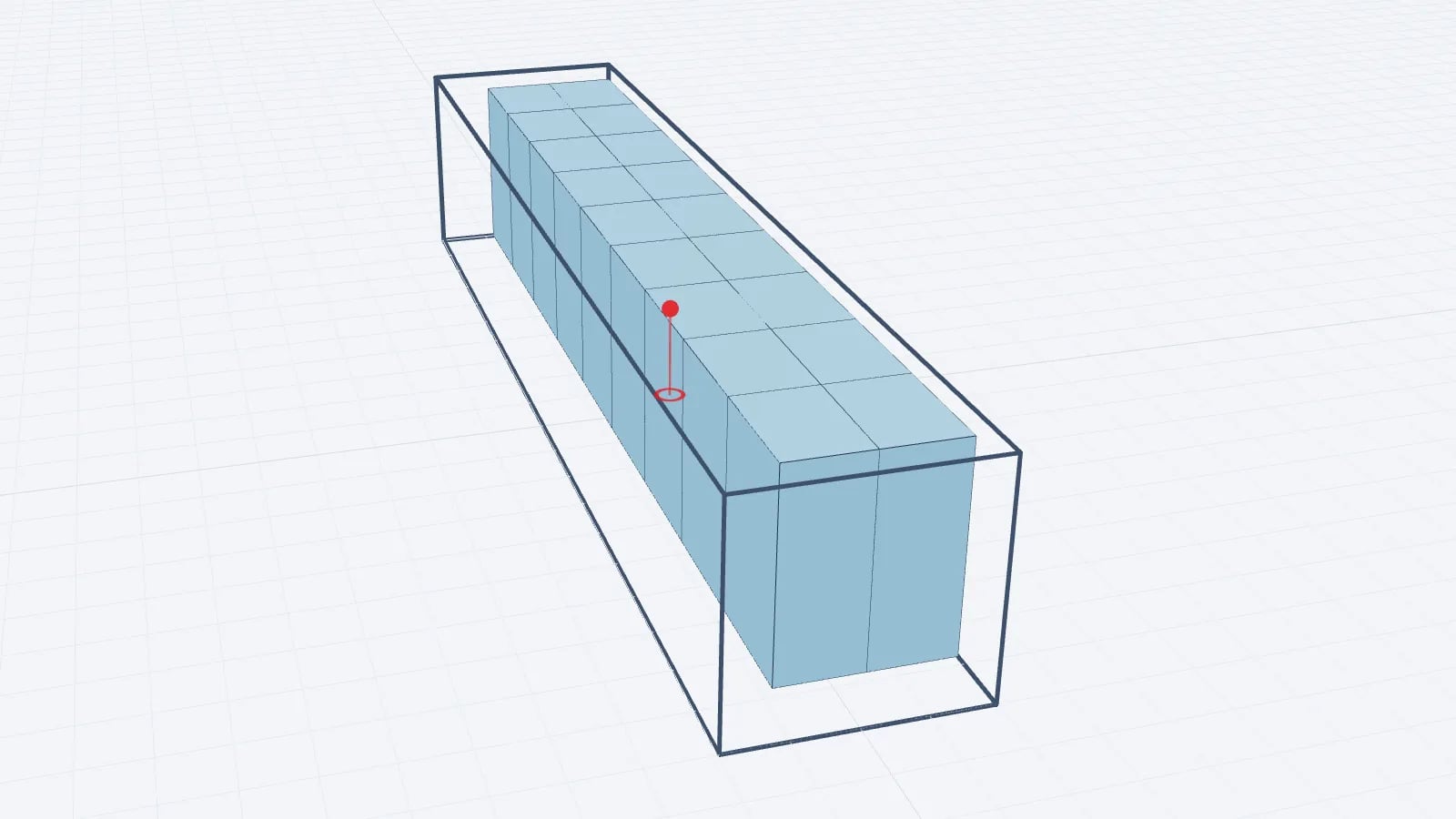
Sea containers · · 5 min read
Reefer Container Loading: Airflow, Red Line and Pallet Plans
How reefers move air, why the T-floor and red load line limit your plan, chilled vs frozen stowage, pre-cooling, and a worked 40ft reefer pallet plan.
Read article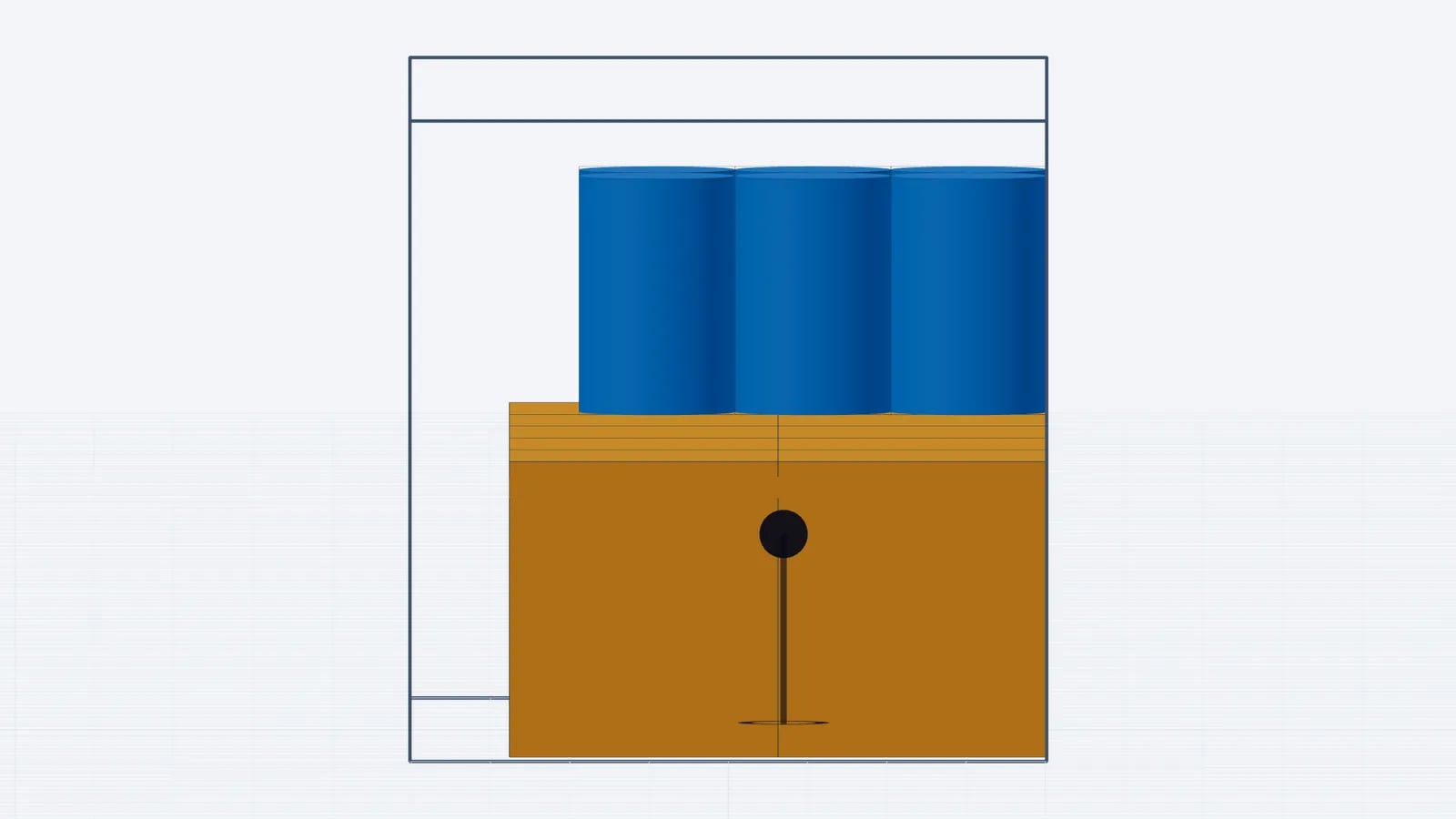
Sea containers · · 6 min read
Container Dunnage: Airbags, Blocking, Bracing and Void Fill
How to secure container cargo with airbags, timber blocking, bracing, lashing and void fill, and how to plan the load so there are fewer gaps to fill.
Read article