VGM Under SOLAS: How to Get Container Weight Right
What the SOLAS verified gross mass rule requires, how Methods 1 and 2 work, what the weight includes, and how planning with real weights avoids rolled boxes.
Sea containers · · 5 min read
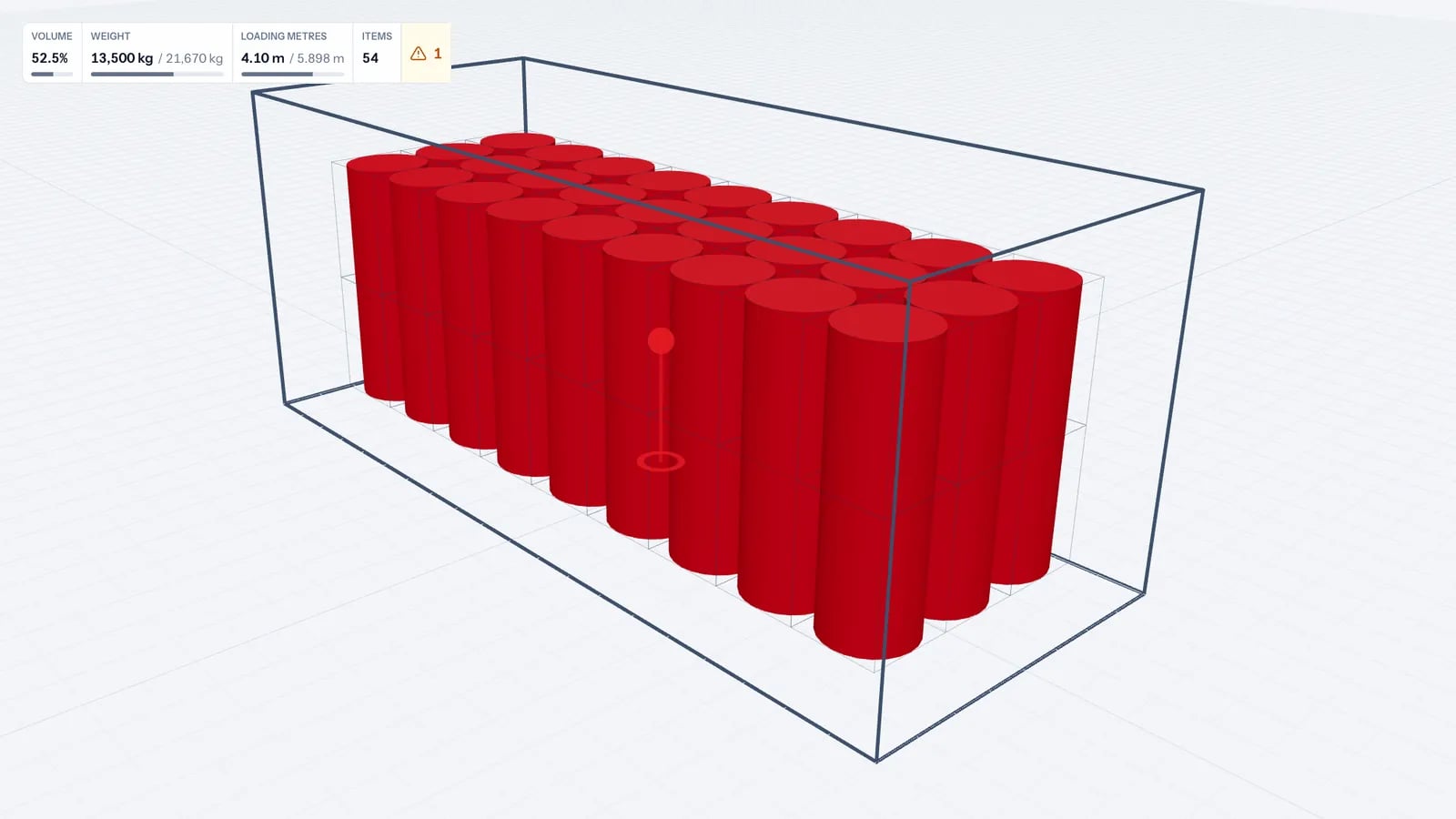
Under the SOLAS Convention, a packed export container may not be loaded on a ship unless the carrier and terminal have its verified gross mass (VGM). The shipper is responsible for it and can obtain it in two ways: weigh the whole packed container (Method 1), or weigh all the contents and add the container tare (Method 2). The rule has applied worldwide since 1 July 2016.
This article explains the requirements in general terms. The details, such as who may use Method 2, accepted tolerances and how the VGM must be sent, are set by each national authority, so check the rules in the country of loading.
Why the rule exists
Before 2016, the weight on the shipping documents was often the shipper's estimate of the cargo alone. Misdeclared weights affect ship stability calculations, stack weights on deck, and the safety of cranes, terminal equipment and road vehicles. The IMO amended SOLAS Chapter VI, Regulation 2 so that the weight used for stowage planning is a verified figure, not a guess.
Method 1 and Method 2 compared
What is weighed
- Method 1
- The packed and sealed container as a whole
- Method 2
- Every package and cargo item, plus pallets, dunnage and securing material
Container tare
- Method 1
- Included automatically
- Method 2
- Added from the tare marked on the container
Equipment
- Method 1
- Calibrated weighbridge, crane or lifting scale
- Method 2
- Calibrated scales for the goods
Typical users
- Method 1
- Mixed loads, bulk-type cargo, any shipper without a certified Method 2 process
- Method 2
- Shippers with good master data and a certified or approved weighing process
Restrictions
- Method 1
- None beyond calibrated equipment
- Method 2
- Some countries require prior approval or certification; not suitable for cargo that cannot be weighed item by item (for example loose scrap or unbagged grain)
| Method 1 | Method 2 | |
|---|---|---|
| What is weighed | The packed and sealed container as a whole | Every package and cargo item, plus pallets, dunnage and securing material |
| Container tare | Included automatically | Added from the tare marked on the container |
| Equipment | Calibrated weighbridge, crane or lifting scale | Calibrated scales for the goods |
| Typical users | Mixed loads, bulk-type cargo, any shipper without a certified Method 2 process | Shippers with good master data and a certified or approved weighing process |
| Restrictions | None beyond calibrated equipment | Some countries require prior approval or certification; not suitable for cargo that cannot be weighed item by item (for example loose scrap or unbagged grain) |
A common Method 1 practice is weighing the truck on a weighbridge with the loaded container on the chassis, then subtracting the known weight of the tractor, chassis and fuel. Whether that is accepted, and how the deductions must be documented, depends on national rules.
What the VGM must include
- The cargo itself, including its inner and outer packaging.
- Pallets, skids and slip sheets.
- Dunnage, blocking timber, airbags and any other securing material.
- The tare mass of the container, as marked on its doors.
The most frequent Method 2 errors are leaving out the pallets and the dunnage, using a product master-data weight that excludes packaging, or using a "typical" tare rather than the tare of the actual container.
Worked example: Method 2
Say you are shipping 20 Euro pallets in a 40' container. Each pallet holds 480 kg of product. Each empty pallet weighs about 25 kg and the film and corner boards about 3 kg. You use 60 kg of airbags and timber. The tare on the door reads 3,750 kg.
Component: Product
- Calculation
- 20 × 480 kg
- Mass
- 9,600 kg
Component: Pallets
- Calculation
- 20 × 25 kg
- Mass
- 500 kg
Component: Film and corner boards
- Calculation
- 20 × 3 kg
- Mass
- 60 kg
Component: Dunnage and airbags
- Calculation
- Mass
- 60 kg
Component: Container tare
- Calculation
- from the door marking
- Mass
- 3,750 kg
Component: Verified gross mass
- Calculation
- Mass
- 13,970 kg
| Component | Calculation | Mass |
|---|---|---|
| Product | 20 × 480 kg | 9,600 kg |
| Pallets | 20 × 25 kg | 500 kg |
| Film and corner boards | 20 × 3 kg | 60 kg |
| Dunnage and airbags | 60 kg | |
| Container tare | from the door marking | 3,750 kg |
| Verified gross mass | 13,970 kg |
If the shipper had declared product plus tare only (9,600 + 3,750 = 13,350 kg), the VGM would be 620 kg too low, about 4.4% of the true figure. Depending on the tolerance applied in that country, that might pass or be rejected; either way it is wrong.
Good to know
IMO guidance leaves tolerances to national administrations. Many apply a percentage tolerance (5% is common) but some use fixed values or different rules. Do not plan on using the tolerance; aim for the true weight.
Deadlines and submission
- 1Agree with the carrier or forwarder who submits the VGM and in what format (carrier portal, EDI message, forwarder system or a signed document).
- 2Obtain the VGM by Method 1 or Method 2 after the container is packed and the final contents are known.
- 3Have it signed by a person authorised by the shipper, by name; electronic signatures are generally accepted.
- 4Submit it before the VGM cut-off set by the carrier or terminal, which is often earlier than the cargo cut-off.
- 5Keep the weighing records and calculation with the shipment file.
A container without a VGM, or with one the terminal finds inconsistent with its own weighing, can be held back from the vessel. Rolled containers mean storage costs, re-booking and missed delivery dates.
Planning with real weights
The VGM is measured after packing, but most VGM problems start earlier, in the load plan. If the plan uses wrong weights, the container may be overweight for its rating, for the road chassis or for the destination, and you only find out at the weighbridge.
- Plan with gross weight per packed piece, including pallet and packaging, not net product weight.
- Compare the planned cargo weight with the payload on the CSC plate of the actual box. Payload is maximum gross minus tare; see shipping container dimensions.
- Check road limits for the container on its chassis at both ends; they can be lower than the container rating.
- Keep a safety margin for dunnage and securing material, which is easy to forget.
- Spread the weight along the length; an overweight end can be a handling problem even when the total is fine. See container stuffing plan.
In a planner such as EveryLoading, the stats bar compares the total cargo weight with the payload you set for the container, and the optimizer never loads past it. Set the payload to the figure on the actual box when you have it, and enter weights per piece including packaging. The weight guide explains the figures shown. The planner gives the cargo weight, not a VGM: you still add the tare and weigh or verify as your national rules require.
Frequently asked questions
Who is responsible for the VGM?
The shipper named on the ocean bill of lading. A forwarder or packer can obtain and submit it on the shipper's behalf, but the responsibility stays with the shipper.
Does the VGM include the container tare?
Yes. It is the total mass of the packed container: cargo, packaging, pallets, dunnage, securing material and the container's own tare.
Can I use Method 2 for any cargo?
Not always. Some countries require approval or certification before a shipper may use Method 2, and it is not suitable for cargo that cannot practically be weighed piece by piece.
What happens if the VGM is missing?
The container should not be loaded on the vessel. It is usually held at the terminal until a valid VGM is received, which can cost a sailing.
Keep reading
Sea containers · · 5 min read
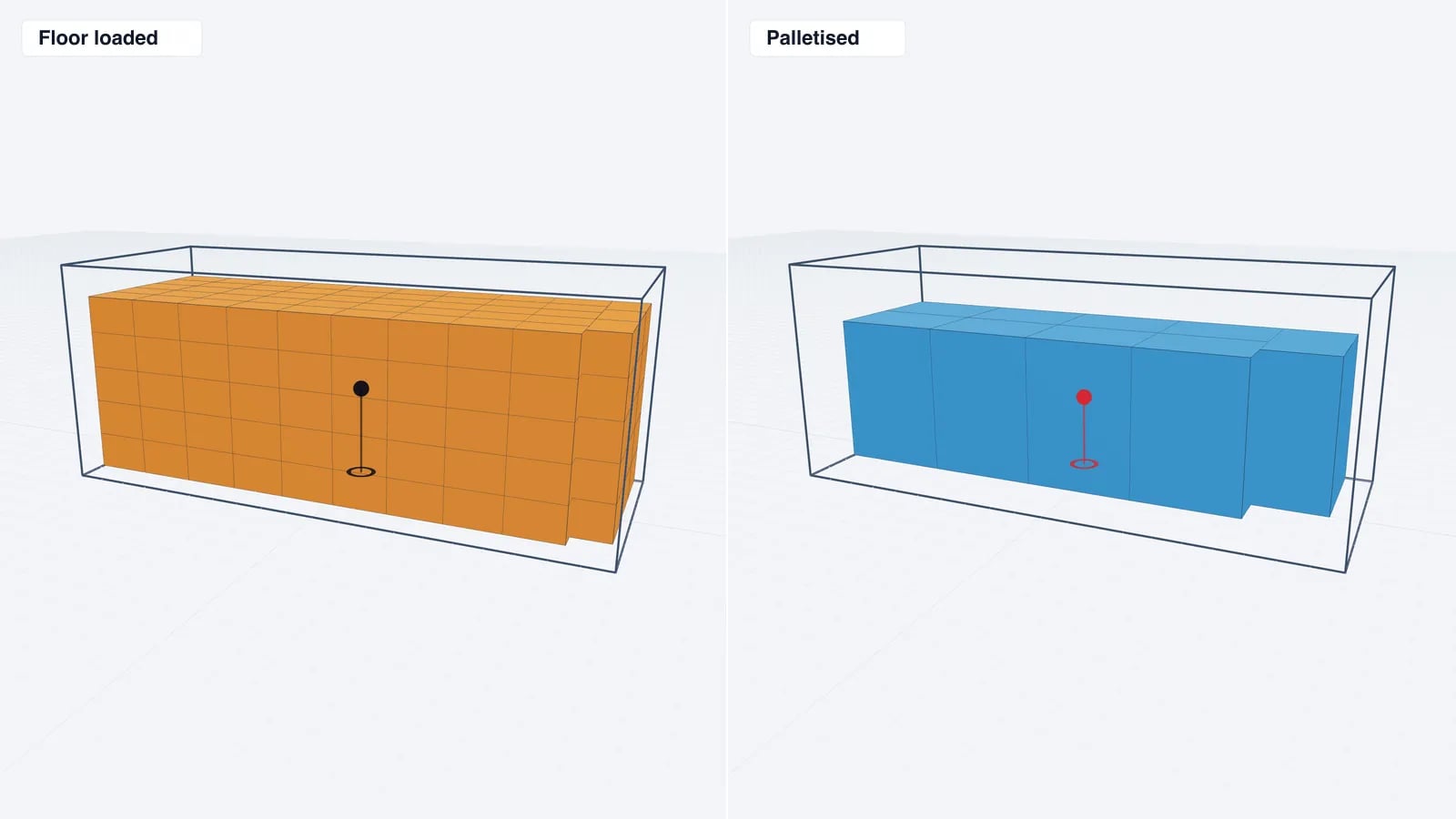
Floor Loading Cartons in a Container vs Palletised Loads
When to floor load cartons instead of palletising, how to orient and stack them, how to check carton strength, and a worked 40ft high cube comparison.
Read article
Sea containers · · 5 min read
Reefer Container Loading: Airflow, Red Line and Pallet Plans
How reefers move air, why the T-floor and red load line limit your plan, chilled vs frozen stowage, pre-cooling, and a worked 40ft reefer pallet plan.
Read article
Sea containers · · 6 min read
Container Dunnage: Airbags, Blocking, Bracing and Void Fill
How to secure container cargo with airbags, timber blocking, bracing, lashing and void fill, and how to plan the load so there are fewer gaps to fill.
Read article