CBM Calculation: Cubic Metres for Cartons, Pallets and Containers
Calculate CBM by multiplying length × width × height in metres. Worked carton and pallet examples, and how to go from total CBM to the right container or truck.
Load planning basics · · 5 min read
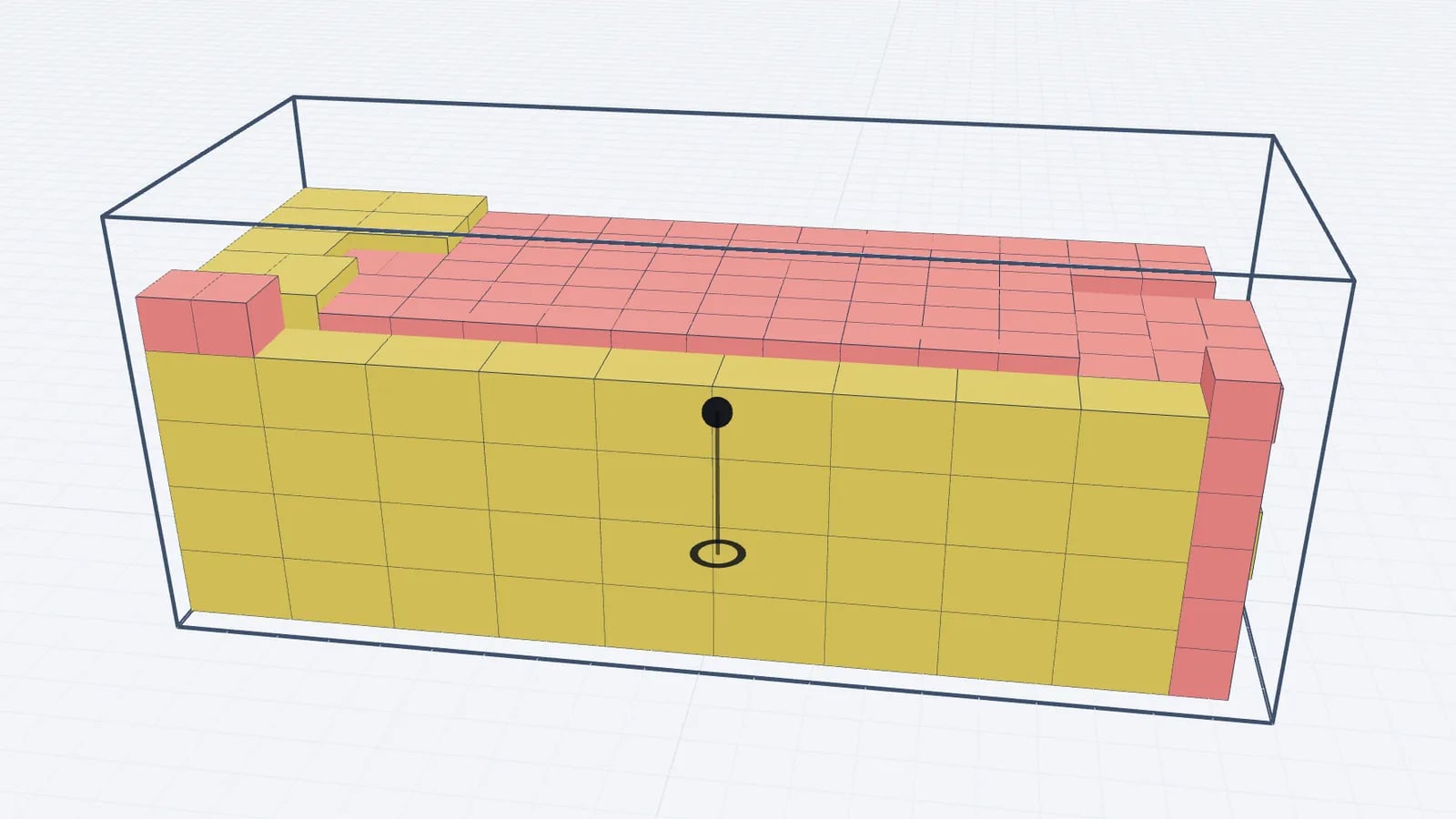
CBM (cubic metres) is the volume of a shipment. To calculate it, convert each dimension to metres and multiply: CBM = length × width × height. A carton of 60 × 40 × 40 cm is 0.6 × 0.4 × 0.4 = 0.096 m³; multiply by the number of cartons for the shipment total. Then compare the total with the usable volume of the container or truck, and check weight separately.
CBM is the language of sea freight and many freight quotes, but on its own it can mislead: cartons never fill 100% of a container, and pallets waste the space above them. Below are the formulas, worked examples and a practical way to choose a container.
How to calculate CBM step by step
- 1Measure the outside of the package: the longest side as length, then width and height. Include bulges, handles and pallet overhang.
- 2Convert to metres: centimetres ÷ 100, millimetres ÷ 1,000, inches × 0.0254.
- 3Multiply length × width × height to get the CBM of one package.
- 4Multiply by the number of identical packages.
- 5Repeat for each package type and add the results.
Package: Carton
- Dimensions
- 60 × 40 × 40 cm
- CBM each
- 0.096
- Qty
- 250
- Total CBM
- 24.0
Package: Carton
- Dimensions
- 40 × 30 × 25 cm
- CBM each
- 0.030
- Qty
- 400
- Total CBM
- 12.0
Package: Euro pallet, built
- Dimensions
- 120 × 80 × 160 cm
- CBM each
- 1.536
- Qty
- 10
- Total CBM
- 15.36
Package: Industrial pallet, built
- Dimensions
- 120 × 100 × 140 cm
- CBM each
- 1.68
- Qty
- 6
- Total CBM
- 10.08
Package: Crate
- Dimensions
- 48 × 40 × 36 in (1.219 × 1.016 × 0.914 m)
- CBM each
- about 1.13
- Qty
- 2
- Total CBM
- about 2.26
| Package | Dimensions | CBM each | Qty | Total CBM |
|---|---|---|---|---|
| Carton | 60 × 40 × 40 cm | 0.096 | 250 | 24.0 |
| Carton | 40 × 30 × 25 cm | 0.030 | 400 | 12.0 |
| Euro pallet, built | 120 × 80 × 160 cm | 1.536 | 10 | 15.36 |
| Industrial pallet, built | 120 × 100 × 140 cm | 1.68 | 6 | 10.08 |
| Crate | 48 × 40 × 36 in (1.219 × 1.016 × 0.914 m) | about 1.13 | 2 | about 2.26 |
Good to know
For a pallet, measure the full height including the pallet itself (about 14–16 cm for wooden pallets). A pallet's CBM is the box around the goods and the pallet, not just the goods.
Container and truck volumes
Nominal volumes come from internal dimensions. Usable volume is lower, because cartons rarely divide evenly into the space and pallets leave gaps above and around them. Figures below are typical; exact internal sizes vary by manufacturer.
Equipment: 20 ft container
- Typical internal size (L × W × H)
- 5.90 × 2.35 × 2.39 m
- Nominal CBM
- about 33
- Typical payload
- roughly 21–28 t, varies by box
Equipment: 40 ft container
- Typical internal size (L × W × H)
- 12.03 × 2.35 × 2.39 m
- Nominal CBM
- about 67
- Typical payload
- roughly 26–27 t
Equipment: 40 ft high cube
- Typical internal size (L × W × H)
- 12.03 × 2.35 × 2.69 m
- Nominal CBM
- about 76
- Typical payload
- roughly 26–27 t
Equipment: 13.6 m semitrailer
- Typical internal size (L × W × H)
- 13.6 × 2.45 × 2.7 m
- Nominal CBM
- about 90
- Typical payload
- often around 24 t, varies
Equipment: 13.6 m mega trailer
- Typical internal size (L × W × H)
- 13.6 × 2.45 × 3.0 m
- Nominal CBM
- about 100
- Typical payload
- often around 24 t, varies
| Equipment | Typical internal size (L × W × H) | Nominal CBM | Typical payload |
|---|---|---|---|
| 20 ft container | 5.90 × 2.35 × 2.39 m | about 33 | roughly 21–28 t, varies by box |
| 40 ft container | 12.03 × 2.35 × 2.39 m | about 67 | roughly 26–27 t |
| 40 ft high cube | 12.03 × 2.35 × 2.69 m | about 76 | roughly 26–27 t |
| 13.6 m semitrailer | 13.6 × 2.45 × 2.7 m | about 90 | often around 24 t, varies |
| 13.6 m mega trailer | 13.6 × 2.45 × 3.0 m | about 100 | often around 24 t, varies |
Check the container's CSC plate or the line's specifications for the exact payload. For details of each type, see shipping container dimensions and semi trailer dimensions.
Worked example: from CBM to container choice
Say an exporter ships 420 cartons of 60 × 40 × 40 cm, 18 kg each.
- Volume: 420 × 0.096 = 40.32 m³.
- Weight: 420 × 18 = 7,560 kg, well under any container payload, so volume decides.
- 20 ft (about 33 m³): too small even on paper.
- 40 ft (about 67 m³): 40.32 ÷ 67 = 60% of nominal volume. It fits on volume, but a CBM total alone does not prove the cartons fit.
Check the pattern. In a 40 ft container (1203 × 235 × 239 cm), turn the cartons with the 60 cm side along the length: 1203 ÷ 60 = 20 rows, 235 ÷ 40 = 5 across, 239 ÷ 40 = 5 high, which is 20 × 5 × 5 = 500 cartons. 420 fit with room for 80 more. In a 20 ft container (589 cm long), the same pattern gives 589 ÷ 60 = 9 rows, so 9 × 5 × 5 = 225 cartons. Turning them 40 cm along the length gives 14 × 5 × 3 = 210, so 225 is the better simple pattern. Two 20 ft containers (450 cartons) would also work; whether that beats one 40 ft is a rate question.
Tip
Volume tells you whether something is impossible. A layer-by-layer pattern, or a 3D planner, tells you whether it actually fits. Paste the carton list into the planner, pick a container and optimise to see the real count.
Why you never get 100% of the CBM
- Dimensions do not divide evenly. In the 20 ft example, 9 rows of 60 cm use 540 cm of 589 cm; the last 49 cm is lost unless smaller cartons fill it.
- Pallets waste height. A 1.6 m pallet in a 2.39 m container leaves 0.79 m above it unless something is stacked.
- Non-stackable items block all the space above them.
- Door clearance and securing take a little space at the doors.
- Mixed sizes leave gaps between groups.
That is why forwarders often plan cartons at well under nominal CBM, and why container utilisation is a better measure than raw CBM.
CBM and chargeable weight
Carriers convert volume into a weight to price light, bulky freight. The ratio depends on the mode:
Mode: Sea LCL
- Common conversion
- 1 m³ = 1,000 kg (weight or measure, whichever is greater)
- 1 m³ counts as
- 1,000 kg
Mode: Road groupage
- Common conversion
- Set by carrier, commonly 250–333 kg per m³
- 1 m³ counts as
- 250–333 kg
Mode: Air
- Common conversion
- IATA volumetric divisor 6,000 cm³ per kg
- 1 m³ counts as
- about 166.7 kg
| Mode | Common conversion | 1 m³ counts as |
|---|---|---|
| Sea LCL | 1 m³ = 1,000 kg (weight or measure, whichever is greater) | 1,000 kg |
| Road groupage | Set by carrier, commonly 250–333 kg per m³ | 250–333 kg |
| Air | IATA volumetric divisor 6,000 cm³ per kg | about 166.7 kg |
Using the 420-carton shipment: 40.32 m³ would count as 40,320 kg on a sea LCL W/M basis (more than the 7,560 kg actual, so it is charged by volume), or 40.32 × 166.7 ≈ 6,720 kg by air. For air freight, see chargeable weight. For road freight priced by floor space instead of volume, see loading metres.
Frequently asked questions
How do I calculate CBM in centimetres?
Multiply length × width × height in cm and divide by 1,000,000. For example, 60 × 40 × 40 = 96,000 cm³, which is 0.096 m³.
How many CBM fit in a 40 ft container?
A standard 40 ft container has about 67 m³ of internal volume and a 40 ft high cube about 76 m³. Usable volume is lower because cartons and pallets never fill the space perfectly.
How many CBM is a Euro pallet?
It depends on the height: a Euro pallet built to 1.6 m including the pallet is 1.2 × 0.8 × 1.6 = 1.536 m³.
Is CBM enough to decide which container to use?
No. Check weight against payload and check that the packages actually fit as a pattern; a shipment can be under the nominal CBM and still not fit.
Keep reading
Load planning basics · · 5 min read
FTL vs LTL: Full Truckload, Part Load or Groupage?
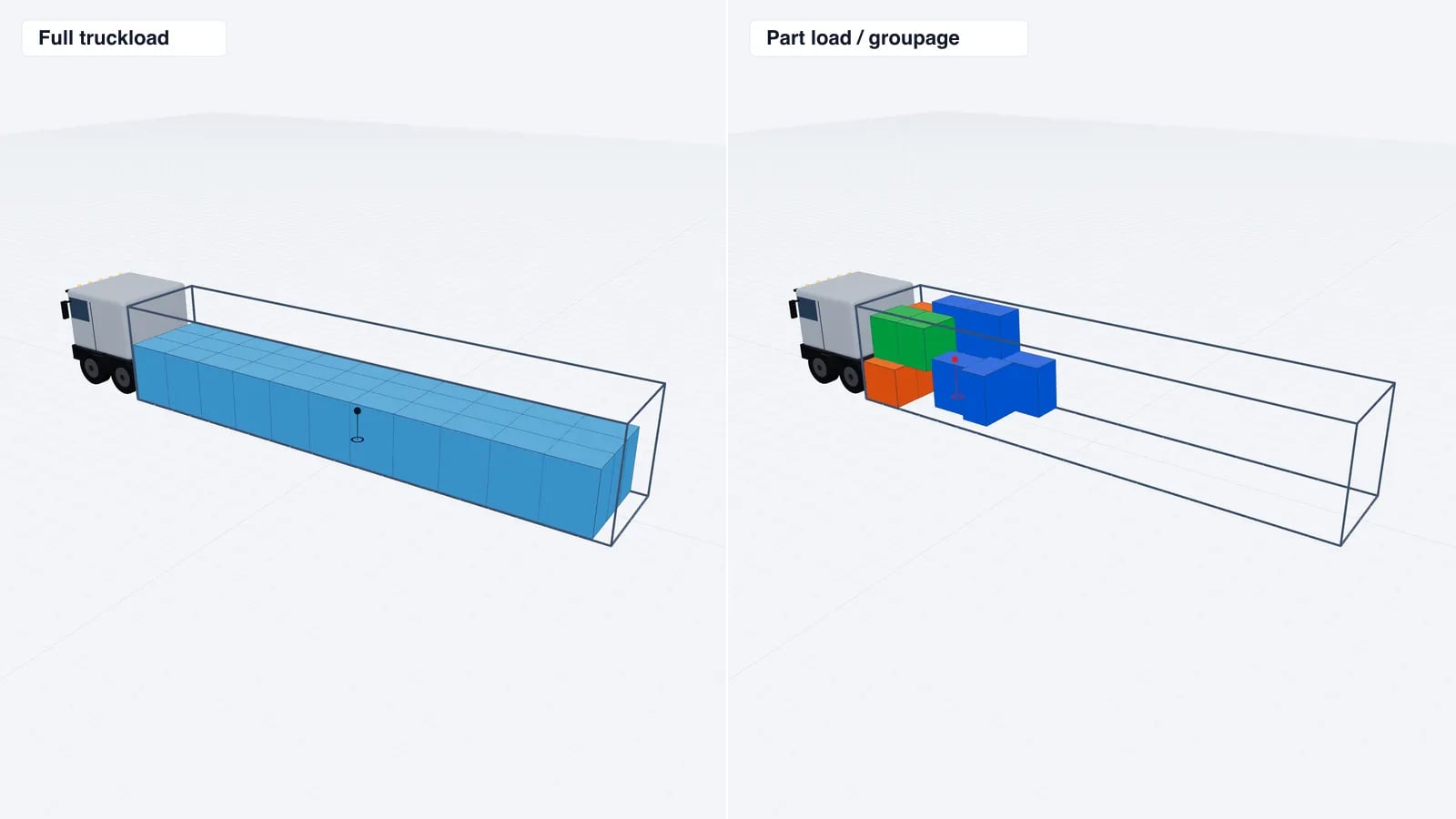
FTL books a whole truck; LTL and groupage share it with other shippers. Compare cost, speed and handling, see how LDM drives LTL price and find your break-even.
Read article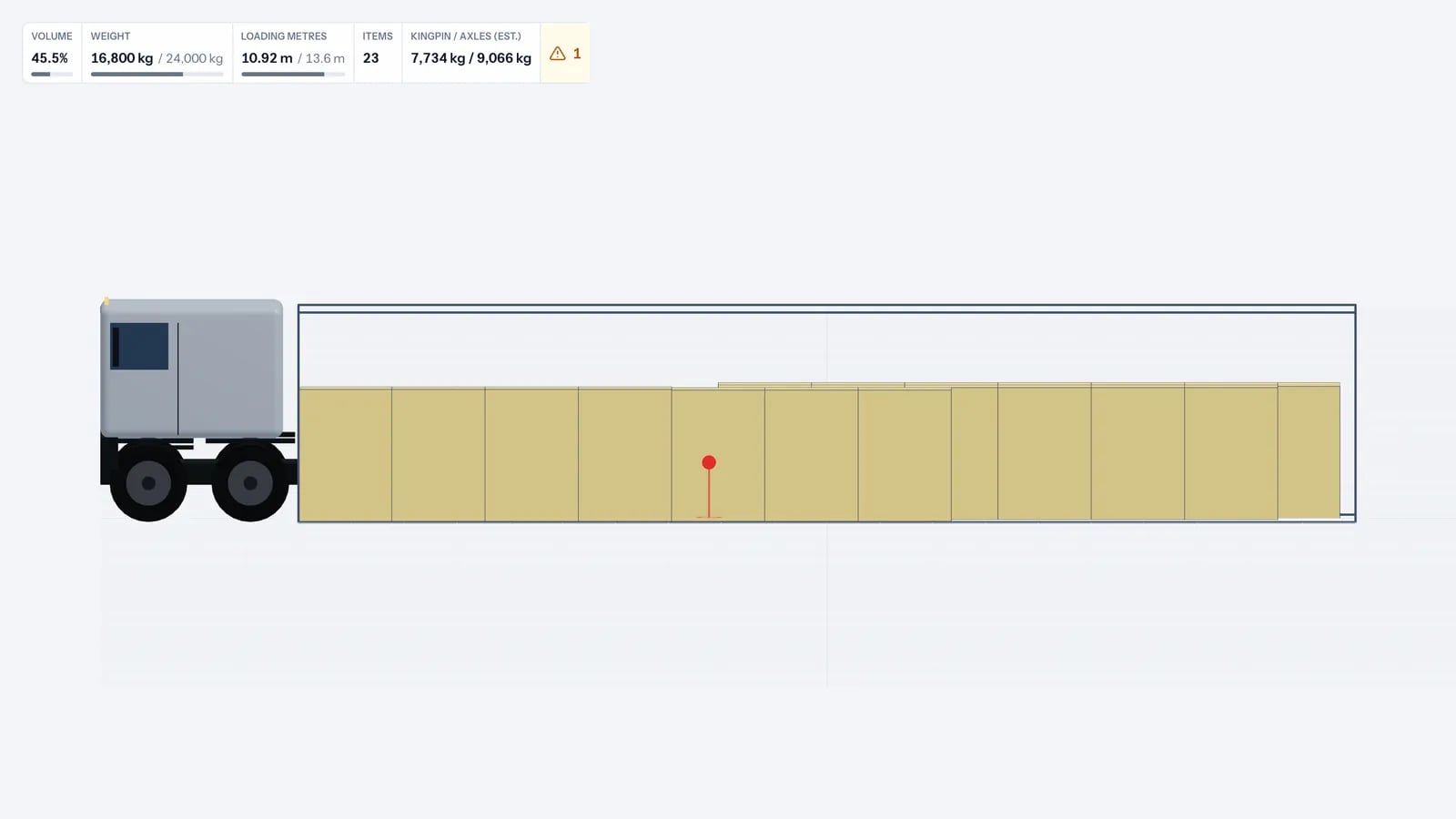
Load planning basics · · 6 min read
Weight Distribution in a Trailer: Axle Loads Made Simple
Where you put heavy cargo decides the load on each axle. Learn how trailer weight distribution works, how to estimate axle loads and how to avoid overloading.
Read article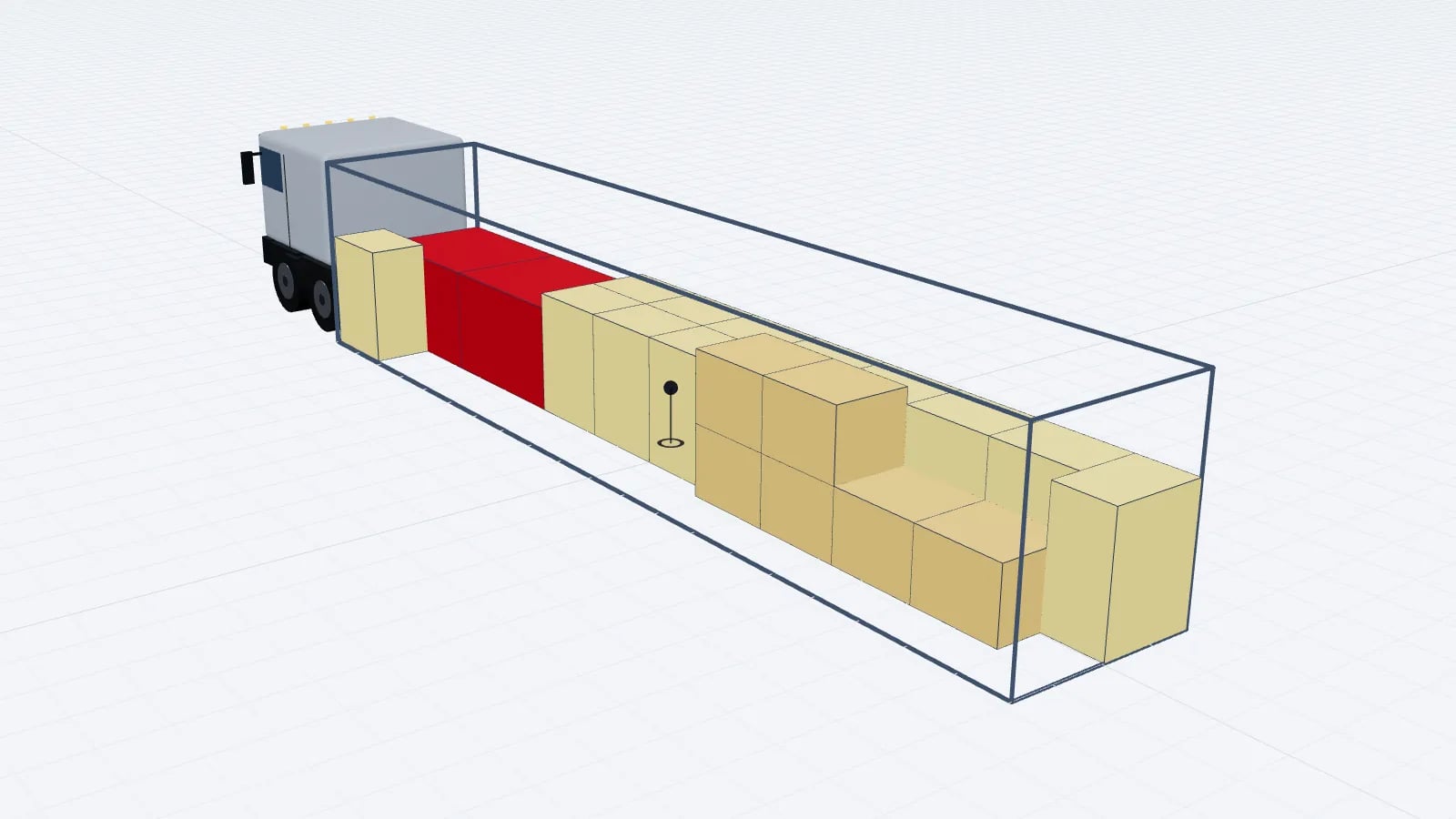
Load planning basics · · 5 min read
Load Centre of Gravity: How to Calculate It for a Truck Load
The centre of gravity of a load is the weighted average of every item's position. Learn the formula, a worked truck example and checks for lateral offset.
Read article