Semi Trailer Dimensions: Curtainsider, Mega, Reefer and Box
Internal length, width, height and typical payload of the 13.6 m curtainsider, mega trailer, reefer and box trailer, with pallet counts and planning tips.
Road freight · · 5 min read
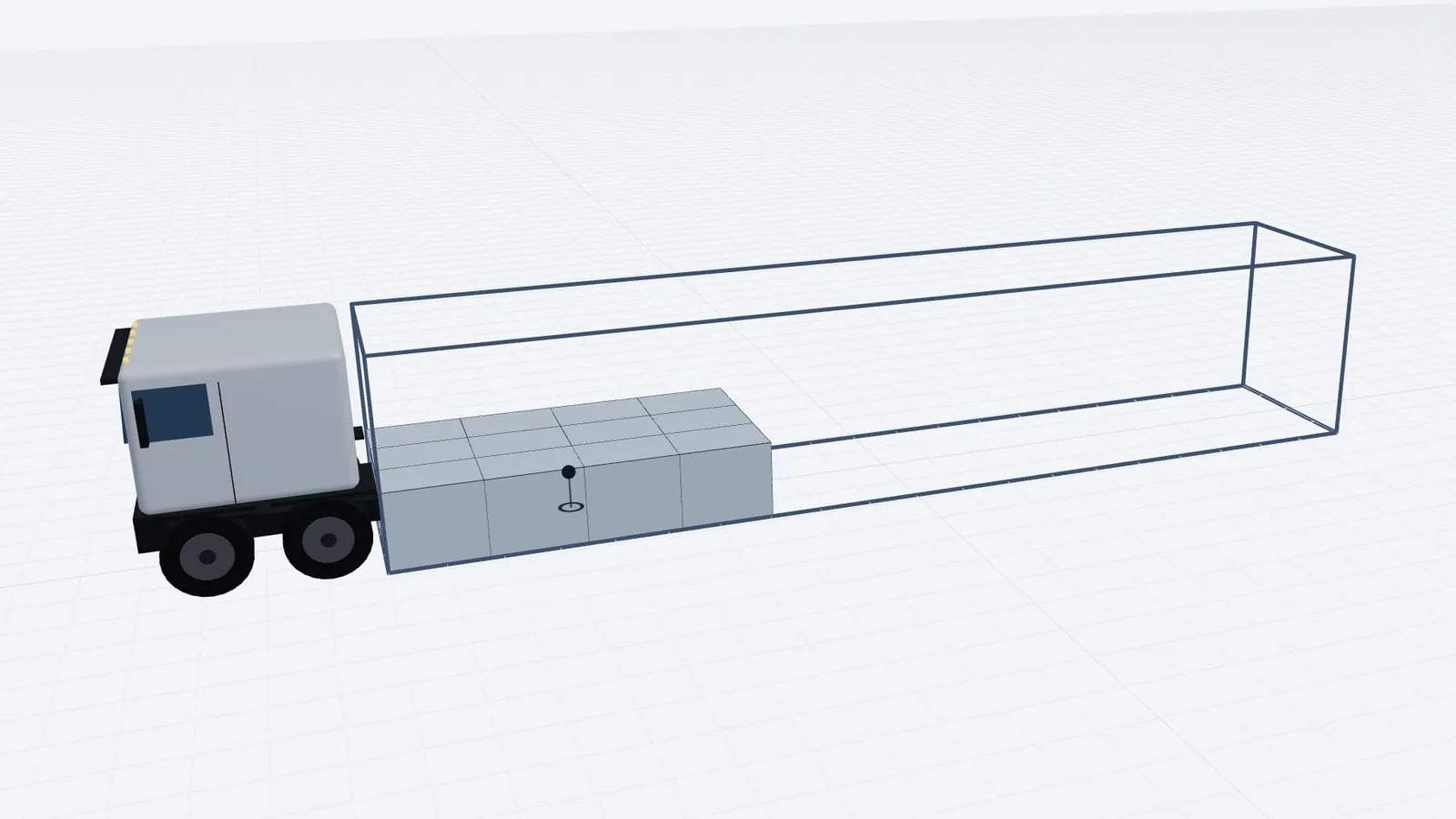
A standard European semi trailer has an internal loading space of about 13.6 m long, 2.45–2.48 m wide and 2.6–2.75 m high, which holds 33 Euro pallets on the floor and typically carries 24–25 tonnes of cargo. Mega trailers keep the same floor but offer about 3.0 m of internal height, while reefers lose a little space to insulation.
Those are the headline numbers. The exact figures for the trailer in front of you depend on the manufacturer, the body build and the tractor it is coupled to, so treat everything below as typical values and check the spec plate or data sheet before you plan to the last centimetre.
Typical internal dimensions by trailer type
Trailer type: Standard curtainsider (tautliner)
- Internal L × W × H (typical)
- 13.6 × 2.48 × 2.65–2.75 m
- Volume (approx.)
- 88–92 m³
- Euro pallets (floor)
- 33
- Typical payload
- 24–25 t
Trailer type: Mega trailer (curtainsider)
- Internal L × W × H (typical)
- 13.6 × 2.48 × 2.95–3.0 m
- Volume (approx.)
- 98–101 m³
- Euro pallets (floor)
- 33
- Typical payload
- 23–25 t
Trailer type: Box trailer (dry van)
- Internal L × W × H (typical)
- 13.6 × 2.48 × 2.6–2.7 m
- Volume (approx.)
- 87–91 m³
- Euro pallets (floor)
- 33
- Typical payload
- 23–25 t
Trailer type: Reefer (refrigerated)
- Internal L × W × H (typical)
- 13.3–13.4 × 2.46 × 2.5–2.65 m
- Volume (approx.)
- 82–87 m³
- Euro pallets (floor)
- 33
- Typical payload
- 21–23 t
Trailer type: Container chassis with 40' HC
- Internal L × W × H (typical)
- 12.03 × 2.35 × 2.69 m
- Volume (approx.)
- about 76 m³
- Euro pallets (floor)
- 24–25
- Typical payload
- depends on container and chassis
| Trailer type | Internal L × W × H (typical) | Volume (approx.) | Euro pallets (floor) | Typical payload |
|---|---|---|---|---|
| Standard curtainsider (tautliner) | 13.6 × 2.48 × 2.65–2.75 m | 88–92 m³ | 33 | 24–25 t |
| Mega trailer (curtainsider) | 13.6 × 2.48 × 2.95–3.0 m | 98–101 m³ | 33 | 23–25 t |
| Box trailer (dry van) | 13.6 × 2.48 × 2.6–2.7 m | 87–91 m³ | 33 | 23–25 t |
| Reefer (refrigerated) | 13.3–13.4 × 2.46 × 2.5–2.65 m | 82–87 m³ | 33 | 21–23 t |
| Container chassis with 40' HC | 12.03 × 2.35 × 2.69 m | about 76 m³ | 24–25 | depends on container and chassis |
Good to know
Payload is what is left after the tractor, trailer, fuel and driver are subtracted from the legal gross weight. In most EU countries that gross limit is 40 t for a five- or six-axle articulated vehicle in international traffic, but some countries allow more on domestic journeys. See axle weight limits in the EU.
Why 13.6 m and 2.48 m?
The outside of the vehicle is fixed by law. Under EU Directive 96/53/EC an articulated vehicle may be at most 16.5 m long, 2.55 m wide (2.60 m for refrigerated bodies with thick walls) and, in most member states, 4.0 m high. A tractor needs room for its cab, so the trailer floor ends up at about 13.6 m. Subtract the side posts and curtains or panels from 2.55 m and you get the 2.45–2.48 m of usable width.
Width matters more than it looks. Three Euro pallets side by side need 2.40 m (3 × 0.80 m), and two industrial pallets crosswise need 2.40 m (2 × 1.20 m). A trailer with 2.45 m inside leaves only 5 cm of play, which is why some side posts or poorly adjusted stakes can stop the third pallet going in.
Height: the dimension that varies most
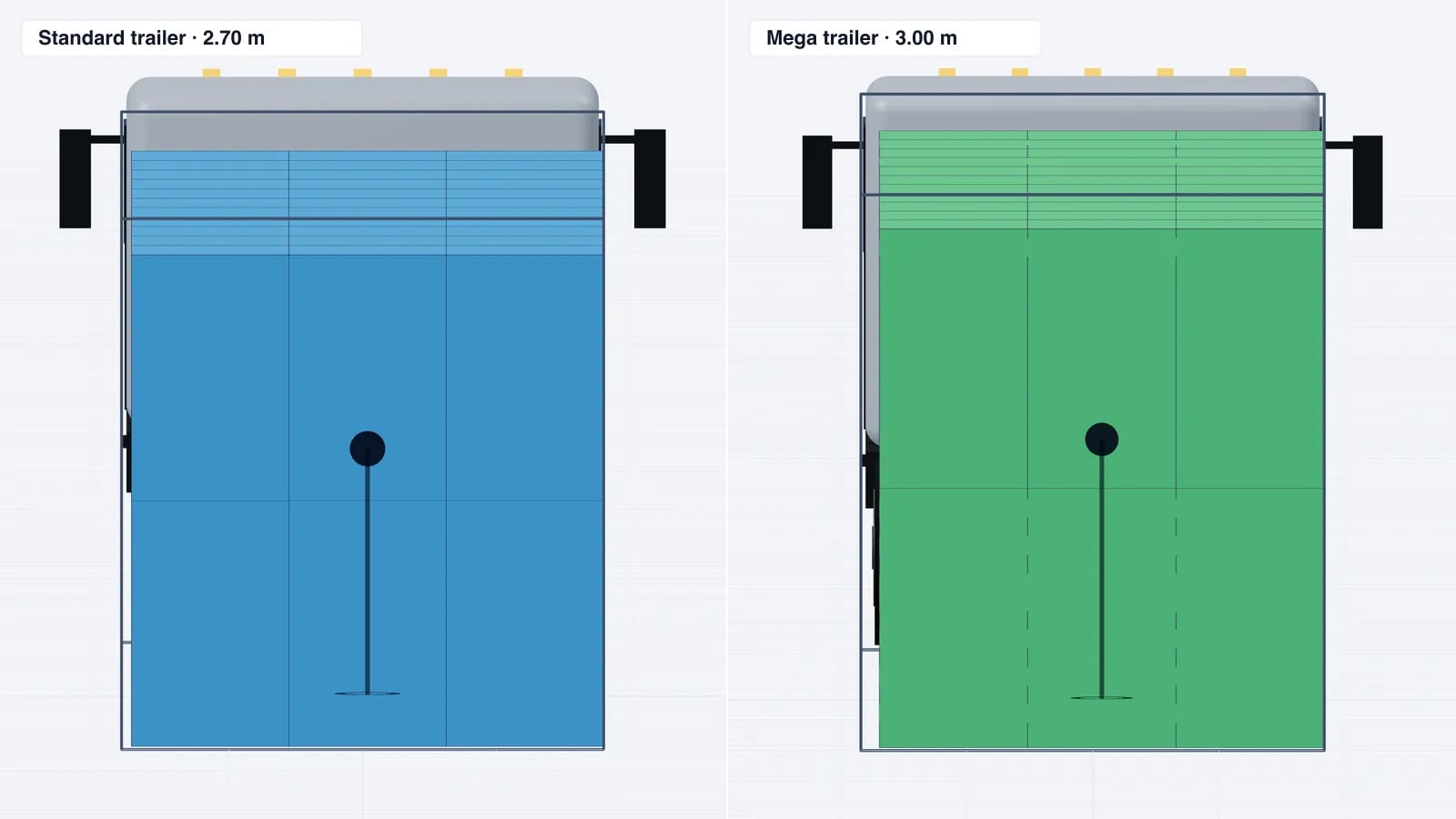
Internal height is set by the 4.0 m overall limit minus the deck height and the roof structure. A standard trailer sits on 22.5-inch wheels with a deck around 1.1–1.2 m above the road, which leaves roughly 2.6–2.75 m inside. A mega trailer uses smaller wheels and a lowered deck (about 0.9–1.0 m) and pairs with a low-deck tractor, which buys about 30 cm more inside. That difference decides whether two pallets of 1.4 m can be stacked or not. The trade-offs are covered in mega trailer vs standard trailer.
Also check the door opening and the height under the roof rails on curtainsiders. On a box trailer or reefer the rear door frame is often 5–10 cm lower than the internal height, so the tallest item you can drive in with a forklift is smaller than the number on the data sheet.
Pallet capacity of a standard 13.6 m trailer
- Euro pallets (1200 × 800 mm): 33 single-stacked, loaded lengthwise three abreast in 11 rows (11 × 1.2 m = 13.2 m). Double-stacked, up to 66 if height and weight allow.
- Industrial pallets (1200 × 1000 mm): 26 single-stacked, two abreast crosswise in 13 rows of 1.0 m (13.0 m).
- Mixed loads: each Euro pallet uses 0.4 loading metres and each industrial pallet 0.5, so a quick sum tells you whether a mix fits. See loading metres explained.
For orientation tricks and partial loads, read how many Euro pallets fit in a trailer.
Worked example: will it fit, and is it too heavy?
Say you have 20 Euro pallets of paper products at 1.60 m high and 650 kg each, plus 6 industrial pallets of machinery parts at 1.10 m high and 900 kg each.
- 1Floor space: 20 × 0.4 + 6 × 0.5 = 8.0 + 3.0 = 11.0 loading metres, inside the 13.6 m available.
- 2Height: 1.60 m fits in any trailer type, but the paper pallets cannot be double-stacked (2 × 1.60 = 3.20 m). Stacking the 1.10 m machinery pallets in pairs would save 1.5 m of floor if they are rated for it, but here there is no need.
- 3Weight: 20 × 650 + 6 × 900 = 13,000 + 5,400 = 18,400 kg, comfortably below a 24 t payload.
- 4Result: a standard curtainsider works with 2.6 m of floor to spare, which is room for a part load to another customer on the same route.
The same arithmetic in a reefer would still work on floor and weight, but you would check the shorter 13.3 m floor and the airflow clearance under the ceiling before confirming.
Planning tips for dispatchers
- Keep a short list of the actual trailers in your fleet (or your subcontractors') with measured inside dimensions, not catalogue values.
- Plan to 2.45 m wide unless you know the trailer is 2.48 m. The 3 cm rarely matters, until it does.
- For reefers, subtract the space the cooling unit and air chute need at the front, and keep cargo below the load line marked on the walls.
- Ask whether a curtainsider has removable side posts or roof lifting: it changes how fast you can side-load.
- Note the payload of the specific combination; a heavy tractor or a tail lift can take 1–2 t off what you can carry.
Tip
In EveryLoading the Loading space tab has presets for the common trailer types, and you can edit inside length, width, height and payload to match your own trailer. See choosing a vehicle.
Frequently asked questions
What are the inside dimensions of a standard 13.6 m trailer?
Typically about 13.6 m long, 2.45–2.48 m wide and 2.6–2.75 m high, giving roughly 88–92 m³. Exact values depend on the manufacturer and body type.
How much weight can a semi trailer carry?
A standard curtainsider usually carries 24–25 t of cargo on a 40 t combination. Reefers and trailers with heavy equipment carry less because their own weight is higher.
How tall is a mega trailer inside?
About 2.95–3.0 m, compared with 2.6–2.75 m for a standard trailer. The extra height comes from a lower deck and smaller wheels, not a taller vehicle.
Why is a reefer trailer shorter inside?
Insulated walls, the front bulkhead and the air channel for the cooling unit take up space, so the usable floor is often 13.3–13.4 m rather than 13.6 m. It still takes 33 Euro pallets in most designs.
Keep reading
Road freight · · 5 min read
Mega Trailer vs Standard Trailer: When the Extra Height Pays
A mega trailer gives about 3 m of internal height on the same 13.6 m floor. Learn when that pays, what a low-deck tractor changes and how to plan double-stacks.
Read article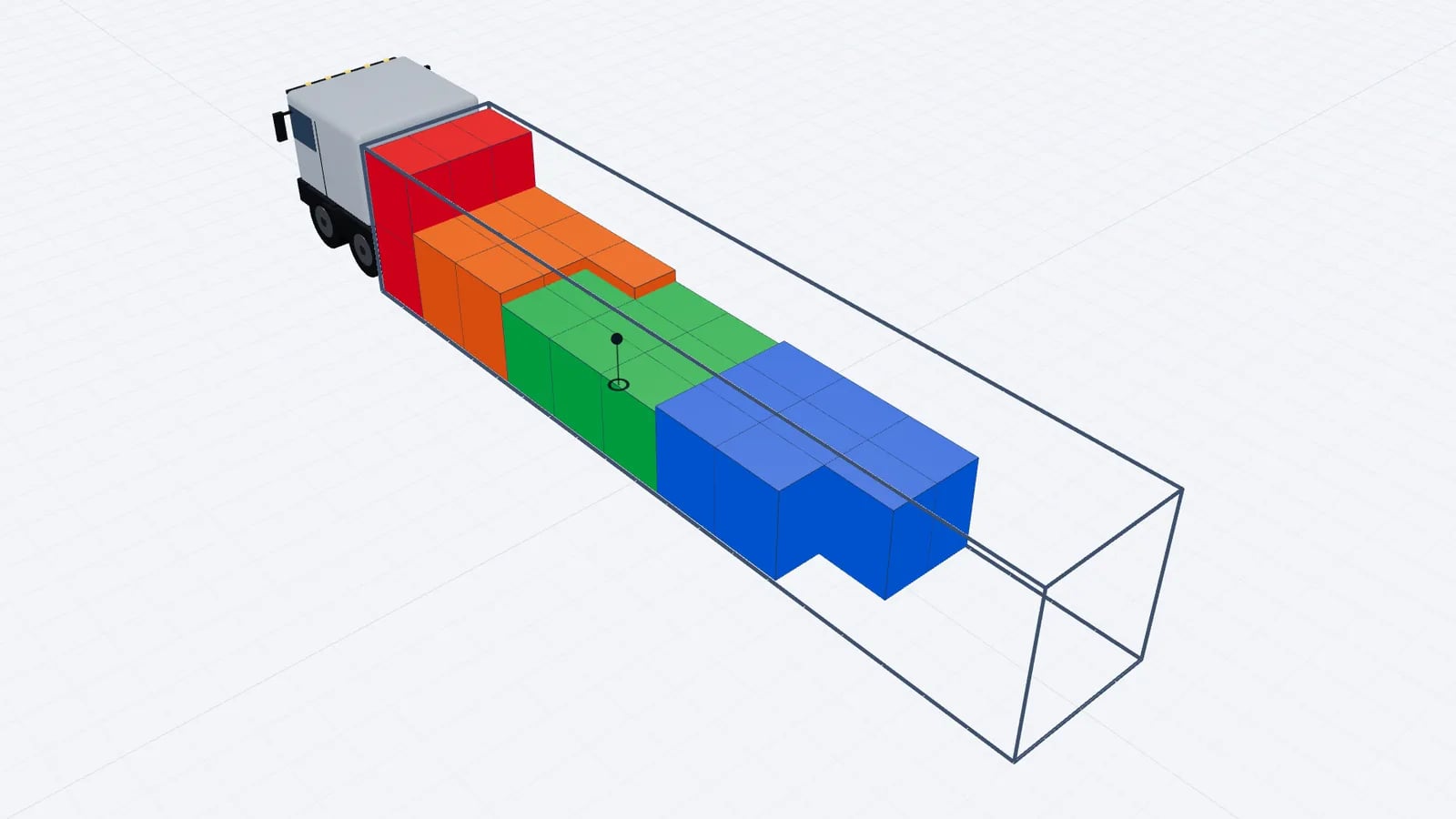
Road freight · · 5 min read
Multi Drop Loading: How to Plan a Truck for Several Stops
Plan a multi-drop truck so every stop unloads without moving other cargo: LIFO order, lanes, stop numbers, axle loads after each drop and a worked example.
Read article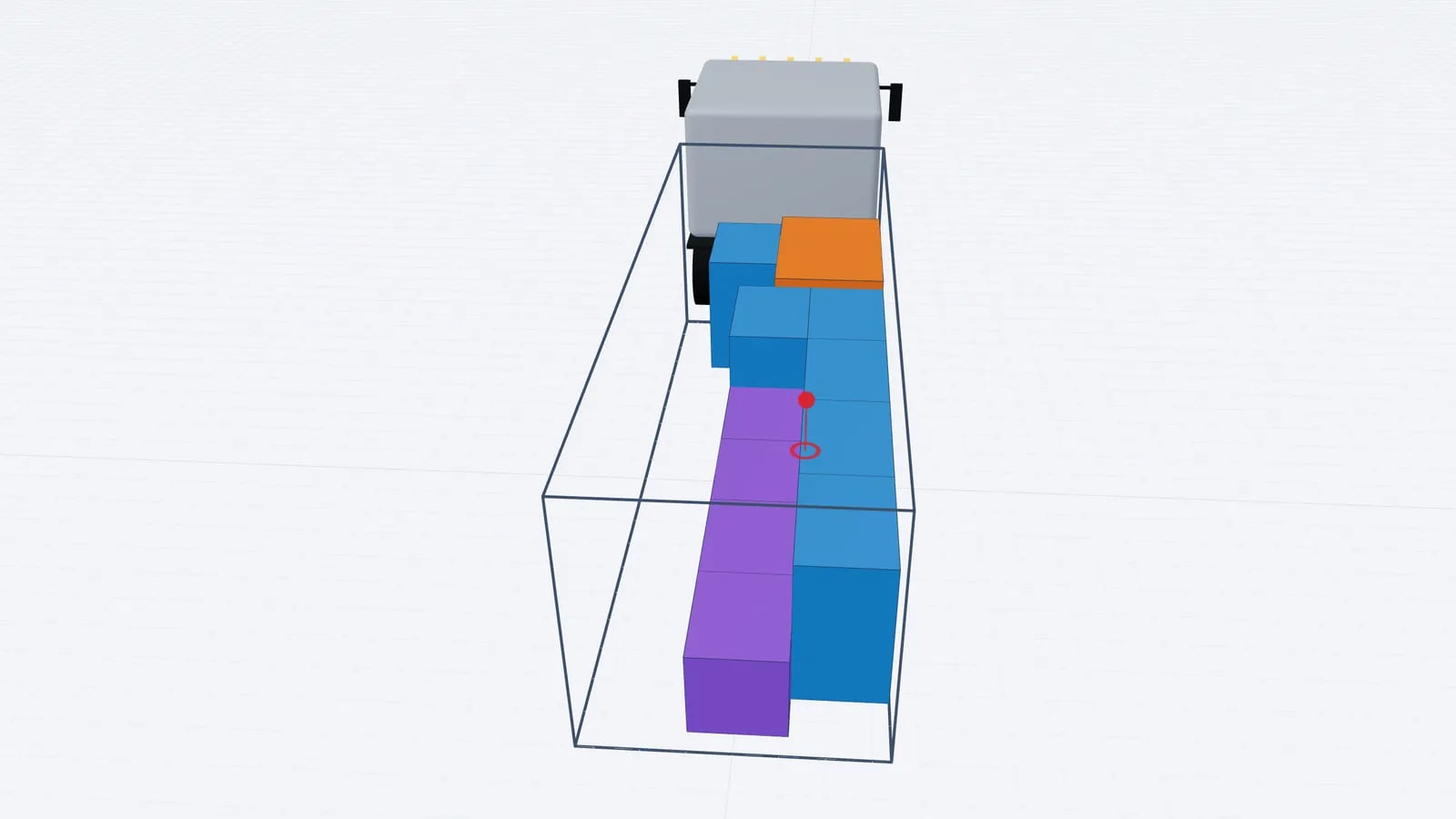
Road freight · · 5 min read
Load Securing Basics: EN 12195-1, Friction, Lashing, Blocking
The principles of load securing under EN 12195-1: design forces, friction, blocking, lashing, body strength, and how a gap-free load plan cuts securing effort.
Read article