How Many Euro Pallets Fit in a Trailer? 33, 66 or Fewer
A 13.6 m trailer takes 33 Euro pallets single-stacked and 66 double-stacked if height and payload allow. See the orientations, mixed loads and the maths.
Load planning basics · · 5 min read
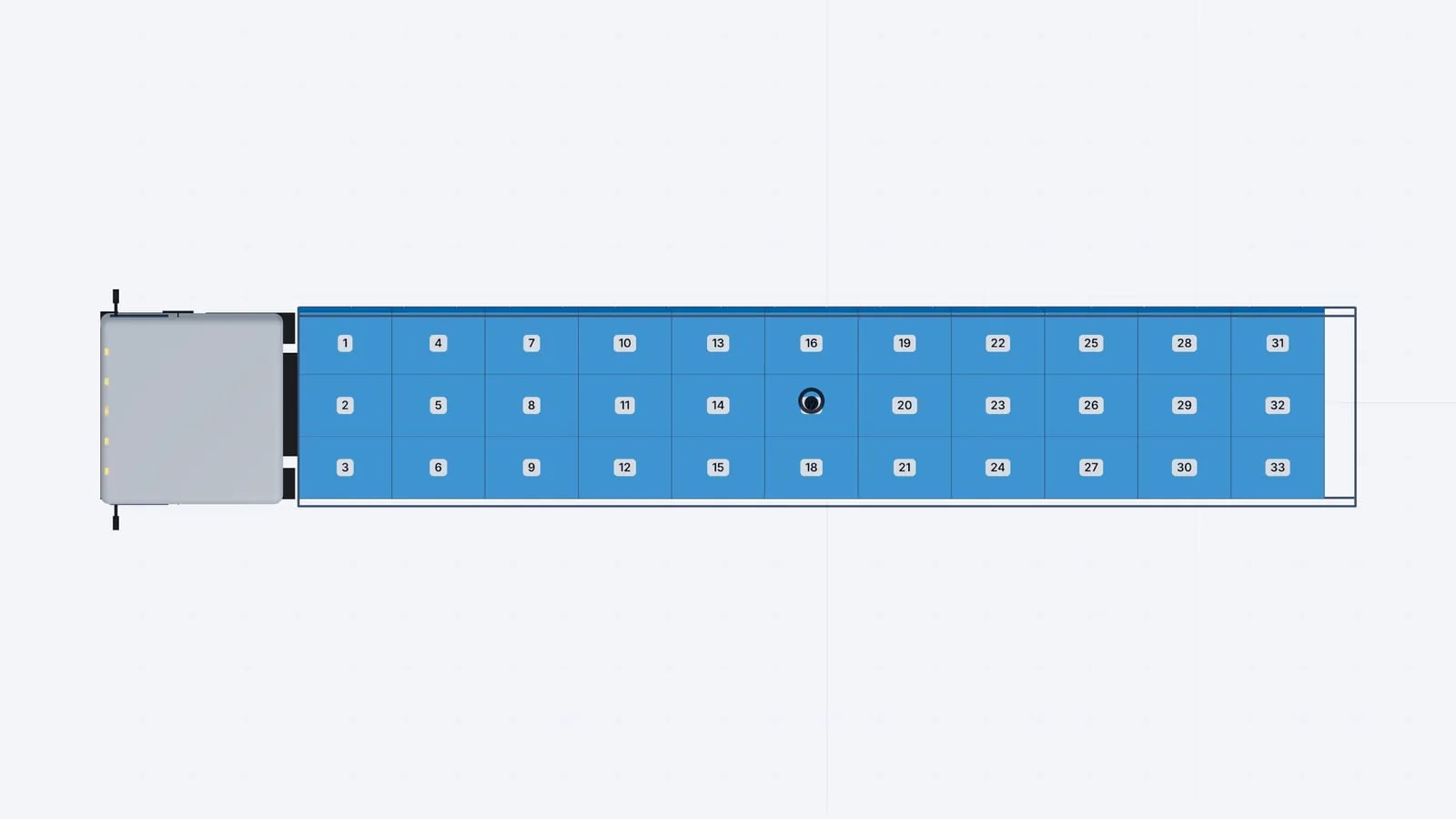
A standard 13.6 m semitrailer holds 33 Euro pallets (1200 × 800 mm) on the floor, loaded lengthwise three abreast in 11 rows. If the pallets are low enough and the payload allows it, double-stacking gives 66. Industrial pallets (1200 × 1000 mm) fit 26 to a floor.
Those are the headline numbers. The real answer depends on the trailer's internal size, how the pallets are turned, whether you mix pallet types and, very often, on weight rather than space.
Why 33: the lengthwise pattern
A typical curtainsider or box trailer is about 13.6 m long and 2.45–2.48 m wide inside. Turn each Euro pallet so its 1.2 m side runs along the trailer and its 0.8 m side across it:
- Across the width: 3 × 0.8 m = 2.4 m, which fits inside 2.45 m with a few centimetres to spare.
- Along the length: 13.6 m ÷ 1.2 m = 11.33, so 11 full rows using 13.2 m.
- 11 rows × 3 pallets = 33 pallets, with about 0.4 m left at the doors.
This is the standard pattern because it is easy to load with a forklift from the rear or the side, and the leftover 0.4 m gives tolerance for pallets that overhang slightly or are not perfectly square.
The crosswise pattern and why 34 rarely happens
Turn the pallets the other way, with the 1.2 m side across the trailer: two pallets take 2.4 m of width, and each row is 0.8 m long. 13.6 ÷ 0.8 = 17 rows, which is 34 pallets in theory.
In practice it needs the full 13.6 m of internal length with no tolerance at all. Any overhanging stretch wrap, a slightly long pallet, a door frame or a bulkhead makes the last row impossible. That is why 33 is quoted as the standard. Some planners mix the two patterns, for example ending a load with a crosswise row to use leftover length, but the total on a 13.6 m floor stays at 33 for ordinary loads.
Pallet capacity by vehicle
The figures below are typical. Body lengths vary by manufacturer, so check the internal length of your vehicle before relying on them.
Vehicle: Standard semitrailer
- Typical internal length
- 13.6 m
- Euro pallets (single)
- 33
- Industrial pallets (single)
- 26
Vehicle: Mega trailer
- Typical internal length
- 13.6 m (about 3 m high inside)
- Euro pallets (single)
- 33
- Industrial pallets (single)
- 26
Vehicle: Rigid truck, 7.2–7.3 m body
- Typical internal length
- 7.2 m
- Euro pallets (single)
- 18
- Industrial pallets (single)
- 14
Vehicle: Rigid truck, 6.0 m body
- Typical internal length
- 6.0 m
- Euro pallets (single)
- 15
- Industrial pallets (single)
- 12
Vehicle: 20 ft container
- Typical internal length
- about 5.9 m, 2.35 m wide
- Euro pallets (single)
- 11
- Industrial pallets (single)
- 9 or 10
Vehicle: 40 ft container
- Typical internal length
- about 12.0 m, 2.35 m wide
- Euro pallets (single)
- 23 to 25
- Industrial pallets (single)
- 20 or 21
| Vehicle | Typical internal length | Euro pallets (single) | Industrial pallets (single) |
|---|---|---|---|
| Standard semitrailer | 13.6 m | 33 | 26 |
| Mega trailer | 13.6 m (about 3 m high inside) | 33 | 26 |
| Rigid truck, 7.2–7.3 m body | 7.2 m | 18 | 14 |
| Rigid truck, 6.0 m body | 6.0 m | 15 | 12 |
| 20 ft container | about 5.9 m, 2.35 m wide | 11 | 9 or 10 |
| 40 ft container | about 12.0 m, 2.35 m wide | 23 to 25 | 20 or 21 |
Industrial pallets in a trailer go two abreast with the 1.2 m side across: 2 × 1.2 = 2.4 m wide, 1.0 m per row, 13 rows in 13.6 m = 26. Containers are narrower (about 2.35 m), so the trailer patterns do not transfer directly; see how many pallets fit in a container.
Double-stacked: when 66 is realistic
Stacking two pallets per place doubles the count, but three conditions must all hold:
- 1Height. Two pallets, each including its 144 mm deck, must fit under the internal height. In a 2.7 m standard trailer that is at most about 1.35 m per pallet, less any clearance for forklift tines. In a mega trailer with about 3.0 m inside, it is around 1.5 m each.
- 2Strength. The bottom pallet's goods must carry the top pallet without crushing. A Euro pallet itself is strong, but the cartons on it may not be. See pallet stacking rules.
- 3Weight. 66 pallets must stay under payload. With a typical 24 t payload (it varies by tractor and trailer), the average is 24,000 ÷ 66 ≈ 364 kg per pallet, including the pallet itself.
That last point is the one most often missed. A trailer of drinks at 700–900 kg per pallet reaches payload at around 26–34 pallets and cannot be double-stacked to 66, even if the height would allow it. For the trade-offs, see double stacking pallets in trailers.
Mixed Euro and industrial pallets
Mixed loads are where most space is lost. Euro pallets use 0.4 loading metres each when three share a row; industrial pallets use 0.5 when two share a row. The two patterns do not share a row well, so plan them as separate blocks along the length.
Say you have 10 industrial pallets and as many Euro pallets as will fit. The industrial block is 5 rows × 1.0 m = 5.0 m. That leaves 13.6 − 5.0 = 8.6 m. Euro rows of 1.2 m: 8.6 ÷ 1.2 = 7.17, so 7 rows × 3 = 21 Euro pallets using 8.4 m. Total: 31 pallets on 13.4 m of floor.
Industrial pallets: 0
- Length used
- 0 m
- Euro pallets in the rest
- 33
- Total pallets
- 33
Industrial pallets: 4
- Length used
- 2.0 m
- Euro pallets in the rest
- 27 (9 rows)
- Total pallets
- 31
Industrial pallets: 10
- Length used
- 5.0 m
- Euro pallets in the rest
- 21 (7 rows)
- Total pallets
- 31
Industrial pallets: 16
- Length used
- 8.0 m
- Euro pallets in the rest
- 12 (4 rows)
- Total pallets
- 28
Industrial pallets: 26
- Length used
- 13.0 m
- Euro pallets in the rest
- 0
- Total pallets
- 26
| Industrial pallets | Length used | Euro pallets in the rest | Total pallets |
|---|---|---|---|
| 0 | 0 m | 33 | 33 |
| 4 | 2.0 m | 27 (9 rows) | 31 |
| 10 | 5.0 m | 21 (7 rows) | 31 |
| 16 | 8.0 m | 12 (4 rows) | 28 |
| 26 | 13.0 m | 0 | 26 |
With 4 industrial pallets, 11.6 m is left, which fits 9 Euro rows (10.8 m). With 16 industrial pallets, 5.6 m is left, which fits 4 rows (4.8 m). An odd number of industrial pallets leaves a half-empty row; a Euro pallet loaded crosswise (1.2 m across, 0.8 m along) can sometimes fill the gap beside a single industrial pallet if the trailer is wide enough, which a 3D planner checks for you.
Practical checks before you promise a number
- Measure the internal width at the narrowest point. Curtainsider posts and some refrigerated trailers with thick walls are narrower than 2.45 m; three Euro pallets need 2.4 m plus overhang.
- Check for overhang. A 2 cm carton overhang on each pallet adds 12 cm across three pallets, which can stop the third pallet sliding in.
- Allow for the loading method. Side-loading a curtainsider gives more flexibility than rear-loading a box trailer, where the last pallets must be pushed in by forklift or pallet truck.
- Weigh before you stack. Total pallet weight must stay within payload, and heavy pallets should be spread over the length for even axle loads.
Tip
To test a mixed load without drawing it by hand, paste the pallet list into the planner, choose a 13.6 m trailer and optimise. It shows whether everything fits, the loading metres used and any pallets left over.
Frequently asked questions
How many Euro pallets fit in a 13.6 m trailer?
33 on the floor, loaded lengthwise three abreast in 11 rows. Double-stacked, up to 66 if each pallet is low enough and the total weight stays within payload.
How many industrial pallets fit in a trailer?
26, loaded two abreast with the 1.2 m side across the trailer, in 13 rows of 1.0 m.
Can you fit 34 Euro pallets in a trailer?
Only in theory, crosswise in 17 rows of 0.8 m, which needs the full 13.6 m with zero tolerance. Real trailers and real pallets rarely allow it, so 33 is the working figure.
How many Euro pallets fit in a rigid truck?
It depends on body length: a 7.2 m body typically takes 18 (6 rows of 3) and a 6.0 m body 15. Check the actual internal length.
Keep reading
Load planning basics · · 5 min read
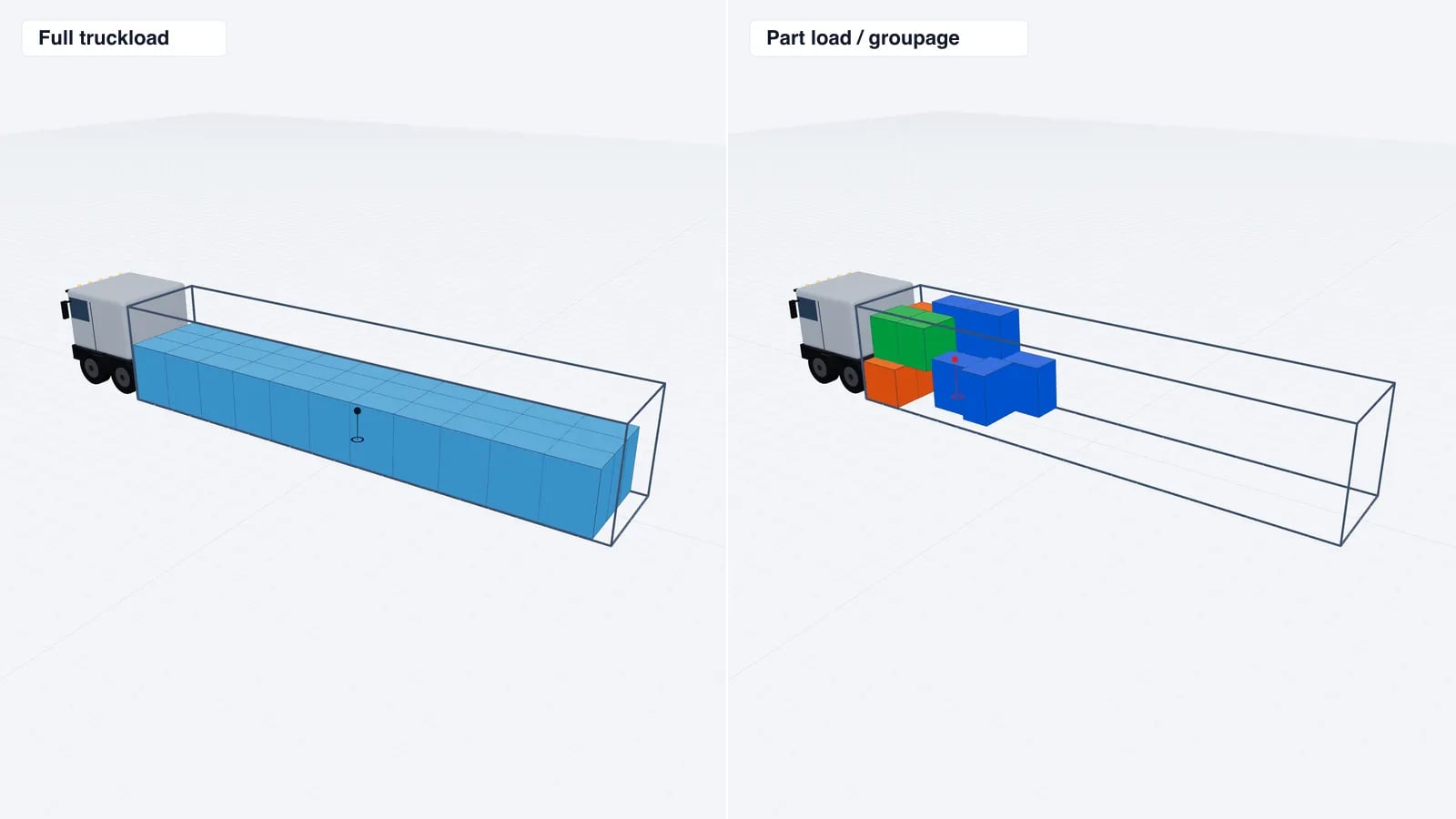
FTL vs LTL: Full Truckload, Part Load or Groupage?
FTL books a whole truck; LTL and groupage share it with other shippers. Compare cost, speed and handling, see how LDM drives LTL price and find your break-even.
Read article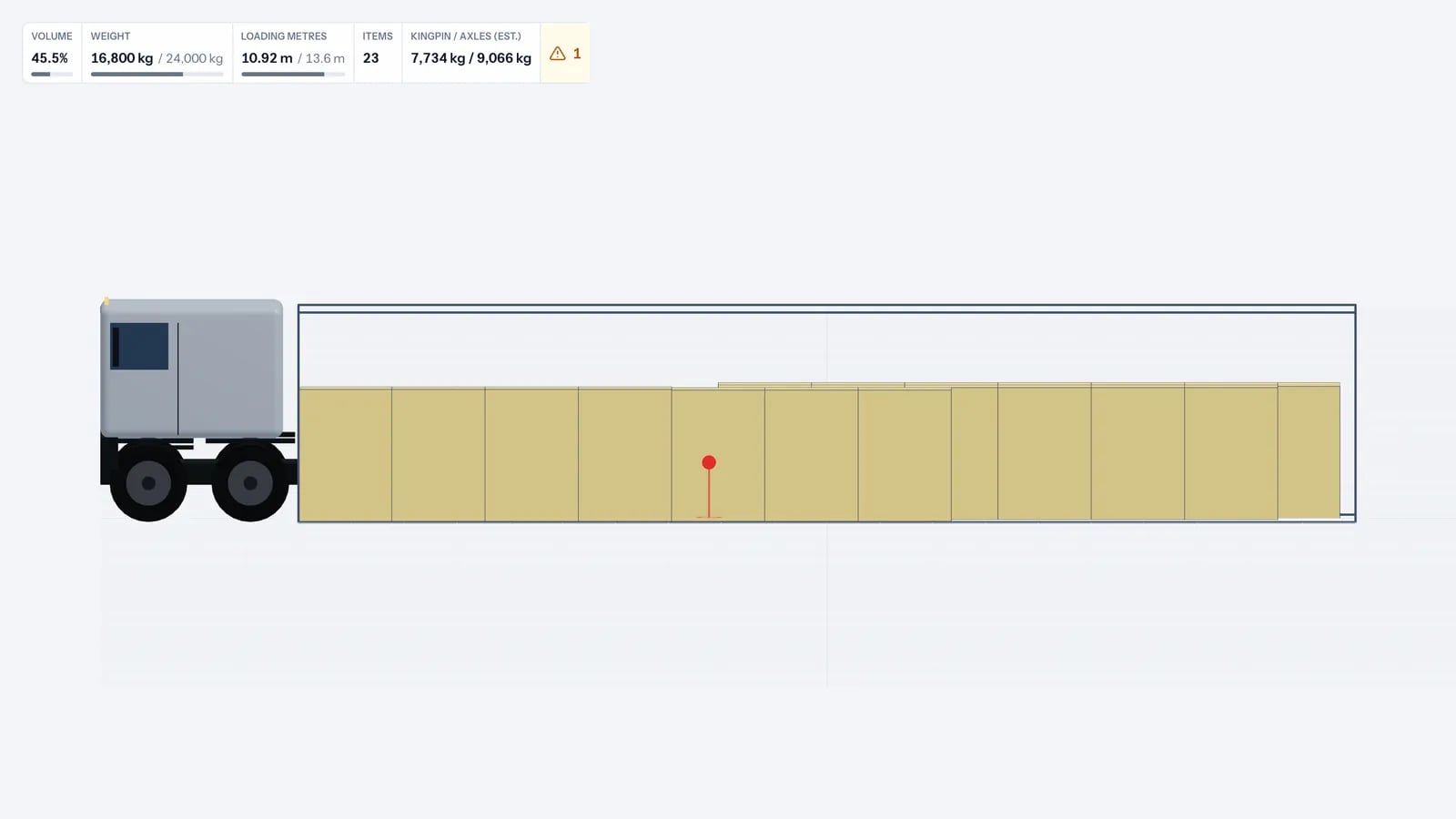
Load planning basics · · 6 min read
Weight Distribution in a Trailer: Axle Loads Made Simple
Where you put heavy cargo decides the load on each axle. Learn how trailer weight distribution works, how to estimate axle loads and how to avoid overloading.
Read article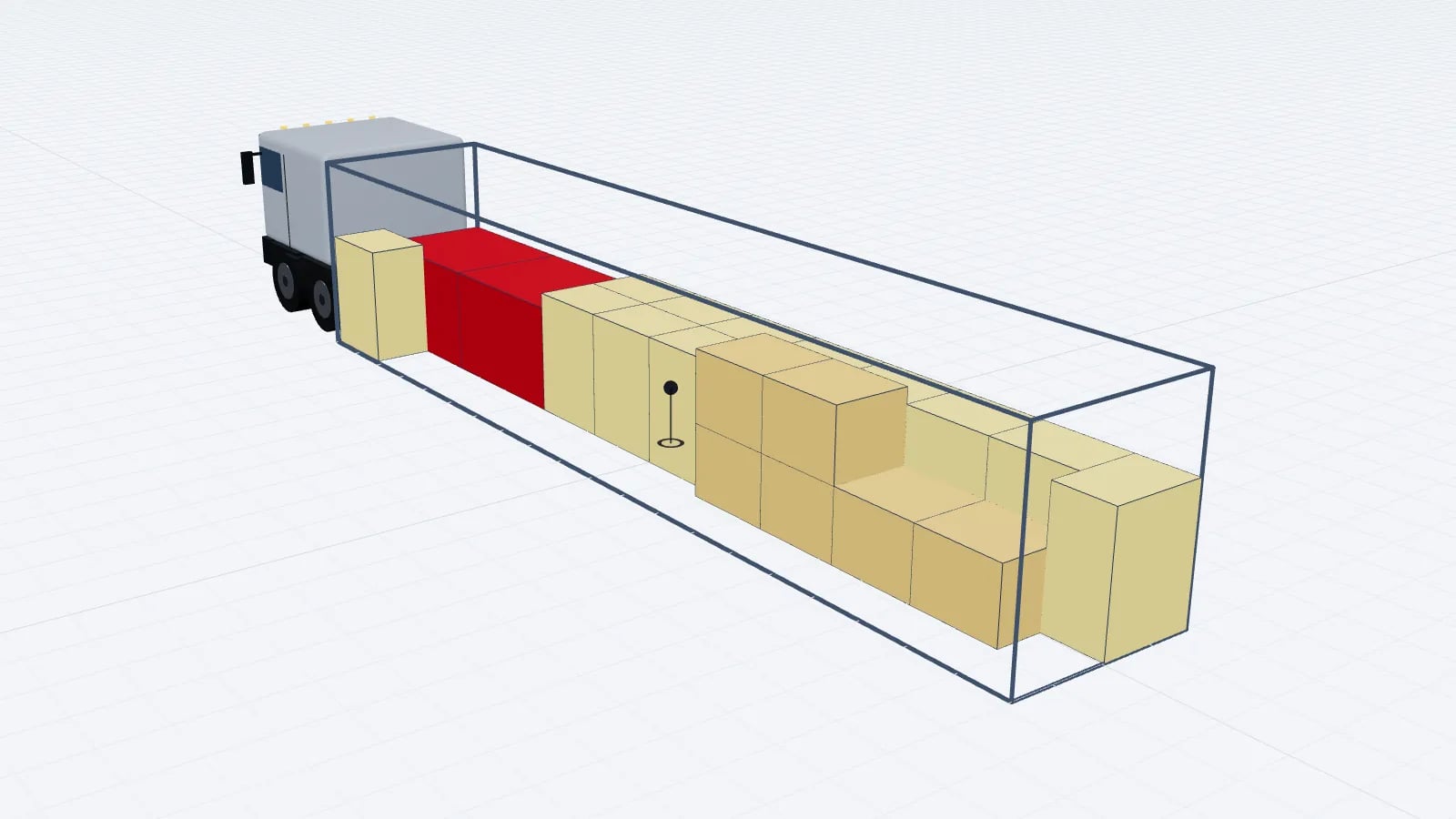
Load planning basics · · 5 min read
Load Centre of Gravity: How to Calculate It for a Truck Load
The centre of gravity of a load is the weighted average of every item's position. Learn the formula, a worked truck example and checks for lateral offset.
Read article