Air Freight Packaging: How to Pack Cargo That Flies Cheaper
Air freight packaging done right: carton strength, sizes that suit ULDs, pallets and ISPM 15, labelling, and practical ways to cut volumetric weight.
Air cargo · · 6 min read
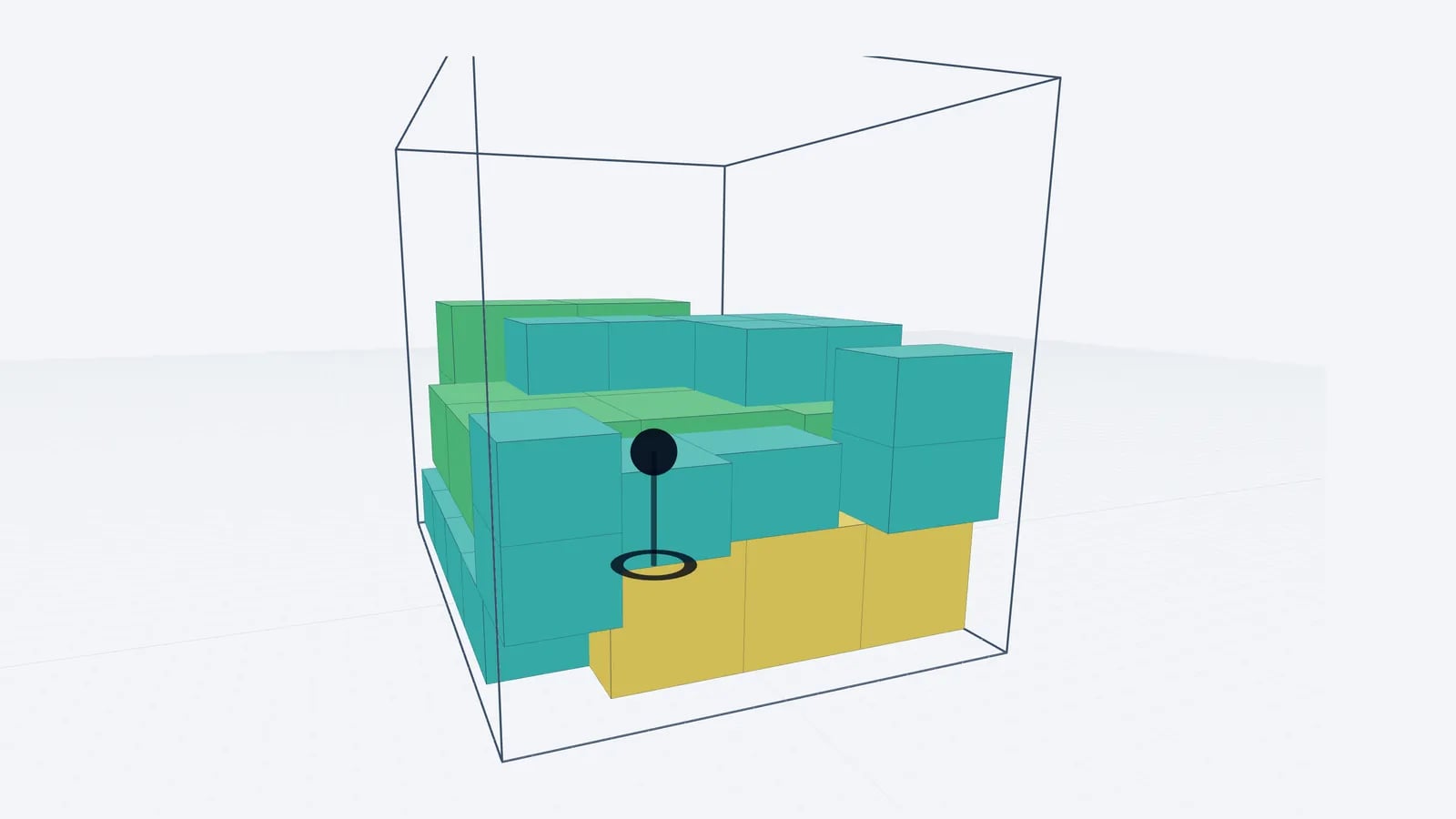
Good air freight packaging does three things: it protects the goods through several handling steps, it suits the way air cargo is built onto ULDs, and it keeps the shipment as small as possible, because air freight is billed on volumetric weight. In practice that means strong, right-sized cartons, a flat-topped pallet with no overhang, clear labels on every piece, and no paid-for empty space.
Air cargo is handled more often than most people expect: from the shipper to the forwarder, into a consolidation, onto a ULD, onto the aircraft, and the same in reverse. Each step is a chance for a weak carton to fail.
Cartons: strength and size
Use new, double-wall corrugated cartons for anything heavy or valuable. Reused cartons lose much of their stacking strength after one trip, and printing from an earlier shipment confuses handlers.
- Stacking strength. In a ULD, cartons may carry several layers above them, up to around 160 cm of cargo on a lower-deck unit. Ask your packaging supplier for the box compression rating and compare it with the weight that will sit on top, with a safety margin for humidity and vibration.
- Fill the carton. Contents should be supported to the walls, so the carton does not collapse when something is stacked on it. But every centimetre of void fill is billed, so use the smallest carton that does the job.
- Weight per carton. Cartons that one person can lift (around 20 to 25 kg) are handled more carefully than heavy ones. Heavier goods belong on a pallet or in a crate.
- Uniform sizes. A shipment of identical cartons builds into a tight block. Ten different sizes leave gaps and get built less efficiently.
Sizes that suit air cargo
Two numbers matter most: the height limits of the ULDs your cargo will travel in, and how the carton footprint divides the base.
Constraint: Wide-body lower deck height
- Typical figure
- about 160 cm built height
- What it means for packing
- Pallets taller than this go on a freighter main deck only
Constraint: A320-family lower deck (LD3-45)
- Typical figure
- about 105 to 110 cm inside height
- What it means for packing
- Keep pieces lower if any leg is on a narrow-body
Constraint: LD3 base
- Typical figure
- about 156 × 153 cm outside
- What it means for packing
- Cartons around 50 × 40 or 60 × 40 cm divide the inside base reasonably well
Constraint: PMC / PAG base
- Typical figure
- 318 × 244 / 318 × 224 cm
- What it means for packing
- Euro pallets (120 × 80) and 120 × 100 pallets fit several per base
| Constraint | Typical figure | What it means for packing |
|---|---|---|
| Wide-body lower deck height | about 160 cm built height | Pallets taller than this go on a freighter main deck only |
| A320-family lower deck (LD3-45) | about 105 to 110 cm inside height | Keep pieces lower if any leg is on a narrow-body |
| LD3 base | about 156 × 153 cm outside | Cartons around 50 × 40 or 60 × 40 cm divide the inside base reasonably well |
| PMC / PAG base | 318 × 244 / 318 × 224 cm | Euro pallets (120 × 80) and 120 × 100 pallets fit several per base |
There is no single perfect carton for all ULDs, but common sizes in multiples of 20 cm (40, 60, 80) combine well. The exact count for an LD3 is worked through in LD3 container dimensions.
Pallets and crates
- Wood packaging and ISPM 15. Solid wood pallets and crates crossing borders generally must be heat-treated or fumigated and carry the ISPM 15 mark. Plywood, OSB and plastic pallets are exempt. Unmarked wood can be refused or treated at destination at your cost.
- Lighter pallets. On a light shipment, a 25 kg wooden pallet adds to both actual and volumetric weight. Plastic or presswood pallets are lighter and exempt from ISPM 15.
- No overhang. Cartons sticking out past the pallet edge get crushed and are measured at their outermost point. Equally, a pallet much larger than the load wastes space.
- Flat top. A square, flat top lets the handler build other cargo on top. A pyramid-shaped build often gets a no-stack label and wastes the space above it.
- Forklift access on all four sides where possible, and fork pockets on crates.
Labelling and marks
- Air waybill number and piece count (for example 3 of 12) on every piece. Forwarders add their own labels for house air waybills.
- Shipper and consignee names and addresses on at least one face, matching the documents.
- Orientation arrows on two opposite sides if the goods must stay upright.
- Handling labels such as fragile or keep dry, used only where they apply. Too many labels get ignored.
- Dangerous goods marks and labels as required by the IATA Dangerous Goods Regulations. Lithium batteries, aerosols, paints and many chemicals are regulated; the shipper is responsible for correct classification and packing.
- Remove or cover old labels and barcodes.
Good to know
This is general guidance, not dangerous goods advice. If your goods may be regulated, use trained staff or a specialist forwarder and follow the current IATA DGR.
Cutting volumetric weight: a worked example
Say you ship 40 small appliances. Each unit in its retail box measures 35 × 30 × 25 cm. Your usual export carton holds 4 units side by side in one layer and measures 75 × 65 × 55 cm, topped up with loose fill. Each packed carton weighs 18 kg.
- 1Current packing: 10 cartons. Volumetric weight per carton: 75 × 65 × 55 ÷ 6,000 = 44.7 kg. Total 447 kg volumetric against 180 kg actual. Chargeable: 447 kg.
- 2Look at the void: the 4 retail boxes in a 2 × 2 layer take 70 × 60 × 25 cm, so the carton has 2.5 cm round the sides and 30 cm of loose fill above them.
- 3Repack: 4 retail boxes stacked 2 × 1 × 2 (70 × 30 × 50 cm), with 2 cm protection all round, gives a carton of 74 × 34 × 54 cm. Volumetric weight: 74 × 34 × 54 ÷ 6,000 = 22.6 kg per carton.
- 4Ten cartons: 226 kg volumetric, still above the 180 kg actual, so the chargeable weight is about 226 kg, half the original.
The retail packaging is doing much of the protection already, which is why less padding can be enough. Test with a drop test or a trial shipment before changing a whole product line. The calculation rules themselves are explained in air cargo chargeable weight.
Checklist before handing over
- Every piece measured and weighed after packing, and the figures match the booking.
- No overhang, no bulging cartons, tape on all seams.
- Pallets stretch-wrapped and strapped, with corner boards where cartons are heavy.
- Labels on every piece, old labels removed.
- ISPM 15 mark on solid wood packaging.
- Dangerous goods identified and declared, or confirmed as not regulated.
- Build plan checked: will the pallets or cartons fit the ULD and the deck height of the booked flight? See air cargo size limits.
If you prepare several pallets per shipment, a quick 3D plan of each pallet build in EveryLoading shows the outer dimensions and how full each one is, before anything is wrapped.
Frequently asked questions
Do I need ISPM 15 pallets for air freight?
ISPM 15 applies to solid wood packaging in international trade whatever the transport mode, so wooden pallets and crates generally need the heat-treatment mark. Plastic, plywood and presswood pallets are exempt.
What is the best carton size for air freight?
The smallest carton that protects the product, in a size that combines well on a ULD base. Sizes in multiples of 20 cm, such as 60 × 40 cm footprints, divide pallet and container bases with little waste.
How can I reduce air freight cost through packaging?
If your shipment is billed on volumetric weight, cut empty space: smaller cartons, less void fill, flat pallet tops, no overhang and lighter pallets. Once actual weight is higher than volumetric, further size reductions no longer lower the price.
Can I reuse cartons for air shipments?
It is possible for light goods, but reused cartons have lost stacking strength and often carry old labels. New double-wall cartons are safer for heavy or valuable goods.
Keep reading
Air cargo · · 5 min read
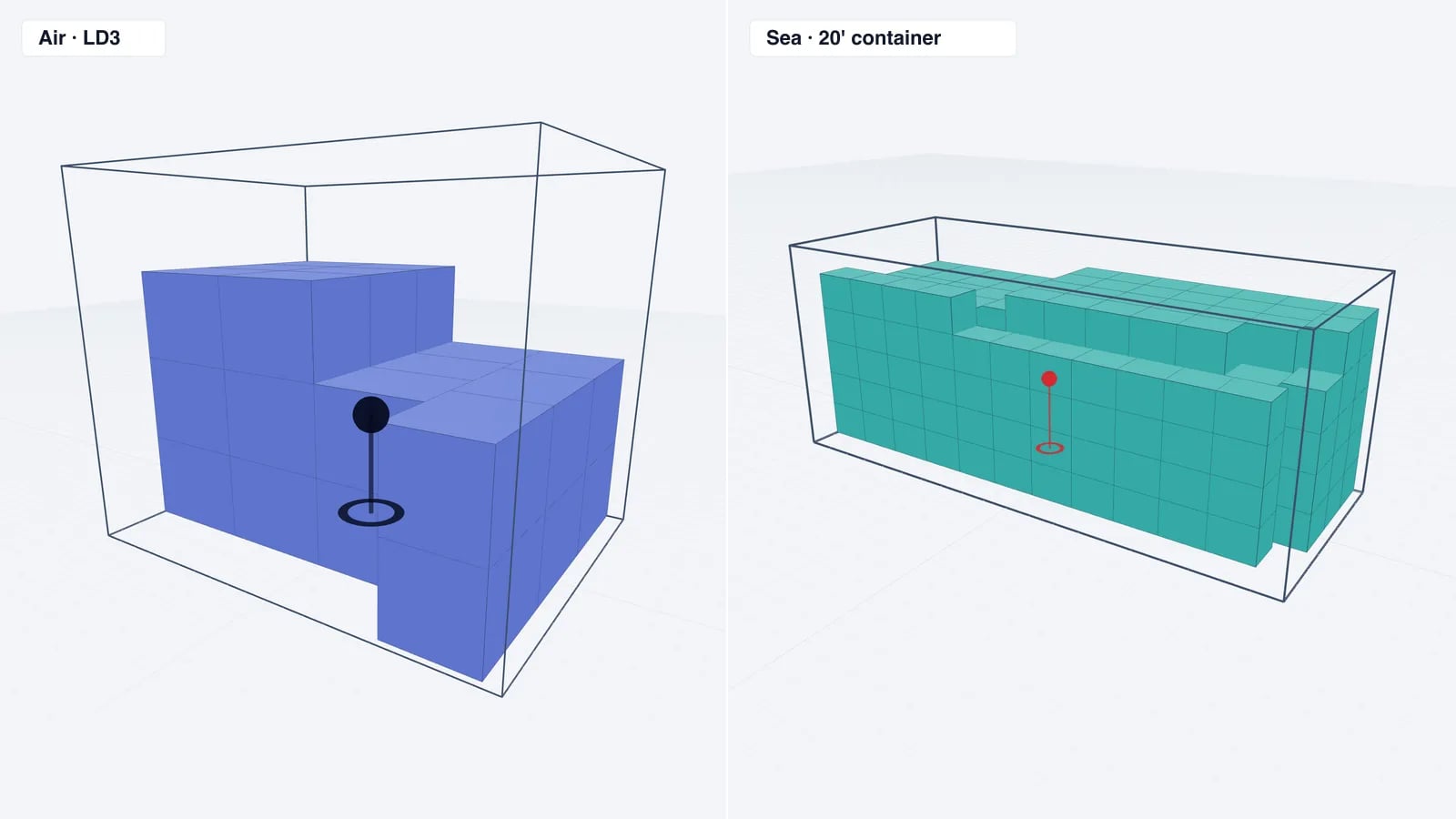
Air vs Sea Freight: When to Switch Mode and How Planning Differs
Air vs sea freight compared for planners: how each mode charges, when air pays, density break-evens, ULDs vs containers, consolidation and a worked example.
Read article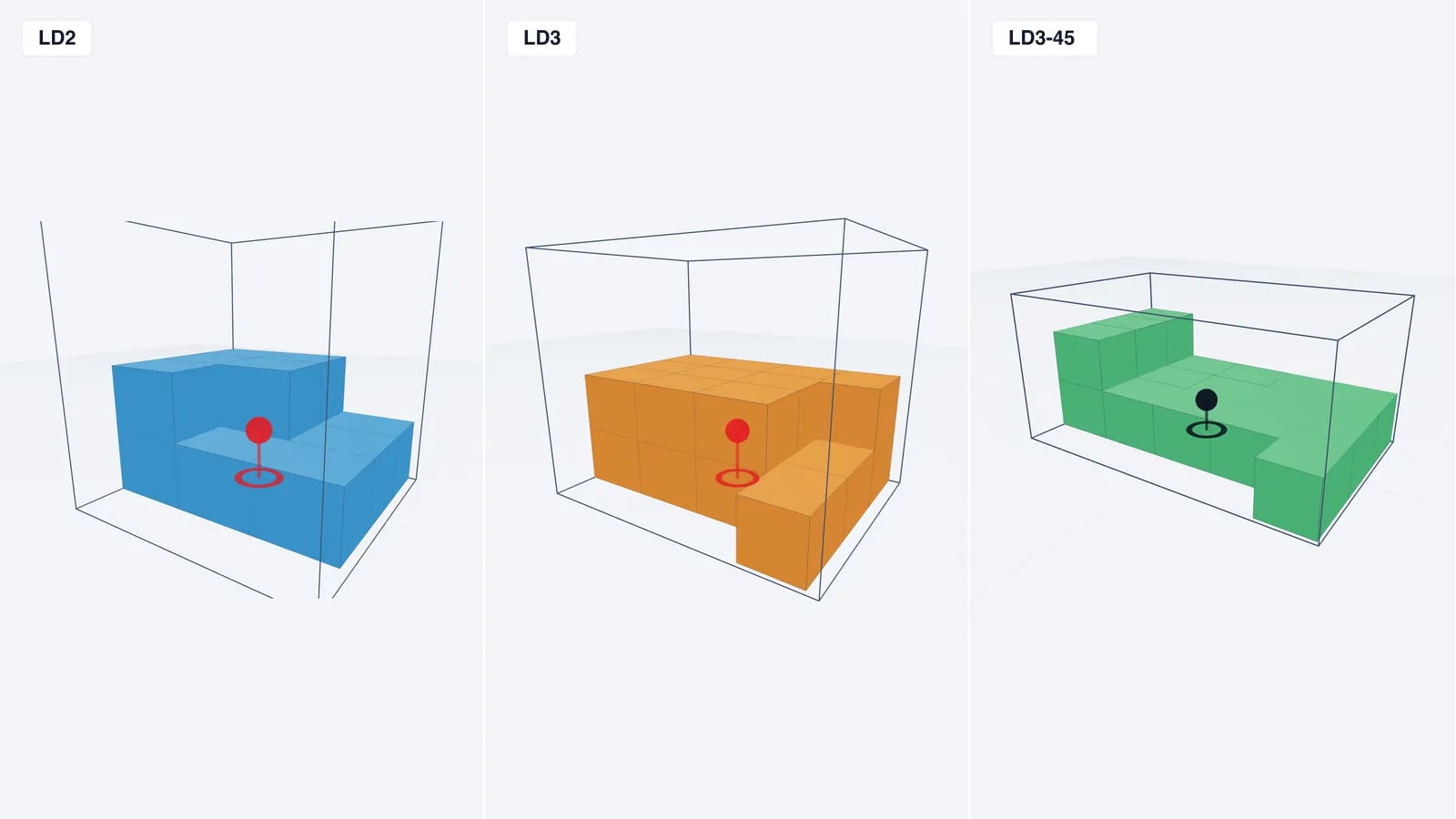
Air cargo · · 7 min read
ULD Types Explained: LD3, LD2, LD3-45, PMC and PAG Pallets
A practical guide to air cargo ULD types: LD3, LD3-45, LD2, LD6, PMC and PAG pallets, with typical dimensions, max gross weights and the aircraft that use them.
Read article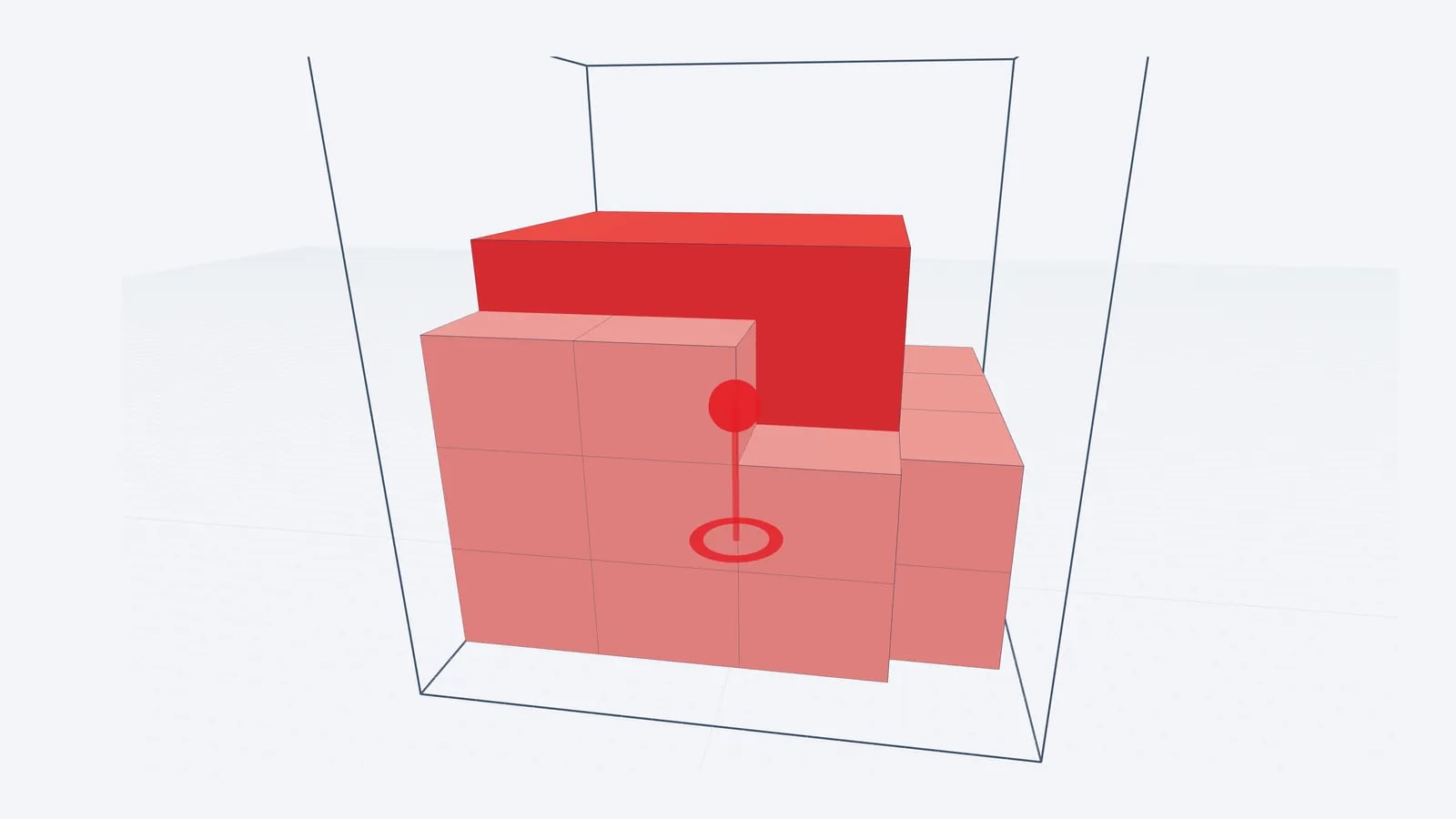
Air cargo · · 6 min read
Air Cargo Size Limits: Maximum Piece Size by Aircraft and Deck
How big can air cargo be? Typical piece heights and door sizes for narrow-body, wide-body lower deck and freighter main deck, and how to plan oversized cargo.
Read article