Air vs Sea Freight: When to Switch Mode and How Planning Differs
Air vs sea freight compared for planners: how each mode charges, when air pays, density break-evens, ULDs vs containers, consolidation and a worked example.
Air cargo · · 5 min read
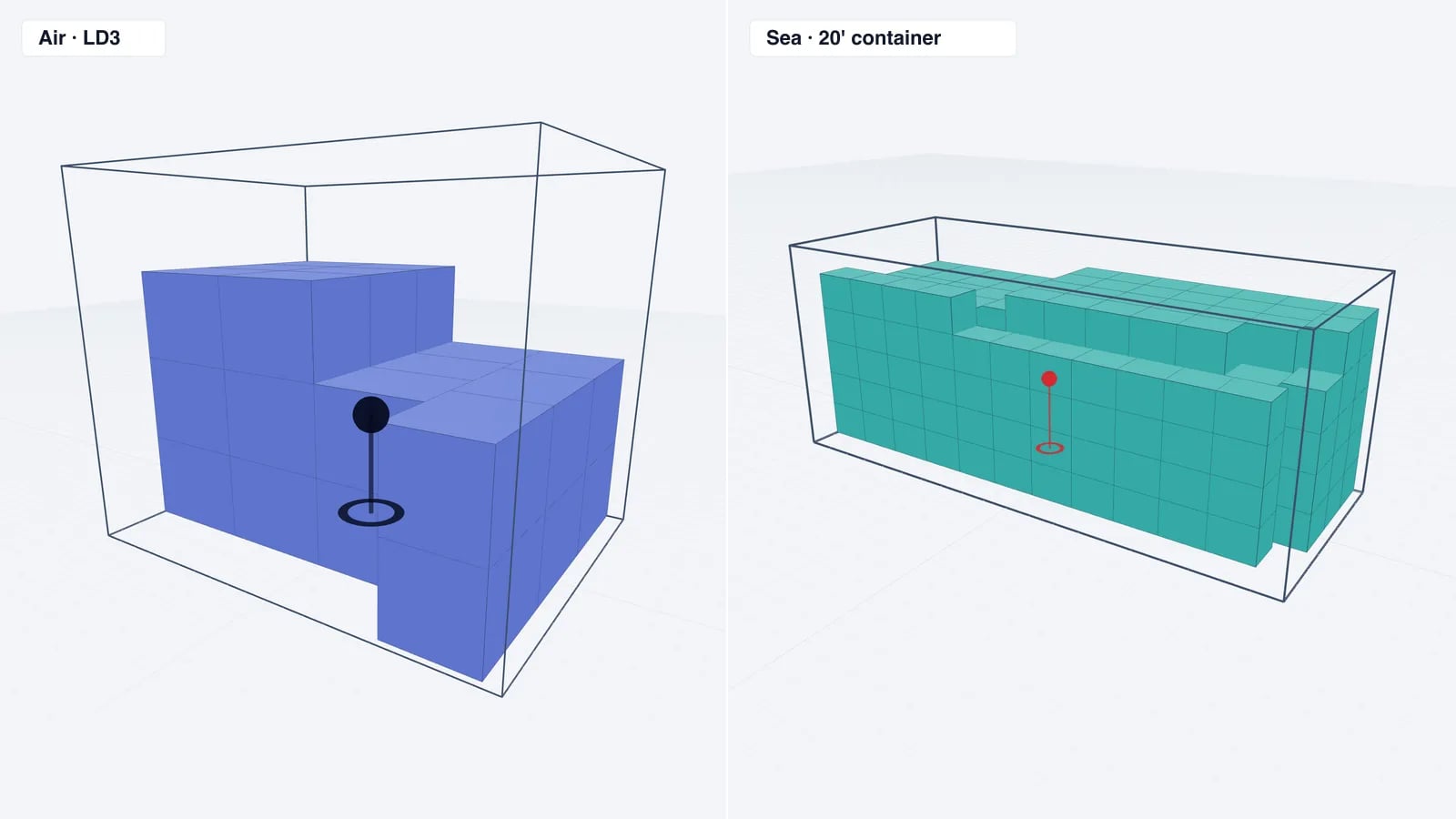
Choose air freight when transit time, value or risk outweigh cost: urgent spares, high-value or perishable goods, small shipments. Choose sea freight for heavy, bulky or low-value goods where a transit of several weeks is acceptable. The deciding numbers are the value and urgency of the goods, and the shipment's density, because air charges at least 167 kg per m³ while sea LCL charges per cubic metre or per tonne, whichever is higher.
This article compares the two modes from a planner's point of view: how they charge, what changes in the load plan, and how to make the switch without surprises. It does not quote rates, which change constantly; get current quotes for your lanes.
How each mode charges
Charging unit
- Air freight
- Chargeable weight in kg
- Sea LCL (groupage)
- Revenue ton (W/M)
- Sea FCL (full container)
- Per container
Volume rule
- Air freight
- 1 m³ = 166.67 kg (IATA divisor 6,000)
- Sea LCL (groupage)
- 1 m³ = 1 revenue ton, compared with 1,000 kg
- Sea FCL (full container)
- Not relevant until the container is full or overweight
What you pay for
- Air freight
- The higher of actual and volumetric weight
- Sea LCL (groupage)
- The higher of m³ and tonnes
- Sea FCL (full container)
- The box, whether full or not
Typical extras
- Air freight
- Fuel and security surcharges per kg, screening, handling
- Sea LCL (groupage)
- Origin and destination LCL handling, documentation
- Sea FCL (full container)
- Terminal handling, container use, demurrage if delayed
| Air freight | Sea LCL (groupage) | Sea FCL (full container) | |
|---|---|---|---|
| Charging unit | Chargeable weight in kg | Revenue ton (W/M) | Per container |
| Volume rule | 1 m³ = 166.67 kg (IATA divisor 6,000) | 1 m³ = 1 revenue ton, compared with 1,000 kg | Not relevant until the container is full or overweight |
| What you pay for | The higher of actual and volumetric weight | The higher of m³ and tonnes | The box, whether full or not |
| Typical extras | Fuel and security surcharges per kg, screening, handling | Origin and destination LCL handling, documentation | Terminal handling, container use, demurrage if delayed |
Notice the gap between the volume rules. Air treats a cubic metre as 167 kg; sea LCL treats it as 1,000 kg. Light, bulky goods are therefore far more expensive by air relative to their weight, while dense goods narrow the gap. Air pricing is explained in detail in air cargo chargeable weight.
When air freight is the right choice
- Urgency. A production line down for a missing part, a launch date, a seasonal window.
- High value per kg. Electronics, pharmaceuticals, fashion samples: freight is a small share of the value, and less time in transit means less capital tied up and less insurance exposure.
- Perishables with short shelf life, under suitable temperature control.
- Small shipments. A few cartons may cost less door to door by air than by sea once fixed LCL charges are added. Get quotes for both.
- Unreliable sea schedules on a lane, where a missed sailing would cost more than the air premium.
When sea freight wins
- Heavy or dense cargo with no deadline pressure: machinery, building materials, raw materials.
- Large volumes. Once a shipment fills a large share of a container, FCL is usually the cheapest mode per unit by a wide margin.
- Oversized items that exceed aircraft door and deck limits. See air cargo size limits.
- Goods restricted in air transport, such as many dangerous goods that are forbidden on aircraft or only allowed on freighters in small quantities.
- Emissions targets. Per tonne-kilometre, air freight emits much more than sea freight, which matters to customers with reporting obligations.
Many shippers split the difference: a small urgent batch by air to bridge a gap, the bulk by sea. Sea-air routings (sea to a hub, then air) are also offered on some lanes as a middle option in both time and cost.
How the load plan changes
Planning factor: Space
- Air (ULD)
- LD3 about 4.3 m³; lower-deck PMC around 10 to 12 m³
- Sea (container)
- 20 ft about 33 m³; 40 ft about 67 m³; 40 ft HC about 76 m³
Planning factor: Height
- Air (ULD)
- About 160 cm on wide-body lower decks, more on freighter main decks
- Sea (container)
- About 239 cm inside (269 cm in a high cube)
Planning factor: Shape
- Air (ULD)
- Contoured units and builds; sloped sides
- Sea (container)
- Rectangular box
Planning factor: Weight focus
- Air (ULD)
- Floor loading, ULD and position limits, aircraft balance
- Sea (container)
- Payload, even distribution, VGM declaration
Planning factor: Who builds
- Air (ULD)
- Usually the airline's ground handler
- Sea (container)
- Shipper or forwarder stuffs, often at origin
Planning factor: Securing
- Air (ULD)
- Nets, straps, spreaders
- Sea (container)
- Lashing, blocking, dunnage, airbags
| Planning factor | Air (ULD) | Sea (container) |
|---|---|---|
| Space | LD3 about 4.3 m³; lower-deck PMC around 10 to 12 m³ | 20 ft about 33 m³; 40 ft about 67 m³; 40 ft HC about 76 m³ |
| Height | About 160 cm on wide-body lower decks, more on freighter main decks | About 239 cm inside (269 cm in a high cube) |
| Shape | Contoured units and builds; sloped sides | Rectangular box |
| Weight focus | Floor loading, ULD and position limits, aircraft balance | Payload, even distribution, VGM declaration |
| Who builds | Usually the airline's ground handler | Shipper or forwarder stuffs, often at origin |
| Securing | Nets, straps, spreaders | Lashing, blocking, dunnage, airbags |
In practice, sea planning is about filling a large rectangular box well and securing it for weeks of motion. For that side, see container stuffing plan and shipping container dimensions. Air planning is about piece size and density: cartons that fit the contour and the deck height, and as little empty space as possible.
Tip
If a product sometimes goes by air and sometimes by sea, design the packaging for air. Pieces under about 160 cm high on a standard pallet footprint work in both a ULD and a container, while tall sea-optimised pallets may be refused on passenger flights.
Worked example: same cargo, two modes
Say you have two shipments to compare, both hypothetical.
Shipment A: 2 pallets, each 120 × 80 × 150 cm and 300 kg.
- Volume: 1.2 × 0.8 × 1.5 = 1.44 m³ per pallet, 2.88 m³ total. Actual weight 600 kg.
- Air: volumetric weight 2.88 × 166.67 = 480 kg. Actual weight is higher, so the chargeable weight is 600 kg.
- Sea LCL: 2.88 m³ against 0.6 t. The volume is higher, so you pay for 2.88 revenue tons.
Shipment B: 40 m³ of furniture weighing 6,000 kg.
- Air: volumetric weight 40 × 166.67 = 6,667 kg, more than the 6,000 kg actual. Chargeable: 6,667 kg, plus the pieces must fit the doors and decks.
- Sea: 40 m³ is more than a 20 ft container holds (about 33 m³), so a 40 ft container (about 67 m³), with room to spare. Or LCL at 40 revenue tons, but at this volume FCL is usually cheaper.
Put your current rates against these figures and the decision is usually obvious. Shipment A is a reasonable air candidate if it is urgent. Shipment B would need a very good reason to fly.
Consolidation in both modes
Both modes rely on consolidation for smaller shipments. In air, the forwarder books space under a master air waybill and issues house air waybills to each shipper, then builds or tenders the cargo for ULDs. In sea, LCL groupage combines many shippers' cargo into one container at a consolidation warehouse.
For the consolidator, the logic is similar: mix dense and light cargo so that space and weight are both used. A 3D planner helps on both sides. In EveryLoading the same packing list can be planned into a sea container preset or an LD3 preset in a few clicks, so you can see how many units each mode needs before asking for quotes.
Frequently asked questions
At what density does air freight become relatively cheaper?
Air volumetric weight is 167 kg per m³. Goods denser than that are billed on actual weight, so they do not pay extra for space, which narrows the gap with sea freight. Light goods below that density pay for space they do not weigh.
What is a revenue ton in sea freight?
In LCL, the shipment is charged per revenue ton: either 1 cubic metre or 1,000 kg, whichever gives the higher figure. That is why bulky LCL shipments are charged on volume.
Can the same pallets go by air and by sea?
Usually yes, if they are not too tall. Keep pallet heights under about 160 cm so they fit a wide-body lower deck; containers accept them easily.
What is sea-air freight?
A combined routing where cargo goes by sea to a transit hub and then by air to destination. It usually sits between pure sea and pure air in both transit time and cost.
Keep reading
Air cargo · · 7 min read
ULD Types Explained: LD3, LD2, LD3-45, PMC and PAG Pallets
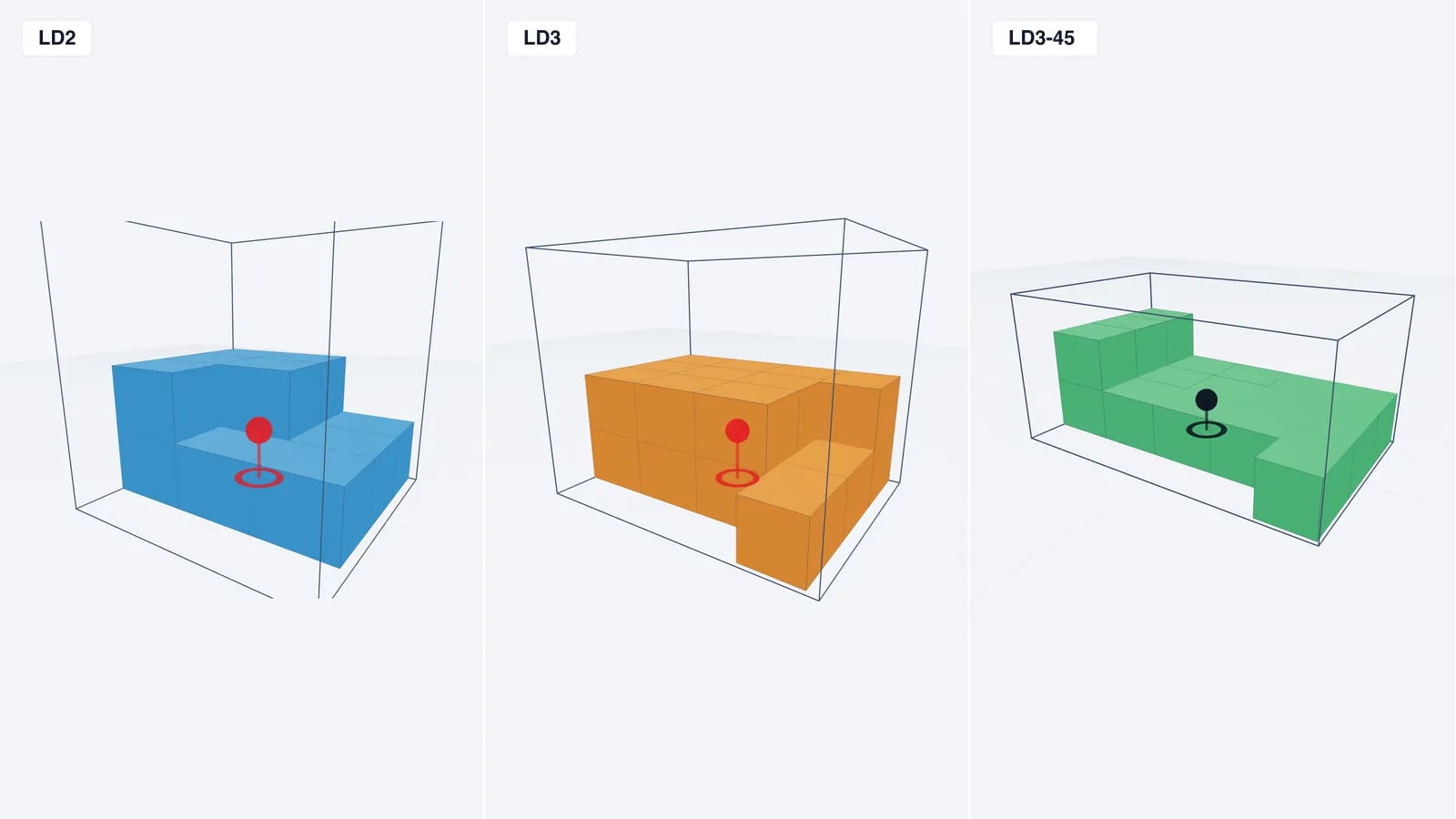
A practical guide to air cargo ULD types: LD3, LD3-45, LD2, LD6, PMC and PAG pallets, with typical dimensions, max gross weights and the aircraft that use them.
Read article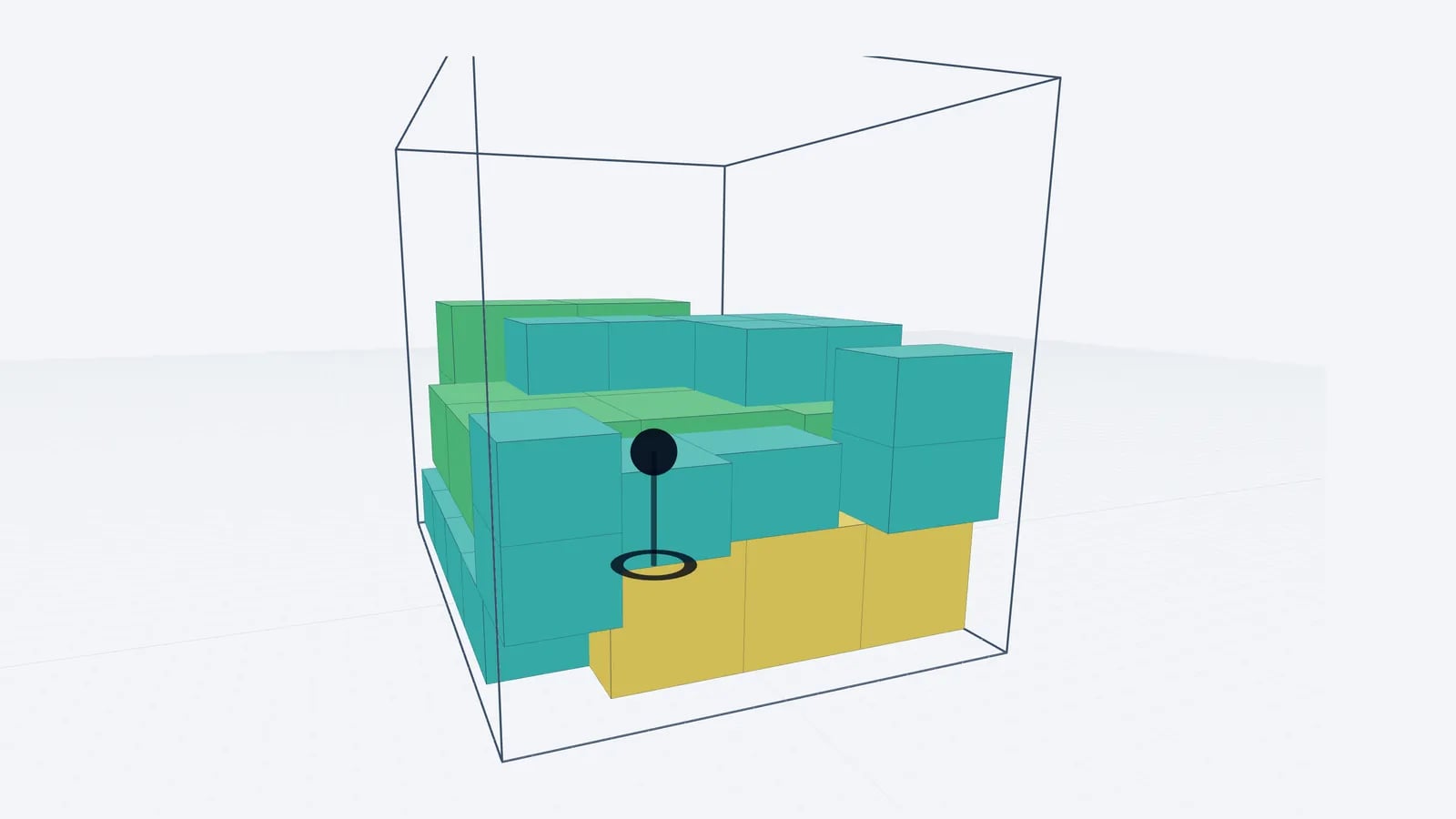
Air cargo · · 6 min read
Air Freight Packaging: How to Pack Cargo That Flies Cheaper
Air freight packaging done right: carton strength, sizes that suit ULDs, pallets and ISPM 15, labelling, and practical ways to cut volumetric weight.
Read article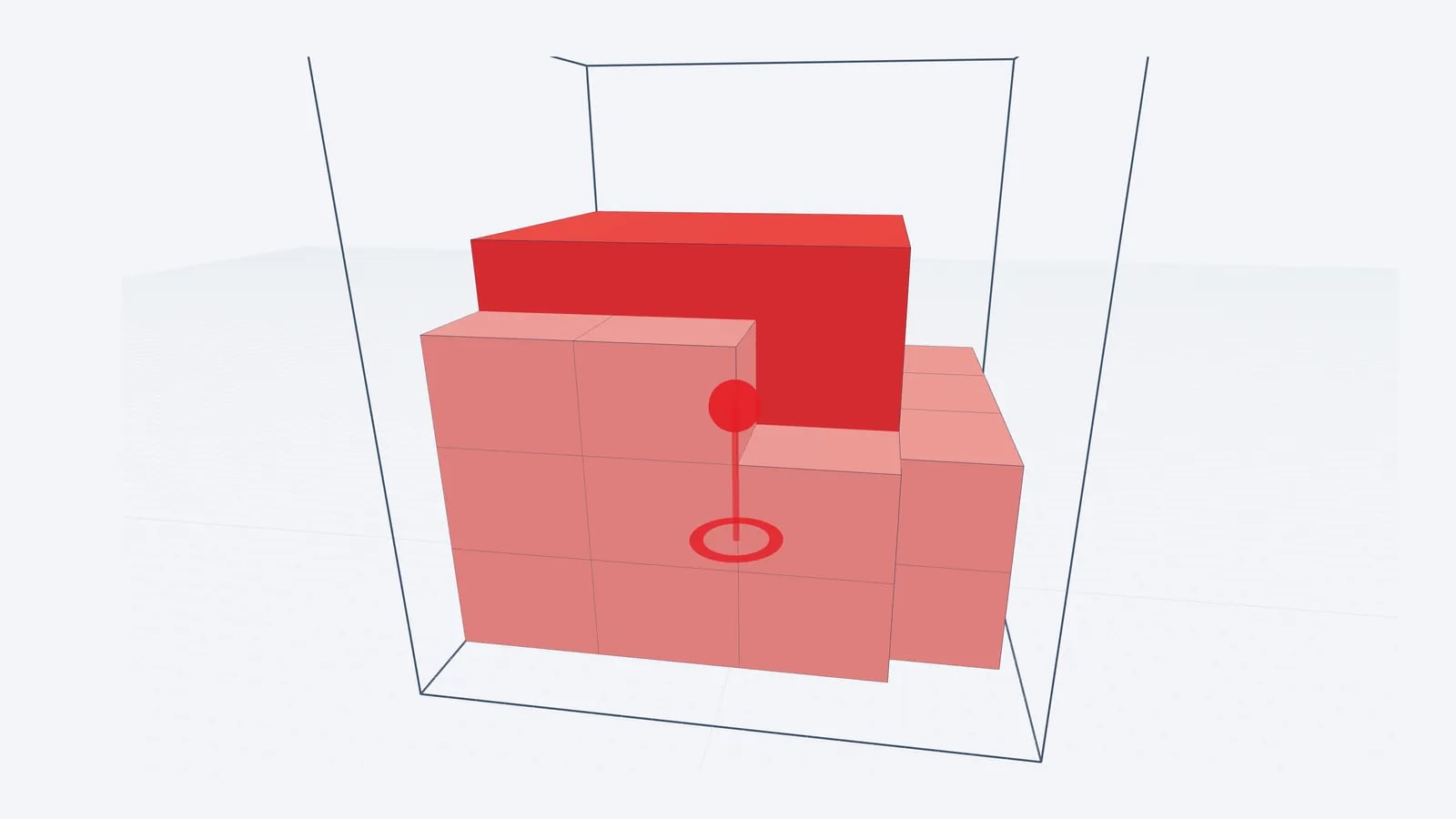
Air cargo · · 6 min read
Air Cargo Size Limits: Maximum Piece Size by Aircraft and Deck
How big can air cargo be? Typical piece heights and door sizes for narrow-body, wide-body lower deck and freighter main deck, and how to plan oversized cargo.
Read article