ULD Types Explained: LD3, LD2, LD3-45, PMC and PAG Pallets
A practical guide to air cargo ULD types: LD3, LD3-45, LD2, LD6, PMC and PAG pallets, with typical dimensions, max gross weights and the aircraft that use them.
Air cargo · · 7 min read
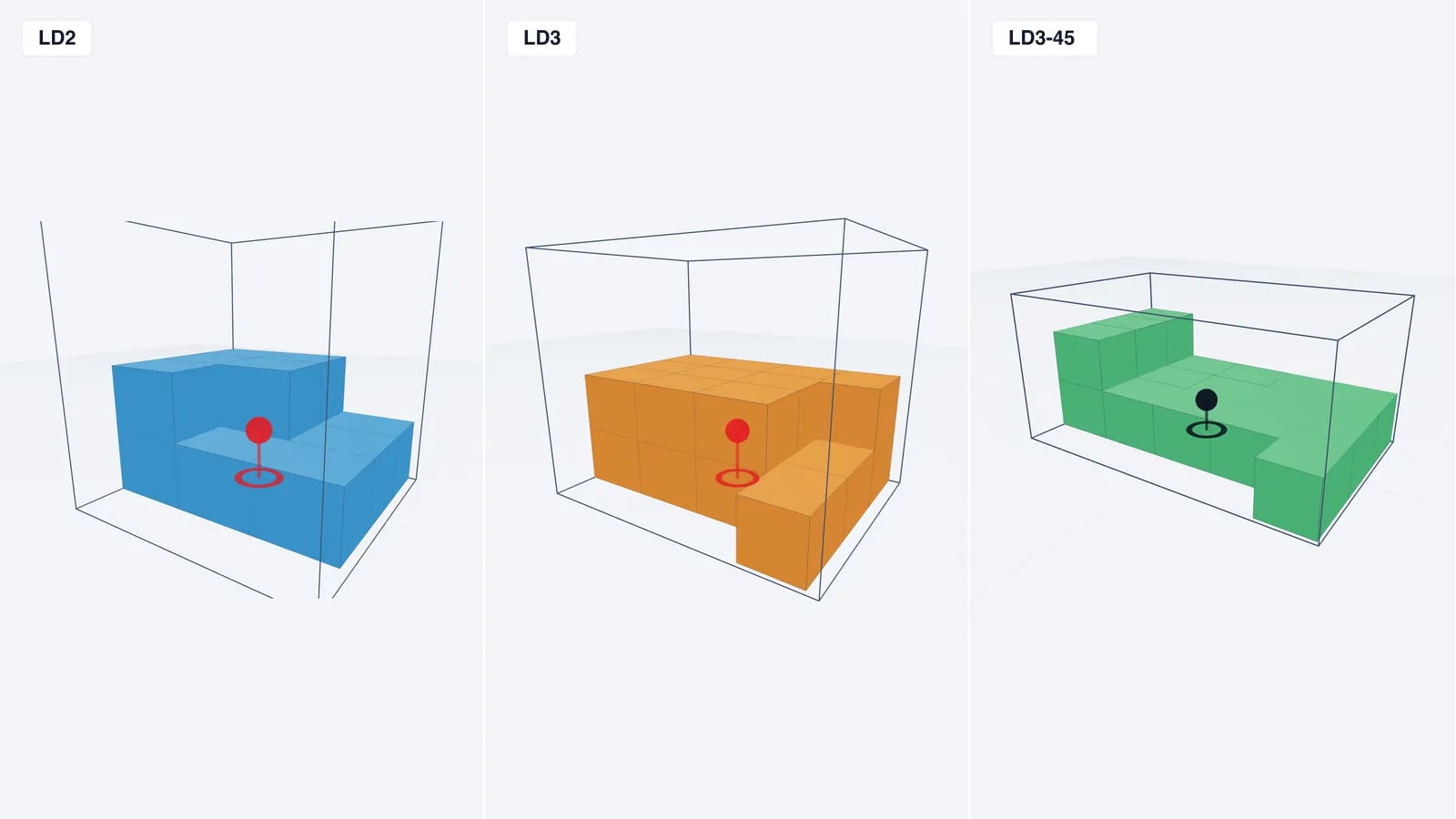
A ULD (unit load device) is the container or pallet that air cargo and baggage are built onto before loading into an aircraft. The main ULD types are lower-deck containers such as the LD3 (AKE), LD3-45 (AKH) and LD2 (DPE), and flat pallets such as the PMC and PAG, which are netted and built to a contour. The type you can use depends on the aircraft, its deck, and the shape and weight of your cargo.
This guide sorts the common types, explains how to read a ULD code, and lists typical dimensions. Figures are approximate: exact internal dimensions, tare and allowable gross weight vary by manufacturer, certification and airline, so always confirm with the carrier or ground handler for your flight.
Containers vs pallets
ULDs come in two families. Containers are closed boxes with a door or curtain, usually aluminium or composite. They protect cartons and baggage, load fast, and need little skill to fill. Pallets are flat aluminium plates with edge rails. Cargo is stacked on them, covered and held with a certified net. Pallets take bigger and odd-shaped items, but the build has to be shaped by hand to fit the aircraft contour.
Most containers have a sloped side, the contour, so they fit the curve of a wide-body lower hold. Pallets have no walls, so their contour is set by the build itself and checked against a profile gauge before the ULD leaves the warehouse. We cover that process in building a ULD.
How to read a ULD code
Every ULD carries an IATA identification code such as AKE 12345 XX. The first three letters describe the unit, the digits are a serial number, and the last two characters are the owner (usually the airline code).
Position: 1st letter
- Meaning
- Category of unit
- Examples
- A = certified aircraft container, P = certified aircraft pallet, D = non-certified container, R = thermal (temperature-controlled) container
Position: 2nd letter
- Meaning
- Base size
- Examples
- K = 156 × 153 cm (61.5 × 60.4 in), A = 318 × 224 cm (125 × 88 in), M = 318 × 244 cm (125 × 96 in), L = 318 × 153 cm, P = 119 × 153 cm
Position: 3rd letter
- Meaning
- Contour or fitting compatibility
- Examples
- E = LD3 contour, H = LD3-45 contour, C = PMC/PAG pallet compatibility
Position: Digits
- Meaning
- Serial number
- Examples
- 4 or 5 digits
Position: Last 2
- Meaning
- Owner
- Examples
- Airline or ULD pool code
| Position | Meaning | Examples |
|---|---|---|
| 1st letter | Category of unit | A = certified aircraft container, P = certified aircraft pallet, D = non-certified container, R = thermal (temperature-controlled) container |
| 2nd letter | Base size | K = 156 × 153 cm (61.5 × 60.4 in), A = 318 × 224 cm (125 × 88 in), M = 318 × 244 cm (125 × 96 in), L = 318 × 153 cm, P = 119 × 153 cm |
| 3rd letter | Contour or fitting compatibility | E = LD3 contour, H = LD3-45 contour, C = PMC/PAG pallet compatibility |
| Digits | Serial number | 4 or 5 digits |
| Last 2 | Owner | Airline or ULD pool code |
So AKE is a certified container on a K-size base with LD3 contour, PMC is a certified pallet on a 125 × 96 inch base, and PAG is the same type of pallet on the narrower 125 × 88 inch base. The older LD names (LD3, LD7 and so on) are still used in everyday speech.
Common lower-deck containers
Lower-deck containers go in the belly holds of passenger and freighter aircraft. Wide-body lower holds take units up to about 163 cm (64 in) high. Narrow-body aircraft such as the A320 family take the lower LD3-45.
Name: LD3
- IATA code
- AKE
- Base width × top width × height (approx.)
- 156 × 201 × 163 cm
- Volume (approx.)
- 4.3 m³
- Max gross (typical)
- 1,588 kg
- Typical aircraft
- Most wide-bodies: A330, A350, B777, B787, B747
Name: LD3-45
- IATA code
- AKH
- Base width × top width × height (approx.)
- 156 × 244 × 114 cm
- Volume (approx.)
- 3.6 m³
- Max gross (typical)
- 1,134 kg
- Typical aircraft
- A320 family lower deck
Name: LD2
- IATA code
- DPE
- Base width × top width × height (approx.)
- 119 × 156 × 163 cm
- Volume (approx.)
- 3.4 m³
- Max gross (typical)
- 1,225 kg
- Typical aircraft
- B767
Name: LD1
- IATA code
- AKC
- Base width × top width × height (approx.)
- 156 × 234 × 163 cm
- Volume (approx.)
- 4.8 m³
- Max gross (typical)
- 1,588 kg
- Typical aircraft
- B747
Name: LD6
- IATA code
- ALF
- Base width × top width × height (approx.)
- 318 × 407 × 163 cm
- Volume (approx.)
- 8.9 m³
- Max gross (typical)
- 3,175 kg
- Typical aircraft
- Wide-bodies (full width of the hold)
Name: LD8
- IATA code
- DQF
- Base width × top width × height (approx.)
- 244 × 318 × 163 cm
- Volume (approx.)
- 7.0 m³
- Max gross (typical)
- 2,449 kg
- Typical aircraft
- B767
Name: LD11
- IATA code
- ALP
- Base width × top width × height (approx.)
- 318 × 318 × 163 cm (rectangular)
- Volume (approx.)
- 7.2 m³
- Max gross (typical)
- 3,175 kg
- Typical aircraft
- Wide-bodies
| Name | IATA code | Base width × top width × height (approx.) | Volume (approx.) | Max gross (typical) | Typical aircraft |
|---|---|---|---|---|---|
| LD3 | AKE | 156 × 201 × 163 cm | 4.3 m³ | 1,588 kg | Most wide-bodies: A330, A350, B777, B787, B747 |
| LD3-45 | AKH | 156 × 244 × 114 cm | 3.6 m³ | 1,134 kg | A320 family lower deck |
| LD2 | DPE | 119 × 156 × 163 cm | 3.4 m³ | 1,225 kg | B767 |
| LD1 | AKC | 156 × 234 × 163 cm | 4.8 m³ | 1,588 kg | B747 |
| LD6 | ALF | 318 × 407 × 163 cm | 8.9 m³ | 3,175 kg | Wide-bodies (full width of the hold) |
| LD8 | DQF | 244 × 318 × 163 cm | 7.0 m³ | 2,449 kg | B767 |
| LD11 | ALP | 318 × 318 × 163 cm (rectangular) | 7.2 m³ | 3,175 kg | Wide-bodies |
Good to know
All of these units are about 153 cm (60.4 in) deep, front to back. The top width includes the contour overhang. Inside dimensions are several centimetres smaller than these outside figures, and the usable volume for real cartons is lower again. Tare weight (the empty unit) also comes off the max gross: typically somewhere around 60 to 100 kg for an LD3 depending on whether it is aluminium or composite.
The LD3 is the workhorse: two fit side by side across a wide-body lower hold, and it is the unit most forwarders mean when they say they booked a container on a passenger flight. For a deeper look at its shape and capacity, see LD3 container dimensions.
Pallets: PMC, PAG and larger
Pallets are used on both decks. On the lower deck they are built to about 160 cm high. On the main deck of a freighter they can be built much higher, to a contour set by the aircraft position.
Name: PMC (often called a P6P or 96-inch pallet)
- IATA code
- PMC
- Base (approx.)
- 318 × 244 cm (125 × 96 in)
- Max gross (typical, main deck)
- 6,804 kg
- Notes
- The most common main-deck and lower-deck pallet
Name: PAG (88-inch pallet, LD7 family)
- IATA code
- PAG
- Base (approx.)
- 318 × 224 cm (125 × 88 in)
- Max gross (typical, main deck)
- around 4,600 to 6,000 kg
- Notes
- Common on passenger wide-body lower decks
Name: PLA (half pallet)
- IATA code
- PLA
- Base (approx.)
- 318 × 153 cm (125 × 60.4 in)
- Max gross (typical, main deck)
- around 3,175 kg
- Notes
- Lower deck, same footprint as an LD11
Name: PGA (20 ft pallet)
- IATA code
- PGA
- Base (approx.)
- 606 × 244 cm (238.5 × 96 in)
- Max gross (typical, main deck)
- around 11,300 kg
- Notes
- Main deck of large freighters, long items
| Name | IATA code | Base (approx.) | Max gross (typical, main deck) | Notes |
|---|---|---|---|---|
| PMC (often called a P6P or 96-inch pallet) | PMC | 318 × 244 cm (125 × 96 in) | 6,804 kg | The most common main-deck and lower-deck pallet |
| PAG (88-inch pallet, LD7 family) | PAG | 318 × 224 cm (125 × 88 in) | around 4,600 to 6,000 kg | Common on passenger wide-body lower decks |
| PLA (half pallet) | PLA | 318 × 153 cm (125 × 60.4 in) | around 3,175 kg | Lower deck, same footprint as an LD11 |
| PGA (20 ft pallet) | PGA | 606 × 244 cm (238.5 × 96 in) | around 11,300 kg | Main deck of large freighters, long items |
Allowable weight on a pallet is set by the aircraft position as well as by the pallet itself. A PMC in a lower-deck position is normally limited to a much lower gross weight than the same pallet on a freighter main deck. Ask for the position limit, not just the pallet rating.
Which ULD type fits your shipment?
- Many small cartons, under about 1.5 t: an LD3 or LD2 container. Fast to build, the walls hold the cartons in.
- Narrow-body routes: LD3-45, or loose (bulk) loading where the aircraft has no ULD system. Check piece heights against the 114 cm unit.
- Long, wide or heavy pieces: a PMC or PAG pallet. A piece over about 150 cm in any footprint direction rarely fits a container.
- Over about 163 cm high: main deck only, so a freighter or combi. See air cargo size limits.
- Temperature-controlled goods: an active or passive thermal container (R-prefix codes), booked well in advance.
Tip
If you are a shipper rather than a handler, you usually do not choose the ULD: the airline or ground handler does. What you control is carton size, piece height and weight. Planning those to suit a common ULD saves money and avoids pieces being refused as too tall for the flight you booked.
Worked example: LD3 or PMC?
Say a forwarder has a consolidation of 48 cartons, each 60 × 40 × 45 cm and 16 kg. Total volume is 48 × 0.108 = 5.18 m³ and total weight is 48 × 16 = 768 kg.
- 1One LD3 offers about 4.3 m³ in theory, and less in practice because of the contour and gaps between cartons. 5.18 m³ will not fit, so it needs two LD3s.
- 2Two LD3s give about 8.6 m³, so they would run around 60% full by volume. Weight is fine: 768 kg against roughly 2 × 1,500 kg of payload.
- 3A PMC built to lower-deck height (about 160 cm) on a 318 × 244 cm base offers up to about 12 m³ as a rectangular block (3.18 × 2.44 × 1.6 m), and somewhat less once the top edges are contoured. The cartons would fill about half of it, leaving room for other shipments in the consol.
- 4Decision: two LD3s if the cargo travels alone; a shared PMC if the forwarder has other freight on the same flight.
Trying both options in a 3D planner takes a minute. In EveryLoading, the Loading space tab has an Air ULD group with LD3, LD3-45 and LD2 presets, and you can enter a pallet base and build height as a custom size. Note that the presets are modelled as rectangular spaces, so leave a margin for the contour side. See choosing a vehicle.
Frequently asked questions
What is the most common ULD type?
The LD3 (IATA code AKE) is the most widely used air cargo container. It fits the lower deck of almost all wide-body aircraft, two units side by side.
What is the difference between a PMC and a PAG pallet?
Both are 125 inches (318 cm) long. A PMC is 96 inches (244 cm) wide and a PAG is 88 inches (224 cm) wide, so the PMC has a larger footprint and usually a higher weight rating.
Can I put an LD3 on a narrow-body aircraft?
No. An LD3 is 163 cm high, which is too tall for A320-family holds. Those aircraft use the lower LD3-45 (AKH), about 114 cm high, or bulk loading.
Why does the same pallet have different weight limits?
The allowable gross weight depends on the aircraft position and floor structure as well as the pallet. A PMC on a freighter main deck is allowed far more than the same pallet in a lower-deck position.
Keep reading
Air cargo · · 6 min read
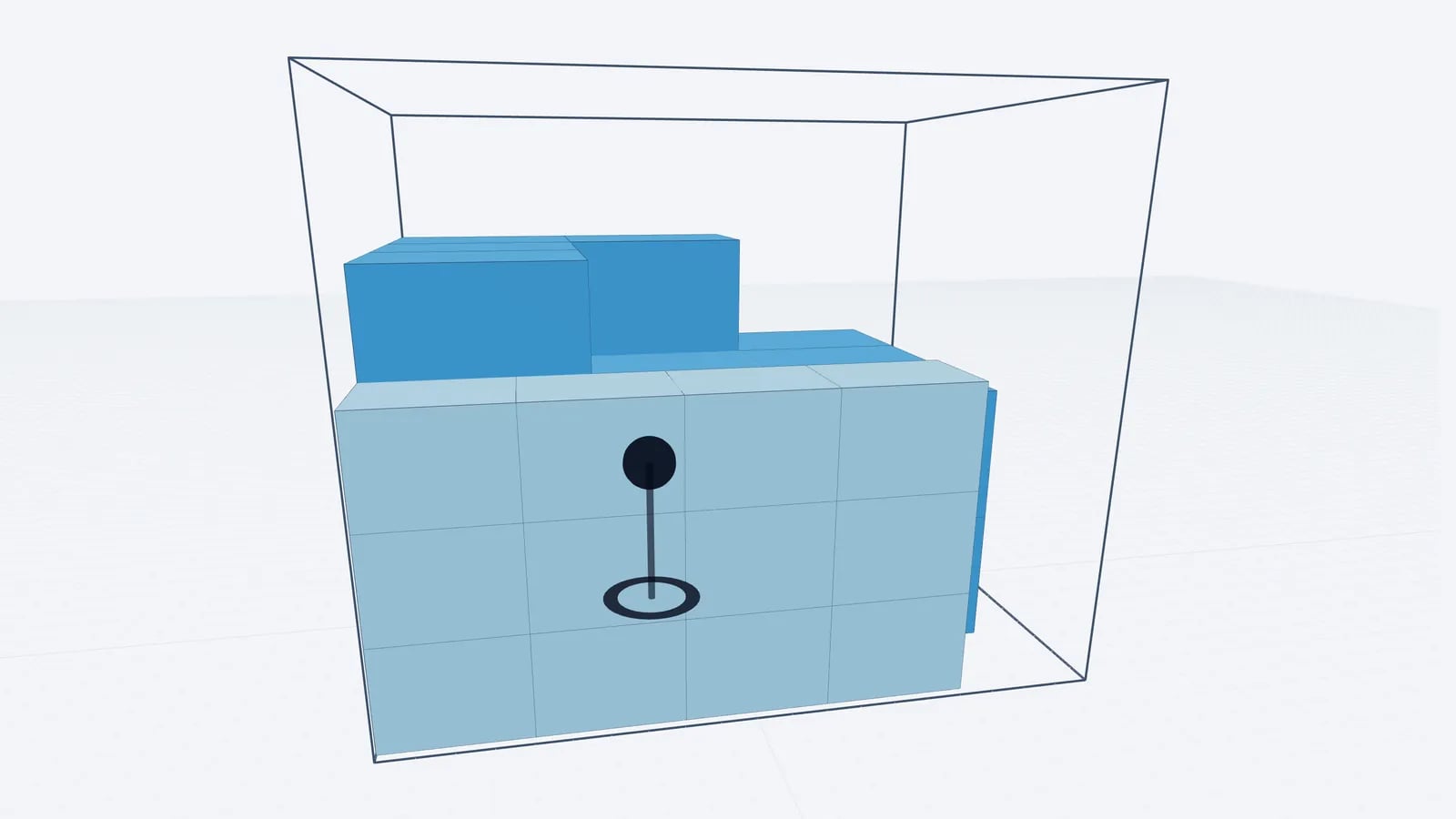
LD3 Container Dimensions, Volume and Weight Limits Explained
LD3 (AKE) dimensions in cm and inches, the contour shape, usable volume, max gross weight, what fits inside, and how the LD3 differs from the lower LD3-45.
Read article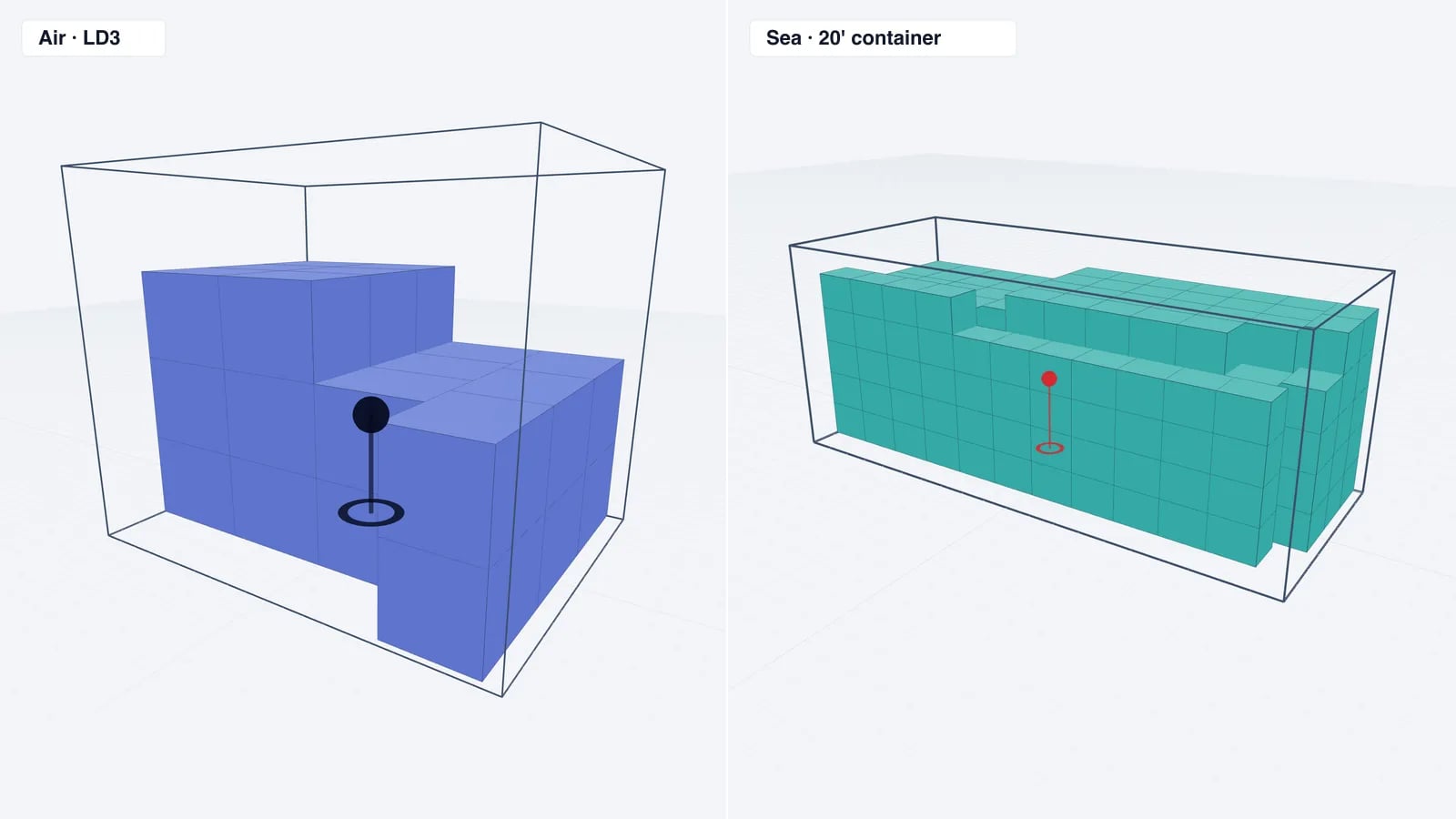
Air cargo · · 5 min read
Air vs Sea Freight: When to Switch Mode and How Planning Differs
Air vs sea freight compared for planners: how each mode charges, when air pays, density break-evens, ULDs vs containers, consolidation and a worked example.
Read article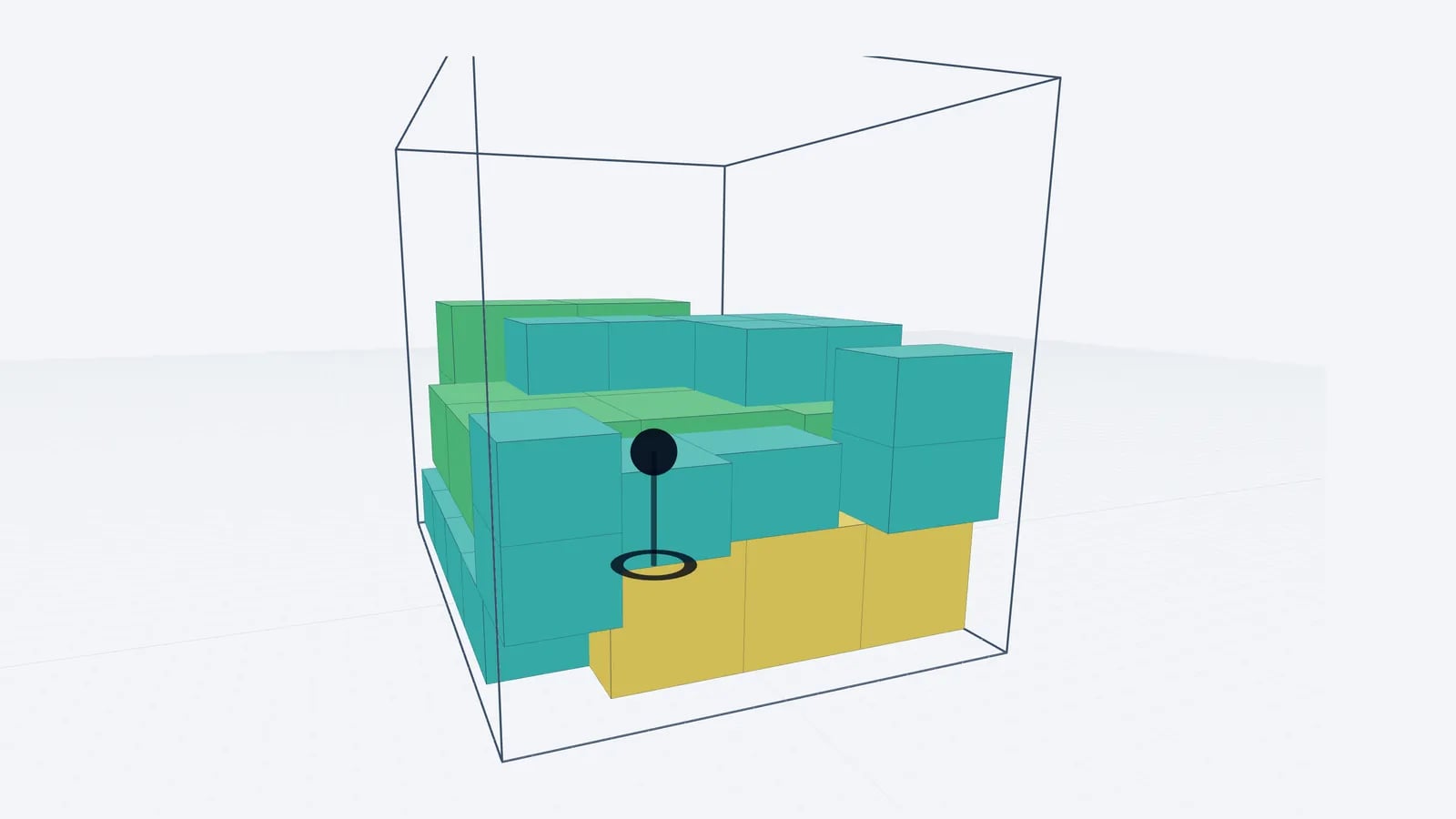
Air cargo · · 6 min read
Air Freight Packaging: How to Pack Cargo That Flies Cheaper
Air freight packaging done right: carton strength, sizes that suit ULDs, pallets and ISPM 15, labelling, and practical ways to cut volumetric weight.
Read article