Air Cargo Size Limits: Maximum Piece Size by Aircraft and Deck
How big can air cargo be? Typical piece heights and door sizes for narrow-body, wide-body lower deck and freighter main deck, and how to plan oversized cargo.
Air cargo · · 6 min read
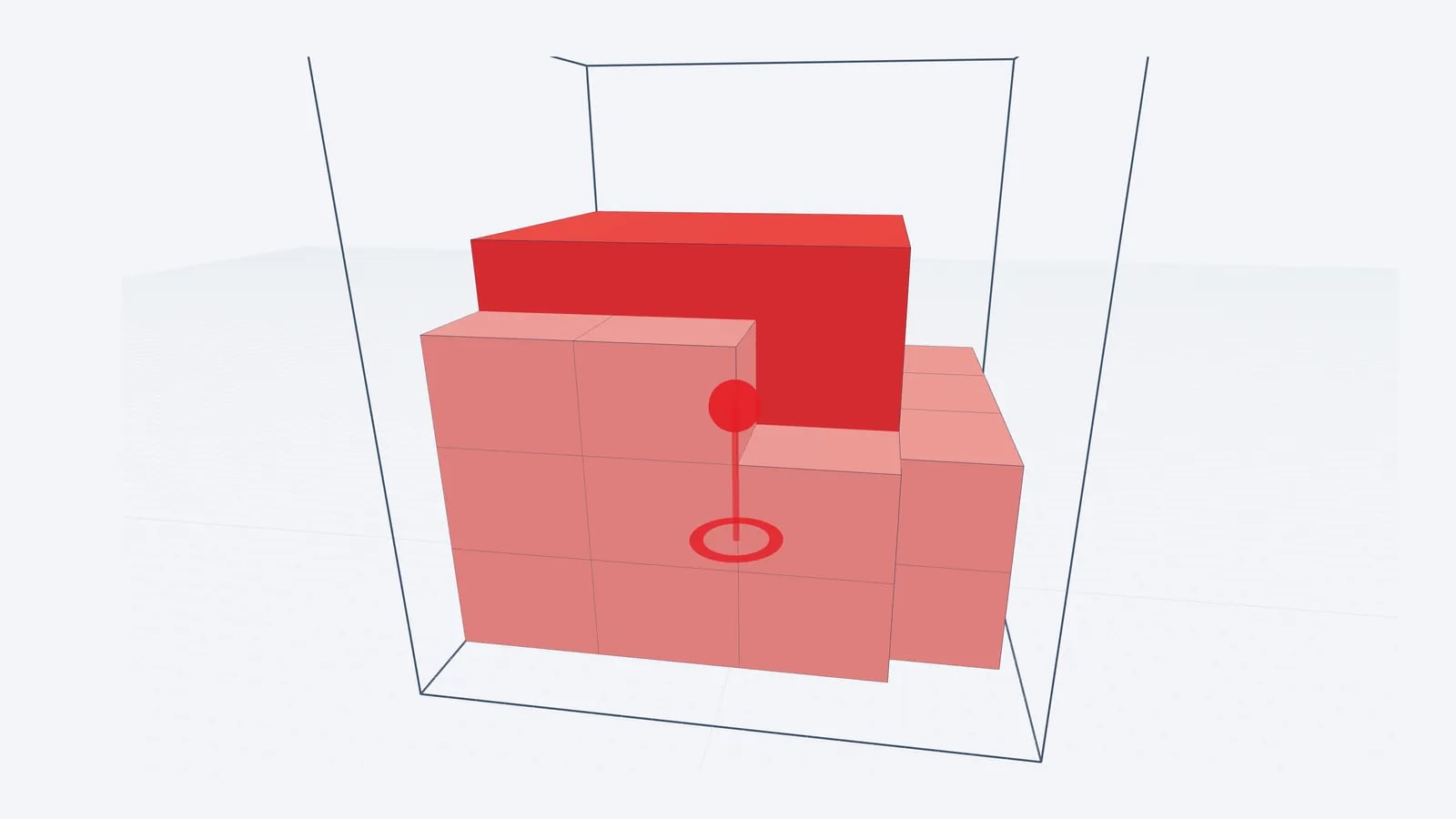
The maximum size of an air cargo piece depends on which aircraft and deck it flies in. As a rough guide, pieces up to about 160 cm high fit the lower deck of wide-body passenger aircraft, narrow-bodies take far less, and anything taller needs the main deck of a freighter, where heights of roughly 240 to 300 cm are possible depending on aircraft and position. Door size, floor loading and piece weight also limit what can fly, so check every non-standard piece with the airline before booking.
The figures below are typical ranges for planning only. They differ between aircraft types, variants and operators, and the airline's own loadability tables are the final word.
Three places cargo can fly
Space: Narrow-body lower deck, bulk loaded (e.g. B737)
- Typical max piece height
- well under 1 m
- Typical door opening
- roughly 1.2 m wide or less, under 1 m high
- Notes
- Small pieces loaded by hand; check per aircraft
Space: Narrow-body lower deck with ULDs (A320 family)
- Typical max piece height
- about 105 to 110 cm in an LD3-45
- Typical door opening
- roughly 1.8 m wide × 1.2 m high
- Notes
- Piece size limited by the LD3-45
Space: Wide-body lower deck (A330, A350, B777, B787)
- Typical max piece height
- about 160 cm
- Typical door opening
- roughly 2.7 m wide × 1.7 m high on the larger doors
- Notes
- LD3 containers and PMC/PAG pallets
Space: Freighter main deck, side door (B747F, B777F)
- Typical max piece height
- about 240 to 300 cm, varies by position
- Typical door opening
- roughly 3.4 to 3.7 m wide × 3.0 to 3.1 m high
- Notes
- Main-deck pallets with tall contours
Space: B747 freighter nose door
- Typical max piece height
- depends on position and length
- Typical door opening
- nose opens straight into the main deck
- Notes
- Allows very long items to be loaded straight in
| Space | Typical max piece height | Typical door opening | Notes |
|---|---|---|---|
| Narrow-body lower deck, bulk loaded (e.g. B737) | well under 1 m | roughly 1.2 m wide or less, under 1 m high | Small pieces loaded by hand; check per aircraft |
| Narrow-body lower deck with ULDs (A320 family) | about 105 to 110 cm in an LD3-45 | roughly 1.8 m wide × 1.2 m high | Piece size limited by the LD3-45 |
| Wide-body lower deck (A330, A350, B777, B787) | about 160 cm | roughly 2.7 m wide × 1.7 m high on the larger doors | LD3 containers and PMC/PAG pallets |
| Freighter main deck, side door (B747F, B777F) | about 240 to 300 cm, varies by position | roughly 3.4 to 3.7 m wide × 3.0 to 3.1 m high | Main-deck pallets with tall contours |
| B747 freighter nose door | depends on position and length | nose opens straight into the main deck | Allows very long items to be loaded straight in |
Good to know
Door sizes give the absolute limit, but the usable height is set by the contour of the aircraft position, which is usually lower than the door. A piece that passes the door can still be too tall for the position it is planned in.
Why height is usually the first limit
On passenger aircraft, all cargo travels below the cabin floor, where the hold is about 160 to 170 cm high on wide-bodies and much lower on narrow-bodies. That is why the most common reason for a piece being refused is height, not length or weight.
A standard Euro pallet built to 160 cm works on most wide-body passenger flights. Built to 180 cm, it is a freighter-only shipment, which can mean fewer flights, longer transit and a higher rate. If a piece will be close to the limit, design its packaging to stay under it. Typical ULD heights are listed in ULD types explained.
Length, width and the door turn
A long piece has to pass through a side door and then turn into the hold. That turn limits length more than the hold itself does. The longest piece that fits through a given door depends on its height and width together: a flat 4 m item may pass where a tall 4 m item does not.
Airlines publish door loadability tables that give, for a piece of a given height and width, the maximum length that will pass. Use these tables, not the door dimensions alone. For very long items such as pipes, rotor blades or aircraft parts, a freighter with a nose door or a main-deck pallet of 20 ft (606 cm) or longer may be needed.
Weight per piece and floor loading
- ULD limit. An LD3 is rated at about 1,588 kg gross; a PMC on a freighter main deck at about 6,804 kg. A single piece cannot exceed what its ULD and position allow.
- Floor loading. Aircraft floors have limits per square metre and per running metre. Heavy pieces on small feet need spreader boards to reduce the pressure.
- Handling equipment. Heavy pieces need forklifts and loaders rated for them at both airports, not only at origin.
- Heavy-piece acceptance. Many airlines require pre-approval for pieces above a certain weight, often somewhere in the range of a few hundred kilograms for lower-deck and bulk loading. Ask before booking.
Spreading load over boards is explained with an example in building a ULD.
Planning an oversized shipment
- 1Measure the piece in its shipping state, including crate, skids and lifting points, to the nearest centimetre. Note the centre of gravity if it is off-centre.
- 2Ask the airline or forwarder for the loadability check with dimensions, weight and contact area. Expect them to name the aircraft types and positions that can take it.
- 3Check the routing: every leg must be able to take the piece. A wide-body to a hub and a narrow-body onwards does not work for a 150 cm high crate.
- 4Confirm handling at both ends: equipment, trucks to and from the airport, and any special build such as two pallets coupled together.
- 5Plan shoring, lashing points and protection for the crate. Main-deck heavy pieces are usually secured with straps to the pallet and the pallet locked into the aircraft.
- 6Book with margin. Freighter capacity for oversized cargo is limited; if no scheduled flight fits, an outsize charter is the remaining option.
Tip
If a machine can be partly dismantled to come in under 160 cm, it may be able to fly on a passenger wide-body instead of a freighter. Ask the manufacturer whether that is possible before quoting the shipment.
Worked example: will this crate fly on a passenger aircraft?
Say you have a crate of 240 × 150 × 170 cm weighing 1,100 kg, booked from a European hub to Asia.
- Height: 170 cm is over the roughly 160 cm wide-body lower-deck limit. It cannot go in a passenger aircraft's hold as packed.
- Footprint: 240 × 150 cm fits on a PMC base (318 × 244 cm) with room for straps. It would also suit a PAG.
- Options: (1) a freighter flight, where 170 cm is well within main-deck height; or (2) repack the crate lower. If the contents allow the crate to be rebuilt to 155 cm, it becomes a lower-deck candidate, subject to the weight per position and floor loading.
- Floor loading: 1,100 kg on a 240 × 150 cm base (3.6 m²) is about 306 kg/m² if the crate bears evenly on its full base. If it stands on skids, recalculate on the skid area.
Planning such a piece on a pallet in 3D helps to see the clearance for straps and any other cargo on the same ULD. EveryLoading lets you enter a custom base and height as the load space (see choosing a vehicle) and shows the result in top, side and rear views (views). If the cargo does not need to fly at all, compare air vs sea freight.
Frequently asked questions
What is the maximum height for air cargo on a passenger plane?
On wide-body passenger aircraft, cargo in the lower deck is usually limited to about 160 cm. Narrow-bodies take much less. Taller pieces need a freighter main deck.
How do I know if a long piece will fit through the cargo door?
Ask for the airline's door loadability table for that aircraft. It gives the maximum length for a piece of a given height and width, because long pieces have to turn as they enter the hold.
What happens if my cargo is too big for any scheduled flight?
The remaining options are to dismantle or repack it smaller, or to book an outsize charter aircraft. Sea freight is often cheaper if time allows.
Does a piece that fits the door always fit the hold?
No. The usable height in each aircraft position follows the contour of the fuselage and is often lower than the door opening.
Keep reading
Air cargo · · 5 min read
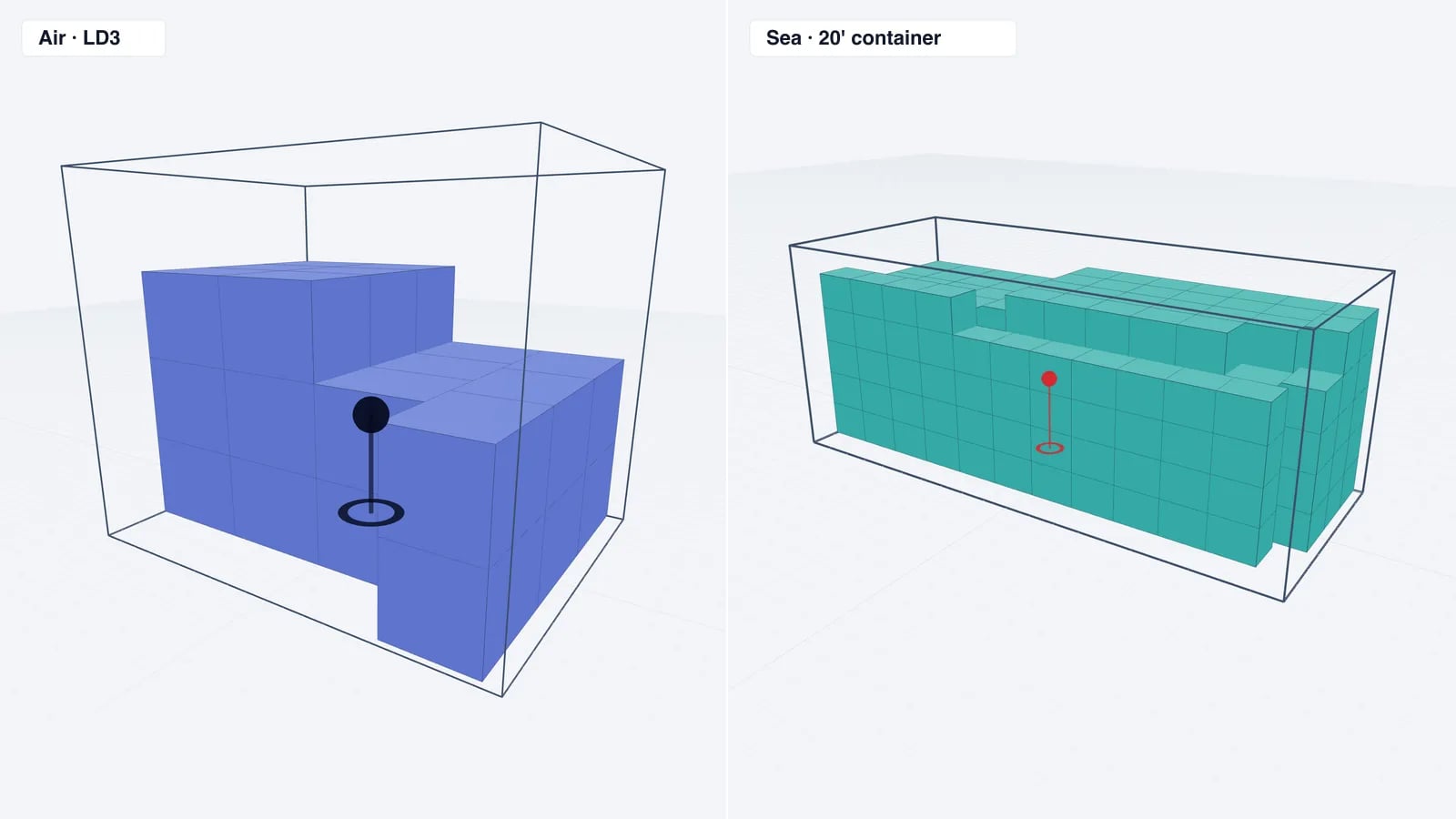
Air vs Sea Freight: When to Switch Mode and How Planning Differs
Air vs sea freight compared for planners: how each mode charges, when air pays, density break-evens, ULDs vs containers, consolidation and a worked example.
Read article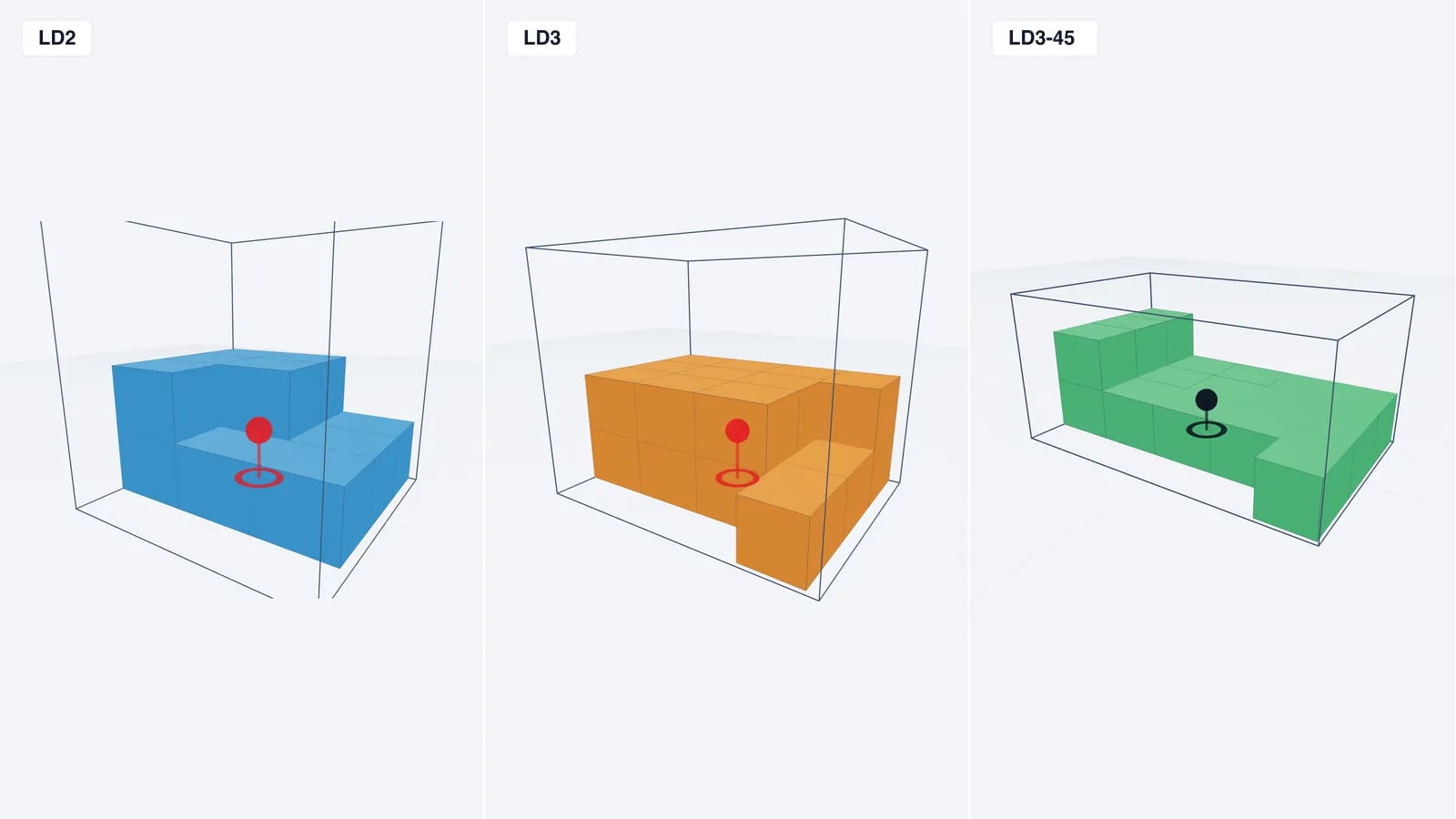
Air cargo · · 7 min read
ULD Types Explained: LD3, LD2, LD3-45, PMC and PAG Pallets
A practical guide to air cargo ULD types: LD3, LD3-45, LD2, LD6, PMC and PAG pallets, with typical dimensions, max gross weights and the aircraft that use them.
Read article
Air cargo · · 6 min read
Air Freight Packaging: How to Pack Cargo That Flies Cheaper
Air freight packaging done right: carton strength, sizes that suit ULDs, pallets and ISPM 15, labelling, and practical ways to cut volumetric weight.
Read article