Pallet Stacking Patterns: Column, Brick, Pinwheel and Row
How to stack boxes on a pallet: column, interlock or brick, pinwheel and row patterns compared, with layer examples and advice on strength and stability.
Load planning basics · · 7 min read
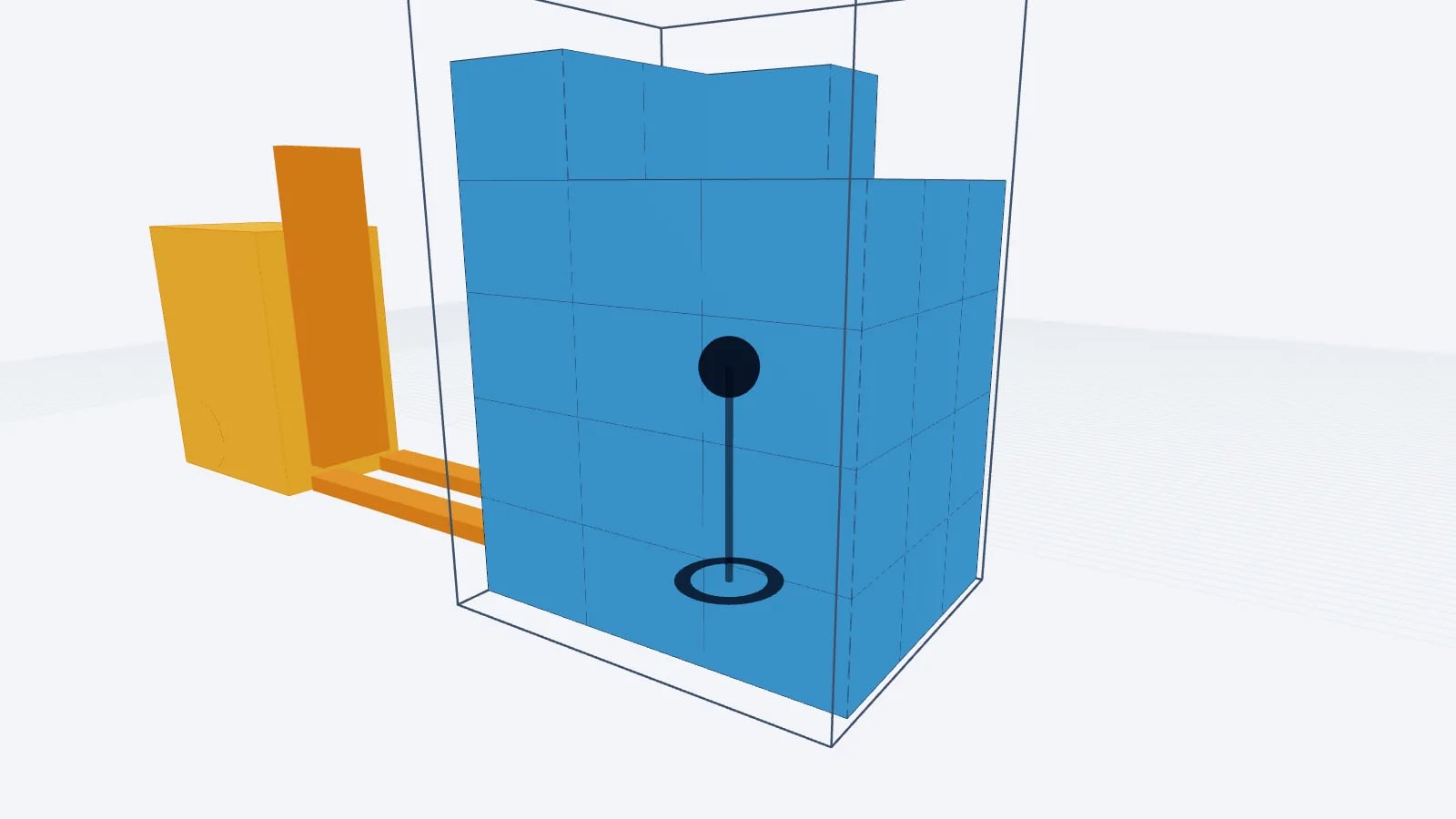
The four common pallet stacking patterns are column, interlock (also called brick), pinwheel and row. Column stacking puts each box directly above the one below and gives the most compression strength, while interlocked patterns overlap the layers and hold the load together better.
This article is about how boxes are arranged on one pallet. Whether one loaded pallet can stand on another is a separate question, covered in pallet stacking rules. The two are connected, though: the pattern you choose affects how much weight the pallet can carry later.
The four patterns at a glance
Pattern: Column (block)
- How the layers work
- Every layer is identical; box corners line up
- Compression strength
- Highest
- Stability
- Lowest
- Best for
- Heavy goods, stacked pallets, strong wrap
Pattern: Interlock (brick)
- How the layers work
- Alternate layers are arranged differently, so boxes bridge the seams below
- Compression strength
- Lower
- Stability
- Good
- Best for
- Light goods, tall or unwrapped loads
Pattern: Pinwheel
- How the layers work
- Boxes run round the pallet edge in a ring, turned 90 degrees each time
- Compression strength
- Lower
- Stability
- Good
- Best for
- Square pallets, boxes that fit the ring
Pattern: Row
- How the layers work
- Rows of boxes in different directions, flipped on alternate layers
- Compression strength
- Between the two
- Stability
- Fair to good
- Best for
- Boxes that do not fill a simple grid
| Pattern | How the layers work | Compression strength | Stability | Best for |
|---|---|---|---|---|
| Column (block) | Every layer is identical; box corners line up | Highest | Lowest | Heavy goods, stacked pallets, strong wrap |
| Interlock (brick) | Alternate layers are arranged differently, so boxes bridge the seams below | Lower | Good | Light goods, tall or unwrapped loads |
| Pinwheel | Boxes run round the pallet edge in a ring, turned 90 degrees each time | Lower | Good | Square pallets, boxes that fit the ring |
| Row | Rows of boxes in different directions, flipped on alternate layers | Between the two | Fair to good | Boxes that do not fill a simple grid |
The names vary between suppliers and pallet software, so a drawing is safer than a name when you brief a warehouse.
Why the pattern changes the strength
A corrugated box carries most of its load through its corners and side walls. In a column stack, those walls line up, so weight travels straight down to the pallet. In an interlocked stack, a box's corners sit over the middle of the walls below, where the box is weaker. Published tests, including a 2021 study in TAPPI Journal, found column stacks gave the highest compression strength and interlocked stacks the lowest of the patterns tested.
Stability pulls the other way. In a column stack, nothing ties one column to the next, so columns can lean apart under vibration. Interlocking ties the layers together like bricks in a wall. That trade-off is the main choice: strength or stability. The size of the difference depends on the box, flute and load, so test with your own packaging if the load is close to its limit.
Column stacking
Every layer is a copy of the one below. A carton of 30 × 20 cm on a Euro pallet (120 × 80 cm) gives four rows of four, or 16 per layer, with no gap at the edges.
- Use it when the boxes carry weight, for example heavy goods, liquids in cartons, or pallets that will be stacked.
- Watch out for columns leaning apart. Stretch wrap, corner boards or a tie sheet every few layers help hold them together.
Interlock or brick pattern
Alternate layers use a different arrangement, so each box rests on two or more boxes below, as bricks do in a wall. With the same 30 × 20 cm carton, layer A is four rows of four. Layer B is two rows of six with the cartons turned, plus one row of four running the long way. That also makes 16 cartons, and most seams in layer A are crossed by layer B.
- Use it when the goods are light and the box is not doing much structural work, or when the wrap is limited.
- Watch out for compression strength on the bottom layers. Do not use it for heavy pallets that will carry another pallet on top.
Good to know
Not every box allows interlocking on every pallet. Cartons of 40 × 30 cm on a Euro pallet fill the pallet in only one way, 8 per layer, because no other mix of 30 and 40 cm adds up to the 80 cm width. Turning that layer 180 degrees gives the same layout, so the layers stay as columns.
Pinwheel pattern
Four blocks of boxes run around the pallet, each turned 90 degrees from the last, like the blades of a pinwheel. It works when the length plus the width of the box equals the side of the pallet. On a square 110 × 110 cm pallet, a carton of 65 × 45 cm makes a ring of four with a 20 × 20 cm hole in the middle, because 65 + 45 = 110.
- Use it when the pallet is square or close to it and a simple grid wastes space.
- Watch out for the central hole. It can be useful for air in some goods, but nothing supports boxes above it, so reverse the pinwheel direction on each layer to overlap the seams.
Row pattern
The layer is made of rows, and not all rows point the same way. A carton of 60 × 40 cm on an industrial pallet (120 × 100 cm) shows why. A simple grid fits only four and leaves a 20 cm gap. Using one row of three with the 40 cm side along the pallet, and one row of two with the 60 cm side along it, fits five cartons and fills the pallet exactly. Turn alternate layers 180 degrees and the rows swap sides, which overlaps the seams.
- Use it when a mixed layout fits more boxes per layer than a grid.
- Watch out for a seam that runs through every layer. Flip layers so it does not form a straight split through the pallet.
How many boxes fit on a pallet?
The maths is simple: boxes per layer × layers. Layers depend on the height limit, and weight has the final word. For a worked example, take the 30 × 20 × 25 cm carton at 8 kg on a Euro pallet with a 180 cm limit.
- 1Per layer: 16 cartons, as above.
- 2Layers: (180 − 14.4 cm pallet) ÷ 25 cm = 6.6, so 6 layers, for a total height of 164.4 cm.
- 3Cartons: 16 × 6 = 96.
- 4Weight: 96 × 8 kg = 768 kg, plus about 25 kg for the pallet, or about 793 kg.
- 5Check: the bottom cartons carry 5 layers × 16 cartons × 8 kg = 640 kg, or 40 kg per bottom carton. Compare that with the carton's stacking strength before you approve the pattern.
That last check is often skipped. A pattern that fits perfectly can still crush the bottom layer on a long trip.
How to choose a stacking pattern
- 1Start with weight. If the pallet is heavy or something will go on top of it, start with column stacking.
- 2Check the fit. Find the arrangement that fills the footprint with no overhang.
- 3Consider the trip. Long road journeys and sea transport mean more vibration, so a column stack needs stronger securing.
- 4Look at the seams. If one long seam runs through every layer, flip or change alternate layers.
- 5Test it. Build one pallet, move it, and check it for lean before you approve it for the full run.
Tip
A mixed approach is common: use column stacking for the lower layers to keep strength, and interlock the top layers to tie the load together. Then wrap it well.
Rules for any pattern
- No overhang. Boxes over the edge lose strength and catch on neighbouring pallets. Keep them inside the deck.
- Avoid large underhang too. A big gap at the edge lets the load shift and wastes space.
- Heaviest at the bottom. In mixed pallets, keep heavy boxes low and light ones high.
- Keep the top flat. A level top makes the pallet easier to wrap, and possible to stack if the goods allow it.
- Wrap to the pallet. Wrap should tie the load to the deck, not only the boxes to each other.
- Use the right pallet. See the pallet sizes guide to match the footprint to your carton.
From a pallet pattern to a full load
Pallet patterns set the height and weight that the load planner has to work with. If a pattern gives a 110 cm pallet, a trailer may take two high, which can halve the floor space you need, as long as the bottom pallet can carry it. Check that with the pallet fit calculator and the double stacking guide.
If you are new to the topic, start with what palletization means. The palletizing use case shows how to plan cartons onto pallets, and truck loading software covers the next step, from pallets to vehicle.
Tip
EveryLoading builds this plan in 3D. Set a pallet as the loading space or use Build pallets (both Pro), and the optimizer places the cartons within your height and weight limits. Note that it arranges for fit and your rules, so choosing column or interlock remains your decision.
Frequently asked questions
What is the strongest way to stack boxes on a pallet?
Column stacking, where each box sits directly above the one below. The walls and corners line up, so the boxes carry the most weight.
What is the most stable pallet stacking pattern?
Interlocked patterns such as brick are usually the most stable, because boxes bridge the seams in the layer below. They give up some compression strength in exchange.
What is the difference between a pinwheel and a brick pattern?
A pinwheel runs boxes around the edge of the pallet in a ring, often with a hole in the middle. A brick pattern changes the layout of alternate layers so seams overlap.
Can I mix column and interlock on one pallet?
Yes. A common approach is column stacking for the lower layers and interlocking for the top layers, which keeps strength low down and ties the load together at the top.
Should boxes hang over the edge of a pallet?
No. Overhang removes support from box walls, which weakens them, and exposes the boxes to damage from neighbouring pallets.
Keep reading
Load planning basics · · 7 min read
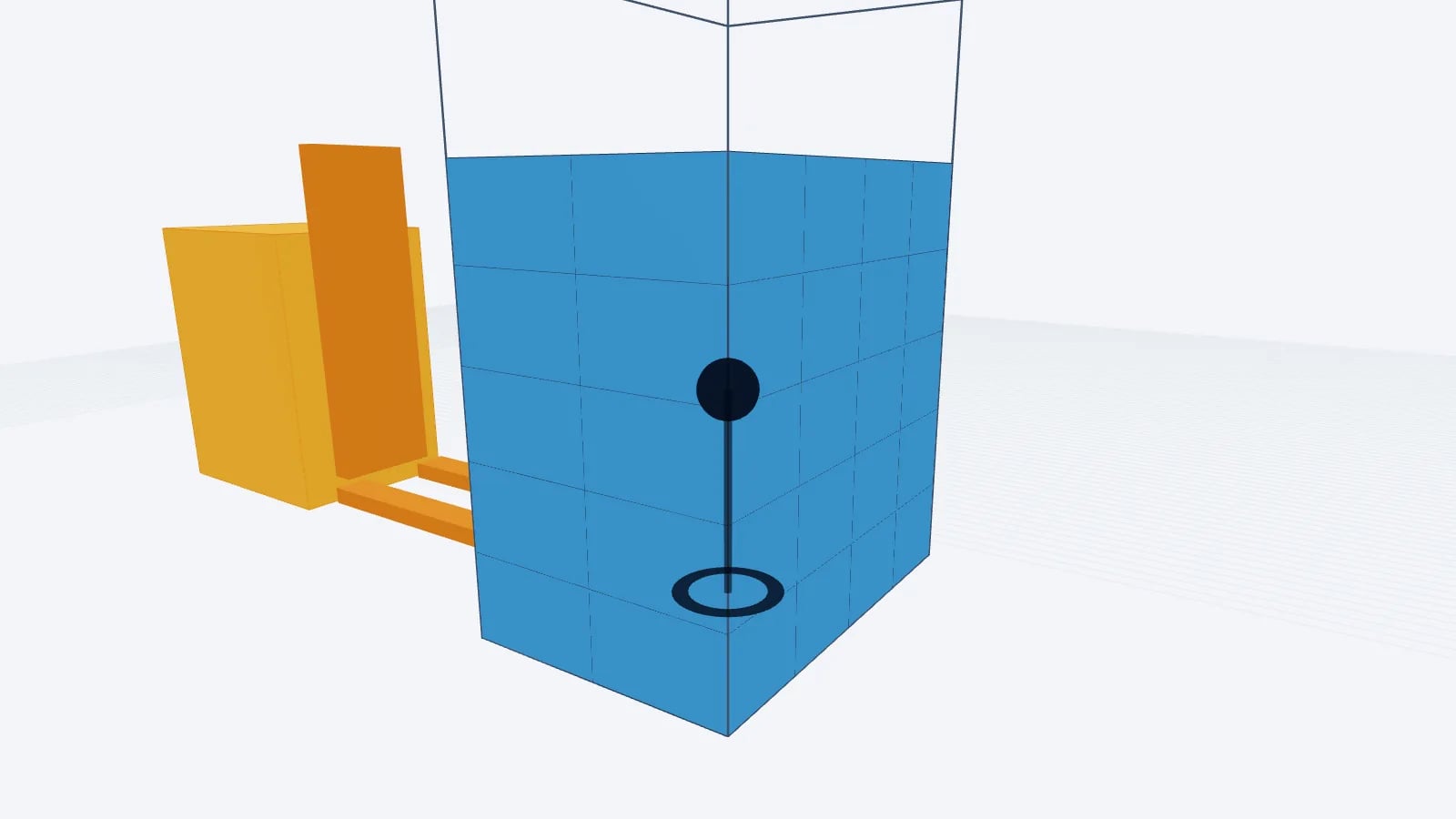
What Is Palletization? Meaning, Methods and When to Use It
Palletization means stacking and securing goods on a pallet so they move as one unit. What it involves, the main methods, and when loose loading fits more.
Read article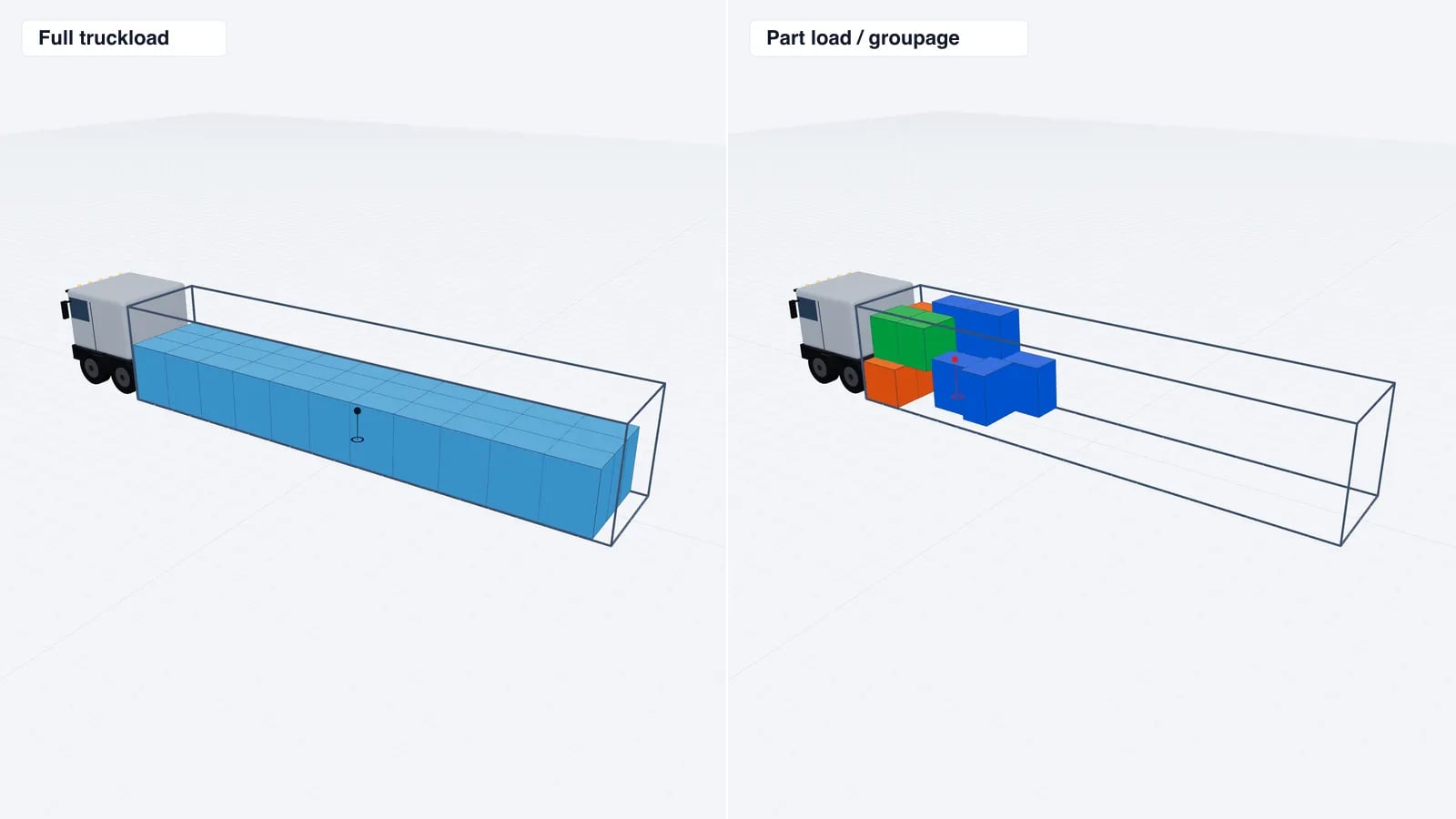
Load planning basics · · 5 min read
FTL Meaning: Full Truckload vs LTL, Part Load and Groupage
FTL means full truckload: one shipper books the whole truck. How it compares with LTL, part load and groupage on cost, speed and handling, with a break-even.
Read article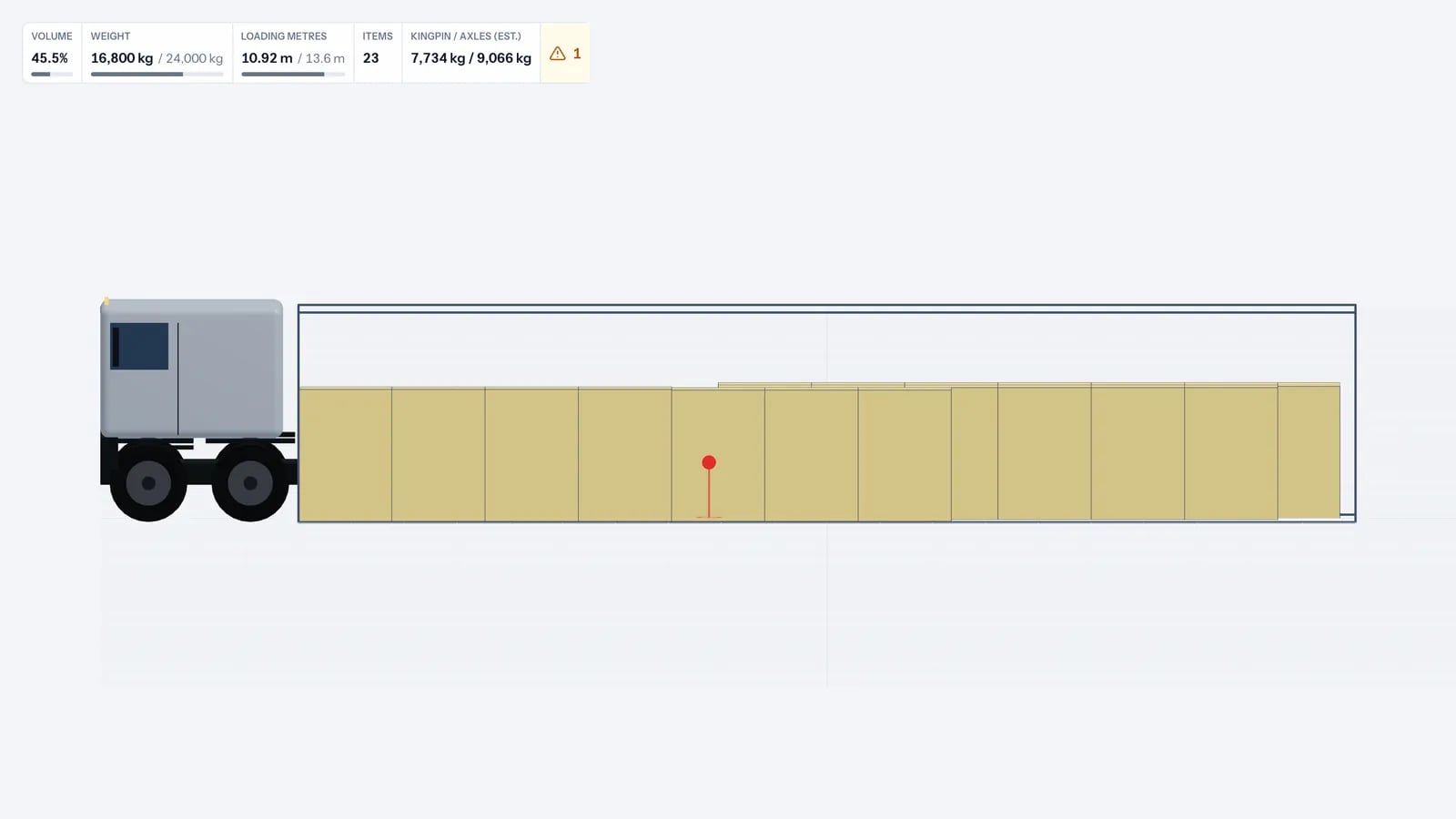
Load planning basics · · 6 min read
Weight Distribution in a Trailer: Axle Loads Made Simple
Where you put heavy cargo decides the load on each axle. Learn how trailer weight distribution works, how to estimate axle loads and how to avoid overloading.
Read article