What Is Palletization? Meaning, Methods and When to Use It
Palletization means stacking and securing goods on a pallet so they move as one unit. What it involves, the main methods, and when loose loading fits more.
Load planning basics · · 7 min read
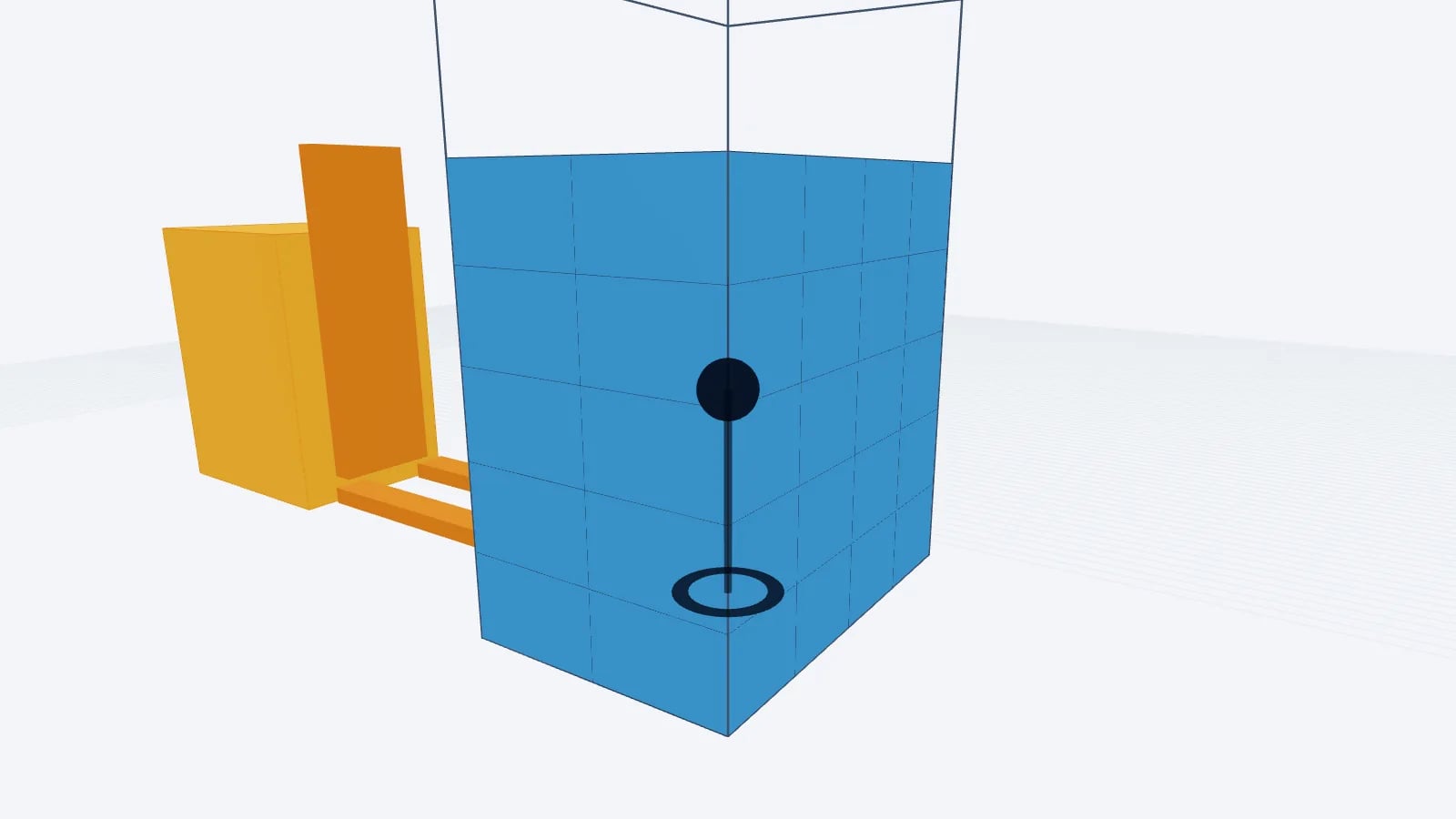
Palletization means stacking goods on a pallet and securing them so they can be stored, lifted and shipped as one unit. To palletize a shipment is to turn many loose cartons, bags or drums into a load that one forklift can move in one go.
It is one of the most basic ideas in logistics, and it shapes how warehouses, trucks and containers are used. It is also not always the right choice: a pallet saves handling time but takes up space, so the decision depends on the shipment.
Palletization meaning, in plain terms
A pallet is a flat base that fork tines can get under. Palletization adds a system to that base: goods go on in a planned pattern, stay inside the pallet's edges and are held together by wrap, strapping or both. The finished pallet is called a unit load.
The spelling varies but the meaning does not. Palletization is the usual US spelling and palletisation the British one. Here is how the related words are used:
| Term | What it means |
|---|---|
| Palletize / palletise | To stack and secure goods on a pallet |
| Palletizing | The act of doing it, by hand or by machine |
| Palletized cargo | Goods shipped on pallets, not loose |
| Unit load | Goods handled as one unit, on a pallet or otherwise |
| Unitization | The wider idea of grouping goods into units; palletization is one form of it |
| Palletizer | A machine or robot that stacks goods on pallets |
| Floor loading | Loading cartons directly on the vehicle floor with no pallets |
What about palletage? It is not a standard English logistics term. Where you meet it, it usually means palletizing, or sometimes the number of pallets in a shipment. If it appears in a contract or quote, ask what the other side means by it.
What does palletizing involve?
Palletizing is more than piling boxes up. A good pallet follows the same steps every time:
- 1Choose the pallet. Pick a footprint that suits the cartons and the destination, such as a Euro pallet in Europe or a 48 × 40 in pallet in the US. See the pallet sizes guide.
- 2Check the pallet. Reject broken boards and protruding nails, because the pallet carries everything above it.
- 3Pick a stacking pattern. Column stacking keeps carton strength; interlocked layers hold together better. See pallet stacking patterns.
- 4Build the layers. Keep heavier cartons at the bottom, and keep the load inside the pallet's edges with no overhang.
- 5Respect the limits. Stop at the maximum height and weight set by your customer, your racking or your carrier.
- 6Secure the load. Stretch wrap, shrink wrap or straps tie the top layers to the pallet. Corner boards and top sheets add protection.
- 7Label it. Put the label where it can be read, with the handling marks and, if needed, a do-not-stack instruction.
Manual, semi-automatic and robotic palletizing
Method: Manual
- How it works
- People stack cartons by hand, sometimes with lift tables
- Suits
- Low volumes, many product types
Method: Semi-automatic
- How it works
- A person arranges goods, and a machine lifts, turns or wraps
- Suits
- Medium volumes, heavier goods
Method: Conventional palletizer
- How it works
- A machine forms complete layers and lowers them onto the pallet
- Suits
- High, steady volumes of similar products
Method: Robotic palletizer
- How it works
- A robot arm places cartons or bags using a programmed pattern
- Suits
- Repetitive lines, frequent pattern changes
| Method | How it works | Suits |
|---|---|---|
| Manual | People stack cartons by hand, sometimes with lift tables | Low volumes, many product types |
| Semi-automatic | A person arranges goods, and a machine lifts, turns or wraps | Medium volumes, heavier goods |
| Conventional palletizer | A machine forms complete layers and lowers them onto the pallet | High, steady volumes of similar products |
| Robotic palletizer | A robot arm places cartons or bags using a programmed pattern | Repetitive lines, frequent pattern changes |
Whichever method you use, the plan is the same: the pattern, height and weight limit are decided first, and the people or the machine follow them.
Why palletize?
- Faster handling. One forklift movement moves dozens of cartons at once, which cuts loading and unloading time.
- Less manual lifting. Fewer hand movements means less strain on people at both ends.
- Less damage. Wrapped cartons stay together and are touched less often. Damage is still possible if the pallet is badly built.
- Easier storage. Pallet racks and floor positions are organised around pallets, so counting and picking are simpler.
- Standard units. Carriers can price, plan and handle a known footprint. LTL and groupage networks often work in pallet places, as covered in FTL meaning and LTL.
The cost of a pallet: space and weight
A pallet has height, weight and a footprint that rarely matches the vehicle exactly. A Euro pallet is 144 mm high and weighs about 25 kg empty, so every pallet in a trailer takes volume and payload away from the goods. Pallets also rarely reach the ceiling, because customer height limits or stacking rules stop them, which leaves empty air above the load.
Floor loading avoids that, and it matters most in sea containers. It takes longer to load and unload by hand, but more cartons fit. Here is a simple comparison for cartons of 60 × 40 × 40 cm in a 20 ft container of about 589 × 235 × 239 cm inside.
Option: Palletized, 180 cm height limit
- How it fits
- 11 Euro pallets × 4 cartons per layer × 4 layers
- Cartons
- 176
Option: Floor loaded
- How it fits
- 9 along × 5 across × 5 high
- Cartons
- 225
| Option | How it fits | Cartons |
|---|---|---|
| Palletized, 180 cm height limit | 11 Euro pallets × 4 cartons per layer × 4 layers | 176 |
| Floor loaded | 9 along × 5 across × 5 high | 225 |
Floor loading fits 49 more cartons in this example, and a mixed carton pattern could fit a few more. Your own result depends on carton size and height limit, so run the numbers with the CBM calculator and a plan. Loading cartons in a container goes further on floor loading.
When to palletize and when not to
| Palletize when | Consider floor loading when |
|---|---|
| The receiver has forklifts and expects pallets | The receiver can unload by hand and accepts it |
| Goods will be handled several times, such as through hubs | The load travels door to door with no handling on the way |
| Speed at the dock matters | Space is the main cost, as on long sea routes |
| Goods are fragile or high value | Cartons are strong, light and uniform |
Check the destination too. Wooden pallets on international shipments may need to meet ISPM 15, the treatment standard for wood packaging, so check the import rules before you ship. Plastic or moulded pallets, or slip sheets, are other options when they suit the receiver's equipment.
Common palletizing mistakes
- Overhang. Cartons past the pallet edge lose support, and neighbouring pallets or forklift tines can damage them.
- Building too high. A tall, narrow pallet leans more in transit, and it may not fit the door, the rack or the customer's limit.
- Light goods under heavy goods. On mixed pallets, the heaviest cartons belong at the bottom, whatever the picking order was.
- Wrapping only the cartons. If the wrap does not reach the pallet deck, the whole stack can slide off in one piece.
- Guessing the weight. Weigh a sample pallet, because a wrong pallet weight carries through to the load plan and the axle estimate.
How palletization affects the load plan
A palletized load is planned in two stages: cartons onto pallets, then pallets into the vehicle. Each stage limits the next. A pallet built to 2.2 m may leave no room above it in a trailer, while one built to 1.3 m may let you double-stack if the goods can carry the weight. See double stacking pallets.
- Set the pallet height from the vehicle, not the other way round. Half the usable height often allows two pallets on top of each other.
- Ask whether the goods can carry weight on top before you count on stacking.
- Use the pallet fit calculator to see how many pallets of a size fit on the floor of a trailer or container.
- Keep pallets to whole loading units where possible, so one customer's order is not split across pallets without need.
The palletizing use case shows how both stages work in practice, and truck loading software covers the vehicle stage.
Tip
EveryLoading builds this plan in 3D. With Build pallets (Pro) it stacks your cartons onto pallets, then the optimizer loads those pallets into the truck or container, so you can see both stages before anything is stacked.
Frequently asked questions
What is palletization?
Palletization is stacking goods on a pallet and securing them so they can be stored, lifted and shipped as one unit, usually by forklift or pallet jack.
What does palletizing mean?
It means building a pallet load: choosing a pallet, stacking cartons or bags in a pattern, staying within height and weight limits, and securing the load with wrap or straps.
What does palletage mean?
It is not a standard English logistics term. It usually means palletizing, or sometimes the number of pallets in a shipment, so ask what is meant if it matters.
Is it better to palletize or floor load a container?
Pallets are faster to handle and protect the goods, while floor loading fits more cartons. Choose pallets when speed and handling matter, and floor loading when space is the main cost.
Keep reading
Load planning basics · · 7 min read
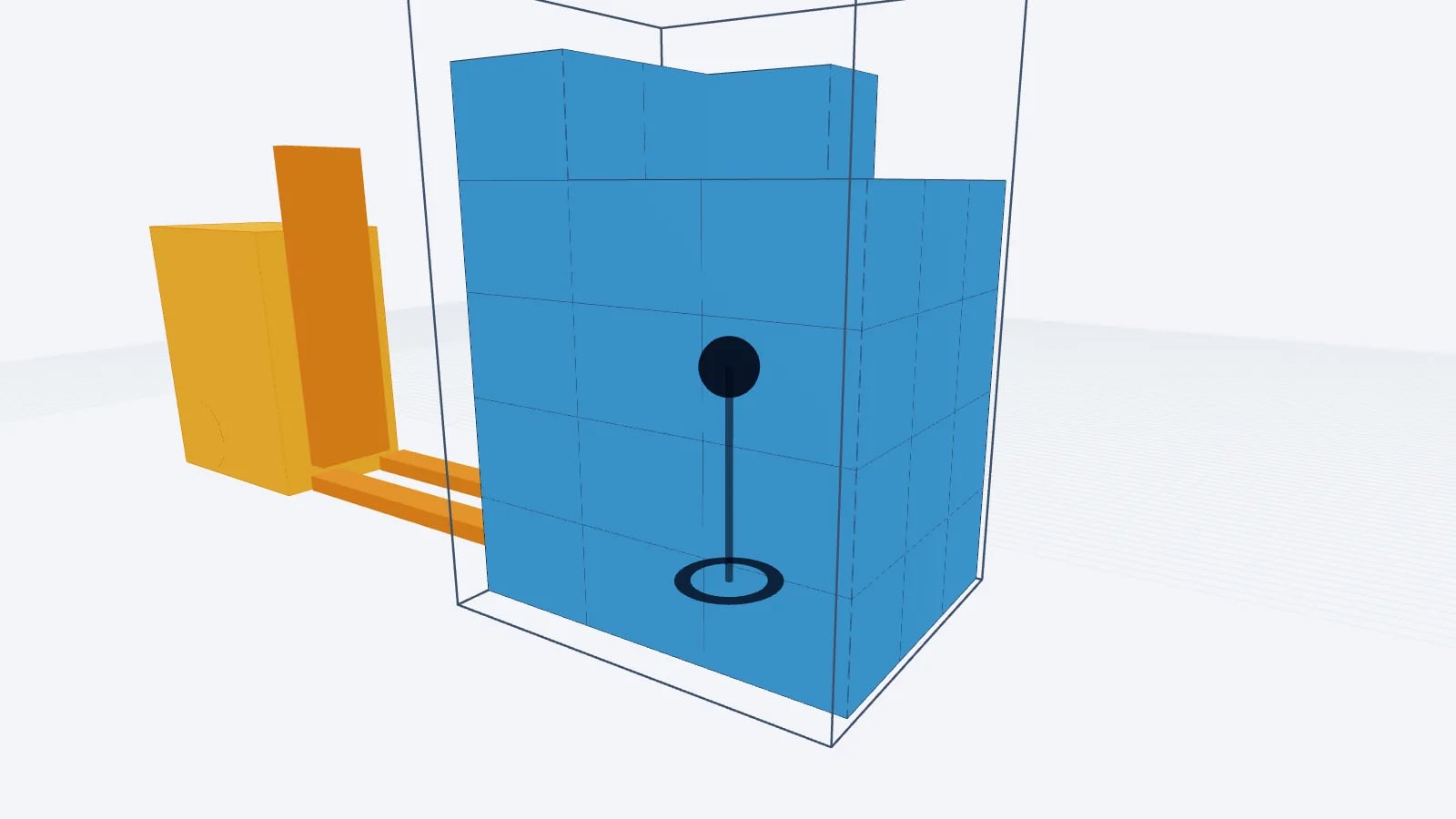
Pallet Stacking Patterns: Column, Brick, Pinwheel and Row
How to stack boxes on a pallet: column, interlock or brick, pinwheel and row patterns compared, with layer examples and advice on strength and stability.
Read article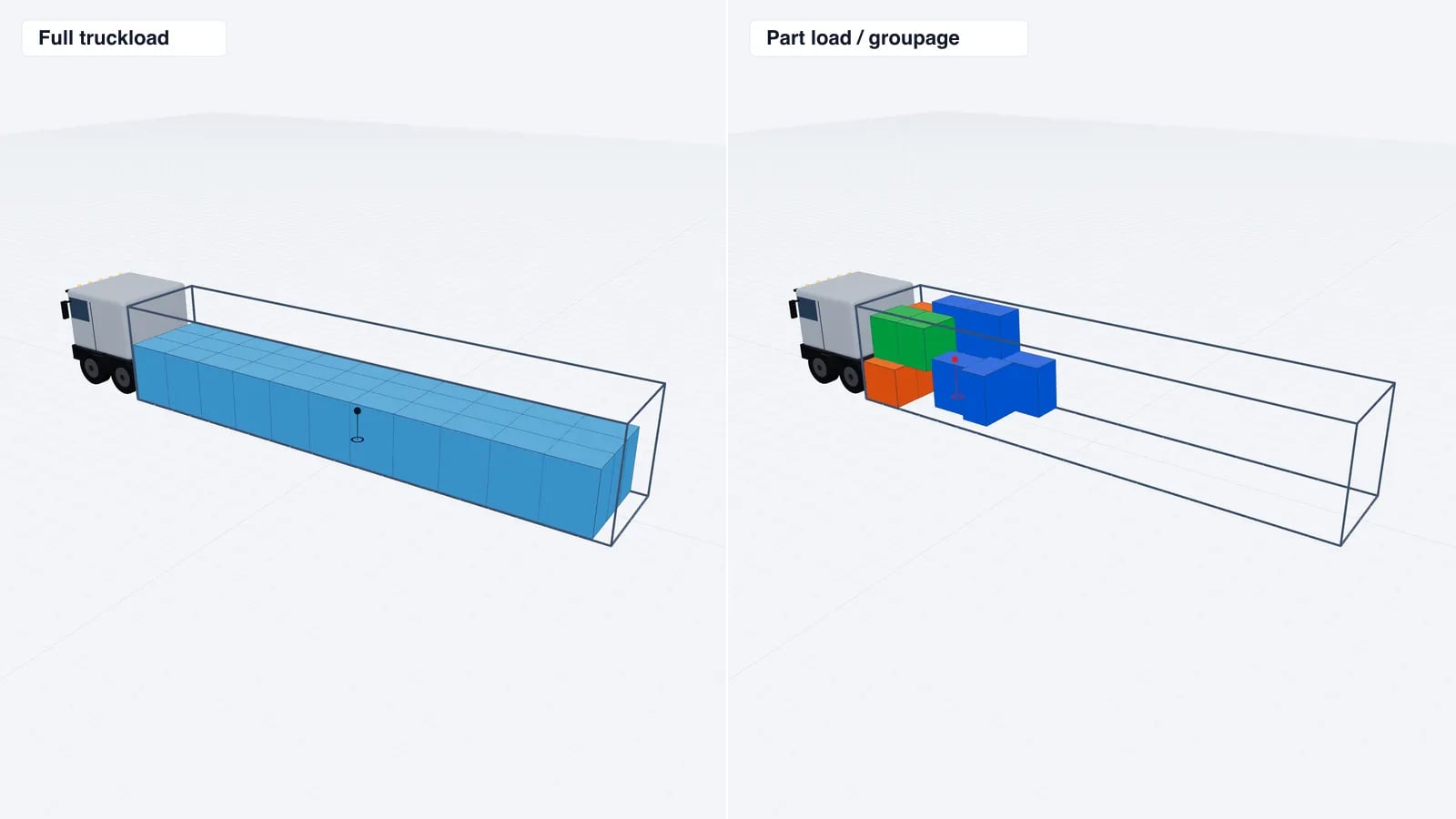
Load planning basics · · 5 min read
FTL Meaning: Full Truckload vs LTL, Part Load and Groupage
FTL means full truckload: one shipper books the whole truck. How it compares with LTL, part load and groupage on cost, speed and handling, with a break-even.
Read article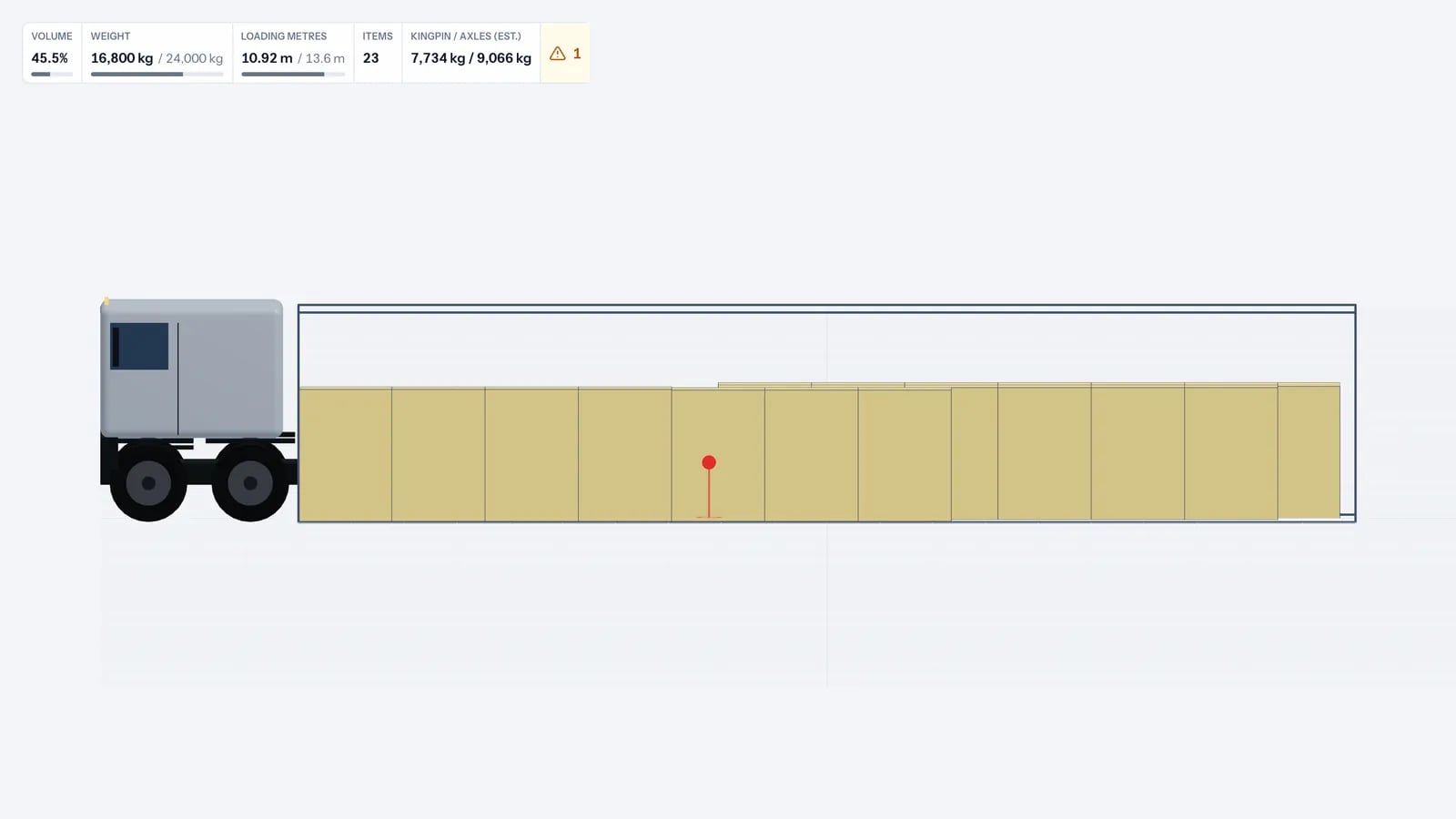
Load planning basics · · 6 min read
Weight Distribution in a Trailer: Axle Loads Made Simple
Where you put heavy cargo decides the load on each axle. Learn how trailer weight distribution works, how to estimate axle loads and how to avoid overloading.
Read article