Removal Truck Loading: Survey, Size and Load a Household Move
Removal truck loading for movers: turning a volume survey into the right vehicle, loading order for furniture and boxes, protection, and shared-load moves.
Industry guides · · 5 min read
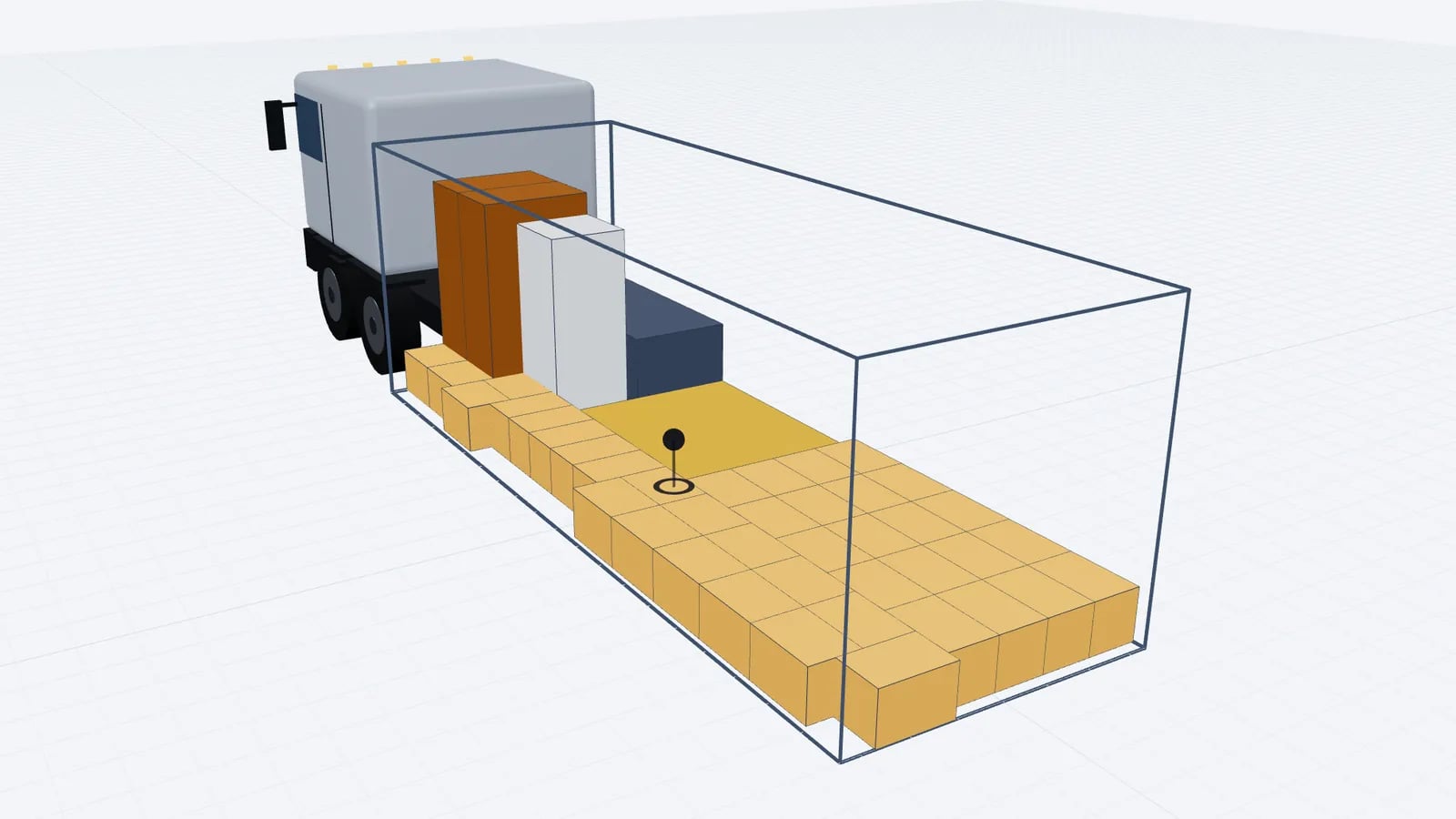
Removal truck loading starts before the truck arrives: a volume survey in cubic metres decides the vehicle, and an allowance for the gaps furniture leaves decides whether it really fits. On the day, heavy and large items go in first against the bulkhead, built into tight tiers from floor to roof, with soft items and boxes filling the gaps and everything padded where it touches.
Step one: the volume survey
A survey lists every item that is moving with an estimated volume, usually in cubic metres (or cubic feet in some markets). Surveyors use standard volumes per item type, often from their company's own list, and add packed boxes by count. Video and in-person surveys work the same way.
Item (example): Three-seater sofa
- Qty
- 1
- Volume each
- 1.5 m³
- Total
- 1.5 m³
Item (example): Double bed, dismantled, with mattress
- Qty
- 2
- Volume each
- 1.2 m³
- Total
- 2.4 m³
Item (example): Double wardrobe, dismantled
- Qty
- 2
- Volume each
- 1.0 m³
- Total
- 2.0 m³
Item (example): Dining table and 6 chairs
- Qty
- 1
- Volume each
- 1.6 m³
- Total
- 1.6 m³
Item (example): Fridge freezer
- Qty
- 1
- Volume each
- 0.9 m³
- Total
- 0.9 m³
Item (example): Washing machine
- Qty
- 1
- Volume each
- 0.4 m³
- Total
- 0.4 m³
Item (example): Chest of drawers
- Qty
- 3
- Volume each
- 0.5 m³
- Total
- 1.5 m³
Item (example): Standard packing boxes
- Qty
- 60
- Volume each
- 0.07 m³
- Total
- 4.2 m³
Item (example): Garden and miscellaneous
- Qty
- Volume each
- Total
- 2.0 m³
Item (example): Survey total
- Qty
- Volume each
- Total
- 16.5 m³
| Item (example) | Qty | Volume each | Total |
|---|---|---|---|
| Three-seater sofa | 1 | 1.5 m³ | 1.5 m³ |
| Double bed, dismantled, with mattress | 2 | 1.2 m³ | 2.4 m³ |
| Double wardrobe, dismantled | 2 | 1.0 m³ | 2.0 m³ |
| Dining table and 6 chairs | 1 | 1.6 m³ | 1.6 m³ |
| Fridge freezer | 1 | 0.9 m³ | 0.9 m³ |
| Washing machine | 1 | 0.4 m³ | 0.4 m³ |
| Chest of drawers | 3 | 0.5 m³ | 1.5 m³ |
| Standard packing boxes | 60 | 0.07 m³ | 4.2 m³ |
| Garden and miscellaneous | 2.0 m³ | ||
| Survey total | 16.5 m³ |
The volumes above are illustrative; use your own company's item list. The total is the volume of the goods, not the space they occupy in a truck.
From survey to vehicle size
Furniture never fits together perfectly, so the space needed is larger than the surveyed volume. Movers add an allowance based on their own experience; your past jobs are the best guide. In this example, use 15%: 16.5 × 1.15 = about 19 m³ of loading space.
Typical removal vehicles, with load space that varies by body builder:
- Large van or Luton body: often in the region of 15–20 m³, limited payload (often around 1 t, check the plate).
- 7.5 t box truck: often in the region of 30–40 m³ and a payload of a few tonnes.
- Larger rigid or trailer: for big houses, or for several households on a shared load.
At 19 m³, a large van might just do it, but there is no margin for a survey that missed the loft or garage. The 7.5 t truck is the safer choice. Check payload too: household goods are light per cubic metre, but appliances, books and garden items add up fast on a small vehicle. If 19 m³ of goods averaged 100 kg/m³, that is 1.9 t, more than many vans can legally carry.
Access matters as much as volume. A 7.5 t truck that cannot get within 50 m of the front door, or a street with weight or height restrictions, may mean using a smaller vehicle with a shuttle, or a second trip. Note parking, low bridges, narrow lanes and lift sizes in the survey, and plan the vehicle and the crew size from both the volume and the access.
Tip
Ask about lofts, sheds, garages and cellars during the survey. They are the usual reason a removal does not fit on the day.
Loading order on the day
- 1Prepare the body: blankets on the floor where needed, tie-rails ready, ramps or tail-lift checked.
- 2Heavy appliances and large items first, against the bulkhead: fridge freezer upright, washing machine with its transit bolts fitted, wardrobes and chests standing.
- 3Build tiers from floor to roof across the full width, like a wall. Heavy at the bottom, light at the top, each tier tied off before the next.
- 4Fill gaps with boxes, cushions and soft items so nothing can slide.
- 5Long items such as mattresses, table tops and bed bases stand on edge along the sides, padded.
- 6Fragile and last-needed items go where nothing can fall on them; first-needed items (beds, kettle box, tools) go at the doors.
Building tight tiers is the same idea as eliminating voids in freight; reducing empty space in trucks explains why gaps cause damage and waste space.
Protection
- Blankets or pads on every piece of wooden or lacquered furniture, held with stretch wrap or bands, never tape on the finish.
- Mattress and sofa covers to keep fabric clean and dry.
- Picture and mirror cartons for glass, carried on edge, never flat with weight on them.
- Corner protectors where straps cross furniture edges.
- Fridges and freezers upright where possible; follow the manufacturer's advice on leaving them before switching on.
Shared loads and multi-drop removals
International and long-distance movers often combine several households on one vehicle, or ship them in containers. That is multi-drop freight planning with added care:
- Keep each household in its own block, separated by a tied-off tier or a bulkhead, and label every item with the job number.
- Load in reverse drop order: the last delivery goes in first.
- Use the survey volumes for each job to reserve space in advance, with the same gap allowance.
- For containers and lift vans, plan the floor layout and weight per container; see shipping container dimensions for internal sizes.
Multi-drop load planning covers the order of loading in more detail.
Checking a tight move in 3D
For a big house or a shared load where the volume is close to the limit, a quick 3D check helps. Enter the main items as boxes with their outer dimensions, mark fragile pieces as non-stackable, and set each household as a delivery stop. EveryLoading lets you set a custom vehicle size in the vehicle tab to match your truck body, and the PDF gives the crew a picture of the plan. It treats every item as a rectangular box, so allow for odd shapes when reading the result.
Frequently asked questions
How do you calculate the size of removal truck needed?
Add up the surveyed volume of every item in cubic metres, then add an allowance for gaps based on your own past jobs. Choose a vehicle with that much load space and enough payload.
What goes into a removal truck first?
Heavy appliances and large furniture, against the bulkhead, followed by tiers of furniture and boxes built from floor to roof. Items needed first at the new home go in last.
Why does a removal need more space than the survey volume?
Furniture has irregular shapes and cannot be packed without gaps, and some items cannot take weight on top. The space used is always larger than the sum of item volumes.
How are shared-load removals planned?
Each household is kept in its own labelled block, loaded in reverse delivery order, with space reserved using each job's survey volume.
Keep reading
Industry guides · · 5 min read
Fresh Produce Transport: Planning Crates, Bins and Reefers
Fresh produce transport planning: crates and bins, temperature and ventilation in general terms, product compatibility, airflow and when produce weighs out.
Read article
Industry guides · · 6 min read
Beverage Pallet Loading: Plan for Weight Before Volume
Beverage pallets run out of payload long before the trailer is full. How to work out the pallet count, spread the weight over the axles and decide on stacking.
Read article
Industry guides · · 5 min read
FMCG Distribution: Load Planning for Multi-Drop Retail Runs
Load planning for FMCG distribution: mixed pallets of uneven height, multi-drop store deliveries, delivery windows, axle loads that change as drops come off.
Read article