What Is Load Planning? A Practical Guide for Freight Teams
Load planning decides where every pallet and carton goes before loading starts. Learn who does it, what a good plan contains and when software beats a sketch.
Load planning basics · · 6 min read
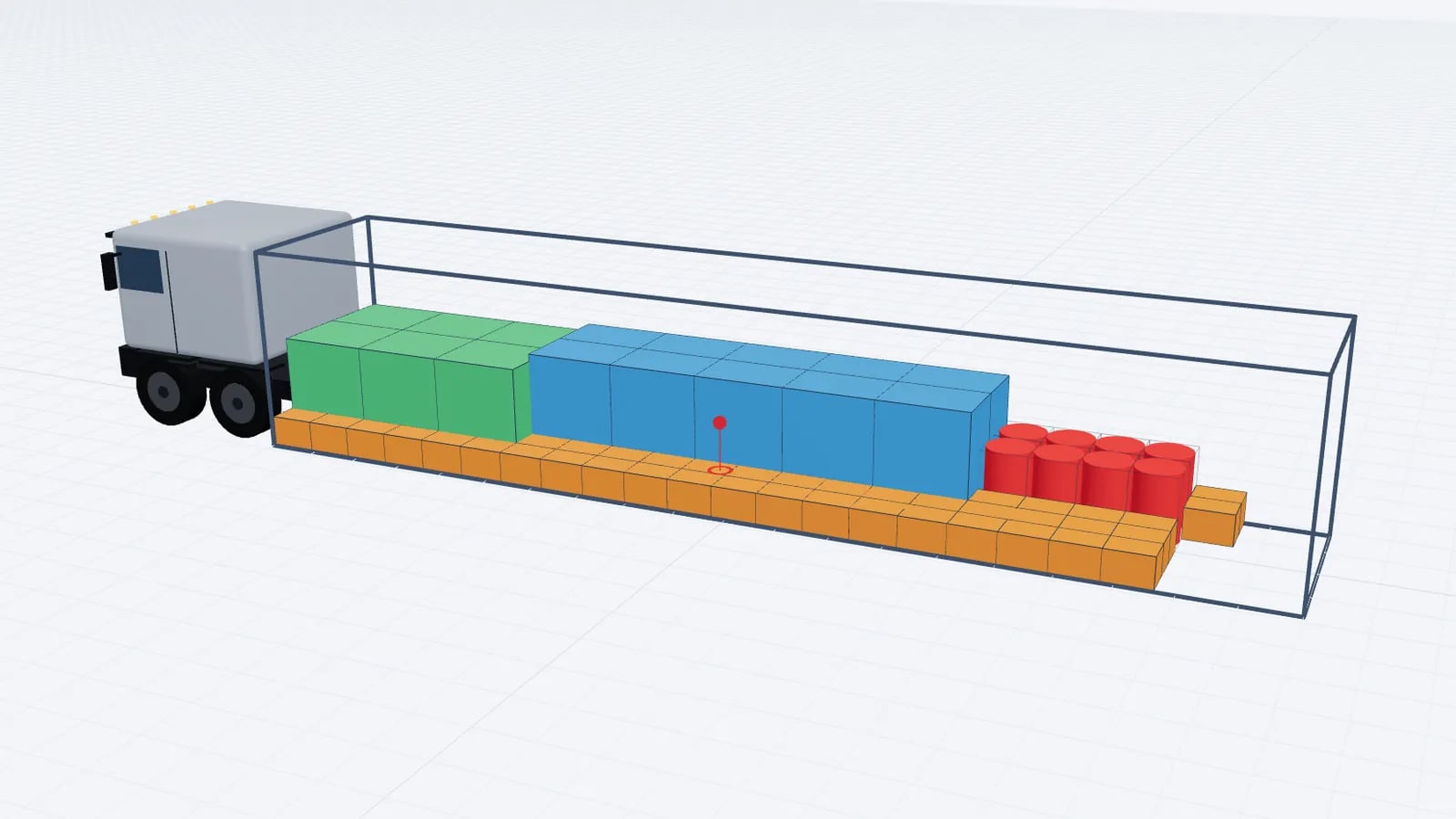
Load planning is the job of deciding, before anything is lifted, which vehicle or container a shipment goes in and exactly where each item sits inside it. A good load plan fits the cargo into the fewest vehicles while staying within payload and axle limits, respecting stacking rules and putting each delivery stop's goods where they can be unloaded without re-handling.
It sounds simple, and for a trailer of identical pallets it is. It gets hard when the cargo is mixed: different footprints and heights, some items that cannot be stacked, heavy machinery next to light cartons and three drops on the same route. That is where most wasted space, damaged goods and overweight axles come from.
Who does load planning
The title varies by company, but the work is the same. In a haulier it is usually the transport planner or dispatcher who checks whether the next order fits on the truck that is already half-booked. In a shipper's warehouse it is the shipping or dock supervisor who decides how the outbound lanes are staged. Freight forwarders plan container stuffing for FCL shipments and consolidate part loads for groupage. Air cargo handlers build ULDs to an aircraft contour.
In smaller firms the same person often does all of it: takes the order, picks the vehicle, plans the load and prints the sheet the driver takes to the dock.
What a good load plan includes
A load plan is not just a picture of boxes in a box. To be useful for the warehouse, the driver and whoever pays the freight bill, it should answer these questions:
| Question | What the plan shows |
|---|---|
| What vehicle? | Type, internal length × width × height, door size, payload, number of vehicles. |
| What is loaded? | A manifest: item names, dimensions, weight per piece, quantity, delivery stop. |
| Where does each item go? | Position in the load space, orientation, what is stacked on what. |
| In what order? | The loading sequence, so the first item in is the last stop's goods. |
| Is it legal? | Total weight against payload, an estimate of axle loads and the centre of gravity. |
| Is it efficient? | Volume used, loading metres used, anything that did not fit. |
If you want a field-by-field checklist you can hand to a new planner, see the load plan template article.
The constraints a planner juggles
Every load plan is a trade-off between filling space and staying within rules. The main constraints are:
- Dimensions. Items must fit inside the internal size of the load space, not the external size of the vehicle. A standard curtainsider trailer is about 13.6 × 2.45 × 2.7 m inside, but door openings, side posts and wheel arches (in vans and some containers) can reduce what is usable.
- Payload. Total cargo weight must stay under the vehicle's payload. In most EU countries a five-axle articulated vehicle in international traffic is limited to 40 t gross under Directive 96/53/EC; the payload is what is left after the tractor and trailer weight.
- Axle loads. Even if total weight is fine, too much weight in one place can overload an axle. The drive axle limit under 96/53/EC is 11.5 t; national rules differ, so check them. See weight distribution in a trailer.
- Stacking. Some items cannot carry anything on top; others can carry only a limited weight. See pallet stacking rules.
- Rotation. Some items must stay upright (this side up) or can only be turned on the floor.
- Delivery order. With multiple stops, goods for the first stop should be nearest the doors.
- Securing. A tight plan with few gaps is easier to secure under EN 12195-1 than one with large voids.
A worked example
Say you have this order for one customer, going by a standard 13.6 m curtainsider with a payload of 24,000 kg (payload varies by vehicle; check yours):
Item: Euro pallet, drinks
- Size (cm)
- 120 × 80 × 150
- Weight each
- 750 kg
- Qty
- 18
- Total weight
- 13,500 kg
Item: Industrial pallet, packaging
- Size (cm)
- 120 × 100 × 120
- Weight each
- 250 kg
- Qty
- 8
- Total weight
- 2,000 kg
Item: Euro pallet, light cartons
- Size (cm)
- 120 × 80 × 100
- Weight each
- 120 kg
- Qty
- 6
- Total weight
- 720 kg
| Item | Size (cm) | Weight each | Qty | Total weight |
|---|---|---|---|---|
| Euro pallet, drinks | 120 × 80 × 150 | 750 kg | 18 | 13,500 kg |
| Industrial pallet, packaging | 120 × 100 × 120 | 250 kg | 8 | 2,000 kg |
| Euro pallet, light cartons | 120 × 80 × 100 | 120 kg | 6 | 720 kg |
Total weight is 16,220 kg, well under payload, so this load is limited by floor space, not weight. On the floor, a Euro pallet loaded lengthwise three abreast uses 0.4 loading metres and an industrial pallet loaded two abreast uses 0.5. The floor need is 24 × 0.4 + 8 × 0.5 = 9.6 + 4.0 = 13.6 LDM. That is exactly the full trailer length with zero tolerance, which is too tight in practice.
The fix is stacking. The light carton pallets are 100 cm high and the packaging pallets are 120 cm, so the six carton pallets can go on top of six of the drinks pallets (150 + 100 = 250 cm, under the 270 cm internal height), provided the drinks pallets are rated to carry 120 kg on top. Now the floor need is 18 × 0.4 + 8 × 0.5 = 7.2 + 4.0 = 11.2 LDM, leaving 2.4 m of free floor at the doors. The heavy drinks pallets should sit forward and spread over the length rather than bunched at the rear, so the trailer axles are not overloaded.
This is the kind of reasoning a planner does dozens of times a day. Done on paper it takes a few minutes per order; with three stops and forty different item sizes it can take an hour.
Manual planning vs load planning software
Speed
- Manual (paper, Excel, experience)
- Fast for uniform pallets, slow for mixed cargo
- 3D load planning software
- Seconds, regardless of mix
Accuracy
- Manual (paper, Excel, experience)
- Depends on the planner; easy to miss a height or weight
- 3D load planning software
- Checks dimensions, payload, stacking on every item
Multi-stop
- Manual (paper, Excel, experience)
- Hard to visualise
- 3D load planning software
- Stop order drives placement
Communication
- Manual (paper, Excel, experience)
- A sketch or a verbal brief to the driver
- 3D load planning software
- Drawings, sequence and a PDF for the dock
Cost
- Manual (paper, Excel, experience)
- Planner time
- 3D load planning software
- Subscription plus planner time
Best for
- Manual (paper, Excel, experience)
- Repeat loads of identical pallets
- 3D load planning software
- Mixed cargo, many orders, new staff
| Manual (paper, Excel, experience) | 3D load planning software | |
|---|---|---|
| Speed | Fast for uniform pallets, slow for mixed cargo | Seconds, regardless of mix |
| Accuracy | Depends on the planner; easy to miss a height or weight | Checks dimensions, payload, stacking on every item |
| Multi-stop | Hard to visualise | Stop order drives placement |
| Communication | A sketch or a verbal brief to the driver | Drawings, sequence and a PDF for the dock |
| Cost | Planner time | Subscription plus planner time |
| Best for | Repeat loads of identical pallets | Mixed cargo, many orders, new staff |
Experienced planners are fast and often right, but their knowledge leaves with them. Software makes the rules explicit and produces a plan that someone else can check. Most teams end up using both: the planner decides, the software does the arithmetic and draws the picture.
In EveryLoading you paste the packing list from Excel, pick the vehicle and click Optimize; the getting started guide walks through a first plan.
Practical tips for better load plans
- Measure the real goods. A pallet that is 150 cm on the order and 158 cm in the warehouse can break a double-stack plan. Ask the warehouse for actual heights, including the pallet.
- Check weight before volume for dense cargo such as drinks, steel or paper. Check volume before weight for furniture, insulation or empty packaging.
- Plan in loading metres when you buy groupage space; see FTL vs LTL.
- Load the last stop first. Then nobody has to unload and reload pallets at the first drop.
- Keep heavy items low and forward of centre, and spread them over the length rather than in one block.
- Write down the rules for items you ship often: can it be stacked, how much on top, can it be rotated. Then every planner applies the same rules.
Tip
Before sending the plan, compare total weight with payload and look at the stack heights. These two checks catch most bad plans.
Frequently asked questions
What is the difference between load planning and route planning?
Route planning decides the order and path of stops for a vehicle. Load planning decides how the goods are arranged inside it, and it uses the stop order from the route so the first delivery is nearest the doors.
Who is responsible for the load plan?
Usually the shipper or the haulier's planner prepares it, but the driver and the loader also share responsibility for safe loading and securing under most national rules. Agree who signs off in your contracts.
Do I need software for load planning?
Not for a trailer of identical pallets. Software pays off when cargo is mixed, there are several stops, or plans need to be shared with drivers and customers.
What is a good fill rate for a truck?
There is no single target, because dense cargo hits the weight limit before the trailer is full. Judge a plan by whichever limit it reaches first: floor length, volume or payload.
Keep reading
Load planning basics · · 5 min read
FTL vs LTL: Full Truckload, Part Load or Groupage?
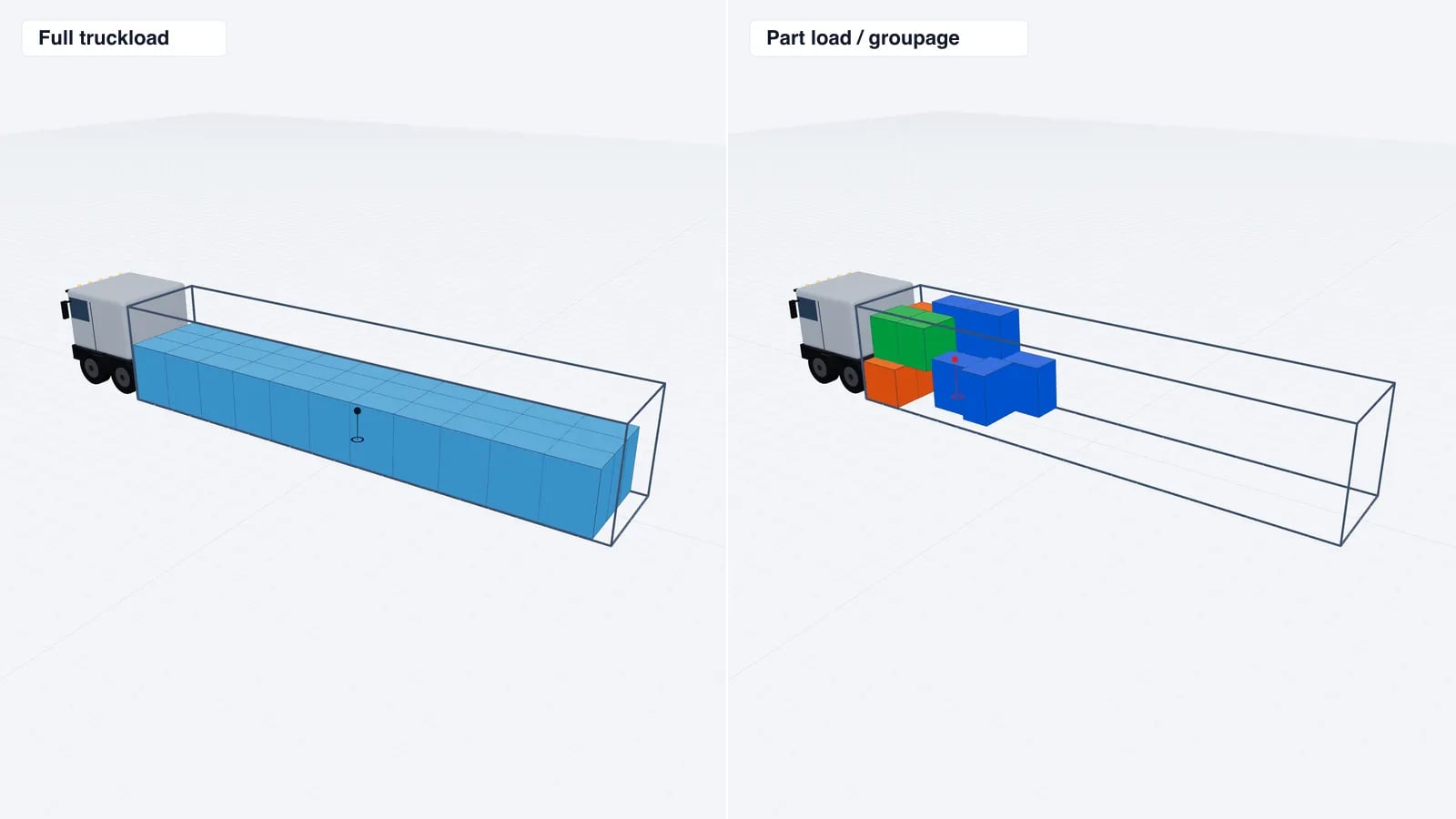
FTL books a whole truck; LTL and groupage share it with other shippers. Compare cost, speed and handling, see how LDM drives LTL price and find your break-even.
Read article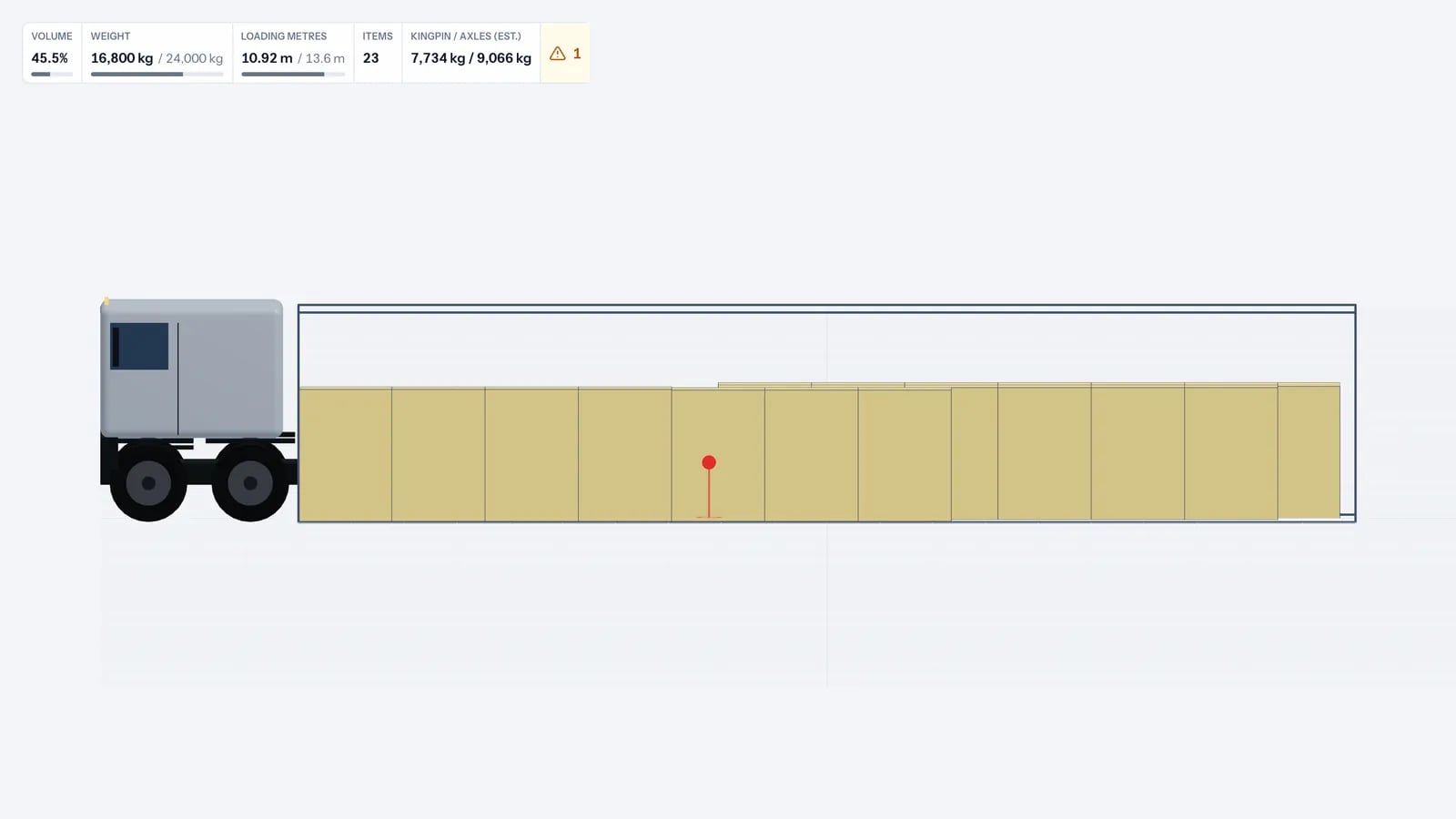
Load planning basics · · 6 min read
Weight Distribution in a Trailer: Axle Loads Made Simple
Where you put heavy cargo decides the load on each axle. Learn how trailer weight distribution works, how to estimate axle loads and how to avoid overloading.
Read article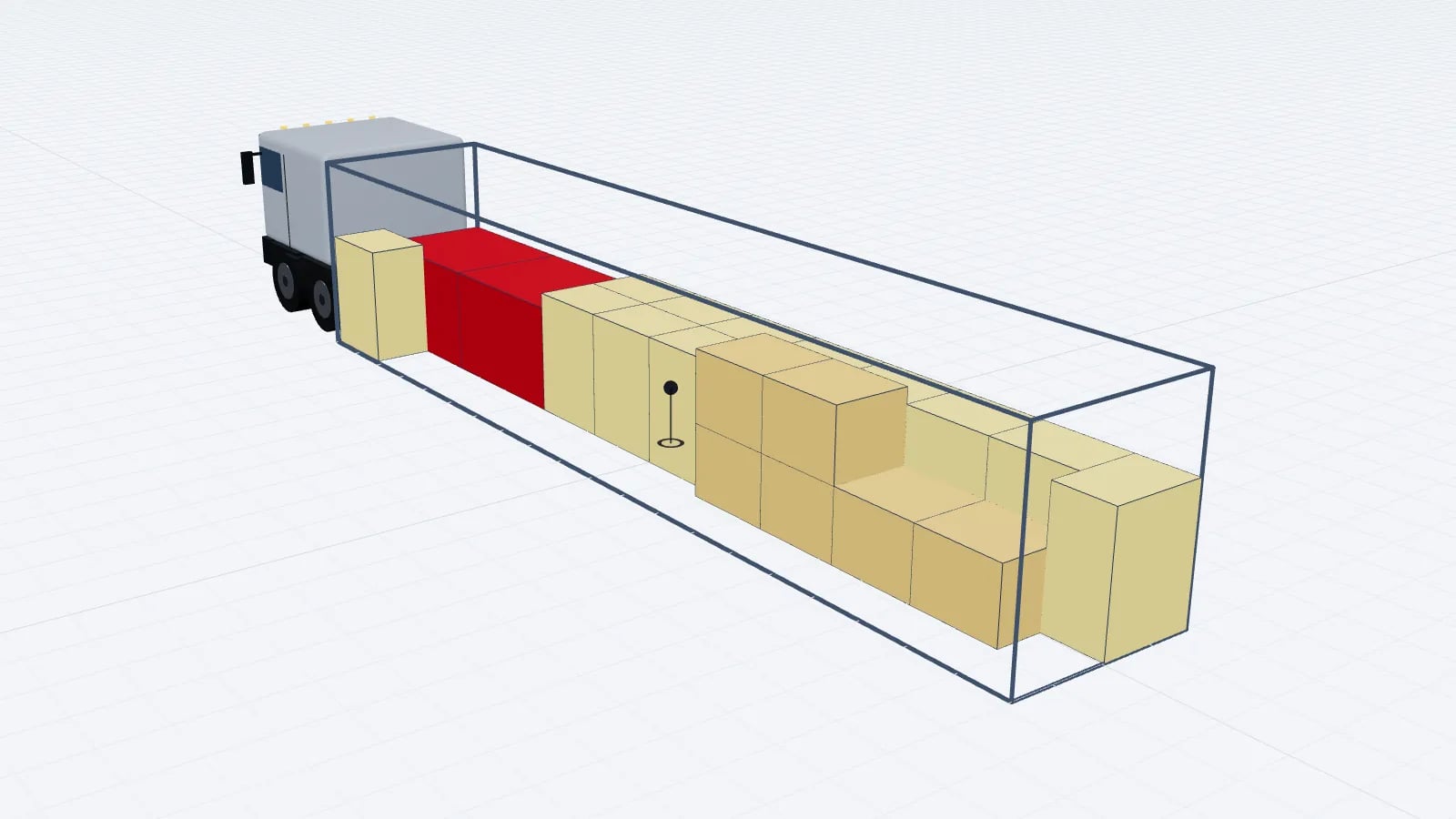
Load planning basics · · 5 min read
Load Centre of Gravity: How to Calculate It for a Truck Load
The centre of gravity of a load is the weighted average of every item's position. Learn the formula, a worked truck example and checks for lateral offset.
Read article