FCL vs LCL: Cost Break-Even, Transit Time and Load Planning
FCL vs LCL explained: how to find the CBM where a full container beats groupage, with a worked break-even example, plus transit, risk and load planning.
Sea containers · · 6 min read
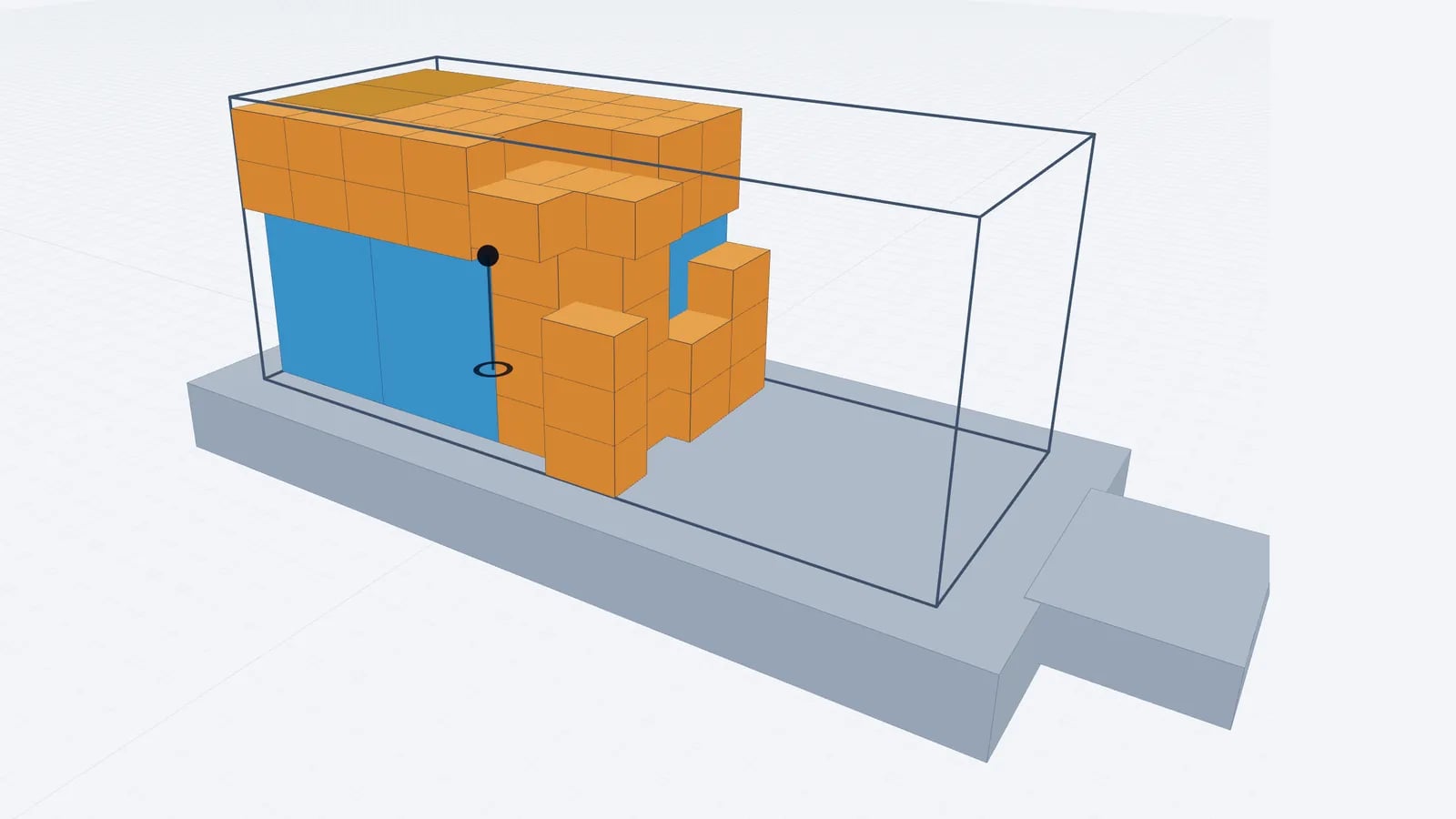
FCL (full container load) means you book a whole container for your cargo and pay a flat price per box. LCL (less than container load) means your cargo shares a container with other shippers and you pay per cubic metre or per tonne. In FCL vs LCL, LCL is usually cheaper for small volumes and FCL wins above a break-even volume that you can calculate from your own quotes; FCL is also faster door to door and handles the goods less.
Freight rates change from week to week and differ a lot by trade lane, so this article does not quote market prices. The figures in the worked example are illustrative only, chosen to show the method. Plug in the quotes you actually receive.
How FCL and LCL are charged
Unit of charge
- FCL
- Per container (20ft, 40ft, 40ft HC)
- LCL
- Per revenue ton (W/M): 1 m³ or 1,000 kg, whichever is greater
Origin charges
- FCL
- Terminal handling per box, trucking of the container
- LCL
- CFS (warehouse) receiving and handling per W/M, trucking of the goods to the CFS
Destination charges
- FCL
- Terminal handling per box, delivery of the container
- LCL
- CFS devanning and handling per W/M, delivery of the goods
Minimum
- FCL
- One container
- LCL
- Usually a minimum of 1 W/M
Who packs the box
- FCL
- You, or your forwarder at your premises
- LCL
- The consolidator, at the CFS
| FCL | LCL | |
|---|---|---|
| Unit of charge | Per container (20ft, 40ft, 40ft HC) | Per revenue ton (W/M): 1 m³ or 1,000 kg, whichever is greater |
| Origin charges | Terminal handling per box, trucking of the container | CFS (warehouse) receiving and handling per W/M, trucking of the goods to the CFS |
| Destination charges | Terminal handling per box, delivery of the container | CFS devanning and handling per W/M, delivery of the goods |
| Minimum | One container | Usually a minimum of 1 W/M |
| Who packs the box | You, or your forwarder at your premises | The consolidator, at the CFS |
The W/M rule matters for dense goods. Eight cubic metres of steel parts weighing 12,000 kg are charged as 12 revenue tons, not 8. Light goods are charged on volume, so an accurate CBM figure is money: use the CBM calculator and measure pallets with their overhang.
FCL vs LCL break-even: a worked example
Suppose you have these quotes on one lane. They are invented for the example and not a guide to current prices:
- LCL: ocean freight $85 per W/M, origin CFS $30 per W/M, destination CFS $35 per W/M, so $150 per W/M, plus $200 fixed for documents and handling.
- FCL 20ft: ocean freight $1,600, origin terminal handling $250, destination terminal handling $300, documents $100, so $2,250 per container.
- FCL 40ft: ocean freight $2,400, terminal handling $350 and $400, documents $100, so $3,250 per container.
LCL costs 150 × W/M + 200. It equals the 20ft price when 150 × W/M + 200 = 2,250, so at 13.7 W/M. Below that, LCL is cheaper; above it, the 20ft is.
Cargo (W/M): 5
- LCL
- $950
- FCL 20ft
- $2,250
- Cheaper
- LCL
Cargo (W/M): 10
- LCL
- $1,700
- FCL 20ft
- $2,250
- Cheaper
- LCL
Cargo (W/M): 13.7
- LCL
- $2,255
- FCL 20ft
- $2,250
- Cheaper
- About equal
Cargo (W/M): 15
- LCL
- $2,450
- FCL 20ft
- $2,250
- Cheaper
- FCL
Cargo (W/M): 20
- LCL
- $3,200
- FCL 20ft
- $2,250
- Cheaper
- FCL
Cargo (W/M): 25
- LCL
- $3,950
- FCL 20ft
- $2,250
- Cheaper
- FCL
| Cargo (W/M) | LCL | FCL 20ft | Cheaper |
|---|---|---|---|
| 5 | $950 | $2,250 | LCL |
| 10 | $1,700 | $2,250 | LCL |
| 13.7 | $2,255 | $2,250 | About equal |
| 15 | $2,450 | $2,250 | FCL |
| 20 | $3,200 | $2,250 | FCL |
| 25 | $3,950 | $2,250 | FCL |
The 40ft only comes into it when the cargo no longer fits a 20ft. A 20ft has about 33 m³ inside and around 25–28 m³ is realistically usable, so in this example 25 m³ would still go in a 20ft. Above that the comparison is 40ft against two 20fts, which 20ft vs 40ft covers.
Now the dense case. The 8 m³ of steel parts weighing 12,000 kg are 12 W/M, so LCL costs 150 × 12 + 200 = $2,000, only $250 under the 20ft. Add the extra handling risk and a few days of transit, and many shippers would choose FCL here even though the volume is small.
Good to know
Compare door-to-door totals, not ocean freight alone. LCL can attract extra charges at destination, such as CFS storage after the free days, and FCL can attract demurrage and detention if the container is not returned in time. Ask each forwarder for a full breakdown.
Transit time and reliability
The vessel takes the same time either way. The difference is on land. LCL cargo has to reach the CFS before a cut-off, wait until the consolidated container is full or the sailing is due, and be devanned and sorted at destination before you can collect it. That typically adds several days at each end, and more on lanes with few direct consolidation services. FCL goes from your dock to the terminal sealed and from the terminal straight to the consignee.
LCL can also roll: if the consolidated box is not full enough, the consolidator may wait for the next sailing. For time-sensitive goods, ask how often the service sails and whether the container is direct or relayed through a hub.
Risk and handling
- Handling. LCL cargo is handled at least twice more, at origin and destination CFS, by forklifts that see many shippers' pallets per hour.
- Neighbours. Your goods share a box with cargo you do not know. Odour, moisture or a badly secured neighbour can damage them.
- Delays from others. A customs hold on another shipper's cargo in the same container can delay devanning for everyone.
- Security. An FCL box is sealed at your premises and the seal is only broken at destination or by customs. That makes claims easier to argue, because the condition at sealing is recorded. See container loading documentation.
How load planning differs
With FCL you plan the whole container: the arrangement, weight distribution, securing and sequence are yours. Utilization becomes your cost lever, because every empty metre is paid for. A container loading calculator or a 3D plan tells you how much fits before you book, and container utilization explains how to measure the result.
With LCL you plan the shipment, not the box. The consolidator decides where it goes, so your job is to make it easy to load well and hard to damage:
- Palletise and shrink-wrap loose cartons so they move as one unit.
- Make it stackable if the goods allow, with a flat, strong top. Non-stackable cargo is often charged extra, because the space above it is lost to the consolidator.
- Declare real dimensions. The CFS measures the cargo on receipt and invoices what it measures.
- Mark every piece with the consignee, the number of pieces and handling marks, because your cargo will be separated from its paperwork more than once.
- Keep the height reasonable. Very tall or very heavy single pieces may be refused or surcharged; ask about limits first.
Tip
Near the break-even, check whether the cargo really fits a 20ft before choosing FCL. Mixed pallets and non-stackable items can need a 40ft even when the CBM says 20ft, which moves the break-even. The container size calculator gives a first answer and the 3D planner shows the real fit.
Choosing between FCL and LCL
| Choose FCL when | Choose LCL when |
|---|---|
| Your volume is above the break-even for your quotes | You ship a few cubic metres, well below the break-even |
| The goods are fragile, valuable or odour-sensitive | The goods are robust, palletised and stackable |
| Transit time is tight | A few extra days do not matter |
| The cargo is dense and close to the break-even by weight | You ship often in small lots and want to avoid holding stock |
| You want to seal and record the load yourself | You do not have the dock or labour to stuff a container |
The same logic applies on the road, where part loads go as groupage and full loads as FTL; see our guide to FTL vs LTL and groupage. For FCL loads, EveryLoading plans 20ft, 40ft and 40ft HC containers in 3D, and you can start with a free account; the sea freight use case shows how.
Frequently asked questions
At how many CBM is FCL cheaper than LCL?
It depends on your quotes. Divide the 20ft all-in price minus the fixed LCL charges by the LCL rate per W/M; with the illustrative rates in this article that gives about 14 m³.
Is LCL slower than FCL?
Usually yes. The sailing is the same, but LCL cargo waits for consolidation at origin and for devanning and sorting at destination, which adds days at both ends.
What is a revenue ton in LCL shipping?
It is the chargeable unit for LCL: one cubic metre or 1,000 kg, whichever gives the higher figure. Dense cargo is charged by weight, light cargo by volume.
Can I ship FCL if my cargo does not fill the container?
Yes. You pay for the whole container whether it is full or not, which is often worth it for fragile, urgent or high-value goods. Secure the cargo well, because a part-filled box has room for the load to move.
Keep reading
Sea containers · · 7 min read
Container Loading Report: What to Record for Every Box
What a container loading report should hold: tally sheet, photos per stage, seal number, VGM and the load plan, and the evidence that decides cargo claims.
Read article
Sea containers · · 7 min read
Container Load Calculator for Mixed Cargo: A 40ft Example
Why a container load calculator for mixed cargo must place every piece: pallets, crates and cartons in one 40ft, worked through with real numbers.
Read article
Sea containers · · 8 min read
Container Loading Calculator: How It Works and What to Enter
How a container loading calculator works, which inputs it needs (inside size, door, payload, rotation, stacking) and why volume-only answers overstate fit.
Read article