How to Load a Truck: Axles, Heavy Low, Securing and Safety
How to load a truck step by step: plan first, keep heavy items low and spread over the axles, load towards the doors, secure the load and check the weight.
Road freight · · 7 min read
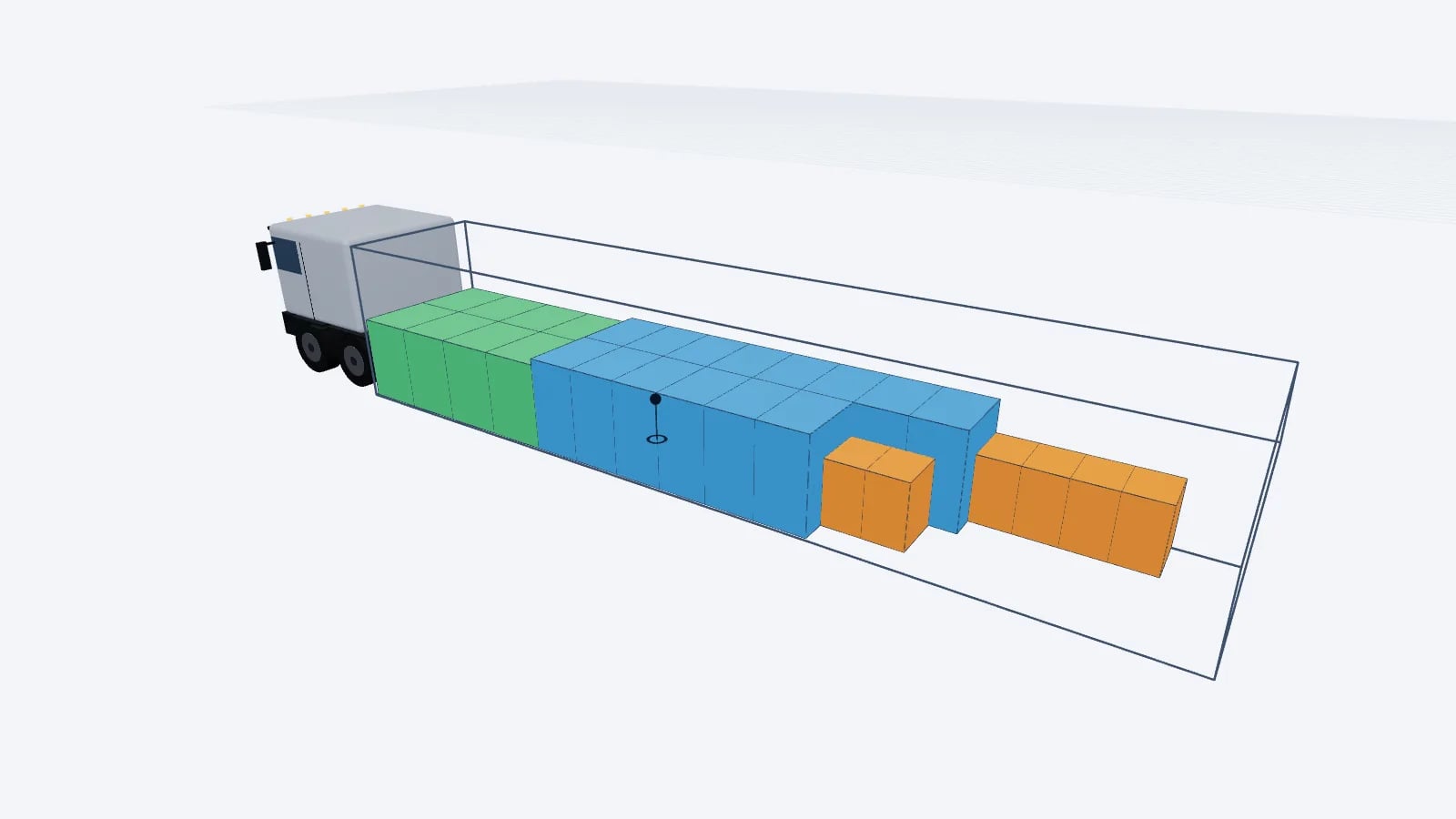
To load a truck, plan the order first, put heavy items low and spread them over the axles, work from the front wall towards the doors, keep the load tight, secure it, and check the weight before you leave. Most loading problems, from overloaded axles to crushed cartons, come from skipping one of those steps.
This guide covers trailers, box trucks and rigid trucks loaded from the back with a forklift or pallet jack. The principles hold for side loading too. The law on weights and securing differs by country, so use the limits that apply to your vehicle and route.
Before the first pallet goes on
Loading starts at the desk or at the dock door, not on the forklift. Check four things:
- What you are loading. Real size, weight and quantity of every item, and which items can carry weight on top.
- What you are loading into. Inside length, width and height, door opening and payload. See US semi truck dimensions or the 13.6 m trailer guide.
- Where it is going. The delivery order decides what goes in last.
- Whether it fits at all. A loading metre calculation gives a fast answer on floor space before you start.
A short written plan beats memory, because a load that is half on when you find out it does not fit has to come off again. How to make a load plan goes through it in detail.
How to load a truck, step by step
- 1Inspect the vehicle. Check the floor, walls, roof and doors for damage, holes, water and old nails. Sweep it if needed, and refuse a vehicle that is not fit for the goods.
- 2Secure the vehicle at the dock. Apply the brakes, chock the wheels or use the dock restraint, and confirm the driver will not move.
- 3Stage the goods in loading order. Line them up at the door so the forklift driver does not hunt for pallets.
- 4Start at the front wall. Place the first heavy row, or the row your plan puts there, and work towards the doors.
- 5Keep heavy items low and centred. Light and fragile goods go on top or in their own row, and never under anything heavier.
- 6Keep rows tight. Close gaps as you go, and fill or block any gap you cannot close.
- 7Check as you load. Compare each row with the plan. If something changes, change the plan rather than guessing.
- 8Secure the load. Use straps, bars, friction mats, dunnage or airbags to suit the goods and the vehicle.
- 9Check the last row and the doors. Nothing should rest against the doors or be able to fall when they open.
- 10Check the weight. Compare the total with the payload and, if you can, use a weighbridge to read each axle group.
Put the weight over the axles
A truck can be under its gross limit and still be overloaded on one axle. On a semitrailer, the cargo's weight is shared between the kingpin, which loads the tractor, and the trailer axles. Where the weight sits along the trailer decides that split.
A partial load is where this goes wrong, because pushing everything to the front wall feels tidy. Take 15 Euro pallets at 800 kg each, 12,000 kg in total, in rows of three. They take 6 m of floor. The trailer below is hypothetical: kingpin 1.0 m behind the front wall and the centre of the axle group 9.6 m behind it, so the supports are 8.6 m apart.
Placement: All against the front wall
- Load centre from front wall
- 3.0 m
- On trailer axles
- about 2,800 kg
- On kingpin
- about 9,200 kg
Placement: Spread along the floor
- Load centre from front wall
- 6.0 m
- On trailer axles
- about 7,000 kg
- On kingpin
- about 5,000 kg
| Placement | Load centre from front wall | On trailer axles | On kingpin |
|---|---|---|---|
| All against the front wall | 3.0 m | about 2,800 kg | about 9,200 kg |
| Spread along the floor | 6.0 m | about 7,000 kg | about 5,000 kg |
These figures are cargo only. The same 12 t puts almost twice as much on the tractor when it is bunched at the front. To spread a part load, leave planned gaps between rows and block them, or move the whole group back from the wall. Weight distribution in a trailer gives the formula, and how to avoid overloading fines covers roadside checks.
Good to know
In the US, the federal limits on the Interstate are 80,000 lb gross, 20,000 lb on a single axle and 34,000 lb on a tandem. In most of the EU, a typical international articulated vehicle is limited to 40 t. National rules and local limits can differ, and only a scale shows real axle loads.
Heavy low, light high
Keep the centre of gravity as low and as close to the centre line as you can. A high load makes the truck more likely to lean and tip in a curve, and heavy goods on light goods crush what is below.
- Put the heaviest pallets on the floor, never on top of a lighter pallet.
- Balance left and right. A heavy row on one side leans the whole vehicle in every bend.
- If you stack, check that the lower pallet can carry the upper one. See pallet stacking rules.
- Spread concentrated weight. A heavy machine on a small base may need timber or a load spreader so that it does not overload the floor.
Load towards the door side
The goods nearest the doors come off first, so the rule for several stops is last on, first off. Put the last delivery against the front wall and the first delivery at the doors. In a side-loaded vehicle, think in lanes rather than rows, and do not block access to an earlier stop.
- Plan the stop order before you load, and show it on the plan so nobody has to guess. See multi-drop load planning.
- Keep each stop's goods together, and mark them if they look the same.
- After each stop, check what is left. Weight distribution changes as the truck empties, and a load that was fine at the start can overload an axle later.
- Leave the last row blocked or strapped, so it cannot move back and rest against the doors.
- Measure the door opening. It is usually lower than the ceiling, and it sets the tallest item you can load through the back.
Secure the load
A load has to stay in place under hard braking, sharp turns and uneven road. The weight of the cargo alone does not hold it, so use more than friction. The three basic methods are:
Method: Blocking
- How it works
- Cargo stands tight against the wall, another row, bars or dunnage
- Good for
- Pallets, cartons, drums in rows
Method: Lashing
- How it works
- Straps or chains press the load down or tie it directly
- Good for
- Stacked pallets, machinery, open vehicles
Method: Friction
- How it works
- Anti-slip mats increase grip between cargo and floor
- Good for
- Used with blocking and lashing, not alone
| Method | How it works | Good for |
|---|---|---|
| Blocking | Cargo stands tight against the wall, another row, bars or dunnage | Pallets, cartons, drums in rows |
| Lashing | Straps or chains press the load down or tie it directly | Stacked pallets, machinery, open vehicles |
| Friction | Anti-slip mats increase grip between cargo and floor | Used with blocking and lashing, not alone |
Rules differ by region. In Europe, EN 12195 is the usual reference for lashing calculations. In the US, 49 CFR Part 393 sets the cargo securement rules, including a minimum number of tiedowns and an aggregate working load limit of at least half the weight of the cargo. Tiedowns should be rated, undamaged and tight, and should be checked again after the first stretch of driving.
Safety on the dock
- Keep people out of the truck and the forklift's path while it moves.
- Check the dock plate or ramp, and never drive over a gap you cannot see.
- Support a parked trailer that has no tractor, so the forklift cannot tip it nose down.
- Wear the protective equipment your site requires, and follow its traffic rules.
- Never stand behind doors when opening them. Goods can fall, so open one door slowly first.
- Do not climb on the load. Use a platform or fall protection if you must work at height.
- Stop loading if the load looks wrong. Fixing it at the dock is far easier than on the road.
Common truck loading mistakes
- Loading by feel, then running out of floor with pallets still on the dock.
- Bunching a part load at the front wall.
- Trusting a gross weight figure and ignoring the axles.
- Placing heavy goods above light goods because of the delivery order.
- Leaving gaps that let the load gather speed under braking.
- Writing the order on a note the driver never sees.
Plan the loading before the truck arrives
All of this is easier when the arrangement is decided in advance. A plan shows what fits, how the weight falls and which item goes next, so the crew follows a sequence instead of solving a puzzle at the dock. The road transport use case shows how that works for trucks and trailers, and the truck loading software guide explains what such tools do.
Tip
EveryLoading builds this plan in 3D. Paste your packing list from Excel, optimize, and check the axle load estimate. Play the loading sequence step by step, then send the crew the plan as a PDF or a share link.
Frequently asked questions
What is the correct way to load a truck?
Plan the order, start at the front wall, keep heavy items low and spread along the floor, keep the rows tight, secure the load, and check the weight before leaving.
Where should the heaviest items go on a truck?
Low on the floor and spread over the axles, not all at one end. Pushing a heavy part load against the front wall can overload the tractor even when the gross weight is legal.
What does last on, first off mean?
The goods for the first delivery are loaded last, so they sit at the doors. Goods for the final delivery go in first, against the front wall.
How do I stop cargo moving in a truck?
Combine blocking, lashing and anti-slip mats so the load cannot slide or tip. Keep rows tight, fill gaps, and recheck tiedowns after the first stretch of driving.
Keep reading
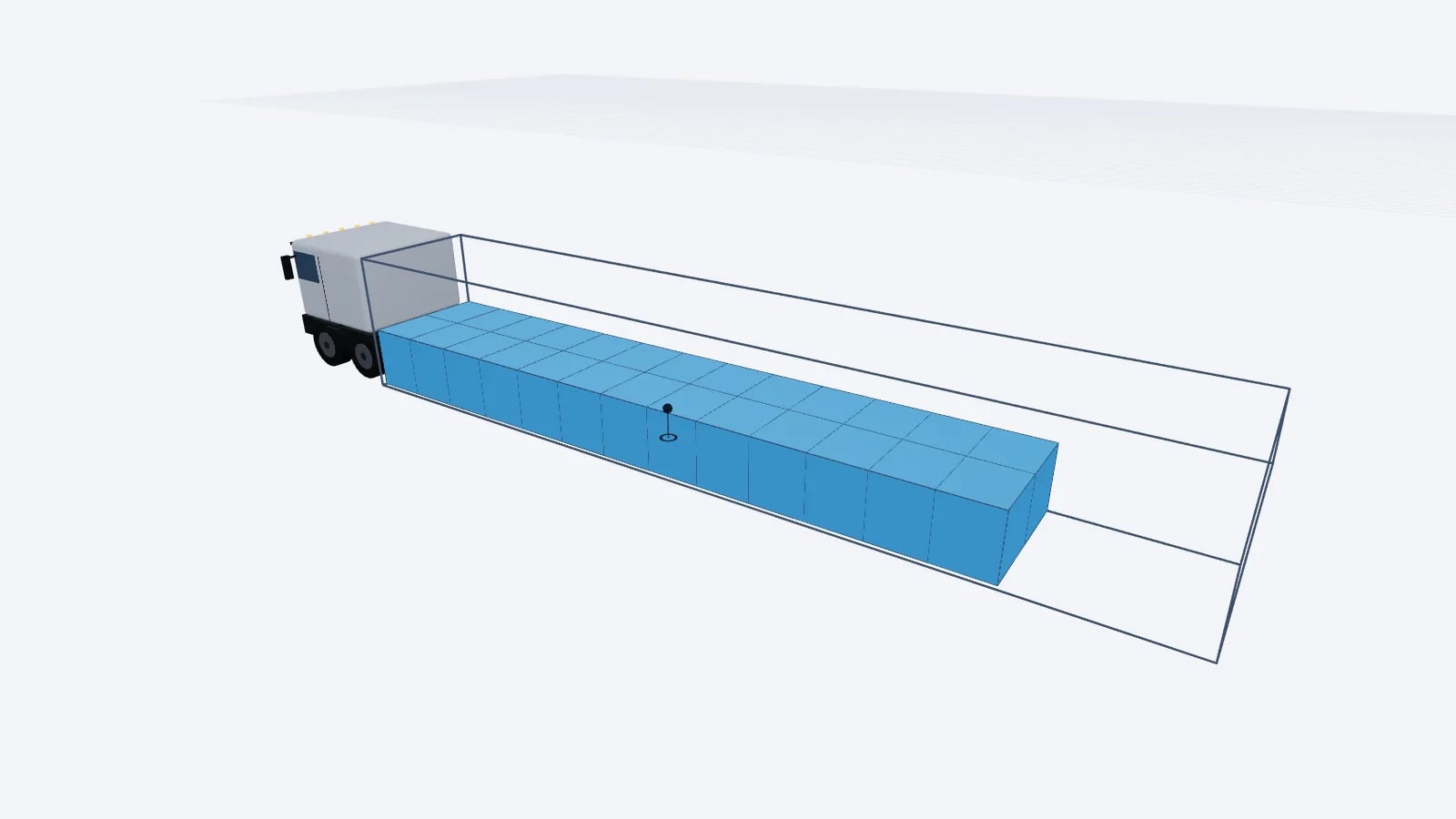
Road freight · · 8 min read
Semi Truck and Trailer Dimensions: US Length, Width, Height
Semi truck dimensions in the US: overall length, width and height, 53 ft and 48 ft dry vans, reefers and flatbeds, in feet and metric, with pallet counts.
Read article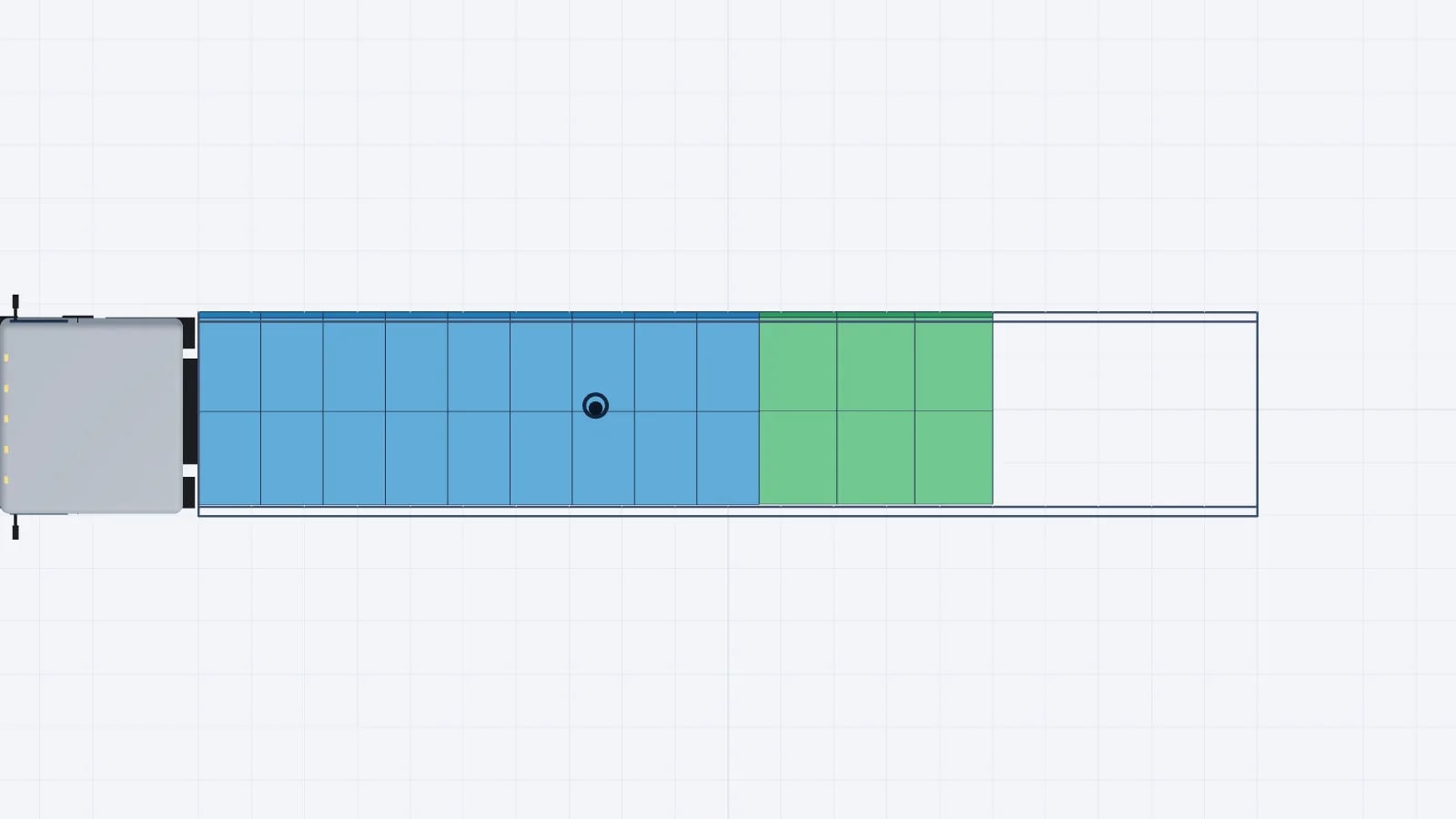
Road freight · · 7 min read
Truck Loading Diagram: What to Show and How to Read One
A truck loading diagram shows where every item goes. What it must include, how to read top, side and rear views, and how to make a trailer loading diagram.
Read article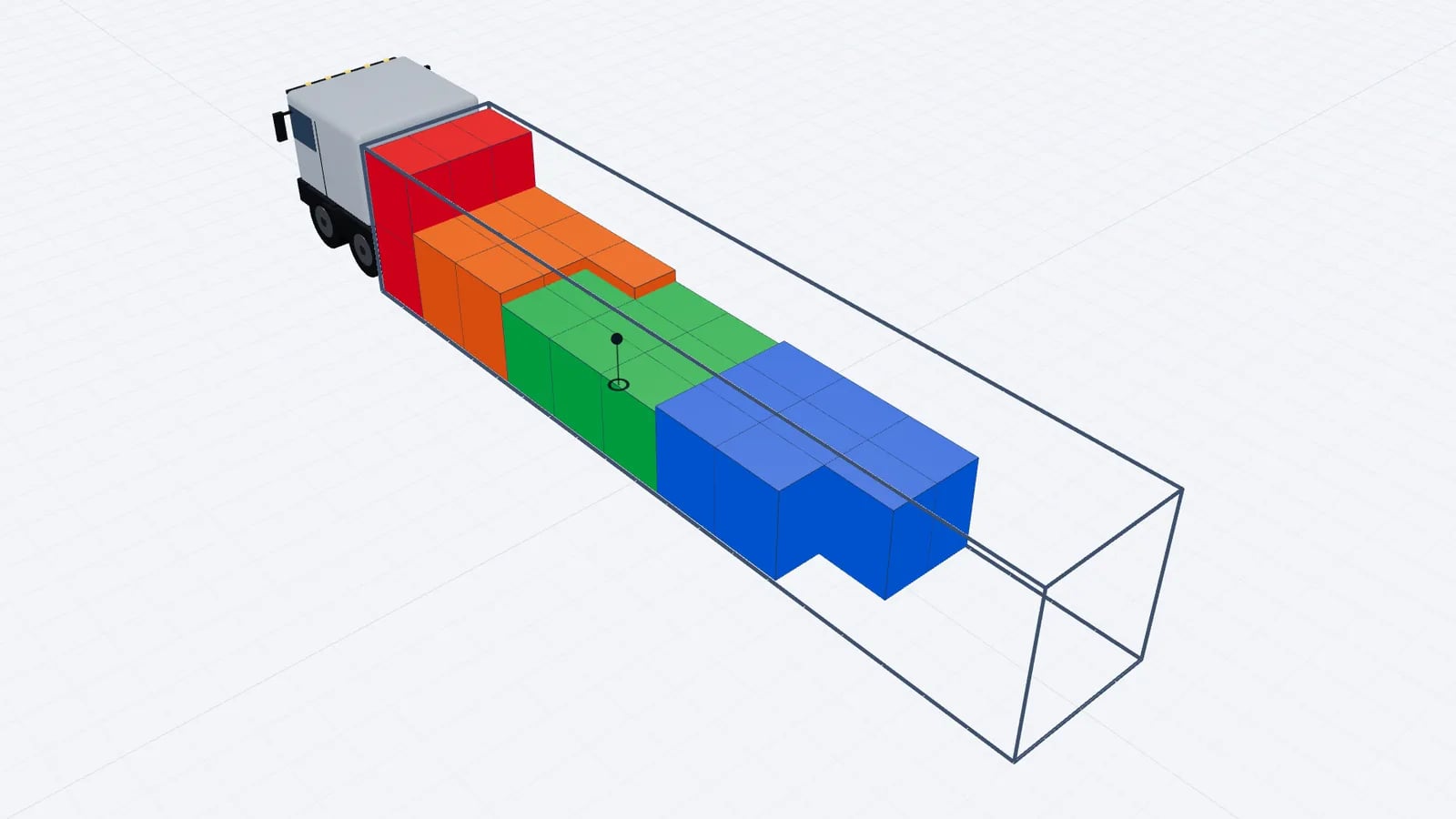
Road freight · · 5 min read
Multi Drop Loading: How to Plan a Truck for Several Stops
Plan a multi-drop truck so every stop unloads without moving other cargo: LIFO order, lanes, stop numbers, axle loads after each drop and a worked example.
Read article