Truck Loading Safety: Docks, Forklifts and Trailer Creep
Truck loading safety at the dock: vehicle restraints, dock plates, forklift traffic, trailer creep, falls, PPE and clear roles, with prevention that works.
Road freight · · 7 min read
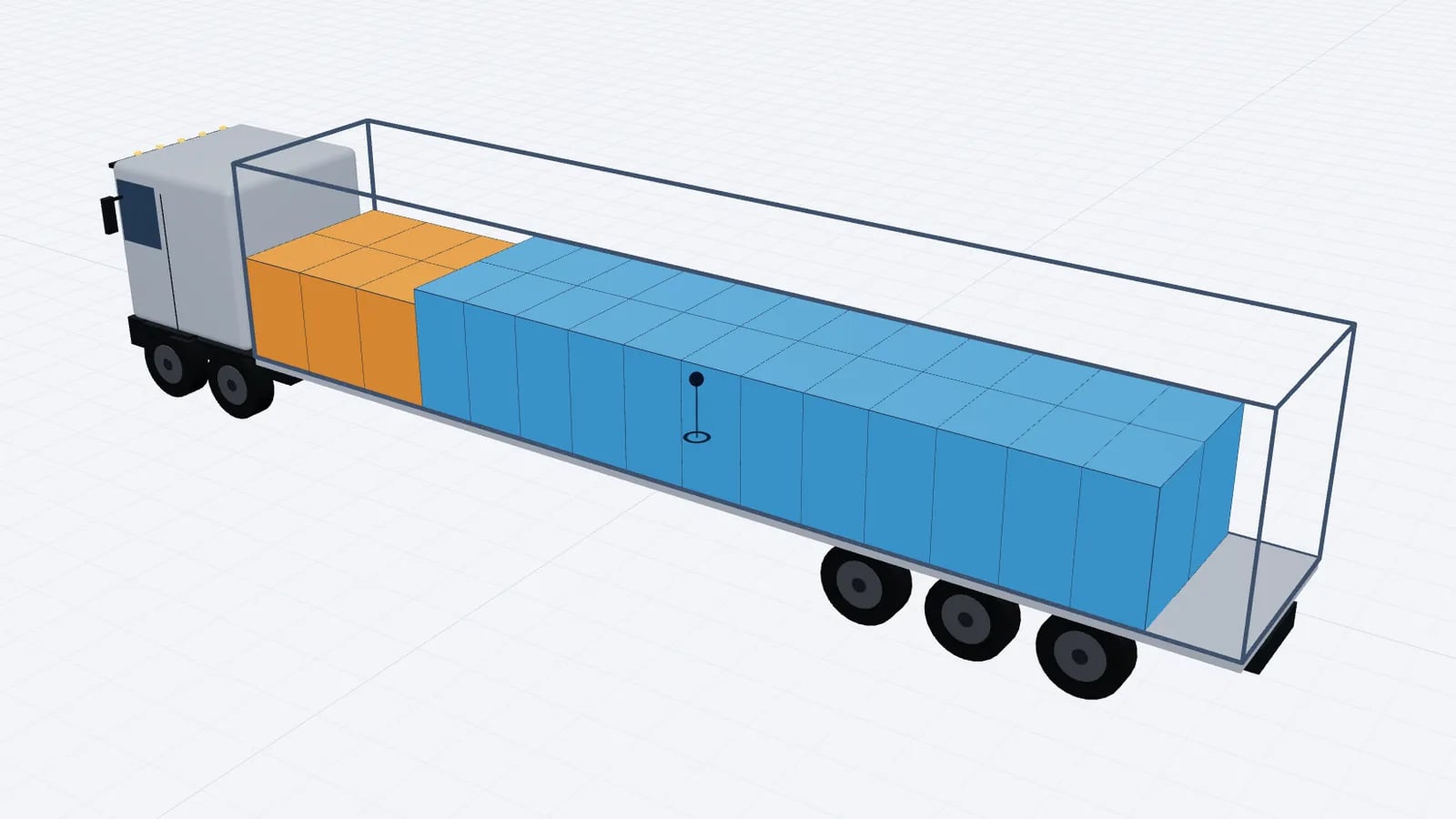
Truck loading safety comes down to a few controls that stop the most serious accidents at the loading bay: the vehicle cannot move while people or forklifts work in it, the bridge between dock and trailer is sound, forklifts and pedestrians are kept apart, and nobody falls from the dock edge or the load. Paperwork records these controls; it does not replace them. This guide goes through each hazard, what causes it, and the physical measures that prevent it.
Rules differ by country. In the US, OSHA's powered industrial truck standard covers forklifts entering trucks, and in the UK the HSE publishes loading bay guidance; most EU countries have similar national rules. Use this as a practical overview and check the rules and your own risk assessment for each site.
The hazards that cause most loading bay accidents
Hazard: Early departure
- What happens
- The truck pulls away while a forklift is half inside; the forklift drops off the dock
- Main control
- Vehicle restraint or key control, plus a signal system
Hazard: Trailer creep (dock walk)
- What happens
- Repeated braking and acceleration of a forklift pushes the trailer away from the dock, opening a gap
- Main control
- Restraint, wheel chocks, trailer brakes applied
Hazard: Trailer tipping or upending
- What happens
- An uncoupled trailer tips forward when a forklift drives to the front
- Main control
- Trailer stands or landing-leg supports
Hazard: Dock plate or leveller failure
- What happens
- The plate slips, the lip does not rest on the bed, or the capacity is exceeded
- Main control
- Rated, inspected equipment; correct lip engagement
Hazard: Forklift and pedestrian contact
- What happens
- A forklift reversing out of a trailer hits someone at the door
- Main control
- Separated walkways, no-go zones, visibility
Hazard: Falls from the dock edge
- What happens
- A person steps back off an open dock or falls between dock and trailer
- Main control
- Edge barriers, closed doors, no jumping down
Hazard: Falling goods
- What happens
- Cargo that shifted in transit falls when the doors open or the curtain is pulled
- Main control
- Open doors carefully, inspect before unloading
| Hazard | What happens | Main control |
|---|---|---|
| Early departure | The truck pulls away while a forklift is half inside; the forklift drops off the dock | Vehicle restraint or key control, plus a signal system |
| Trailer creep (dock walk) | Repeated braking and acceleration of a forklift pushes the trailer away from the dock, opening a gap | Restraint, wheel chocks, trailer brakes applied |
| Trailer tipping or upending | An uncoupled trailer tips forward when a forklift drives to the front | Trailer stands or landing-leg supports |
| Dock plate or leveller failure | The plate slips, the lip does not rest on the bed, or the capacity is exceeded | Rated, inspected equipment; correct lip engagement |
| Forklift and pedestrian contact | A forklift reversing out of a trailer hits someone at the door | Separated walkways, no-go zones, visibility |
| Falls from the dock edge | A person steps back off an open dock or falls between dock and trailer | Edge barriers, closed doors, no jumping down |
| Falling goods | Cargo that shifted in transit falls when the doors open or the curtain is pulled | Open doors carefully, inspect before unloading |
Stop the vehicle from moving
The single most important rule: a vehicle that people or forklifts are working in must not be able to move. Early departure and trailer creep are both caused by a vehicle that was free to move.
- Vehicle restraints. A hook or barrier at the dock face holds the trailer's rear underrun bar or wheel. Linked to a red and green light inside and outside, it shows the forklift driver when it is safe to enter and the truck driver when it is safe to leave.
- Key or glad-hand control. Some sites take the cab key or lock the trailer's air coupling until loading is signed off. This stops the driver from leaving early, and it works where restraints do not fit every vehicle.
- Wheel chocks. Simple and cheap, but only effective when placed correctly on both sides and removed by the right person. In the US, OSHA requires brakes set and wheel chocks or another positive restraint when a forklift boards a truck or trailer.
- Trailer stands. An uncoupled semi-trailer rests on landing legs near the front. A loaded forklift driving to the front wall can tip it forward or collapse the legs. Place a stand under the front of any uncoupled trailer.
Good to know
Trailer creep is slow. Each forklift entry pushes the trailer a few millimetres, and after twenty pallets the gap between dock and trailer can be wide enough for the dock plate lip to drop. Check the gap during long loads, not only at the start.
Dock plates, levellers and ramps
The bridge between the dock and the trailer bed carries the forklift, the load and the driver at every crossing. A failure here is sudden and serious.
- 1Check the rating. The plate or leveller must be rated for the forklift plus its heaviest load. A 3-tonne forklift (around 4.5 t empty is common for that class) carrying a 1,000 kg pallet puts far more on the plate than the pallet alone.
- 2Check the lip. A leveller's lip must rest flat on the trailer bed with enough overlap. A lip resting on the edge of a cross-member or a damaged floor can slip.
- 3Check the height difference. A steep slope makes the forklift ground out or lose the load. If the trailer is far higher or lower than the dock, use a different dock or vehicle.
- 4Secure portable plates. Loose dock plates must be fixed against sliding, usually with locating lugs or pins.
- 5Inspect regularly. Cracked welds, worn hinges and leaking hydraulics are found on inspection or found by the forklift.
The types of plates, levellers, yard ramps and tail lifts, and how to choose between them, are covered in truck loading equipment.
Forklift traffic and people on the dock
Most dock injuries involve a forklift and a person on foot. The forklift driver's view is blocked by the load going in and by the mast and the trailer coming out.
- Mark pedestrian walkways that do not cross the forklift's path into the trailer, and keep the area in front of each open door a forklift-only zone while loading.
- Keep drivers out of the trailer and the loading area. A waiting room or a marked safe area for drivers removes the most common person in the wrong place.
- Use lights in the trailer. A dark trailer interior hides people and gaps in the floor.
- Train and authorise forklift drivers. In the US, OSHA requires operator training and evaluation; in the EU and UK, national rules require trained and authorised operators.
- Set speed limits and horn rules at blind corners and door entries.
- Do not use the forklift to push or pull trailers, or to lift people without an approved platform.
Falls from height and falling goods
Docks are typically around 1.2 m (about 4 ft) above the yard. A fall from that height onto concrete causes serious injuries, and the risk is highest at doors left open with no vehicle docked.
- Close dock doors or fit a barrier when no vehicle is docked.
- Do not jump from the dock or the trailer; use steps.
- Do not climb on the load to fix a strap or a tarpaulin. Use a working platform or a fall-protected gantry.
- Open rear doors one at a time, standing to the side, and only after looking through any gap. A load that shifted in transit leans on the doors.
- On curtainsiders, look at the curtain shape before releasing the buckles. A bulge means the load is resting on the curtain.
PPE and roles
Personal protective equipment is the last line of defence, after the controls above. Typical dock PPE is safety footwear, a high-visibility vest and gloves for handling; some sites add hard hats where goods are lifted overhead. Set the requirement by risk assessment, and apply it to visiting drivers too.
| Role | Owns |
|---|---|
| Dock supervisor | Door allocation, the signal system, stopping unsafe work |
| Forklift driver | Checking the restraint light, plate and floor before each entry; loading to the plan |
| Truck driver | Parking at the right door, brakes applied, staying in the safe area, checking the load before leaving |
| Planner | A plan that keeps heavy goods low, within payload and axle limits, and securable |
Writing down who owns each step matters more than it looks. When everyone thinks someone else removed the chocks or checked the plate, nobody did.
Truck loading safety starts with the load plan
Many loading bay risks begin at the planning desk. A plan that does not fit leads to forced last rows and goods leaning on the doors. A plan that bunches weight at one end overloads an axle. A plan with heavy items stacked on light ones makes loads that collapse when the doors open. Planning the load in advance, with real sizes and weights, removes those problems before anyone drives a forklift into a trailer.
In EveryLoading, the optimizer keeps non-stackable and floor-only items on the floor and respects stacking limits, and the stats bar shows the axle-load and centre-of-gravity estimate with warnings above your limits. See weight distribution in a trailer for the background, and the road transport use case for how a plan fits into daily dispatch. The pass-by-pass checks are in the truck loading checklist, and securing methods are in load securing basics.
Tip
Run a five-minute walk of each dock door at the start of every shift: restraint works, lights work, plate is clean and undamaged, walkways are clear, chocks and stands are in place. Most failures show up there before a vehicle arrives.
Frequently asked questions
What is trailer creep?
It is the slow movement of a trailer away from the dock as forklifts brake and accelerate inside it. It can open a gap that the dock plate falls into, so trailers should be held by a restraint or chocks and checked during long loads.
Are wheel chocks enough to secure a truck at the dock?
They help, but they depend on being placed correctly and stop neither an early departure under power nor a driver who removes them. Many sites combine chocks with a vehicle restraint or key control and a light signal.
Why do uncoupled trailers need stands?
The landing legs sit near the front, and a loaded forklift at the front wall can tip the trailer forward or overload the legs. A stand under the front carries that load.
Should truck drivers stay in the cab during loading?
Most sites require drivers to wait in a marked safe area or a drivers' room, away from forklift traffic and with the vehicle immobilised. Follow the site's rules, which differ by company and country.
Keep reading
Road freight · · 7 min read
Truck Loading Time: How Long Loading and Unloading Take
Truck loading time by method: pallets, floor-loaded cartons and side loading, with worked minute estimates, what slows docks and how planning cuts it.
Read article
Road freight · · 8 min read
Truck Loading Checklist: Before, During and Before Departure
A printable truck loading checklist for docks and drivers: what to check before loading, while loading and before departure, and why each check matters.
Read article
Road freight · · 10 min read
Out of Gauge Cargo by Road: Limits, Permits and Trailers
Out of gauge cargo on EU roads: Directive 96/53/EC limits, indivisible loads, permits, escorts, overhang marking, trailer choice, axle loads and route surveys.
Read article