Out of Gauge Cargo by Road: Limits, Permits and Trailers
Out of gauge cargo on EU roads: Directive 96/53/EC limits, indivisible loads, permits, escorts, overhang marking, trailer choice, axle loads and route surveys.
Road freight · · 10 min read
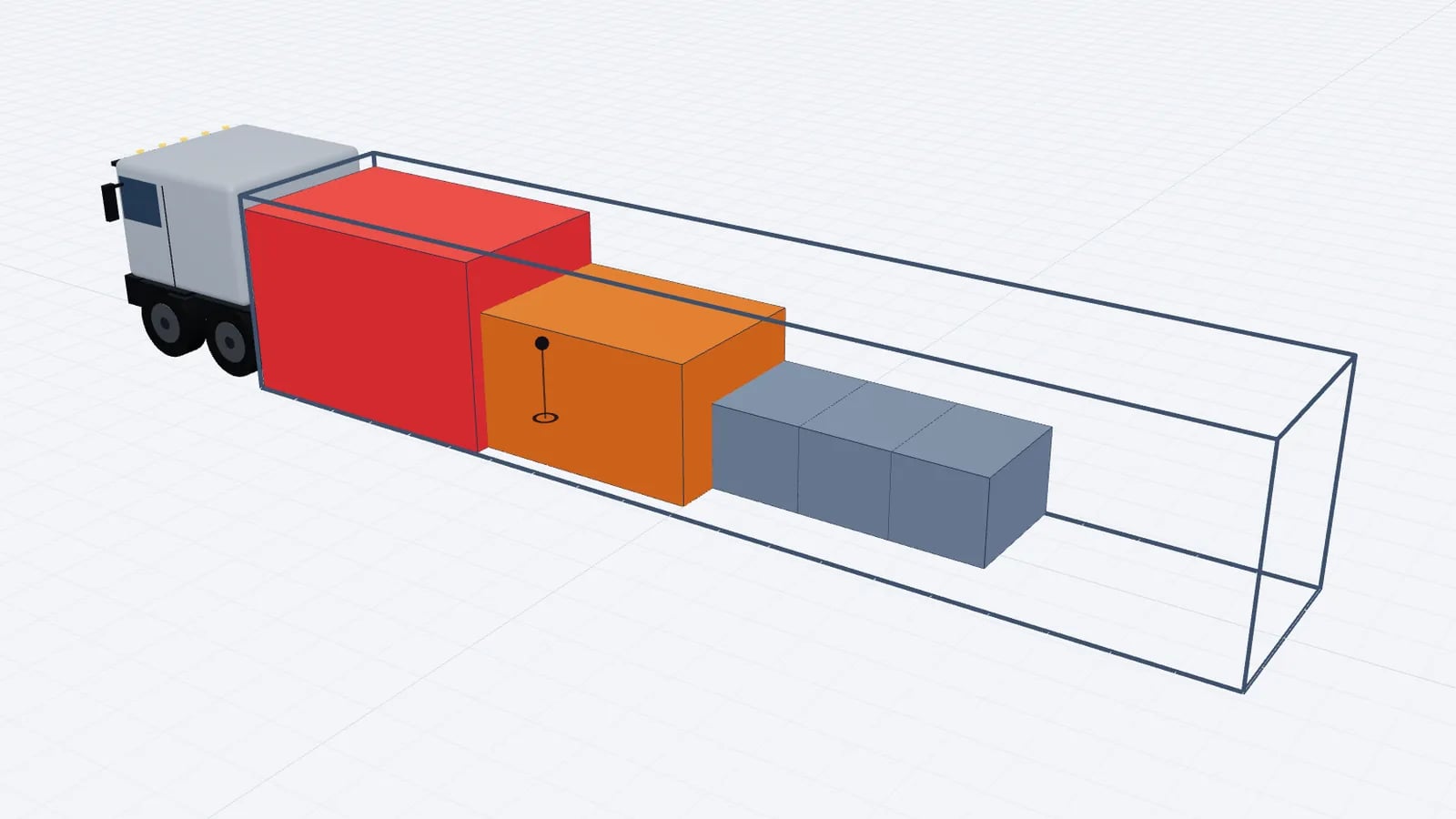
Out of gauge cargo is any load that makes the vehicle exceed the standard legal length, width, height or weight for the road. In the EU those standard limits come from Directive 96/53/EC, and going beyond them needs a special permit, often with escorts, a set route and extra marking.
The rules for abnormal transport are national. The EU sets the standard maxima for international traffic, but each country decides how permits, escorts and markings work on its roads. This guide explains the common principles and gives examples, so check the rules of every country on the route before you quote or load.
The standard EU limits
Directive 96/53/EC, Annex I, sets the maximum dimensions that vehicles in international traffic between member states must be allowed. Anything within them is a normal load. Anything beyond them is out of gauge.
Dimension: Length, rigid vehicle
- Standard maximum (96/53/EC)
- 12.00 m
- Notes
Dimension: Length, articulated vehicle (tractor and semitrailer)
- Standard maximum (96/53/EC)
- 16.50 m
- Notes
- Extra length allowed for aerodynamic devices and some cab designs under later amendments
Dimension: Length, road train (truck and drawbar trailer)
- Standard maximum (96/53/EC)
- 18.75 m
- Notes
Dimension: Width, general
- Standard maximum (96/53/EC)
- 2.55 m
- Notes
Dimension: Width, conditioned (refrigerated) bodies
- Standard maximum (96/53/EC)
- 2.60 m
- Notes
- Side walls at least 45 mm thick
Dimension: Height
- Standard maximum (96/53/EC)
- 4.00 m
- Notes
- Some countries allow more on their own roads, others have no general limit
Dimension: Gross weight, 5+ axle combination
- Standard maximum (96/53/EC)
- 40 t
- Notes
- 44 t for a 40 ft container in combined transport
| Dimension | Standard maximum (96/53/EC) | Notes |
|---|---|---|
| Length, rigid vehicle | 12.00 m | |
| Length, articulated vehicle (tractor and semitrailer) | 16.50 m | Extra length allowed for aerodynamic devices and some cab designs under later amendments |
| Length, road train (truck and drawbar trailer) | 18.75 m | |
| Width, general | 2.55 m | |
| Width, conditioned (refrigerated) bodies | 2.60 m | Side walls at least 45 mm thick |
| Height | 4.00 m | Some countries allow more on their own roads, others have no general limit |
| Gross weight, 5+ axle combination | 40 t | 44 t for a 40 ft container in combined transport |
The 4 m height is the one that varies most. Several countries allow higher vehicles nationally, and the UK and Ireland have different rules again. A load that is legal at 4.20 m at home may need a permit as soon as it crosses a border.
For axle loads, see EU truck axle weight limits. Typical maxima are 10 t on a single non-driving axle, 11.5 t on a single driving axle and 24 t on a tridem with normal spacing. For trailer sizes inside the standard limits, see semi-trailer dimensions.
Indivisible loads
Permits for abnormal transport are generally given only for indivisible loads. Directive 96/53/EC defines one as a load that cannot be split into two or more loads for road transport without undue expense or risk of damage, and that, because of its size or mass, cannot be carried by a vehicle within the standard limits.
- Indivisible: a transformer, a bridge beam, a boat hull, a 3.2 m wide machine frame, a wind turbine blade.
- Divisible: steel beams that can be split over two trucks, a machine that can be taken apart with normal tools, or extra pallets added to a permitted load to fill space.
Authorities can refuse a permit if the load could reasonably be split, and adding other goods to an abnormal load is usually not allowed.
Permits
Each country issues its own permits, sometimes through a national body and sometimes through regional road authorities. The common pattern is similar:
- 1Describe the load and vehicle. Dimensions, total weight, axle loads, axle spacing and the type of trailer.
- 2Propose a route. The authority checks bridges, tunnels, roundabouts and roadworks, and may change it.
- 3Wait for the permit. Lead times range from a few days for simple single-trip permits to several weeks for very large or heavy moves. Some countries offer long-term permits for repeated moves within set limits.
- 4Follow the conditions. Permits set the route, time windows (often night or outside rush hours, and not on weekends or holidays), maximum speed, escort needs and marking.
In the UK, for example, many moves are notified rather than permitted. Under the Road Vehicles (Authorisation of Special Types) (General) Order 2003 and the Construction and Use Regulations, police and road and bridge authorities must be told in advance, with the notice period and the need for a special order rising with size and weight. Germany, by contrast, requires a permit under the road traffic rules for most oversize moves. These are examples only; the thresholds change between countries.
Escorts
Escort vehicles warn other road users and help the truck through junctions and narrow sections. Whether you need one, and what kind, depends on the width, length, height and weight, and on the country.
- Private escort vehicles are the most common, often with a sign board and lights. Several countries license escort drivers and set rules for their vehicles.
- Police escorts are required in some countries for the largest moves, or to stop traffic at junctions.
- Attendants on the vehicle itself may be required for long overhangs or wide loads, for example in the UK.
As a rough rule, many countries start to ask for an escort somewhere above about 3 m width or 25 to 30 m length. Treat those numbers as a guide only. The permit is what decides.
Overhang and marking
Long items such as pipes, beams and timber often stick out at the back of the vehicle. Overhang rules apply even when the vehicle is not abnormal, and they vary between countries. Two examples:
| Country | Rear overhang rule (simplified) |
|---|---|
| UK (Construction and Use, Schedule 12) | Up to 1 m: no extra requirement. Over 1 m to 2 m: end must be clearly visible. Over 2 m to 3.05 m: marker boards. Over 3.05 m: marker boards, an attendant and two clear working days' notice to the police. |
| Germany (§ 22 StVO) | Load may project up to 1.5 m at the rear, or up to 3 m for journeys of up to 100 km. Projections over 1 m must be marked with a red flag, sign or cylinder, and with lights in poor visibility. |
Spain and Italy require a square warning panel with red and white diagonal stripes on loads that project at the rear. Other countries use flags, panels or lights. If a load crosses several countries, it must meet the marking rules of each one, which in practice often means carrying more than one type of marker.
Wide loads need marker boards, extra lights and often warning signs and amber beacons. The permit usually lists what is needed.
Choosing the trailer
The trailer decides how much height you have under the 4 m line, and how long and heavy the load can be. The deck heights below are typical and vary by maker and tyre size.
Trailer: Flatbed (standard platform)
- Typical deck height
- 1.2 to 1.4 m
- Typical load height under 4 m
- 2.6 to 2.8 m
- Best for
- Long and wide loads that are not tall: steel, beams, boats on cradles
Trailer: Step deck (semi low loader)
- Typical deck height
- 0.8 to 1.0 m
- Typical load height under 4 m
- 3.0 to 3.2 m
- Best for
- Tall machines and vehicles that can drive or be lifted on
Trailer: Low loader (lowbed, well deck)
- Typical deck height
- 0.3 to 0.6 m
- Typical load height under 4 m
- 3.4 to 3.7 m
- Best for
- Tall and heavy items: excavators, transformers, plant
Trailer: Extendable (telescopic) trailer
- Typical deck height
- Similar to flatbed or step deck
- Typical load height under 4 m
- As the base type
- Best for
- Long items: beams, pipes, blades; extends from standard length to over 20 m on many models
Trailer: Modular trailer (axle lines)
- Typical deck height
- About 1 m, adjustable
- Typical load height under 4 m
- About 3 m
- Best for
- Very heavy loads; axle lines added to spread weight
| Trailer | Typical deck height | Typical load height under 4 m | Best for |
|---|---|---|---|
| Flatbed (standard platform) | 1.2 to 1.4 m | 2.6 to 2.8 m | Long and wide loads that are not tall: steel, beams, boats on cradles |
| Step deck (semi low loader) | 0.8 to 1.0 m | 3.0 to 3.2 m | Tall machines and vehicles that can drive or be lifted on |
| Low loader (lowbed, well deck) | 0.3 to 0.6 m | 3.4 to 3.7 m | Tall and heavy items: excavators, transformers, plant |
| Extendable (telescopic) trailer | Similar to flatbed or step deck | As the base type | Long items: beams, pipes, blades; extends from standard length to over 20 m on many models |
| Modular trailer (axle lines) | About 1 m, adjustable | About 3 m | Very heavy loads; axle lines added to spread weight |
- 1A machine 3.45 m tall, 2.40 m wide, 14 t. On a flatbed with a 1.30 m deck, the total height is 4.75 m, well over 4 m. On a step deck at 0.90 m it is 4.35 m, still over. On a low loader with a 0.45 m well it is 3.90 m, within the standard height. The width is within 2.55 m, so this may be a normal load if the weight and axles also stay within limits.
- 2A steel beam 22 m long, 9 t. A standard semitrailer deck is about 13.6 m, so the beam would overhang by over 8 m. An extendable flatbed opened to about 20 m leaves a rear overhang of about 2 m. The vehicle is now over the 16.50 m length limit, so it needs a permit in most countries, but the overhang is short enough to mark and secure safely.
Axle loads and centre of gravity
Out of gauge loads are often concentrated: a 30 t transformer sits on a few square metres of deck. The position along the trailer decides how much each axle group carries. Too far forward and the tractor's drive axle or the kingpin is overloaded; too far back and the trailer axles are. Permits usually state maximum axle loads, and some roads and bridges have lower limits.
- Place the centre of gravity of the load where the trailer maker says. Many low loaders have a load distribution diagram that shows the allowed weight at each point of the deck.
- Check the centre of gravity height. A tall, heavy machine on a low loader is stable; the same machine on a flatbed is higher and more likely to tip in bends and crosswinds.
- Keep the load centred across the width. An off-centre heavy load loads one side of the axles more and makes the vehicle lean.
- Secure for the forces, not the weight alone. EN 12195-1 applies, and heavy machines need chains, blocking and often mats. See load securing basics.
For the method of finding a load's centre of gravity, see centre of gravity of a load.
Route surveys
For anything beyond a simple wide load, the route must be checked before the move. The authority checks structures, but the carrier checks whether the vehicle can physically get through.
- Height: bridges, gantries, overhead cables, traffic lights, trees. Allow for the load moving up and down on bumps.
- Width: narrow roads, bridges with parapets, parked cars, road signs and traffic islands.
- Turning: roundabouts and junctions, especially for long extendable trailers. A swept path drawing helps.
- Weight: bridge limits, weak culverts, soft verges and site access roads.
- Sites: space to unload at the destination, ground strength for cranes, and access for escorts.
For very large moves, specialist surveyors measure clearances and model the swept path.
Checklist for an out of gauge move
- 1Measure the load, its lifting points and centre of gravity, and confirm it is indivisible.
- 2Choose the trailer that keeps the load as low and as short as possible.
- 3Calculate the axle loads and check them against the trailer and the road limits.
- 4Apply for permits in every country on the route, allowing enough lead time.
- 5Book escorts, plan the marking for each country, and survey the route.
- 6Secure the load to EN 12195-1, and check it after the first few kilometres.
Plan the normal part of the load too
Many projects mix one or two out of gauge items with a lot of normal cargo: spare parts, cable drums, crates. Planning that part well can stop a second permit being needed. See machinery transport and the manufacturing use case, and use the vehicle settings manual to set up an open trailer with your own deck size.
Tip
EveryLoading checks fit within the loading space you set, so it plans cargo that stays within the vehicle, not loads that stick out. Set the trailer's deck length, width and the height limit you need, add your items with their weights, and click Optimize load. The axle estimate and the Centre of gravity limit show whether heavy items sit in the right place, and the plan goes to the crew as a PDF or share link.
Frequently asked questions
What is out of gauge cargo?
Cargo that makes the vehicle exceed the standard maximum length, width, height or weight. In the EU the standard limits for international traffic are set by Directive 96/53/EC, for example 2.55 m width, 4 m height and 16.50 m length for an articulated vehicle.
Do I need a permit for an oversize load?
In most countries, yes, once the vehicle and load exceed the standard limits. Permits are national and usually only given for indivisible loads. Some countries, such as the UK, use a notification system for many moves instead.
How far can a load overhang the back of a truck?
It depends on the country. In Germany it is generally up to 1.5 m, or 3 m on journeys up to 100 km, with marking over 1 m. In the UK, overhangs over 1 m must be clearly visible and longer ones need marker boards and more.
What is the difference between a step deck and a low loader?
A step deck has a lower rear deck, typically 0.8 to 1.0 m high. A low loader has a well between the axle groups, typically 0.3 to 0.6 m high, so it takes taller loads within the 4 m height.
When is an escort vehicle needed?
When the permit or national rules say so, usually for wide, long or very heavy loads. Many countries start to require one somewhere above about 3 m width, but the thresholds differ, so check each country's rules.
Keep reading
Road freight · · 9 min read
Driving Without a Tachograph: EU Rules and Exemptions
When you can drive without a tachograph in the EU: Regulation 561/2006 scope, vans over 2.5 t from July 2026, Article 3 and 13 exemptions and driving limits.
Read article
Road freight · · 8 min read
Semi Truck and Trailer Dimensions: US Length, Width, Height
Semi truck dimensions in the US: overall length, width and height, 53 ft and 48 ft dry vans, reefers and flatbeds, in feet and metric, with pallet counts.
Read article
Road freight · · 7 min read
How to Load a Truck: Axles, Heavy Low, Securing and Safety
How to load a truck step by step: plan first, keep heavy items low and spread over the axles, load towards the doors, secure the load and check the weight.
Read article