Driving Without a Tachograph: EU Rules and Exemptions
When you can drive without a tachograph in the EU: Regulation 561/2006 scope, vans over 2.5 t from July 2026, Article 3 and 13 exemptions and driving limits.
Road freight · · 9 min read
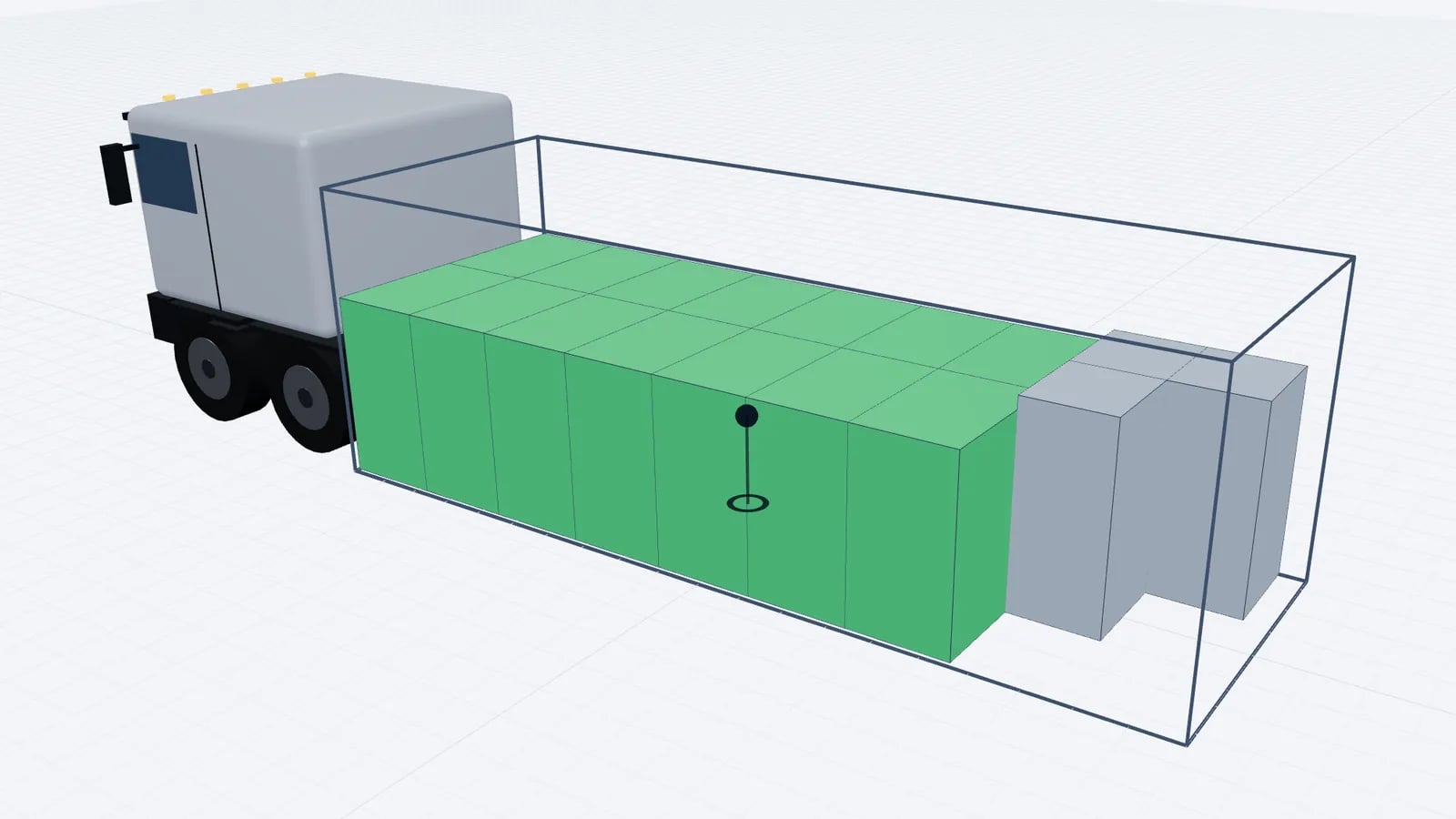
Driving without a tachograph is legal only when the vehicle or the transport falls outside EU Regulation (EC) No 561/2006, through its scope, an Article 3 exemption, or a national derogation under Article 13. In every other case, a goods vehicle over 3.5 t, and since 1 July 2026 a van over 2.5 t on international hire or reward work, must have a working tachograph and the driver must use it.
Good to know
This article is a general guide, not legal advice. Article 13 derogations are optional, and each member state chooses which ones to apply and how. National rules on working time and records can also apply when the EU rules do not. Check the rules of the country where the vehicle is registered and where it drives, or ask your enforcement authority.
The two regulations behind the tachograph
Two EU regulations work together. Regulation (EC) No 561/2006 sets the driving times, breaks and rest periods, and says which transport is covered. Regulation (EU) No 165/2014 says that vehicles covered by 561/2006 must have a tachograph, and sets the technical and usage rules for it. Both were amended by Regulation (EU) 2020/1054, part of the Mobility Package I.
So the question "do I need a tachograph?" is really "is this transport covered by 561/2006?" If it is, you need the device. If it is exempt, you don't, though national rules may still ask for records of another kind.
Who is in scope
| Vehicle and use | In scope of 561/2006? |
|---|---|
| Goods vehicle over 3.5 t maximum mass, including trailer | Yes, unless an exemption applies |
| Goods vehicle over 2.5 t up to 3.5 t, international transport or cabotage, from 1 July 2026 | Yes, unless own-account and driving is not the main activity |
| Goods vehicle over 2.5 t up to 3.5 t, national transport only | No, under the EU rules |
| Goods vehicle up to 2.5 t | No |
| Bus or coach for more than 9 people including the driver | Yes, unless an exemption applies |
The mass that counts is the maximum permissible mass, including any trailer or semi-trailer, not the actual weight on the day. A 3.5 t van towing a 750 kg trailer is a combination over 3.5 t.
Vans over 2.5 t from 1 July 2026
Regulation (EU) 2020/1054 added light commercial vehicles to the rules. Since 1 July 2026, vehicles over 2.5 t and up to 3.5 t used for international transport or cabotage of goods must follow the driving and rest rules and must be fitted with a smart tachograph version 2. This applies to hire or reward work.
- Covered: a 3.5 t van carrying goods for customers from one EU country to another, or doing cabotage.
- Not covered by this extension: a van working only inside one country, and own-account transport where driving is not the driver's main activity (Article 3(ha)).
- Licence too: since 21 May 2022, operators using these vans for international hire or reward work have generally needed an EU community licence, under Regulation (EC) No 1071/2009 as amended by Regulation (EU) 2020/1055. Check with your licensing authority.
Article 3: exemptions that apply everywhere
Article 3 lists transport to which 561/2006 does not apply at all, in every member state. The main ones for goods transport are:
| Point | Exemption (simplified) |
|---|---|
| 3(aa) | Vehicles up to 7.5 t carrying materials, equipment or machinery for the driver's work, or delivering goods produced by hand by the undertaking, within 100 km of base, where driving is not the driver's main activity and the transport is not for hire or reward |
| 3(b) | Vehicles with a maximum authorised speed of 40 km/h or less |
| 3(c) | Vehicles of the armed services, civil defence, fire services and forces responsible for public order, under their control |
| 3(d) | Vehicles used in emergencies or rescue, including non-commercial humanitarian aid |
| 3(e) | Specialised medical vehicles |
| 3(f) | Specialised breakdown vehicles within 100 km of base |
| 3(g) | Vehicles on road tests for development, repair or maintenance, and new or rebuilt vehicles not yet in service |
| 3(h) | Vehicles up to 7.5 t used for non-commercial carriage of goods |
| 3(ha) | Vehicles over 2.5 t up to 3.5 t on own account, not for hire or reward, where driving is not the main activity |
| 3(i) | Historic commercial vehicles used for non-commercial carriage |
Most are narrow. "Non-commercial" in 3(h) means no link to any business at all; a shop moving its own stock is commercial.
Article 13: national derogations
Article 13 lets each member state exempt certain transport on its own territory, or with the agreement of a neighbouring state, on its territory and theirs. These are optional. One country may apply a derogation fully, another only partly, and another not at all. Regulation 2020/1054 raised the radius in several of them from 50 km to 100 km.
Point: 13(1)(a)
- Derogation (simplified)
- Vehicles owned or hired by public authorities, not competing with private hauliers
- Radius
- None set
Point: 13(1)(b)
- Derogation (simplified)
- Agricultural, horticultural, forestry, farming or fishery undertakings carrying goods for their own business
- Radius
- Up to 100 km
Point: 13(1)(c)
- Derogation (simplified)
- Agricultural and forestry tractors used for agriculture or forestry
- Radius
- Up to 100 km
Point: 13(1)(d)
- Derogation (simplified)
- Vehicles up to 7.5 t used by universal postal service providers to deliver items
- Radius
- Up to 100 km
Point: 13(1)(e)
- Derogation (simplified)
- Vehicles operating only on islands, or areas cut off from the mainland, of up to 2,300 km²
- Radius
- Island only
Point: 13(1)(f)
- Derogation (simplified)
- Vehicles up to 7.5 t running on natural or liquefied gas or electricity, carrying goods
- Radius
- Up to 100 km
Point: 13(1)(h)
- Derogation (simplified)
- Vehicles used for sewerage, flood protection, water, gas and electricity, road maintenance, refuse and similar services
- Radius
- None set
Point: 13(1)(l)
- Derogation (simplified)
- Vehicles used for milk collection from farms
- Radius
- None set
Point: 13(1)(p)
- Derogation (simplified)
- Vehicles carrying live animals from farms to local markets and back, or to slaughterhouses
- Radius
- Up to 100 km
Point: 13(1)(q)
- Derogation (simplified)
- Vehicles carrying construction machinery for a construction undertaking, where driving is not the main activity
- Radius
- Up to 100 km
| Point | Derogation (simplified) | Radius |
|---|---|---|
| 13(1)(a) | Vehicles owned or hired by public authorities, not competing with private hauliers | None set |
| 13(1)(b) | Agricultural, horticultural, forestry, farming or fishery undertakings carrying goods for their own business | Up to 100 km |
| 13(1)(c) | Agricultural and forestry tractors used for agriculture or forestry | Up to 100 km |
| 13(1)(d) | Vehicles up to 7.5 t used by universal postal service providers to deliver items | Up to 100 km |
| 13(1)(e) | Vehicles operating only on islands, or areas cut off from the mainland, of up to 2,300 km² | Island only |
| 13(1)(f) | Vehicles up to 7.5 t running on natural or liquefied gas or electricity, carrying goods | Up to 100 km |
| 13(1)(h) | Vehicles used for sewerage, flood protection, water, gas and electricity, road maintenance, refuse and similar services | None set |
| 13(1)(l) | Vehicles used for milk collection from farms | None set |
| 13(1)(p) | Vehicles carrying live animals from farms to local markets and back, or to slaughterhouses | Up to 100 km |
| 13(1)(q) | Vehicles carrying construction machinery for a construction undertaking, where driving is not the main activity | Up to 100 km |
The list is longer than this. It also covers driving schools, circus vehicles, mobile project vehicles and others. The wording in the regulation decides the details, such as what counts as the base, and each national rule may be narrower.
Tip
Ask three questions before relying on a derogation. Has the country where you drive adopted it? Does your transport match the exact wording, not just the spirit? Is the whole journey inside the radius and the country? A single trip outside it brings the full rules back for that journey.
When the tachograph is broken or the card is missing
"Driving without a tachograph" also covers the day the device fails or the card is lost. That is not an exemption. Regulation 165/2014 sets out what to do:
- Device faulty: the operator must have it repaired by an approved workshop as soon as circumstances permit. If the vehicle cannot return to base within a week, it must be repaired on the way. Meanwhile the driver records activities by hand on a printout or a record sheet (Article 37).
- Card lost, stolen or damaged: the driver reports it and applies for a replacement within seven days, and may drive without the card for up to 15 days, making printouts at the start and end of each shift and signing them (Article 29).
Smart tachograph version 2 deadlines
The smart tachograph version 2 records border crossings and loading and unloading, which is needed to enforce cabotage and posting rules. Regulation 165/2014, as amended, set these dates for vehicles in international transport:
| Vehicles | Deadline |
|---|---|
| New vehicles first registered | From 21 August 2023 |
| Analogue or first-generation digital tachograph, in international transport | 31 December 2024 (enforcement grace period until early 2025) |
| Smart tachograph version 1, in international transport | August 2025 |
| Vans over 2.5 t up to 3.5 t, international hire or reward and cabotage | 1 July 2026 |
Vehicles used only in national transport do not have to retrofit under these dates, though they still need a working tachograph of an approved type if they are in scope.
Driving and rest limits under 561/2006
| Rule | Limit |
|---|---|
| Daily driving | 9 hours, extendable to 10 hours twice a week |
| Weekly driving | 56 hours |
| Two consecutive weeks | 90 hours |
| Break | 45 minutes after 4.5 hours of driving, or 15 minutes then 30 minutes |
| Daily rest | 11 hours, reducible to 9 hours up to three times between weekly rests |
| Weekly rest | 45 hours regular, or 24 hours reduced with compensation; in two consecutive weeks at least two regular, or one regular and one reduced |
These limits apply to EU-covered transport. Exempt transport may still fall under national driving hours rules, such as the domestic rules in the UK, and under working time law. Leaving the EU rules does not mean having no rules.
Why load planning matters for drivers' hours
Driving time is a fixed budget. A driver has 9 hours a day, sometimes 10, and 56 a week. Every extra trip uses some of it, and every trip that does not fit into a shift costs a daily rest away from base. Load planning is one of the few levers that reduces the number of trips without breaking any rule.
- 1A depot sends 52 Euro pallets a day to a customer 180 km away. With a semitrailer that takes 33 floor pallets, that is two full trips. At an average of about 80 km/h, each 360 km round trip takes about 4.5 hours of driving, so the two trips use the whole 9 hour daily limit.
- 2If the goods can be stacked two high and the trailer's payload allows, a planned load could take the 52 pallets in one trip. That saves about 4.5 hours of driving per day, or over 20 hours in a five-day week.
- 3Over 20 hours a week is more than a third of the 56 hour weekly limit. It can mean one truck and driver instead of two, or room for another customer in the same week.
On multi-drop routes, loading in delivery order means no unloading and reloading at each stop, so the route is more likely to finish in one shift. Planning also catches a load that fits but is over the weight limit, before it forces a last-minute second trip.
- Fuller loads mean fewer vehicles and drivers on the road for the same freight.
- A clear loading order cuts time at the dock and at each drop. Under 561/2006 that time is other work, not driving, but it still uses up the driver's working day.
Fit the load, fit the shift
Use the loading metre calculator for a first check of floor space, and read reducing empty space in trucks and multi-drop load planning for ways to cut trips. If your fleet includes vans now covered by the 2026 rules, the van loading guide covers payload and pallet counts.
Tip
EveryLoading does not record drivers' hours. It helps you need fewer of them. Build the load in 3D with stacking rules and delivery stops, check the weight and axle estimate, and with Use more trucks if it doesn't fit (Pro) see how many vehicles the cargo really needs. Send the plan to the dock as a PDF or share link so loading is quick.
Frequently asked questions
Can I drive a truck without a tachograph?
Only if the transport is outside Regulation (EC) 561/2006, through its scope, an Article 3 exemption or an Article 13 derogation applied by the country you drive in. Otherwise a goods vehicle over 3.5 t needs a working tachograph. If the device breaks, you may continue with manual records while it is repaired.
Do vans need a tachograph from July 2026?
Vans over 2.5 t and up to 3.5 t used for hire or reward on international journeys or cabotage need a smart tachograph version 2 from 1 July 2026. Vans used only nationally, and own-account vans where driving is not the main job, are outside this EU extension.
What is the 100 km tachograph exemption?
Several exemptions and derogations apply within 100 km of the operator's base, for example vehicles up to 7.5 t carrying a tradesperson's own equipment, and some agricultural, postal, gas or electric vehicle cases. Most are national options, so check whether your country applies them.
How long can a lorry driver drive in a day under EU rules?
Nine hours, extendable to ten hours twice a week, with a 45 minute break after 4.5 hours. Weekly driving may not exceed 56 hours, and 90 hours in any two consecutive weeks.
Are tachograph exemptions the same in every EU country?
No. Article 3 exemptions apply everywhere, but Article 13 derogations are optional. Each member state decides which ones to apply and may word them more narrowly.
Keep reading
Road freight · · 10 min read
Out of Gauge Cargo by Road: Limits, Permits and Trailers
Out of gauge cargo on EU roads: Directive 96/53/EC limits, indivisible loads, permits, escorts, overhang marking, trailer choice, axle loads and route surveys.
Read article
Road freight · · 8 min read
Semi Truck and Trailer Dimensions: US Length, Width, Height
Semi truck dimensions in the US: overall length, width and height, 53 ft and 48 ft dry vans, reefers and flatbeds, in feet and metric, with pallet counts.
Read article
Road freight · · 7 min read
How to Load a Truck: Axles, Heavy Low, Securing and Safety
How to load a truck step by step: plan first, keep heavy items low and spread over the axles, load towards the doors, secure the load and check the weight.
Read article