Van Loading: Payload, Pallets and Securing in Large Vans
How to load a Sprinter-size van: payload vs the 3.5 t limit, typical load space by length, Euro pallets between the wheel arches, weight placement and lashing.
Road freight · · 10 min read
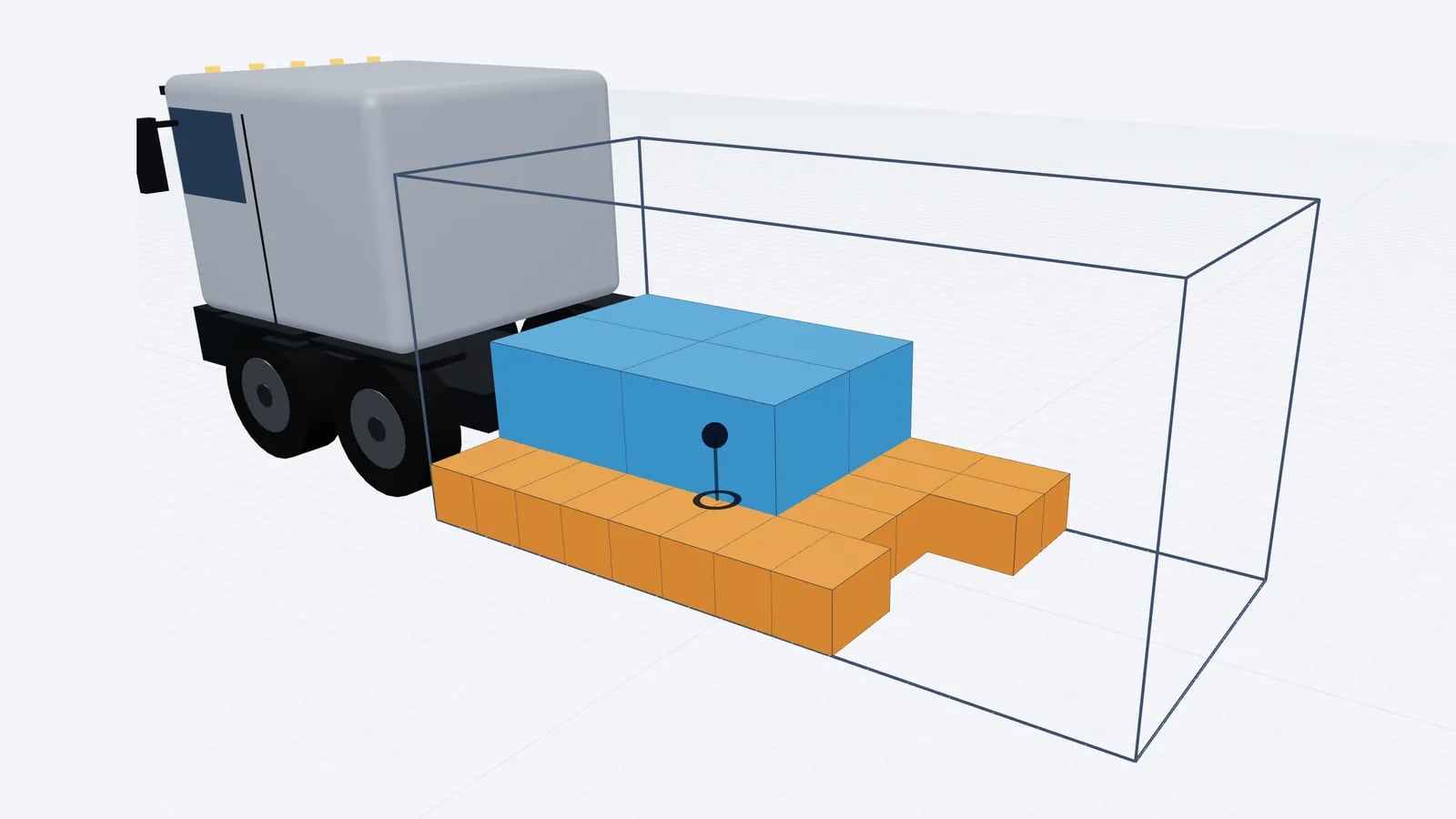
Good van loading starts with weight, not space: a large 3.5 t van usually fills its payload long before it fills its load area. Put heavy goods low and forward against the bulkhead, check the payload and both axle limits, and lash everything to the floor points so nothing can slide.
This guide covers the large panel vans often called Sprinter-size: high-roof vans in short, medium, long and extra-long lengths. Every figure for load space, payload and lashing strength varies by make, model, drive and options, so treat the numbers here as typical and check the plate and handbook of your own van.
Payload is not the same as the 3.5 t limit
A standard car licence (category B under Directive 2006/126/EC) lets you drive a vehicle with a maximum authorised mass of up to 3,500 kg. That figure is the gross weight: van, fuel, driver, passengers, racking, tools and cargo together. It is not how much you can load.
Payload is the gross weight minus the van's own weight. In EU type approval, the published "mass in running order" already includes a 75 kg driver and a fuel tank filled to 90 %, so the brochure payload assumes one driver and nothing else. Anything else you add comes out of it.
| Typical 3.5 t high-roof diesel van | Typical range |
|---|---|
| Maximum authorised mass | 3,500 kg (some models also sold at 3.88 t, 4.1 t or more, which needs a C1 licence) |
| Mass in running order | About 2,000 to 2,500 kg |
| Payload | About 1,000 to 1,500 kg |
| Front axle limit | Often about 1,700 to 2,000 kg |
| Rear axle limit | Often about 2,000 to 2,500 kg |
The two axle limits add up to more than 3,500 kg. That is normal. It means you can overload one axle while the van is still under its gross weight, which is why placement matters as much as the total.
Some countries, including the UK, let category B drivers drive alternatively fuelled vans up to 4,250 kg under conditions. Check your own country's rules before you rely on it.
Worked example: what is really left for cargo
- 1The plate says 3,500 kg. The handbook gives a mass in running order of 2,350 kg, so the payload on paper is 1,150 kg.
- 2A second crew member weighs about 80 kg. That leaves 1,070 kg.
- 3Shelving, a tow bar and a toolbox weigh about 120 kg. That leaves 950 kg.
- 4A full tank is already counted, but a roof rack of 30 kg is not. That leaves 920 kg for cargo.
- 5The job is five pallets of 200 kg each, or 1,000 kg. The van is 80 kg over before anyone has checked the axles.
The brochure payload and the real payload can differ by 20 % or more. Weigh the van once, empty but as it is normally equipped, and you know your real figure.
Typical load space by van length
Most makers offer similar size steps. The table shows typical ranges for high-roof versions; your van may differ.
Body length: Short
- Typical load floor length
- 2.5 to 2.9 m
- Typical load width (between arches)
- 1.70 to 1.80 m (1.25 to 1.40 m)
- Typical height (high roof)
- 1.80 to 1.95 m
- Typical volume
- 7 to 9 m³
Body length: Medium
- Typical load floor length
- 3.1 to 3.4 m
- Typical load width (between arches)
- 1.70 to 1.80 m (1.25 to 1.40 m)
- Typical height (high roof)
- 1.80 to 1.95 m
- Typical volume
- 9 to 11.5 m³
Body length: Long
- Typical load floor length
- 3.7 to 4.4 m
- Typical load width (between arches)
- 1.70 to 1.80 m (1.25 to 1.40 m)
- Typical height (high roof)
- 1.80 to 1.95 m
- Typical volume
- 11 to 14 m³
Body length: Extra long
- Typical load floor length
- 4.4 to 4.8 m
- Typical load width (between arches)
- 1.70 to 1.80 m (1.25 to 1.40 m)
- Typical height (high roof)
- 1.80 to 1.95 m
- Typical volume
- 14 to 17 m³
| Body length | Typical load floor length | Typical load width (between arches) | Typical height (high roof) | Typical volume |
|---|---|---|---|---|
| Short | 2.5 to 2.9 m | 1.70 to 1.80 m (1.25 to 1.40 m) | 1.80 to 1.95 m | 7 to 9 m³ |
| Medium | 3.1 to 3.4 m | 1.70 to 1.80 m (1.25 to 1.40 m) | 1.80 to 1.95 m | 9 to 11.5 m³ |
| Long | 3.7 to 4.4 m | 1.70 to 1.80 m (1.25 to 1.40 m) | 1.80 to 1.95 m | 11 to 14 m³ |
| Extra long | 4.4 to 4.8 m | 1.70 to 1.80 m (1.25 to 1.40 m) | 1.80 to 1.95 m | 14 to 17 m³ |
Super-high roofs add about 15 to 20 cm. The rear door opening is usually narrower and lower than the load space, typically around 1.5 to 1.6 m wide on these vans, so a tall or wide item may fit inside but not through the doors. Measure the opening as well as the box.
How many Euro pallets fit in a van?
The wheel arches decide it. A Euro pallet is 120 × 80 cm. Two pallets side by side need 160 cm, which does not fit between arches that are 125 to 140 cm apart. One pallet turned crosswise, with its 120 cm side across the van, does fit, with a few centimetres to spare on each side.
So in most large vans the pallets go in one row, crosswise, each using 80 cm of floor length. The count is the floor length divided by 80 cm, rounded down.
Body length: Short
- Example floor length
- 2.6 m
- Calculation
- 260 ÷ 80 = 3.25
- Euro pallets (typical)
- 3
Body length: Medium
- Example floor length
- 3.3 m
- Calculation
- 330 ÷ 80 = 4.1
- Euro pallets (typical)
- 4
Body length: Long
- Example floor length
- 4.3 m
- Calculation
- 430 ÷ 80 = 5.4
- Euro pallets (typical)
- 5
Body length: Extra long
- Example floor length
- 4.8 m
- Calculation
- 480 ÷ 80 = 6.0
- Euro pallets (typical)
- 5 or 6, often only 5 in practice
| Body length | Example floor length | Calculation | Euro pallets (typical) |
|---|---|---|---|
| Short | 2.6 m | 260 ÷ 80 = 3.25 | 3 |
| Medium | 3.3 m | 330 ÷ 80 = 4.1 | 4 |
| Long | 4.3 m | 430 ÷ 80 = 5.4 | 5 |
| Extra long | 4.8 m | 480 ÷ 80 = 6.0 | 5 or 6, often only 5 in practice |
The extra-long case shows why measuring matters. A floor of exactly 4.80 m takes six pallets on paper, but a bulkhead lining, a sliding door frame or a slightly shorter floor at the level of the pallet base can cut that to five.
Good to know
Industrial pallets (120 × 100 cm) only fit crosswise, using 100 cm of length each, and only where the arches are at least about 120 cm apart. A long van therefore takes about four, not five.
Box vans, with a flat floor about 2.1 to 2.2 m wide and no arches inside, take two pallets across. That is how an 8, 10 or 12 pallet body on a 3.5 t chassis works, usually with less payload than the panel van.
For any carton or pallet size, the pallet fit calculator does the layout sum for you.
Where to put the weight
A van has a short wheelbase and a long rear overhang. Weight placed behind the rear axle acts like a lever: it loads the rear axle by more than its own weight and lifts weight off the front axle. The van then steers and brakes worse, and a front-wheel-drive van loses grip.
- Heavy goods forward and low. Put them on the floor against the bulkhead, or just ahead of the rear axle. The bulkhead also blocks them under braking.
- Keep the load central across the width. A heavy item on one side overloads one tyre and makes the van lean in bends.
- Light goods at the doors and on top. If something has to go behind the rear axle, make it light.
- Recheck after each drop. On a multi-drop route the balance changes as goods come off. A van that was fine when full can have too little weight on the front axle when only the rear is still loaded.
The maths is the same as in weight distribution in a trailer, with a stronger lever behind the rear axle.
Roof racks and roof loads
Roof racks are useful for ladders, pipes and long, light items. The limits are tight, though. A typical van roof is rated for somewhere between about 100 and 300 kg, depending on the model and the rack system, and the rack itself counts towards that figure and towards the payload.
- Check the roof load in the handbook. The rack maker's rating does not override it.
- Weight on the roof raises the centre of gravity, so the van rolls more in bends and in crosswinds.
- A loaded rack adds height. Check car parks, depots and low bridges, and remember the height changes with what is on the rack that day.
Securing the load: lashing points and friction
In a van the load sits right behind the driver, with only the bulkhead in between. A short trip is no reason to skip securing.
European standard EN 12195-1 sets the forces a load must be secured against on the road: 0.8 times its weight forwards, and 0.5 times its weight sideways and backwards. Friction between the load and the floor helps, and the standard lets you count it. Anything friction does not cover must come from blocking, such as the bulkhead or a filled gap, or from lashing.
- 1A pallet weighs 400 kg. The forward force to resist is 0.8 × 400 kg = 320 kg-force, about 314 daN.
- 2On an anti-slip mat, a friction coefficient of about 0.6 is typical. Friction gives 0.6 × 400 = 240 kg-force.
- 3The gap is 320 − 240 = 80 kg-force forwards. Pushing the pallet tight against the bulkhead covers it by blocking.
- 4Sideways the requirement is 0.5 × 400 = 200 kg-force, less than the friction. On paper the mat is enough, but vibration and bumps reduce friction while driving, so lash it anyway.
Most vans have lashing points or rails in the floor and walls. Their strength is often stamped on them or given in the handbook, and on delivery vans is commonly in the range of a few hundred daN per point. The international standard for lashing points and partitions in delivery vans is ISO 27956. Do not lash more force into a point than it is rated for. Use several points rather than one strong strap to a weak eye.
The load securing basics guide explains EN 12195-1 in more detail, including how to work out the number of straps.
Overloading is common at roadside checks
Vans are often overloaded because drivers judge load by space. In the UK, an analysis of roadside data obtained under freedom of information found that roughly a quarter of the vans tested since 2015 were over their weight limits. In years when examiners weighed vans they had stopped because they looked heavy, the share found overloaded was much higher.
The consequences are similar in most countries. The van can be stopped until the excess is removed, which means a second vehicle or a wasted day. Fines usually rise with the percentage of overload, and the driver and the operator can both be liable. The details depend on the country; how to avoid overloading fines covers the general picture.
Tip
Since 1 July 2026, vans over 2.5 t used for hire or reward on international journeys or cabotage in the EU need a smart tachograph and must follow EU driving time rules. See driving without a tachograph for who is in scope.
A van loading checklist
- 1Know the real payload of this van as it is equipped today, and both axle limits.
- 2Add up the cargo weight before loading, including pallets and packaging.
- 3Check that the biggest item passes through the door opening.
- 4Load heavy items first, low and forward against the bulkhead, centred across the width.
- 5Load in reverse delivery order where you can, so the first drop is at the doors.
- 6Fill gaps, use anti-slip mats, and lash to rated points, not to shelving unless it is rated.
- 7Check straps after the first stretch and after each stop. If in doubt about weight, use a weighbridge.
Plan the van before you load it
A plan shows whether the goods fit through the doors, how many pallets go in one row between the arches, and whether the weight sits too far back. For more on order and stops, see multi-drop load planning. The road transport use case covers vans and trucks, and the vehicle settings manual explains how to set up a load space with its own size, axles and parts.
Tip
In EveryLoading, pick a van or box van preset such as Bus 8 EP, Bus 10 EP or Bus 12 EP, or type your van's inside size and payload. Add Wheel arches and Door opening under Vehicle details, mark cargo as stackable or not, and click Optimize load. The axle estimate and centre of gravity show if the weight sits too far back, delivery stops keep the first drop at the doors, and the plan goes to the driver as a PDF or share link.
Frequently asked questions
How much can a 3.5 tonne van carry?
Usually about 1,000 to 1,500 kg of payload, depending on the model, length and equipment. The 3.5 t figure is the gross weight of the van with everything in it, so passengers, racking and tools all reduce what is left for cargo.
How many Euro pallets fit in a Sprinter-size van?
Typically 3 in a short van, 4 in a medium, 5 in a long and 5 or sometimes 6 in an extra-long van. The pallets go in one row crosswise, because two side by side do not fit between the wheel arches.
Where should heavy items go in a van?
Low, centred and forward, against the bulkhead or just ahead of the rear axle. Weight behind the rear axle overloads that axle and takes weight off the front wheels, which hurts steering and braking.
Is friction enough to secure a load in a van?
Rarely on its own. EN 12195-1 lets you count friction, and an anti-slip mat helps a lot, but the forward force is 0.8 times the load weight, so you still need blocking against the bulkhead or lashing, plus lashing against vibration.
Do vans need a tachograph?
Vans up to 3.5 t were mostly outside the EU tachograph rules. Since 1 July 2026, vans over 2.5 t used for hire or reward on international journeys or cabotage need one. Purely domestic and own-account use is generally outside this extension.
Keep reading
Road freight · · 10 min read
Out of Gauge Cargo by Road: Limits, Permits and Trailers
Out of gauge cargo on EU roads: Directive 96/53/EC limits, indivisible loads, permits, escorts, overhang marking, trailer choice, axle loads and route surveys.
Read article
Road freight · · 9 min read
Driving Without a Tachograph: EU Rules and Exemptions
When you can drive without a tachograph in the EU: Regulation 561/2006 scope, vans over 2.5 t from July 2026, Article 3 and 13 exemptions and driving limits.
Read article
Road freight · · 8 min read
Semi Truck and Trailer Dimensions: US Length, Width, Height
Semi truck dimensions in the US: overall length, width and height, 53 ft and 48 ft dry vans, reefers and flatbeds, in feet and metric, with pallet counts.
Read article