Truck Loading Time: How Long Loading and Unloading Take
Truck loading time by method: pallets, floor-loaded cartons and side loading, with worked minute estimates, what slows docks and how planning cuts it.
Road freight · · 7 min read
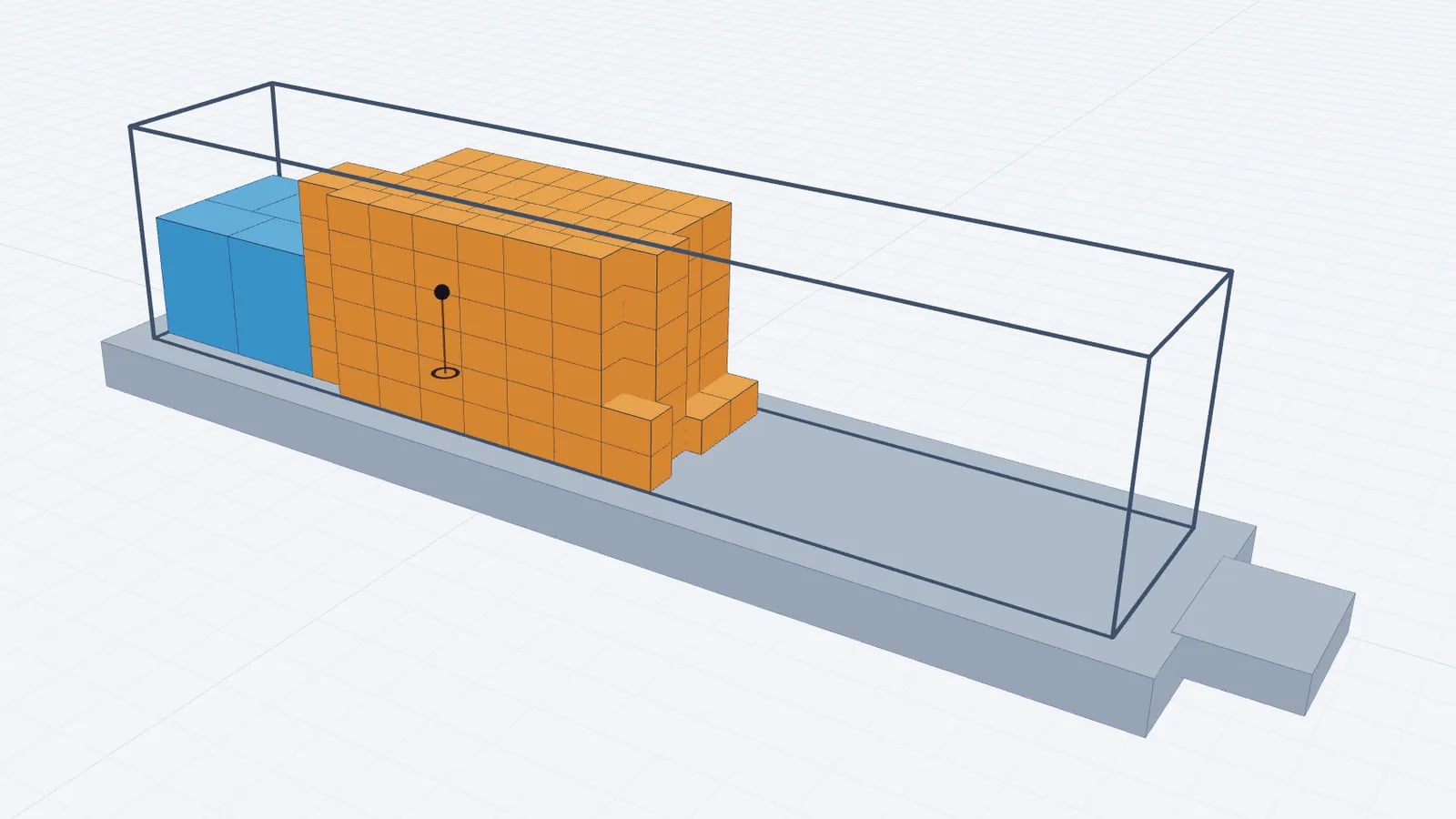
Truck loading time depends mostly on how the goods are packed. A full trailer of pallets usually takes 30 to 60 minutes of forklift work, while the same trailer floor-loaded with loose cartons can take three to five hours with a small crew. Docking, securing and paperwork add a fixed 15 to 30 minutes on top. The estimates below show how to work out the time for your own loads, and where the minutes really go.
All figures here are illustrative rates to show the method. Real times depend on your forklifts, travel distance, crew size and site, so time a week of your own loads and replace the rates with yours.
Truck loading time by method
Method: Pallets, rear loading by forklift at a dock
- Typical full load
- 33 Euro pallets, 13.6 m trailer
- Driver of the time
- Number of forklift moves
- Rough range
- 35–70 min plus fixed time
Method: Pallets, rear loading by pallet jack
- Typical full load
- Same, forklift drops at the door
- Driver of the time
- Walking distance inside the trailer
- Rough range
- 60–90 min plus fixed time
Method: Pallets, side loading a curtainsider
- Typical full load
- Same, forklift from the side
- Driver of the time
- Opening curtains and straps; one or two forklifts
- Rough range
- 30–60 min plus curtain time
Method: Floor-loaded cartons by hand
- Typical full load
- About 1,000 cartons, 40 ft container
- Driver of the time
- Cartons per person per hour
- Rough range
- 2.5–5 hours
Method: Floor-loaded cartons with a telescopic conveyor
- Typical full load
- Same
- Driver of the time
- Conveyor speed and stacking crew
- Rough range
- 1.5–3 hours
| Method | Typical full load | Driver of the time | Rough range |
|---|---|---|---|
| Pallets, rear loading by forklift at a dock | 33 Euro pallets, 13.6 m trailer | Number of forklift moves | 35–70 min plus fixed time |
| Pallets, rear loading by pallet jack | Same, forklift drops at the door | Walking distance inside the trailer | 60–90 min plus fixed time |
| Pallets, side loading a curtainsider | Same, forklift from the side | Opening curtains and straps; one or two forklifts | 30–60 min plus curtain time |
| Floor-loaded cartons by hand | About 1,000 cartons, 40 ft container | Cartons per person per hour | 2.5–5 hours |
| Floor-loaded cartons with a telescopic conveyor | Same | Conveyor speed and stacking crew | 1.5–3 hours |
Unloading takes about as long as loading for pallets, and often longer for floor-loaded cartons, because the crew has to sort cartons onto pallets by line as they come off.
How to estimate the loading time of a pallet load
For palletised loads, count moves, not pallets. One move is: pick from the staging lane, drive into the vehicle, place, reverse out. Then add the fixed time that every load has.
- 1Count the moves. Single pallets are one move each. Double-stacked pallets taken together, or two pallets side by side with long forks or a double-pallet handler, count as one move.
- 2Apply your move time. A rear-loaded trailer at a dock with short travel typically takes 1.5 to 2 minutes per move; the further the staging lane, the longer.
- 3Add fixed time. Docking and restraint, opening, securing, seal and paperwork: 15 to 30 minutes on a routine load.
- 4Add a buffer for complexity. Mixed pallet sizes, multi-drop loads and weight checks add time where loaders have to think.
Example: 26 Euro pallets, of which 14 are 1 m high and can travel double-stacked (7 moves), and 12 are 1.8 m high and go one at a time (12 moves). That is 19 moves × 1.75 min ≈ 33 minutes, plus 20 minutes fixed, about 53 minutes at the door. Loading every pallet singly would be 26 × 1.75 ≈ 46 minutes, plus 20, so 66 minutes. Planning for double moves saved about 13 minutes on one trailer.
Good to know
The loading dock efficiency guide uses the same move-based method to size dock appointments. This post focuses on the method itself and on the difference between packing types.
Floor-loaded cartons: where the hours go
Floor loading means stacking loose cartons directly on the vehicle floor, wall to wall and floor to roof. It is common for containers from Asia, parcel trunking and e-commerce goods, because it fills more of the space. The cost is labour time at both ends.
Take cartons of 50 × 40 × 30 cm in a 40 ft high cube (inside about 1,203 × 235 × 269 cm). A simple pattern takes 24 cartons along the length, 5 across and 8 high: 960 cartons. Two loaders hand-stacking at a combined rate of about 350 cartons an hour need around 2 hours 45 minutes. With a telescopic conveyor bringing cartons to the stacking face, the same pair might reach 550 an hour, about 1 hour 45 minutes.
Now palletise the same cartons on Euro pallets: 4 cartons per layer and 7 layers (210 cm of cartons on a 15 cm pallet) is 28 cartons per pallet. About 25 Euro pallets fit a 40 ft container on the floor, so 700 cartons, 260 fewer than floor loading. Loading 25 pallets by pallet jack at about 2.5 minutes each takes around an hour.
Cartons per 40 ft HC
- Floor-loaded
- 960
- Palletised
- 700
Loading time (2 people)
- Floor-loaded
- about 1 h 45 min to 2 h 45 min
- Palletised
- about 1 h
Unloading time at destination
- Floor-loaded
- often longer than loading, cartons sorted by hand
- Palletised
- about 1 h
Containers for 9,600 cartons
- Floor-loaded
- 10
- Palletised
- 14
| Floor-loaded | Palletised | |
|---|---|---|
| Cartons per 40 ft HC | 960 | 700 |
| Loading time (2 people) | about 1 h 45 min to 2 h 45 min | about 1 h |
| Unloading time at destination | often longer than loading, cartons sorted by hand | about 1 h |
| Containers for 9,600 cartons | 10 | 14 |
The choice is a trade between freight cost and handling cost. For long sea routes, the four extra containers usually cost more than the labour, so floor loading wins. For short road trips or high-value goods that need fast turnaround, pallets often win. Loading cartons in a container covers the carton patterns, and the cartons in container calculator gives the count for your own carton size.
Side loading vs rear loading time
A curtainsider opened on one or both sides lets the forklift place pallets directly at their final position without driving into the trailer. Each move is shorter, and two forklifts can work at once, one per side. Against that, the driver has to open the curtains, release and refit the side straps, and sometimes move side posts, which can take 10 to 20 minutes on each side. Side loading also needs a flat yard rather than a dock.
Example: 33 pallets side loaded with two forklifts at about 1.2 minutes per move takes 17 moves each, around 20 minutes, plus 25 minutes for curtains and straps and 10 minutes for paperwork: about 55 minutes. One forklift doing all 33 moves takes about 40 minutes plus the same fixed time, about 75 minutes. The method comparison, including which cargo suits each, is in side loading vs rear loading trucks.
What slows truck loading down
- Goods not staged. The forklift driver searches the warehouse for the next pallet. This alone can double the loading time.
- No plan, or a plan that does not fit. The load is built, found not to fit, and partly rebuilt. One rebuild costs more than every other delay on this list.
- Mixed pallet sizes and heights. Each pallet needs a decision about where it goes and what can stand on it.
- Multi-drop sequencing. Stops must be loaded in reverse order, which limits which pallet can go next.
- Weight checks after loading. Finding an axle overload on the weighbridge means moving pallets inside a full trailer.
- Damaged pallets. Rewrapping or restacking on the dock while the truck waits.
- Equipment. A single forklift shared between doors, a broken dock leveller, or no conveyor for floor-loaded cartons.
- Paperwork and gate time. The truck is loaded but waits for documents, seals or a release.
In the US, carriers often charge detention once a truck waits beyond an agreed free time, commonly around two hours. In Europe, waiting time is usually set in the transport contract. Either way, long loading times are paid for by someone.
How planning cuts truck loading time
Most of the time savings come from decisions made before the truck arrives.
- 1Confirm the fit at order release. Use a pallet fit calculator or a full load plan so a second vehicle is booked early, not at the door.
- 2Choose double moves. Plan which pallets travel stacked so the forklift handles them together.
- 3Stage in sequence. Pallets for the front wall nearest the door, so loading is a straight run.
- 4Give the loader a picture. A plan with each row shown is faster to follow than a list. See the truck loading diagram guide.
- 5Check weight on the plan. An axle estimate before loading avoids moving pallets afterwards.
Tip
In EveryLoading, the loading-sequence slider shows the load being built one item at a time, so you can count moves and spot the rows that need thought before the truck docks. Send the plan to the dock as a PDF or share link. You can start with a free account in the planner; the truck loading checklist covers what to verify at the door.
Frequently asked questions
How long does it take to load a semi truck?
A full trailer of pallets usually takes 30 to 60 minutes of forklift work plus 15 to 30 minutes for docking, securing and documents. Floor-loaded cartons take several hours.
How long does it take to unload a 40 ft container?
A palletised container usually takes under an hour with a pallet jack or forklift. A floor-loaded container of loose cartons often takes two to five hours with two or three people, depending on carton size and count.
Is side loading faster than rear loading?
Each forklift move is shorter and two forklifts can work at once, but opening curtains and straps adds fixed time. With two forklifts on a full load, side loading is often faster; with one, the difference is small.
How can I reduce loading time at my dock?
Stage goods in loading order, plan the load in advance so it fits first time, use double pallet moves where stacking allows, and check axle weights on the plan rather than on the weighbridge.
Keep reading
Road freight · · 8 min read
Truck Loading Checklist: Before, During and Before Departure
A printable truck loading checklist for docks and drivers: what to check before loading, while loading and before departure, and why each check matters.
Read article
Road freight · · 10 min read
Out of Gauge Cargo by Road: Limits, Permits and Trailers
Out of gauge cargo on EU roads: Directive 96/53/EC limits, indivisible loads, permits, escorts, overhang marking, trailer choice, axle loads and route surveys.
Read article
Road freight · · 9 min read
Driving Without a Tachograph: EU Rules and Exemptions
When you can drive without a tachograph in the EU: Regulation 561/2006 scope, vans over 2.5 t from July 2026, Article 3 and 13 exemptions and driving limits.
Read article