Truck Loading Checklist: Before, During and Before Departure
A printable truck loading checklist for docks and drivers: what to check before loading, while loading and before departure, and why each check matters.
Road freight · · 8 min read
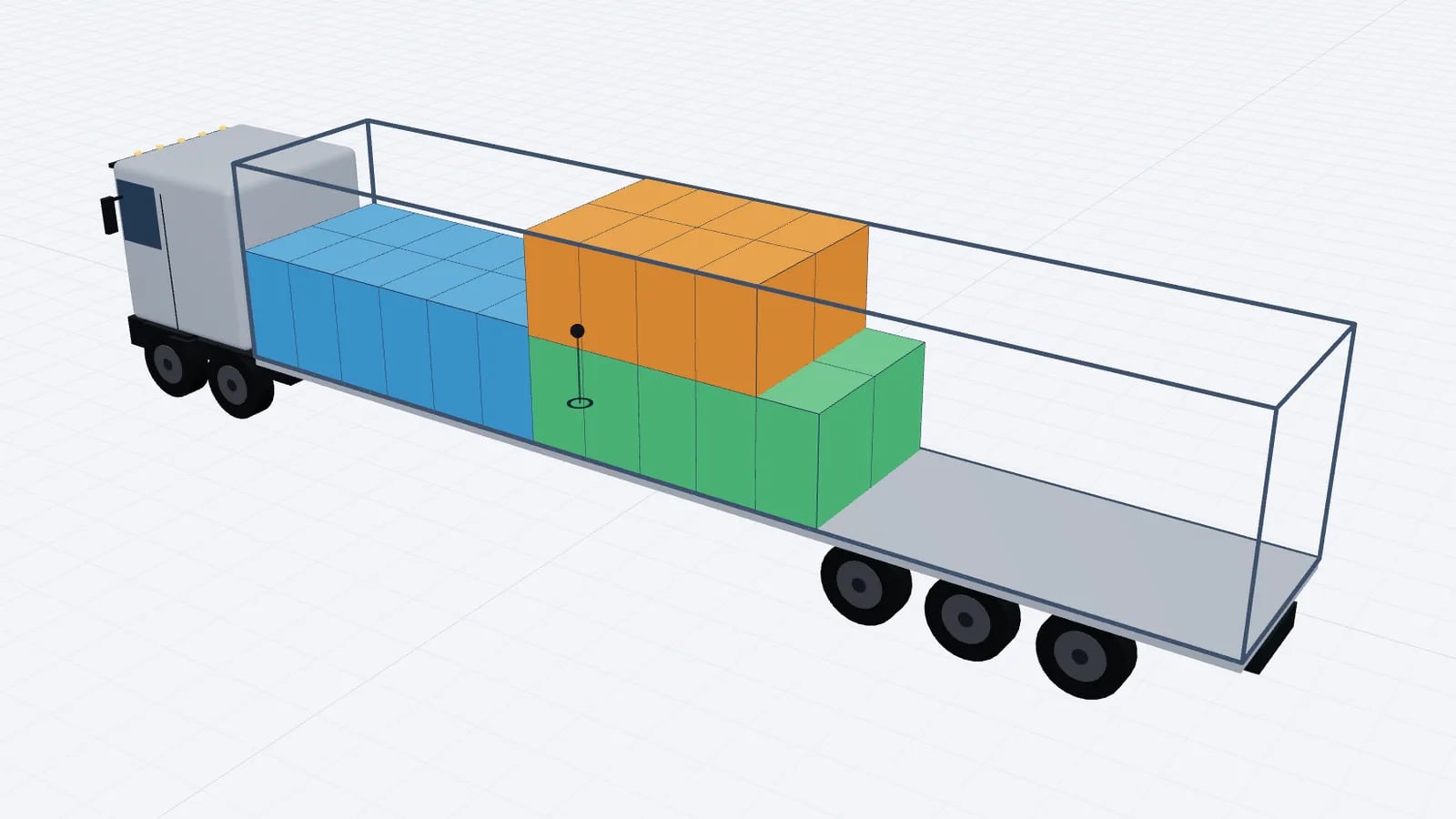
A truck loading checklist splits the job into three short passes: before loading (vehicle, paperwork, goods and plan), during loading (order, weight, gaps and damage) and before departure (securing, doors, weight and handover). Each line below is there because skipping it causes a known problem, from a refused delivery to an overloaded axle. Print the tables, tick them at the door, and keep the sheet with the delivery documents.
The checklist assumes pallets or cartons loaded into a trailer, rigid truck or van by forklift or pallet jack. It does not replace your site rules or the securing rules that apply to your route. For the full method behind each step, see how to load a truck.
How to use this truck loading checklist
Give each pass an owner. The planner or shift lead owns the first pass, the loader owns the second, and the driver and loader sign the third together. One sheet per vehicle works better than one sheet per shift, because problems are found on a specific load and need a specific fix.
- Tick, do not assume. A box ticked from memory is worth nothing. If a check was not possible, write why.
- Stop on a red line. If a check fails, fix it before moving on. Unloading half a trailer costs more than waiting ten minutes.
- Keep it short. The lists below are the core. Add site-specific items (seals, temperature, customs) at the bottom rather than in the middle.
- Keep the sheet. A signed sheet shows what was checked if goods arrive damaged or a roadside check finds a problem.
Pass 1: before loading
Most failed loads were already failed before the first pallet moved. This pass confirms that the right goods are going into the right vehicle in a known order.
| Check | Why it matters |
|---|---|
| Vehicle matches the booking: type, inside length, width and height, payload | A 13.6 m trailer and a 7.7 m drawbar body are both "a truck" on a booking. The wrong one is found at the door, not at the desk. |
| Door opening measured or known | The door is often lower than the inside height. A pallet that fits inside may not pass the door. |
| Floor, walls, roof and doors inspected: holes, water, nails, broken boards | Damaged floors fail under forklift wheels, and water damages cartons. Refuse the vehicle if it is not fit for the goods. |
| Vehicle clean, dry and free of smell; temperature set if refrigerated | Food and pharma shippers reject vehicles that fail hygiene or pre-cooling checks. |
| Wheels chocked or dock restraint engaged; trailer supported if uncoupled | Stops trailer creep and nose-down tipping while a forklift is inside. See truck loading safety. |
| Goods counted and matched to the packing list | Missing lines found after departure mean a second delivery. |
| Weights and sizes known for every line | Estimated weights hide overloads. A carton that weighs twice the label changes the axle split. |
| Non-stackable, fragile and floor-only items marked | Unmarked items get used as a base, and the crushed goods are found by the customer. |
| Load plan printed or open on a tablet at the door | The loader follows a sequence instead of solving the puzzle with a forklift. |
| Goods staged in loading order | Hunting for pallets on the dock is the biggest avoidable delay. See loading dock efficiency. |
| Securing equipment ready: straps, bars, anti-slip mats, edge protectors | Searching for straps after loading is when shortcuts happen. |
Tip
Check the fit before the truck arrives. A loading metre calculator or a pallet count for the booked vehicle tells you in a minute whether the order fits the booked vehicle.
Pass 2: during loading
The second pass is about order and weight. Most of it is a habit of comparing each row with the plan before driving in with the next pallet.
| Check | Why it matters |
|---|---|
| Loading starts at the front wall (or at the position the plan gives) | Starting at the doors leaves the front empty and moves weight off the drive axle. |
| Last delivery loaded first, first delivery at the doors | Last on, first off. The driver should not unload one customer's goods to reach another's. |
| Heavy items on the floor, light and fragile on top or in their own row | Heavy over light crushes the lower item and raises the centre of gravity. |
| Weight balanced left and right | A heavy side leans the vehicle in every bend and loads one set of tyres. |
| Part loads spread along the floor, not bunched at the front | Bunching a part load at the front wall can overload the tractor while the gross weight is legal. |
| Each stacked pallet checked against its stacking limit | A pallet that can carry 500 kg on top fails under 800 kg, usually after the first pothole. |
| Rows tight; any gap filled, blocked or noted | Cargo that can travel 20 cm before it hits something arrives with momentum. |
| Damaged pallets or broken wrap set aside, not loaded | Damage noted at loading is the shipper's problem; damage found at delivery becomes the carrier's dispute. |
| Plan updated when something changes | If a pallet is swapped or left out, the driver and the receiver need to know. |
Good to know
Count rows as you go. On a 13.6 m trailer with Euro pallets loaded three across, row 11 is the last one. If you reach the doors at row 10 with pallets still on the dock, stop and find out why before you force the last row in.
Pass 3: before departure
The driver is usually responsible for the vehicle on the road, so this pass is done with the driver, not for the driver. It should take five minutes on a normal load.
| Check | Why it matters |
|---|---|
| Load secured by blocking, lashing, friction mats or a mix | A load that is not secured moves under braking. See load securing basics. |
| Straps rated, undamaged, tight, with edge protection where they bear on corners | A cut or frayed strap fails below its rated load. |
| Last row blocked or strapped so it cannot rest on the doors | Goods leaning on the doors fall on whoever opens them. |
| Curtains, side boards or doors closed and locked; seal applied and recorded | An open buckle on a curtainsider lets the curtain flap and the load lean out. |
| Total weight within payload; axle loads checked on a scale if possible | Gross weight alone does not show an overloaded axle. |
| Height of the loaded vehicle known | Tall loads on open vehicles meet bridges and car parks. |
| Documents match the load: delivery notes, CMR or bill of lading, dangerous goods papers | A missing document stops the vehicle at the border or the receiver's gate. |
| Driver has the load plan with the stop order | The driver can check what comes off at each stop and spot a shifted load. |
| Dock restraint released, chocks removed, dock plate stored, signal given | Early departure with a forklift or dock plate still in place is a common serious accident. |
| Sheet signed by loader and driver | Shows who checked what, and when. |
A worked example: one trailer, three stops
A 13.6 m semi-trailer (inside about 1,360 × 245 × 270 cm, payload 24,000 kg) takes 30 Euro pallets for three customers: 12 for stop 3 at 650 kg, 10 for stop 2 at 500 kg and 8 for stop 1 at 400 kg. Total weight is 7,800 + 5,000 + 3,200 = 16,000 kg, well inside the payload.
- 1Before loading: the planner confirms 30 pallets fit 10 rows of three, leaving one row (about 1.2 m) free at the doors, and stages the lane with stop 3 nearest the door.
- 2During loading: rows 1 to 4 take the 12 stop-3 pallets, rows 5 to 7 and one pallet of row 8 take stop 2, and the other two pallets of row 8 plus rows 9 and 10 take stop 1. The heaviest stop is at the front, which loads the tractor; the axle estimate shows whether the block needs moving back.
- 3Before departure: the free row at the doors is blocked with an empty pallet stack or bar, straps go over every row, and the driver gets the plan with each stop's pallets coloured.
At stop 1 the driver removes eight pallets: two from row 8 and all of rows 9 and 10. The remaining 22 pallets now sit in the front 8 rows, with a single pallet in row 8, and both that pallet and the gap behind it need blocking before driving on. Sharing a row between two stops, like row 8 above, works because all three pallets in a row face the doors, so nothing has to be moved to reach the stop-1 pallets. A good checklist has a line for that: resecure after every stop. More on stop order in multi-drop load planning.
Make the checklist printable
A truck loading checklist works best on one A4 page per vehicle, with the three passes as columns or blocks and a signature line at the bottom. Add the vehicle registration, trailer number, seal number, date and the loader's and driver's names at the top. Keep a short free-text box for remarks, because "one pallet left behind, damaged wrap" is exactly the information the customer service team needs later.
Attach the load plan to the sheet. A picture of where each pallet stands is faster to check than a list of line numbers. In EveryLoading you can export the plan as a PDF with the views and the loading order, or send the driver a read-only share link, and the load plan PDF for drivers post shows what to include. If you only need a sheet to fill in by hand, a simple row-by-row grid of the floor works.
Tip
To build the plan the checklist refers to, open the Cargo tab in the planner, paste your packing list from Excel, set a stop number per row and press Optimize. The stats bar shows the axle estimate and warnings, so the weight lines of the checklist are already answered before the truck docks. You can start with a free account.
Frequently asked questions
What should be on a truck loading checklist?
The vehicle and its condition, the goods and their weights, the loading order, stacking and weight balance, securing, door and seal, total and axle weight, documents and the handover to the driver.
Who is responsible for checking a truck before it leaves?
Usually both sides. The loader or shipper checks that the goods are loaded and secured as planned, and the driver checks that the vehicle and load are safe to drive. Responsibilities are set by national law, so check the rules for your country.
How long should a pre-departure load check take?
Around five minutes on a routine pallet load. Mixed, multi-drop or open-vehicle loads take longer because there is more to secure and verify.
Should the checklist be repeated during a multi-drop trip?
The securing part should. Every unloaded row leaves a gap or changes the weight balance, so the driver should block or strap the remaining load before driving to the next stop.
Keep reading
Road freight · · 7 min read
Truck Loading Time: How Long Loading and Unloading Take
Truck loading time by method: pallets, floor-loaded cartons and side loading, with worked minute estimates, what slows docks and how planning cuts it.
Read article
Road freight · · 10 min read
Out of Gauge Cargo by Road: Limits, Permits and Trailers
Out of gauge cargo on EU roads: Directive 96/53/EC limits, indivisible loads, permits, escorts, overhang marking, trailer choice, axle loads and route surveys.
Read article
Road freight · · 9 min read
Driving Without a Tachograph: EU Rules and Exemptions
When you can drive without a tachograph in the EU: Regulation 561/2006 scope, vans over 2.5 t from July 2026, Article 3 and 13 exemptions and driving limits.
Read article