Truck Loading Equipment: What You Need and How to Choose
Truck loading equipment explained: pallet jacks, forklifts, dock levellers, ramps, tail lifts, conveyors and load bars, and how to choose per vehicle and cargo.
Road freight · · 7 min read
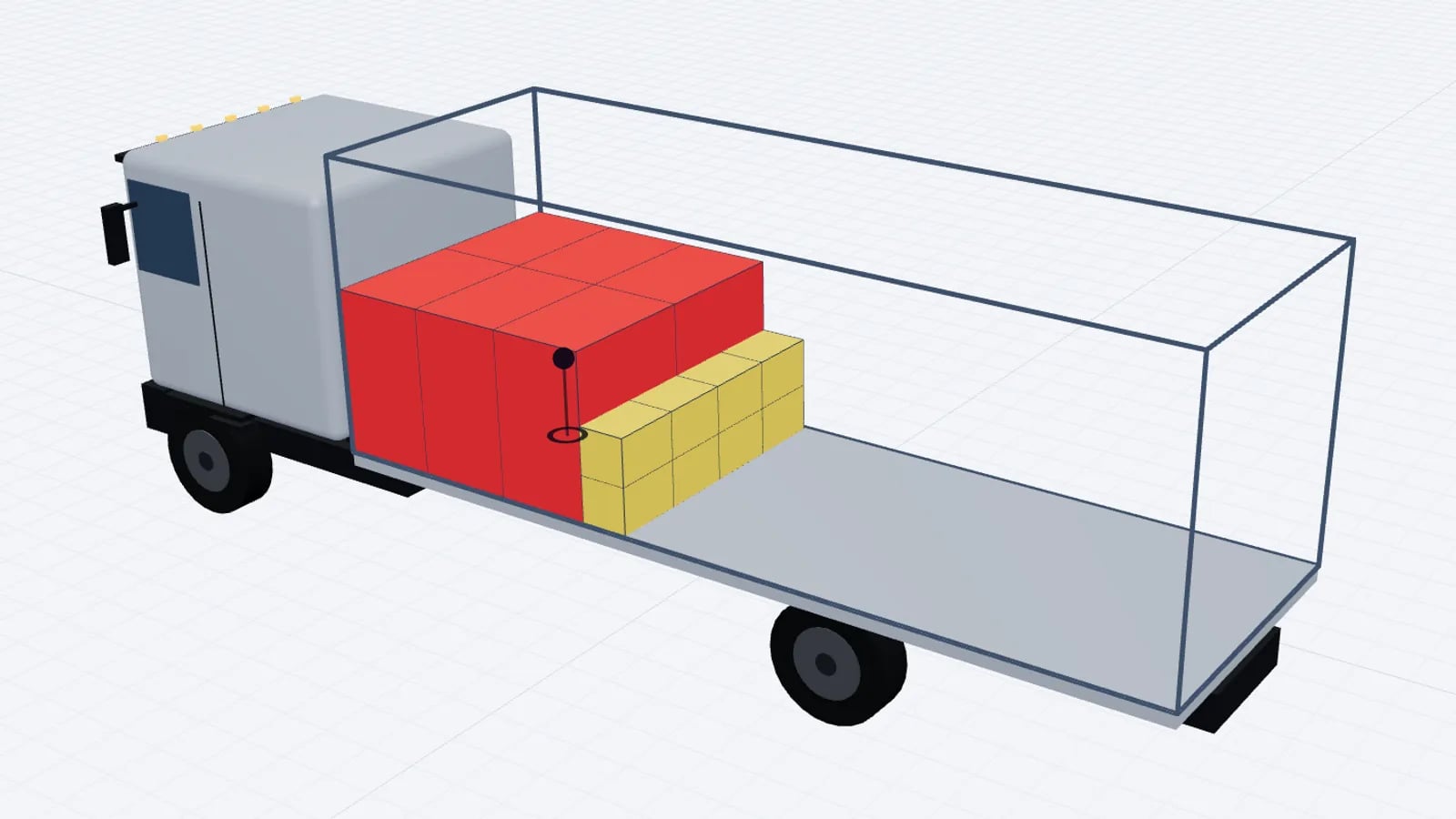
Truck loading equipment falls into three groups: machines that move the goods (pallet jacks, forklifts, conveyors), equipment that bridges the vehicle and the ground or dock (dock levellers, dock plates, yard ramps, tail lifts), and gear that keeps the load in place once it is on board (straps, load bars, anti-slip mats). The right set depends on two questions: does the site have a dock, and how is the cargo packed? This guide describes each piece, its typical capacity, and when it is the right choice.
Capacities below are typical ranges for common models. Always use the rating on the equipment's own plate, and include the weight of the machine where it crosses a plate or leveller.
Equipment that moves the goods
Equipment: Hand pallet jack
- Typical capacity
- 2,000–2,500 kg
- Best for
- Pallets at a dock, inside trailers and containers, tail-lift deliveries
- Limits
- Flat, smooth floors only; tiring over long distances
Equipment: Electric pallet truck
- Typical capacity
- 1,600–3,000 kg
- Best for
- Busy docks, long trailers, repeated loading
- Limits
- Weight on the dock plate; battery charging
Equipment: Counterbalance forklift
- Typical capacity
- 1.5–5 t, most docks 2–3 t
- Best for
- Side loading, yard work, loading over a leveller
- Limits
- Mast height in containers; heavy on plates and trailer floors
Equipment: Reach truck or stacker
- Typical capacity
- 1–2 t
- Best for
- Moving pallets from racking to the staging lane
- Limits
- Not designed to drive into trailers
Equipment: Truck-mounted forklift
- Typical capacity
- about 1.5–2.5 t
- Best for
- Self-unloading at sites without docks or forklifts
- Limits
- Payload lost to the forklift's weight
Equipment: Telescopic or roller conveyor
- Typical capacity
- Per carton, often up to about 50 kg
- Best for
- Floor-loaded cartons and parcels
- Limits
- Only for cartons and bags, not pallets
Equipment: Crane (overhead, mobile, truck-mounted)
- Typical capacity
- Wide range
- Best for
- Top loading of coils, beams, machines
- Limits
- Needs lifting points, slinging and a competent operator
| Equipment | Typical capacity | Best for | Limits |
|---|---|---|---|
| Hand pallet jack | 2,000–2,500 kg | Pallets at a dock, inside trailers and containers, tail-lift deliveries | Flat, smooth floors only; tiring over long distances |
| Electric pallet truck | 1,600–3,000 kg | Busy docks, long trailers, repeated loading | Weight on the dock plate; battery charging |
| Counterbalance forklift | 1.5–5 t, most docks 2–3 t | Side loading, yard work, loading over a leveller | Mast height in containers; heavy on plates and trailer floors |
| Reach truck or stacker | 1–2 t | Moving pallets from racking to the staging lane | Not designed to drive into trailers |
| Truck-mounted forklift | about 1.5–2.5 t | Self-unloading at sites without docks or forklifts | Payload lost to the forklift's weight |
| Telescopic or roller conveyor | Per carton, often up to about 50 kg | Floor-loaded cartons and parcels | Only for cartons and bags, not pallets |
| Crane (overhead, mobile, truck-mounted) | Wide range | Top loading of coils, beams, machines | Needs lifting points, slinging and a competent operator |
For pallet work, the main choice is between a pallet jack and a forklift inside the trailer. A forklift is faster but heavier, and its mast can hit the roof of a container or low trailer when lifting. A pallet jack weighs little and fits everywhere, but it cannot lift a pallet onto another pallet, so double-stacked loads need a forklift.
Tip
If you double-stack inside a trailer, check the forklift's lift height against the inside height. A 1.2 m pallet lifted onto another 1.2 m pallet needs about 2.5 m of free height plus the mast clearance, and many trailers have about 2.7 m inside. See double-stacking pallets in trailers.
Equipment that bridges the vehicle and the dock
The dock face and the trailer bed are rarely level. A loaded trailer sits lower than an empty one, and a city rigid is lower than a semi-trailer. Bridging equipment closes the gap and the height difference so that a pallet jack or forklift can cross.
Equipment: Dock leveller (hydraulic, with a lip)
- What it does
- A hinged platform in the dock face that raises and lowers to the bed height; a lip rests on the vehicle floor
- When to use it
- Docks serving many vehicle heights; heavy and frequent traffic
Equipment: Dock plate or dock board
- What it does
- A loose metal plate laid across a small gap
- When to use it
- Small height differences and light, occasional traffic
Equipment: Dock lift or scissor lift
- What it does
- A platform that lifts goods from ground level to the bed height
- When to use it
- Sites with no dock pit and vans or low vehicles
Equipment: Yard ramp
- What it does
- A mobile steel ramp from ground level to the trailer bed
- When to use it
- Forklift loading through the rear without a dock
Equipment: Tail lift
- What it does
- A lifting platform on the vehicle's rear
- When to use it
- Deliveries to shops and sites without docks
Equipment: Vehicle restraint and dock shelter
- What it does
- Holds the trailer at the dock; seals the gap around the door
- When to use it
- Any busy dock; temperature-controlled loading
| Equipment | What it does | When to use it |
|---|---|---|
| Dock leveller (hydraulic, with a lip) | A hinged platform in the dock face that raises and lowers to the bed height; a lip rests on the vehicle floor | Docks serving many vehicle heights; heavy and frequent traffic |
| Dock plate or dock board | A loose metal plate laid across a small gap | Small height differences and light, occasional traffic |
| Dock lift or scissor lift | A platform that lifts goods from ground level to the bed height | Sites with no dock pit and vans or low vehicles |
| Yard ramp | A mobile steel ramp from ground level to the trailer bed | Forklift loading through the rear without a dock |
| Tail lift | A lifting platform on the vehicle's rear | Deliveries to shops and sites without docks |
| Vehicle restraint and dock shelter | Holds the trailer at the dock; seals the gap around the door | Any busy dock; temperature-controlled loading |
Dock levellers are rated by their dynamic capacity, often 6 to 10 t, which has to cover the forklift and its load together. A 2.5 t counterbalance forklift weighs around 4 t empty, so with a 1,000 kg pallet it already puts about 5 t on the leveller at each crossing. The safe use of plates and levellers, and the trailer creep that can pull a lip off the bed, are covered in truck loading safety.
Good to know
Tail lifts are commonly rated between about 500 and 2,000 kg. A 1,000 kg tail lift with a 700 kg pallet and a 150 kg pallet truck and operator is within its limit; a 1,000 kg pallet is not. Check the plate, and check where on the platform the rating applies.
Equipment that keeps the load in place
- Ratchet straps (lashing straps). The most used securing gear. Rated by lashing capacity (LC) and standard tension force (STF) on the label. Used for top-over lashing and direct lashing.
- Load bars and locking beams. Horizontal bars between the side walls that block a row from moving back. Common in box trailers and for part loads with a gap behind them.
- Anti-slip mats. Rubber mats under pallets that raise friction and reduce the strap force needed.
- Edge protectors. Corners that stop straps cutting into cartons and spread the force.
- Dunnage and airbags. Timber, boards and inflatable bags that fill gaps between rows or between cargo and walls.
- Chains and binders. For heavy machinery and steel on flatbeds.
How much securing a load needs, and why friction alone is never enough, is covered in load securing basics. For containers, see dunnage and container securing.
Choosing truck loading equipment per vehicle
| Vehicle | Typical set |
|---|---|
| Van (about 3.5 t) | Hand pallet jack, ramp or tail lift, straps and load bars; often loaded by hand |
| Rigid truck, 7.5–18 t | Tail lift for city deliveries, pallet jack on board, forklift at the depot |
| 13.6 m box or reefer trailer | Dock with leveller and restraint, electric pallet truck or forklift, load bars |
| 13.6 m curtainsider | Counterbalance forklift for side loading, or dock and leveller for rear loading; straps |
| Flatbed | Forklift or crane, chains and straps, dunnage |
| ISO container | Pallet jack or low-mast forklift via a dock or ramp; conveyor for floor-loaded cartons |
Choosing per cargo
- 1Weigh the heaviest unit. It sets the minimum capacity of the pallet jack, forklift, leveller and tail lift. Add the machine's own weight wherever it crosses a plate or lift.
- 2Measure the largest unit. Long items rule out rear loading by pallet jack; tall ones need checking against the forklift's mast and the door height.
- 3Count the units. A few heavy pieces suit a forklift or crane; hundreds of cartons need a conveyor and a crew.
- 4Check the sites at both ends. The delivery end decides as much as the loading end. A shop without a dock needs a tail lift and a pallet jack on the vehicle.
- 5Plan the securing. Know before loading how each row will be held: blocked against the front wall, a load bar, straps over each row.
A worked example
A distributor sends 14 Euro pallets of drinks at 850 kg each from a warehouse with docks to five shops without docks, in an 18-pallet rigid truck (inside about 730 × 245 × 250 cm, payload 8,000 kg). The cargo weighs 14 × 850 = 11,900 kg, which is already over the payload. The plan has to change before any equipment is chosen: at most 9 pallets (7,650 kg) per truck, so two trucks with 7 pallets (5,950 kg) each.
For each truck: an electric pallet truck at the depot dock loads the pallets over the leveller. At the shops, a tail lift is needed, and at 850 kg per pallet plus the pallet truck and operator, a 1,000 kg lift is too tight; a 1,500 kg lift fits. The drinks need anti-slip mats and straps over each row, plus a load bar behind the last row as pallets come off. The weight and the delivery sites chose the equipment, not the other way round. Beverage load planning goes deeper into heavy drinks loads.
Tip
Check weights and pallet counts before booking equipment. In EveryLoading, pick a vehicle preset on the Vehicle tab, paste the cargo, and the stats bar warns when the payload or an axle estimate is over your limits. With Pro, Use more trucks if it doesn't fit splits the load across vehicles. Start in the planner with a free account, or try the pallet fit calculator first. How long loading takes with each piece of equipment is in truck loading time.
Frequently asked questions
What equipment is used to load trucks?
Pallet jacks and forklifts move palletised goods, conveyors move cartons, and cranes lift heavy items. Dock levellers, plates, ramps and tail lifts bridge the vehicle and the dock or ground, and straps, load bars and mats hold the load.
Can a forklift drive into a trailer?
Yes, if the trailer floor, the dock leveller or plate, and the trailer support are rated for the forklift plus its load, and the trailer is restrained against moving. Containers and low trailers may limit the mast height.
What is the difference between a dock leveller and a dock plate?
A leveller is a fixed, adjustable platform built into the dock that handles a wide range of vehicle heights and heavy traffic. A dock plate is a loose plate for small gaps and lighter, occasional use.
What capacity tail lift do I need?
At least the heaviest pallet plus the pallet truck and operator standing on the platform, with some margin. For pallets around 800 to 1,000 kg, that usually means a lift rated at 1,500 kg or more.
Keep reading
Road freight · · 7 min read
Truck Loading Time: How Long Loading and Unloading Take
Truck loading time by method: pallets, floor-loaded cartons and side loading, with worked minute estimates, what slows docks and how planning cuts it.
Read article
Road freight · · 8 min read
Truck Loading Checklist: Before, During and Before Departure
A printable truck loading checklist for docks and drivers: what to check before loading, while loading and before departure, and why each check matters.
Read article
Road freight · · 10 min read
Out of Gauge Cargo by Road: Limits, Permits and Trailers
Out of gauge cargo on EU roads: Directive 96/53/EC limits, indivisible loads, permits, escorts, overhang marking, trailer choice, axle loads and route surveys.
Read article