Cargo Pallet Types: Materials, Designs and Which to Use
Cargo pallet types compared: wood (ISPM 15), plastic, presswood, metal and paper, two-way vs four-way entry, block vs stringer, and the right pick by mode.
Load planning basics · · 8 min read
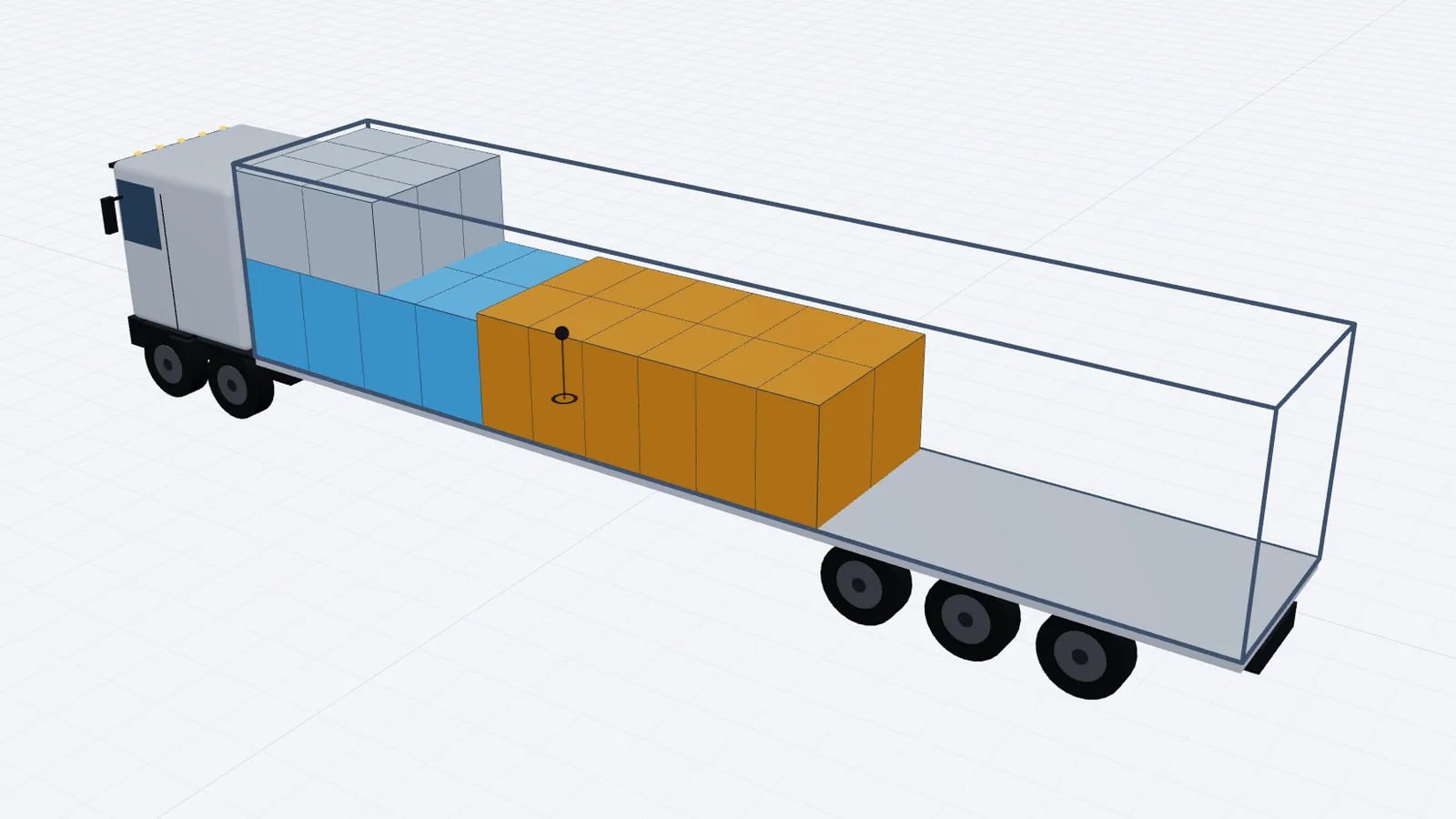
A cargo pallet is the flat base a unit load is built on, and the type you choose decides how it is handled, what it weighs, whether it can cross a border without treatment and how much it can carry. The main choices are the material (wood, plastic, presswood, metal or paper) and the design (block or stringer, two-way or four-way entry). For road freight inside one region a standard wooden pallet is usually right; for export by sea or air, the treatment rules and the pallet's own weight often point somewhere else.
This guide is about what a pallet is made of and how it is built. For the footprints themselves (EUR 1200 x 800, industrial 1200 x 1000, US 48 x 40 in and the rest), see the pallet sizes guide. For how much each type can carry, see pallet weight capacity.
Cargo pallet types at a glance
Material: Wood (softwood)
- Typical own weight (1200 x 800)
- 20 to 25 kg
- ISPM 15 needed for export
- Yes, unless the wood is processed
- Strengths
- Cheap, strong, repairable, exchange pools
- Watch out for
- Moisture, nails, splinters, treatment marks
Material: Plastic (HDPE/PP)
- Typical own weight (1200 x 800)
- 8 to 25 kg depending on design
- ISPM 15 needed for export
- No
- Strengths
- Hygienic, washable, consistent weight
- Watch out for
- Price, some designs sag in racks, slippery decks
Material: Presswood (moulded wood fibre)
- Typical own weight (1200 x 800)
- about 10 to 15 kg
- ISPM 15 needed for export
- No (processed wood)
- Strengths
- Light, nestable, no treatment
- Watch out for
- Usually one-way, weaker in racks, dislikes water
Material: Metal (steel, aluminium)
- Typical own weight (1200 x 800)
- 15 to 50 kg or more
- ISPM 15 needed for export
- No
- Strengths
- Very strong, long life, fire resistant
- Watch out for
- Weight, cost, slippery when wet
Material: Paper (corrugated, honeycomb)
- Typical own weight (1200 x 800)
- 3 to 8 kg
- ISPM 15 needed for export
- No
- Strengths
- Very light, recyclable, air freight friendly
- Watch out for
- Low capacity, no wet conditions, one trip
| Material | Typical own weight (1200 x 800) | ISPM 15 needed for export | Strengths | Watch out for |
|---|---|---|---|---|
| Wood (softwood) | 20 to 25 kg | Yes, unless the wood is processed | Cheap, strong, repairable, exchange pools | Moisture, nails, splinters, treatment marks |
| Plastic (HDPE/PP) | 8 to 25 kg depending on design | No | Hygienic, washable, consistent weight | Price, some designs sag in racks, slippery decks |
| Presswood (moulded wood fibre) | about 10 to 15 kg | No (processed wood) | Light, nestable, no treatment | Usually one-way, weaker in racks, dislikes water |
| Metal (steel, aluminium) | 15 to 50 kg or more | No | Very strong, long life, fire resistant | Weight, cost, slippery when wet |
| Paper (corrugated, honeycomb) | 3 to 8 kg | No | Very light, recyclable, air freight friendly | Low capacity, no wet conditions, one trip |
The weights are typical ranges for a 1200 x 800 mm pallet. Real pallets vary by maker and design, so take the figure from the supplier's data sheet and use it in your plan. A few kilograms per pallet is nothing on one shipment but adds up to hundreds of kilograms on a full trailer.
Wooden pallets and ISPM 15
Wood is still the default cargo pallet in most of the world. The EUR/EPAL pallet and the US GMA-style 48 x 40 are both wooden, both are repaired and reused many times, and the European exchange system works because the pallets are interchangeable.
For international shipments, solid wood packaging falls under ISPM 15, the international standard for wood packaging material. The wood must be treated against pests, normally by heat treatment (code HT) or, where still allowed, fumigation with methyl bromide (MB), and carry the IPPC mark with a country code, producer number and treatment code. Many countries inspect at the border and can refuse, treat or destroy shipments on untreated or unmarked wood, at the shipper's cost. Check what the destination country requires: rules within some trading blocs are lighter, but you should not assume that.
- Check the mark before loading, not after. A container stuffed on a mix of marked and unmarked pallets has to be unloaded to fix it.
- Dunnage counts too. Wooden blocking and bracing in a container is also wood packaging and needs the same treatment.
- Moisture matters. Wet wooden pallets add weight and can cause mould and condensation in a closed container, especially on long sea routes.
Plastic, presswood, metal and paper pallets
Plastic pallets come in three broad designs: light nestable pallets that stack inside each other when empty, rackable pallets with a reinforced bottom frame, and heavy-duty pallets often with steel inserts. They are popular in food, pharma and closed loops where pallets come back, because they can be washed and do not shed splinters. Like other non-wood packaging they are outside ISPM 15. The trade-off is price, so one-way export use only makes sense for the lighter designs.
Presswood pallets are pressed from wood chips or fibre with a resin binder, usually with moulded feet. Because the wood is processed, they are outside ISPM 15, and they nest, so empties take little space. They suit one-way export of light to medium loads. Keep them out of the rain and check the rating before you put them in a rack.
Metal pallets and stillages are used for heavy and repeat loops: automotive parts, castings, coils, and anything that would break a wooden deck. They last for years but weigh a lot, which hurts on air freight and on loads that are close to the payload. Paper pallets, made of corrugated board or honeycomb, are the lightest option and are used mostly for light air freight and retail displays. They are one-trip pallets and do not tolerate water.
Two-way vs four-way entry
Entry describes from which sides forks can go in. A two-way pallet takes forks from two opposite sides only. A four-way pallet takes them from all four sides. Some designs are partial four-way: a forklift can enter from all sides, but a hand pallet truck only from two, because the wheels have nowhere to go on the other sides.
Four-way entry matters more than it looks on a load plan. If a trailer is loaded with mixed lengthwise and crosswise pallets, which is how 33 EUR pallets fit a 13.6 m trailer, some of them are picked up from the narrow side and some from the long side. With two-way pallets, the forklift driver may not be able to place them the way the plan shows, or has to turn them in the trailer. In a 20 ft container, where the side-by-side pattern often mixes orientations, the same problem applies.
Tip
If your pallets are two-way, tell the planner. In EveryLoading you can set an item's rotation to Keep as entered or Turn on the floor only (this side up) in the row menu, so the optimizer only uses orientations your forklift can actually build.
Block vs stringer pallets
A block pallet has its top deck resting on blocks (usually nine) with bottom boards between them. The EUR pallet is a block pallet: it is four-way, stiff in both directions and handles well with pallet trucks. A stringer pallet has three long beams (stringers) under the top deck. It is simpler and cheaper to build, and the classic North American 48 x 40 is a stringer design, often with notches cut in the stringers to give partial four-way entry.
For load planning, the difference shows up in three places: which way the pallet can be picked up, how it behaves in a rack (stringer pallets are usually racked across the stringers), and how it carries a stack on top. A stringer pallet loaded off-centre or across a gap flexes more than a block pallet. If you double-stack in a trailer, use the block design or check the rating; see stacking rules for pallets for the support and weight-on-top side of that decision.
Which cargo pallet to use by mode
Mode: Domestic or regional road
- Usual choice
- Wooden EUR or 48 x 40 in an exchange pool
- Why
- Cheap, swapped at delivery, every dock handles them
Mode: International road
- Usual choice
- Wooden, ISPM 15 marked if the route needs it; plastic in closed loops
- Why
- Border rules and who gets the pallet back
Mode: Sea container
- Usual choice
- ISPM 15 wood, presswood or plastic; footprint chosen for the 2.35 m container width
- Why
- Treatment rules, moisture on long voyages, floor fill
Mode: Air freight
- Usual choice
- Presswood, light plastic or paper
- Why
- Every kilo of tare is paid for; no treatment needed
Mode: Heavy industrial
- Usual choice
- Heavy wood, steel or stillages
- Why
- Capacity and durability count more than tare
| Mode | Usual choice | Why |
|---|---|---|
| Domestic or regional road | Wooden EUR or 48 x 40 in an exchange pool | Cheap, swapped at delivery, every dock handles them |
| International road | Wooden, ISPM 15 marked if the route needs it; plastic in closed loops | Border rules and who gets the pallet back |
| Sea container | ISPM 15 wood, presswood or plastic; footprint chosen for the 2.35 m container width | Treatment rules, moisture on long voyages, floor fill |
| Air freight | Presswood, light plastic or paper | Every kilo of tare is paid for; no treatment needed |
| Heavy industrial | Heavy wood, steel or stillages | Capacity and durability count more than tare |
For sea freight, also think about the footprint. A 20 ft container is about 2.35 m wide inside, which suits two industrial pallets (1.0 m) side by side better than EUR pallets, and the pallets in a container guide shows the counts. Plan the material and the size together, because a cheap pallet that leaves 30 cm of dead width along the whole box is not cheap.
Worked example: wood vs presswood on an air shipment
Four pallets go by air, each with 200 kg of goods on a 1200 x 800 base, total height 135 cm. Air freight is charged on the higher of actual weight and volumetric weight (length x width x height in cm / 6,000 under the common IATA divisor).
- Volumetric weight per pallet: 120 x 80 x 135 / 6,000 = 216 kg, so 864 kg for four.
- On wooden pallets at 25 kg: actual weight 4 x 225 = 900 kg. That is above 864 kg, so you pay for 900 kg.
- On presswood pallets at 12 kg: actual weight 4 x 212 = 848 kg. Now the volumetric 864 kg is higher, so you pay for 864 kg.
The lighter pallet saves 36 kg of chargeable weight on a small shipment, and no ISPM 15 treatment is needed. On dense cargo where actual weight decides the price, the saving is the full difference in tare. The air cargo chargeable weight guide covers the rounding rules, and the chargeable weight calculator does the sum for you.
Choosing a pallet: a short checklist
- 1Route: does any country on the way require ISPM 15 for wood? If so, use marked wood or a non-wood pallet.
- 2Return: will the pallet come back (pool or closed loop) or is it one-way? One-way favours presswood, paper or cheap wood.
- 3Weight: what is the heaviest load per pallet, and will pallets be stacked or racked? Check the rating, not the look.
- 4Handling: forklift or hand pallet truck at both ends? Four-way entry avoids problems with mixed orientations.
- 5Tare and payload: multiply the pallet weight by the pallet count and subtract it from the vehicle's payload before you promise the customer a full load.
- 6Hygiene and moisture: food and pharma often need plastic; long sea voyages punish wet wood.
Once the pallet type is fixed, enter the pallet with its goods as one item in a load planner, with the real overall size and gross weight including the pallet. In EveryLoading you can start with a free account, add the pallets in the cargo table, pick a truck or container and press Optimize to see how many fit and whether the weight stays inside the payload. The palletizing use case shows how cartons are built onto pallets first when you start from a packing list of boxes.
Frequently asked questions
What are the main types of cargo pallet?
By material: wood, plastic, presswood, metal and paper. By design: block pallets with feet and stringer pallets with long beams, each available as two-way or four-way entry.
Do plastic pallets need ISPM 15 treatment?
No. ISPM 15 applies to raw solid wood packaging, so plastic, metal, paper and presswood pallets are outside it. Wooden dunnage in the same container still needs treatment.
Which pallet is best for air freight?
Usually the lightest one that carries the load safely, such as presswood, light plastic or paper, because the pallet's own weight is part of the weight you are charged for.
Is a EUR pallet a block or stringer pallet?
A EUR/EPAL pallet is a block pallet with nine blocks and four-way entry. The common North American 48 x 40 is a stringer design, often notched for partial four-way entry.
Keep reading
Load planning basics · · 8 min read
Load Planning with Mixed Pallets: Euro, Industrial, Half, US
Load planning with mixed pallets: how Euro, industrial, half and US pallets share a 13.6 m trailer, which rows to turn, and a worked example in loading metres.
Read article
Load planning basics · · 8 min read
12 Load Planning Mistakes, What They Cost and How to Fix Them
The 12 common load planning mistakes, from outside dimensions to bunched part loads, with what each one costs in trucks, fines and claims and how to fix it.
Read article
Load planning basics · · 8 min read
Ti-Hi Pallet Calculation: Cases per Layer and Layers High
What Ti-Hi means and how to calculate it: cases per layer times layers, worked on 48×40 in and 120×80 cm pallets, with height, weight and crush checks.
Read article