Pharma Transport: Planning Temperature-Controlled Loads
Load planning for temperature-controlled pharma transport: GDP basics, reefer airflow, load lines, multi-temperature compartments and a worked trailer example.
Industry guides · · 5 min read
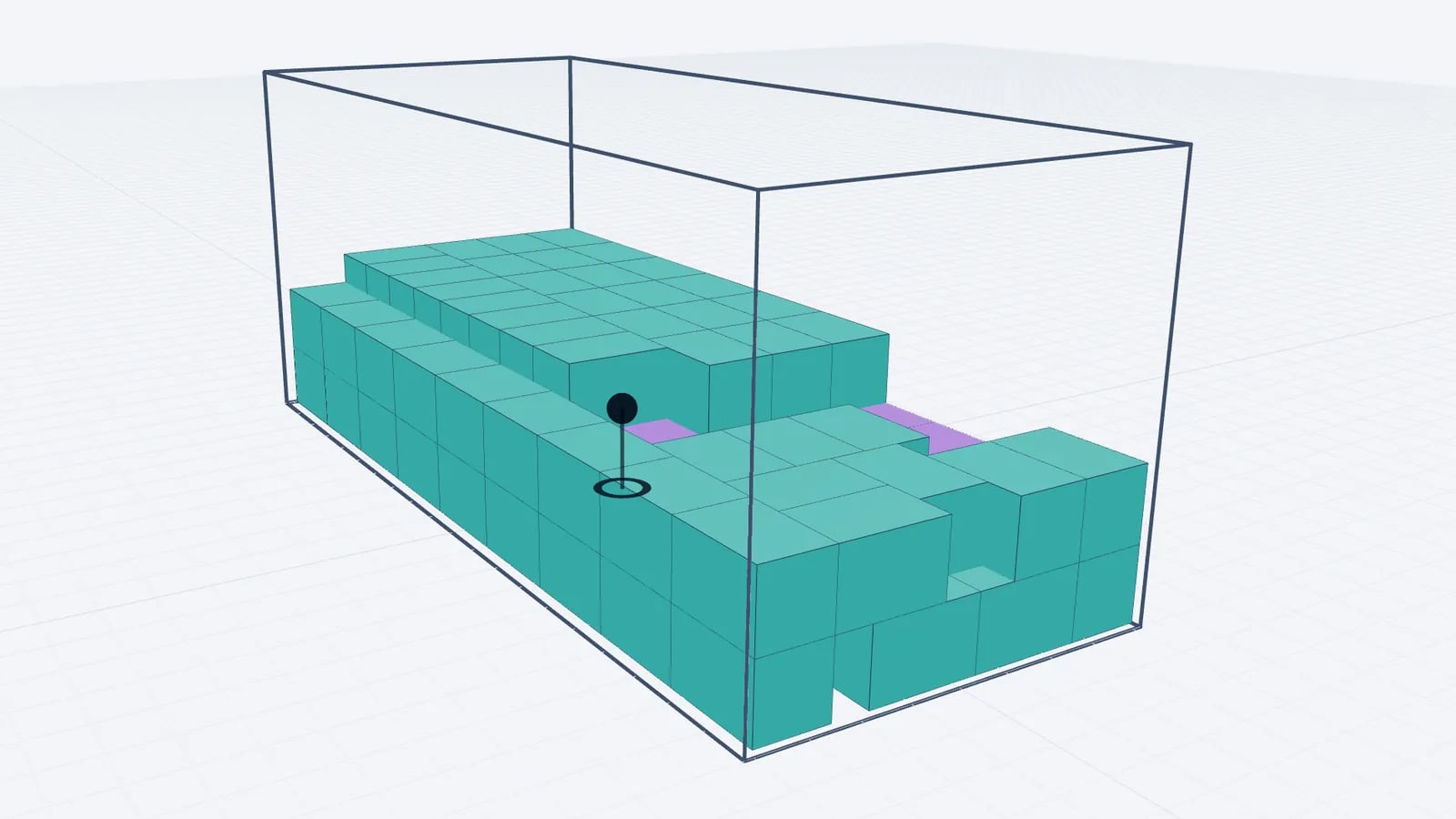
Pharma transport is load planning with one extra constraint that overrides the others: the product must stay inside its labelled temperature range the whole way. The plan has to leave room for air to circulate, keep pallets below the reefer's load line, separate temperature zones, and document what went where. This article covers the planning side in general terms; it is not regulatory advice.
GDP in one paragraph
In the EU, distribution of medicines for human use follows the Guidelines on Good Distribution Practice (GDP), published by the European Commission in 2013 (2013/C 343/01). Other regions have similar rules. For transport they expect, among other things, that storage conditions are maintained during transit, that temperature-controlled vehicles are qualified and monitored, that deviations are reported, and that the process is documented. How a company meets that is set out in its own quality system, so the load planner works to that company's procedures and the shipper's instructions.
Common temperature bands
Band: Frozen / deep frozen
- Typical label
- e.g. −25 to −15 °C, or colder for some products
- Planning notes
- Usually separate vehicles or insulated containers; no mixing
Band: Cold chain
- Typical label
- 2–8 °C
- Planning notes
- Reefer with tight control; most sensitive to door openings
Band: Controlled room temperature
- Typical label
- 15–25 °C (sometimes up to 30 °C)
- Planning notes
- Still needs an active, monitored vehicle in summer and winter
| Band | Typical label | Planning notes |
|---|---|---|
| Frozen / deep frozen | e.g. −25 to −15 °C, or colder for some products | Usually separate vehicles or insulated containers; no mixing |
| Cold chain | 2–8 °C | Reefer with tight control; most sensitive to door openings |
| Controlled room temperature | 15–25 °C (sometimes up to 30 °C) | Still needs an active, monitored vehicle in summer and winter |
Always use the range on the product label or the shipper's instructions; the table shows common examples only.
Airflow: why the plan leaves space
A reefer unit maintains temperature by moving air around the load. It is designed to hold product that is already at the right temperature, not to cool warm product down quickly. In a typical European reefer trailer, the unit at the front blows conditioned air along the ceiling towards the doors, and the air returns along the floor and through the load to the unit's return grille.
- Keep below the load line. The marked maximum height leaves a channel under the ceiling for supply air. Pallets above it block the air for everything behind them.
- Do not block the return air at the front. Pallets jammed against the unit's bulkhead starve the evaporator.
- Allow air under and around pallets. Wooden or plastic pallets give a channel under the load; slip sheets on the floor do not.
- Leave a gap at the doors if the trailer design requires it, so the air can turn and return.
- Avoid stacking temperature-sensitive pallets unless the shipper allows it and the height stays under the load line.
Sea reefer containers work differently: they usually supply air through a T-shaped floor and the load must not go past the end of the T-floor or above the red load line. Reefer container loading covers that case.
Worked example: a two-zone trailer
Say you run a multi-temperature reefer trailer with a movable bulkhead, internal length about 13.3 m and width about 2.46 m. Euro pallets go three abreast across the width (3 × 0.8 = 2.4 m), with rows of 1.2 m. The order has:
- 12 pallets at 2–8 °C for a hospital pharmacy wholesaler,
- 20 pallets at 15–25 °C for the same delivery point.
The 2–8 °C zone goes at the front, next to the unit, where control is usually tightest. 12 pallets need 4 rows, so 4 × 1.2 = 4.8 m. Allow about 0.1 m for the bulkhead (it varies by design), which puts the bulkhead's rear face at 4.9 m. That leaves 13.3 − 4.9 = 8.4 m for the rear compartment, exactly 7 rows of 1.2 m, or 21 pallet positions. The 20 pallets for 15–25 °C fit with one position spare.
Exactly 7 rows means no clearance at all, which is not realistic. In practice you would check the real internal length, the bulkhead thickness and the door seals, and if needed plan the rear zone as 6 rows of three (7.2 m) plus one row of two pallets turned with the long side across (2 × 1.2 = 2.4 m wide, 0.8 m deep). That holds 18 + 2 = 20 pallets in 8.0 m and leaves about 0.4 m for loading and closing the doors.
Good to know
Compartment sizes, airflow per zone and maximum load heights depend on the trailer and unit. Use the operator's documentation for the actual vehicle.
Planning for delivery stops
Each door opening lets warm or cold air in. With multiple drops, plan so each stop opens as little as possible:
- Load the first stop at the doors of its compartment, so the unloader takes it quickly.
- Use side doors on multi-temperature trailers where fitted, so a rear-zone delivery does not expose the front zone.
- Keep the number of drops per run reasonable for the product's sensitivity; the shipper may set a limit.
- Plan the route so the most sensitive goods spend the least time in the trailer.
The general logic of loading order is in multi-drop load planning.
Before the doors close
- 1Confirm the trailer is pre-conditioned to the required set-point for each zone, as the operator's procedure requires.
- 2Check product temperatures where the procedure requires it; do not load product that is out of range.
- 3Load to the plan, keeping below the load line and leaving the required air gaps.
- 4Place data loggers where the procedure says, for example in the warmest and coldest expected positions.
- 5Record the set-points, the plan, the seal number and the loading times.
A load plan is part of that record. In EveryLoading you can set the vehicle's usable height to the load line so the optimizer never stacks above it, give each order a delivery stop, and attach the PDF to the shipment file; see vehicle settings and PDF and share links. It does not model airflow or temperature, so the reefer rules above still apply.
Frequently asked questions
What is GDP in pharma transport?
Good Distribution Practice is the set of guidelines, in the EU published in 2013 as 2013/C 343/01, that require medicines to be kept within their storage conditions and handled in a documented, quality-controlled way during distribution, including transport.
Why must pharma pallets stay below the reefer load line?
The space under the ceiling carries the conditioned air to the rear of the trailer. Pallets above the line block it, and goods behind them can drift out of range.
Can 2–8 °C and 15–25 °C products travel on one trailer?
Yes, in a multi-temperature trailer with a bulkhead and separate control for each compartment, if the shipper and the operator procedures allow it.
Does a reefer cool down warm products?
Reefers are designed to maintain temperature, not to pull warm product down. Products should be at the required temperature before loading.
Keep reading
Industry guides · · 5 min read
Fresh Produce Transport: Planning Crates, Bins and Reefers
Fresh produce transport planning: crates and bins, temperature and ventilation in general terms, product compatibility, airflow and when produce weighs out.
Read article
Industry guides · · 6 min read
Beverage Pallet Loading: Plan for Weight Before Volume
Beverage pallets run out of payload long before the trailer is full. How to work out the pallet count, spread the weight over the axles and decide on stacking.
Read article
Industry guides · · 5 min read
Removal Truck Loading: Survey, Size and Load a Household Move
Removal truck loading for movers: turning a volume survey into the right vehicle, loading order for furniture and boxes, protection, and shared-load moves.
Read article