Container Loading Best Practices: From Inspection to Seal
Container loading best practices in order: inspect the box, spread weight along the length, block and brace, control moisture, secure the door end and seal.
Sea containers · · 7 min read
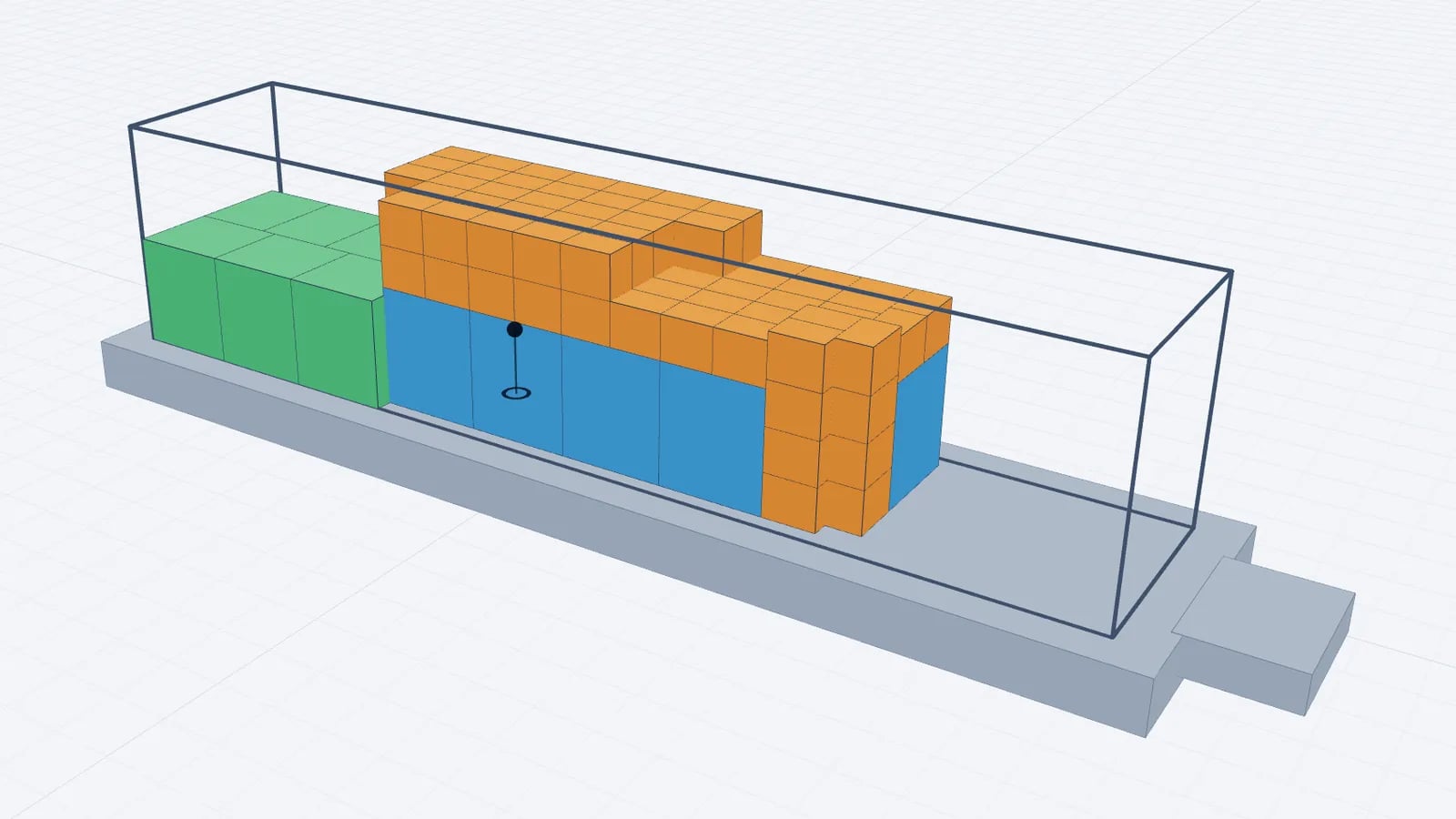
Good container loading comes down to six habits: inspect the empty box, spread the weight evenly along the length and keep it low, leave no space for the cargo to move, protect the goods from moisture, make the door end safe, and seal and record the container properly. Each one prevents a specific, expensive kind of claim, and most of them take minutes.
The main reference is the IMO/ILO/UNECE Code of Practice for Packing of Cargo Transport Units (CTU Code). It is guidance rather than law in most places, but carriers, insurers and surveyors use it to judge whether a box was packed with care. The planning side, deciding what goes where before loading starts, is covered in how to make a container stuffing plan. This article is about the practices at the dock.
1. Inspect the container before you load it
A damaged or dirty container causes claims that have nothing to do with how well you packed. Inspect every box when it arrives, before the first piece goes in, and refuse it if it is not fit for the goods.
| Check | What to look for |
|---|---|
| CSC plate | Present on the door, with a valid examination date or ACEP reference |
| Outside | Holes, cracked welds, bent corner posts, damage that could weaken the structure |
| Roof and walls | Close the doors from inside: any daylight means a hole that will let water in |
| Floor | Dry, clean, no protruding nails, no soft or broken boards, no oil or chemical stains |
| Doors | Open and close freely, rubber gaskets intact, locking bars and cams work |
| Smell and residue | No odour or residue from a previous load that could taint food or textiles |
| Markings | Old dangerous goods labels removed if the box is not carrying DG now |
Photograph the empty box from the door, with the container number visible. In the US, CTPAT members follow a standard seven-point container inspection (front wall, both sides, floor, ceiling, doors inside and out, and the undercarriage); it is a useful routine even outside that programme.
2. Spread the weight along the length and keep it low
A container is lifted at its four corners and carried on a chassis with the weight shared between the truck and the chassis axles. A load that is heavy at one end tilts when lifted and can overload one end on the road. Two simple rules cover most loads:
- Heavy on the floor, light on top. Never put heavy goods above lighter ones, even if the lighter ones look strong.
- Spread the weight along the length. A common rule of thumb is that no more than about 60 % of the cargo weight should sit in either half of the container. Better still, calculate the centre of gravity and keep it close to the middle.
- Balance side to side. A heavy row along one wall makes the container lean on the chassis and in the stack.
- Respect the floor. A heavy machine on a small base can exceed what the floor takes per square metre; spread it with timber beams.
- Stay under the payload, and under road limits. The CSC plate gives the maximum gross mass, but the road leg at either end may allow less.
Heavy goods in a 40ft are a common trap. A 40ft carries little more weight than a 20ft, so 20 tonnes of steel in a 40ft occupy only part of the floor. Placed all at the front, they put the centre of gravity metres off the middle. Spread them in blocks with braced gaps between, or use a 20ft. See 20ft vs 40ft for that choice.
3. Block and brace so nothing can move
At sea a container rolls and pitches, and on the road it is braked hard. The CTU Code gives acceleration factors for sea transport that depend on the sea area, and they are much higher than people expect: sideways forces in rough seas can reach a large share of the cargo's own weight. Friction alone will not hold a load.
- Load tight. Every piece should touch its neighbours or a wall. Voids are where movement starts.
- Fill gaps you cannot close. Use timber blocking, dunnage bags or void fillers. Airbags are for gaps, not for holding a load against the doors.
- Lash where blocking is not possible. Use the container's lashing points, which are rated for a limited load each; heavy items may need several.
- Use friction mats under heavy items with smooth bases, together with blocking or lashing.
- Brace stacked cargo. A tall stack can tip even when it cannot slide.
Which method suits which cargo, and how to size airbags, is in container dunnage and securing. For road-leg lashing calculations in Europe, EN 12195-1 is the usual reference.
4. Control moisture
Container rain is condensation that forms when warm, humid air inside the box meets a roof that cools at night or when the ship sails into colder water. It drips onto the top layer and soaks cartons from above. The source of the moisture is usually the cargo and its packaging, not the outside air.
- Use dry pallets and dunnage. Wet or freshly cut timber releases a lot of water. Ask for kiln-dried wood, which ISPM 15 heat-treated pallets usually are.
- Do not load in the rain without cover over the door, and do not load cargo that has been standing outside.
- Use desiccants for long or tropical routes and hygroscopic goods. Hang or place them as the supplier recommends.
- Cover the top layer with kraft paper or a protective sheet for sensitive goods, so drips land on paper rather than product.
- Keep ventilation openings clear. Do not tape over the small vents found on many dry containers.
Temperature-controlled cargo has its own rules for airflow, set point and pre-cooling; those are covered in our reefer container loading guide.
5. Make the door end safe
The person who opens the doors at destination has no idea how the box was packed. Cargo resting against the doors can fall out when the locking bars are released, and that is one of the most common causes of injury in container handling.
- Build a stable, vertical last row. Do not let cartons lean on the doors.
- Secure the last row with a door-end barrier: timber frame, straps across the width fixed to the lashing points, or a load-bearing bulkhead.
- Put light, stable cargo at the door end if you can, and items that customs or the consignee may want to inspect first.
- Leave room for the doors to close without pushing on the cargo.
- Plan the order so the door end is not filled with whatever happened to be left on the dock. Container loading sequence covers that order.
Good to know
Dangerous goods need placards on the outside of the box and a container packing certificate under the IMDG Code, and some may not be stowed together. Check the IMDG Code and your carrier's rules before loading any DG; dangerous goods loading gives an overview.
6. Seal, weigh and record
- 1Photograph the door end before closing, with the securing visible.
- 2Close the doors and check every locking bar is engaged.
- 3Fit the seal on the right-hand door's locking handle, the one that must open first. Use a high-security seal to ISO 17712 if your carrier or programme requires one.
- 4Record and photograph the seal number together with the container number. Check it against the booking and the shipping instructions.
- 5Confirm the VGM. The verified gross mass must reach the carrier before the box is loaded on the vessel. See VGM under SOLAS.
- 6File the evidence. The tally, the photos, the seal number and the load plan belong in the shipment file in case of a claim. What to record is in container loading documentation.
Container loading starts with a plan
Most of these practices are easier if the arrangement is decided before the container arrives: you know where the heavy items go, which gaps need dunnage and what goes at the door end. EveryLoading builds that plan in 3D for 20ft, 40ft and 40ft HC containers, with stacking rules per item and a centre-of-gravity estimate, and plays the loading sequence step by step for the crew. You can start with a free account, and the sea freight use case shows the workflow.
Frequently asked questions
What is the first step in loading a container?
Inspect the empty container: structure, roof, floor, doors, smell and the CSC plate. Photograph it and reject it if it is damaged or dirty, before any cargo goes in.
Where should heavy cargo go in a shipping container?
On the floor, spread along the length so the centre of gravity stays near the middle. Avoid putting more than about 60 % of the cargo weight in one half of the box.
How do I prevent moisture damage in a container?
Keep the cargo, pallets and dunnage dry, load under cover, use desiccants on long or humid routes, and cover sensitive top layers so condensation does not drip onto the goods.
Which door gets the container seal?
The seal goes on the locking handle of the right-hand door, which has to be opened first. Record the seal number with the container number and check it against the shipping documents.
Keep reading
Sea containers · · 6 min read
How to Make a Container Stuffing Plan That Holds Up at Sea
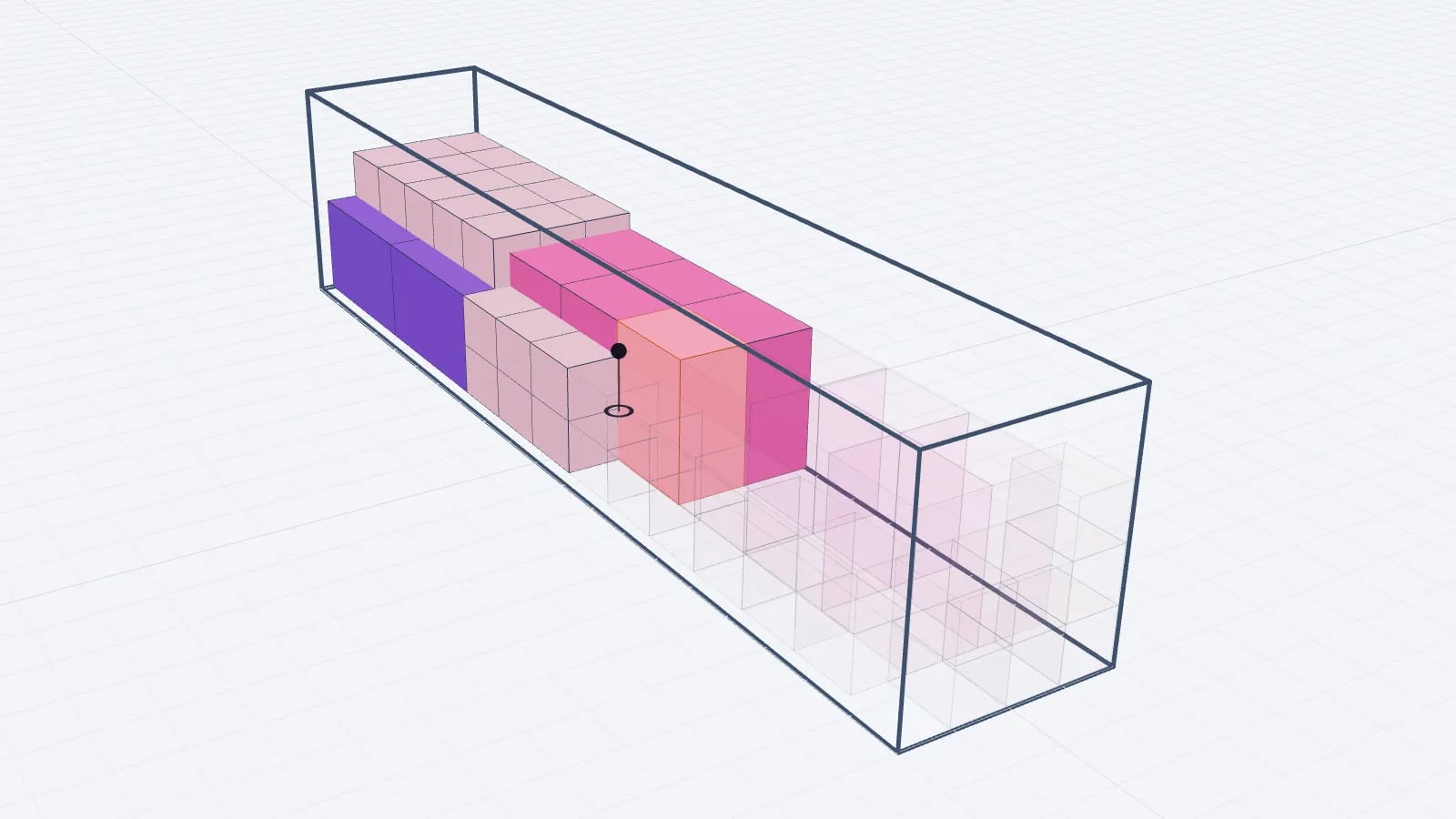
A step-by-step method for planning container stuffing: heavy goods low and central, even weight along the length, door-end cargo last, securing and photos.
Read article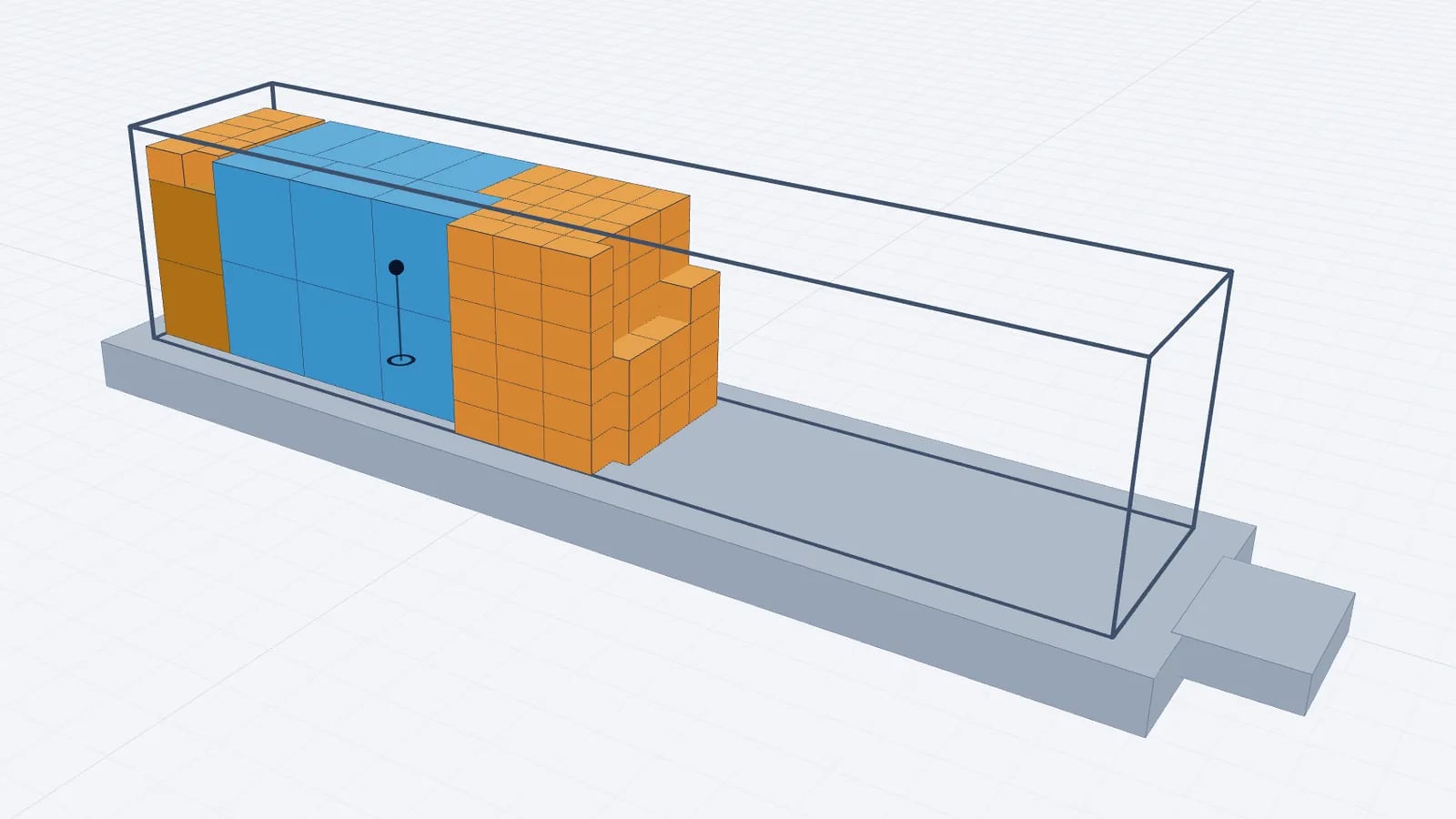
Sea containers · · 7 min read
Container Loading Report: What to Record for Every Box
What a container loading report should hold: tally sheet, photos per stage, seal number, VGM and the load plan, and the evidence that decides cargo claims.
Read article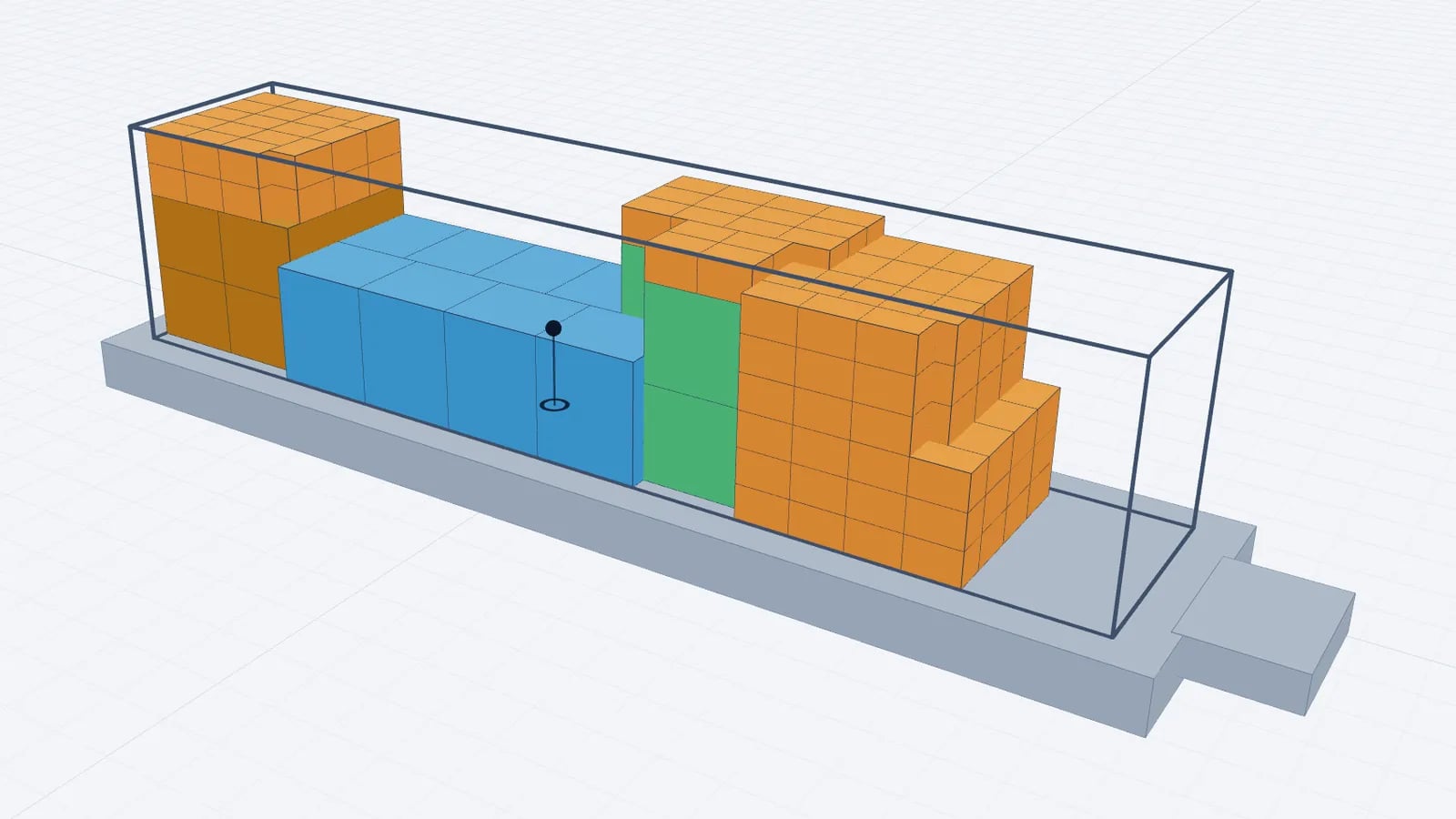
Sea containers · · 7 min read
Container Load Calculator for Mixed Cargo: A 40ft Example
Why a container load calculator for mixed cargo must place every piece: pallets, crates and cartons in one 40ft, worked through with real numbers.
Read article