Container Loading Sequence: What Goes In First and Why
How to set a container loading sequence: wall by wall from the front, heavy low, door-end rules, several consignees in unloading order, and a numbered plan.
Sea containers · · 7 min read
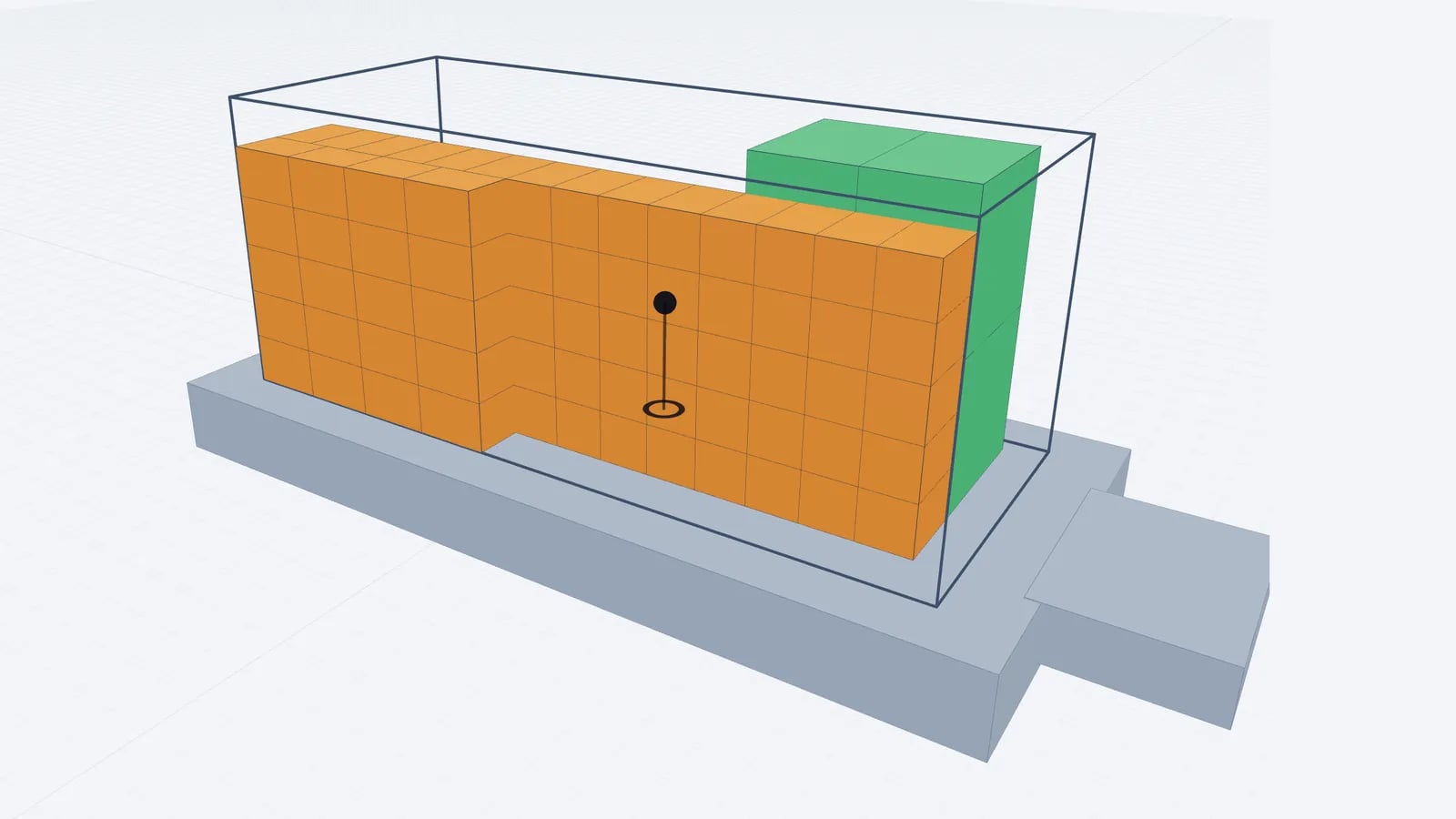
A container loading sequence starts at the front wall and works towards the doors in vertical sections, with heavy items on the floor of each section and lighter ones above. Where several consignees share the box, the goods for the last delivery go in first and the first delivery goes in last, at the doors. Within those rules the order is set by stability, weight distribution and what the forklift can reach.
A container can only be loaded from one end, so the sequence and the final position are the same thing: whatever you decide to put at the front wall has to be loaded first. That makes the order a planning decision, not something the crew should work out with the doors open. The overall method for the plan is in how to make a container stuffing plan; this article is about the order itself.
Load wall by wall, not layer by layer
In a truck loaded from the side you can build layers along the whole length. In a container you cannot reach the front once the middle is full, so the load is built as a series of walls, also called faces: a complete cross-section of the box, floor to top and side to side, finished before the next one starts.
- Each wall is self-supporting. A finished wall stands against the one before it and gives the next wall something to lean on.
- The floor of each wall goes first. Heavy cartons, pallets and crates at the bottom, lighter and fragile goods above.
- The wall is filled side to side. A gap left at a side wall in section 3 cannot be reached once section 4 is in, so fill or block it now.
- Tall stacks go in one piece only if they clear the door. Otherwise the bottom tier goes in first and the top tier is lifted on inside the box. On a standard box the door is roughly 10 cm lower than the ceiling.
What goes in first, and why
Position: Front wall, first in
- Typical cargo
- Heavy, strong, rigid items of the last consignee; long items
- Reason
- Supported by the strongest wall, and the forklift can place them while the box is empty
Position: Middle
- Typical cargo
- Bulk of the load, heavy goods spread along the length
- Reason
- Keeps the centre of gravity near the middle
Position: Towards the doors
- Typical cargo
- Lighter, stable goods; first consignee's goods
- Reason
- Comes out first, does not fall when the doors open
Position: Door end, last in
- Typical cargo
- Items for inspection, documents pouch if agreed, door-end barrier
- Reason
- Reachable without unloading, and holds the load off the doors
| Position | Typical cargo | Reason |
|---|---|---|
| Front wall, first in | Heavy, strong, rigid items of the last consignee; long items | Supported by the strongest wall, and the forklift can place them while the box is empty |
| Middle | Bulk of the load, heavy goods spread along the length | Keeps the centre of gravity near the middle |
| Towards the doors | Lighter, stable goods; first consignee's goods | Comes out first, does not fall when the doors open |
| Door end, last in | Items for inspection, documents pouch if agreed, door-end barrier | Reachable without unloading, and holds the load off the doors |
"Heavy to the front" is a common shorthand, but it is only half right. The heavy goods should be low, and spread along the length. If everything heavy is loaded first, against the front wall, the box ends up nose-heavy. A common rule of thumb is no more than about 60 % of the cargo weight in either half of the container; a better check is the centre of gravity, worked through in centre of gravity of a load.
Several consignees: unloading order decides loading order
When one container serves two or more consignees, whether delivered by truck to each in turn or devanned at a warehouse that hands out each part, the rule is last in, first out. The final consignee goes against the front wall, the first at the doors. Three more rules keep that order workable:
- Keep each consignee's goods in their own section. Never put the first stop's cartons in a gap beside a later stop's pallets; they would be stuck behind them.
- Mark the boundary. A sheet of coloured paper, tape or a label on the first piece of each new section shows the unloading crew where one consignee ends.
- Check the weight after each drop. If the box is delivered by road with stops, the axle load changes as it empties. The method for trucks is in multi-drop load planning.
- Do not let a stop order break a stacking rule. If the first consignee's goods are heavy and the last consignee's goods are fragile, they may need separate sections across the full height rather than stacking.
Worked example: three consignees in a 20ft
A 20ft container (inside about 590 × 235 × 239 cm) goes to three customers on one route. The sequence follows the stop order in reverse:
Order: 1st in
- Consignee
- Stop 3 (last off)
- Cargo
- 4 industrial pallets 120 × 100 × 130 cm, 500 kg, in 2 rows of 2
- Section
- 0–240 cm
- Weight
- 2,000 kg
Order: 2nd in
- Consignee
- Stop 2
- Cargo
- 4 Euro pallets 120 × 80 × 115 cm, 450 kg, 2 lengthwise and 2 high
- Section
- 240–360 cm
- Weight
- 1,800 kg
Order: 3rd in
- Consignee
- Stop 1 (first off)
- Cargo
- 90 cartons 60 × 40 × 40 cm, 12 kg, 18 per layer × 5 layers
- Section
- 360–590 cm
- Weight
- 1,080 kg
| Order | Consignee | Cargo | Section | Weight |
|---|---|---|---|---|
| 1st in | Stop 3 (last off) | 4 industrial pallets 120 × 100 × 130 cm, 500 kg, in 2 rows of 2 | 0–240 cm | 2,000 kg |
| 2nd in | Stop 2 | 4 Euro pallets 120 × 80 × 115 cm, 450 kg, 2 lengthwise and 2 high | 240–360 cm | 1,800 kg |
| 3rd in | Stop 1 (first off) | 90 cartons 60 × 40 × 40 cm, 12 kg, 18 per layer × 5 layers | 360–590 cm | 1,080 kg |
Check the weight along the length. Stop 3's block has its centre at 120 cm, stop 2's at 300 cm and stop 1's at 475 cm. The centre of gravity is (2,000 × 120 + 1,800 × 300 + 1,080 × 475) ÷ 4,880 = 265 cm, about 30 cm in front of the middle at 295 cm. The front half holds all of stop 3 and 55 cm of stop 2's 120 cm section, 2,000 + 825 = 2,825 kg, or 58 % of the cargo. That passes the 60 % rule of thumb, but only just.
If stop 3's pallets weighed 650 kg instead of 500 kg, the front half would carry 3,425 of 5,480 kg, about 62 %. The stop order cannot change, so the options are: leave a blocked gap at the front wall to move the whole load back if the length allows, put stop 3's heaviest pallets at the rear of its section, or split the shipment. Seeing this before loading is the point of the sequence plan.
Good to know
Stop 2's Euro pallets take 160 cm of the 235 cm width, leaving a 75 cm strip. It is tempting to fill it with stop 1's cartons, but they would be trapped. Fill it with stop 2's own goods, or block it with dunnage.
Door-end rules
- Last row vertical and stable. Nothing leaning on the doors. A door-end barrier or straps across the lashing points hold the final wall.
- Inspection access. If customs or a fumigation check is likely, put a representative sample of each line near the doors so the officer does not need the whole box emptied.
- Dangerous goods often need to be accessible and are subject to segregation rules under the IMDG Code. Follow your carrier's instructions on where to stow them.
- Documents that travel with the cargo, if agreed with the consignee, go in a marked pouch on the last row, never loose.
The full set of door-end and securing practices is in container loading best practices.
Documenting the order for the stuffing crew
A sequence the crew cannot see is not a sequence. Give them a document that answers "what next?" at every step without a phone call.
- 1Number every step. One line per section or per pallet, in loading order, starting at the front wall.
- 2Draw each wall. A side view and a rear view per section show what goes on the floor and what goes on top.
- 3Colour by consignee. Stop colours on the drawing should match the labels on the goods.
- 4List the dunnage per section. Where each blocking piece or airbag goes, so it is placed before the next wall closes the gap.
- 5Leave a check-off column. The tally clerk ticks each step and notes any change. That sheet becomes part of the container loading report.
Tip
In EveryLoading each cargo row can carry a stop number, and later stops are loaded deeper in the container. The loading sequence slider steps through the plan piece by piece, and the plan can be sent to the dock as a PDF or a read-only share link, also on a free account. The sea freight use case shows the container workflow from packing list to plan.
Frequently asked questions
What should be loaded first in a container?
The goods that will come out last, placed against the front wall, with the heaviest pieces of each section on the floor. Build the load in complete cross-sections from the front towards the doors.
What does LIFO mean in container loading?
Last in, first out: the goods loaded last sit at the doors and are unloaded first. With several consignees, the first delivery is loaded last.
Should heavy cargo go at the front of a container?
Heavy cargo should go low and be spread along the length, not packed against the front wall. Keep the centre of gravity close to the middle of the box.
How do I show the loading order to warehouse staff?
Give them a numbered list of steps with a drawing per section, colours per consignee and the dunnage to place, and have them tick each step as it is loaded.
Keep reading
Sea containers · · 7 min read
Container Loading Report: What to Record for Every Box
What a container loading report should hold: tally sheet, photos per stage, seal number, VGM and the load plan, and the evidence that decides cargo claims.
Read article
Sea containers · · 7 min read
Container Load Calculator for Mixed Cargo: A 40ft Example
Why a container load calculator for mixed cargo must place every piece: pallets, crates and cartons in one 40ft, worked through with real numbers.
Read article
Sea containers · · 8 min read
Container Loading Calculator: How It Works and What to Enter
How a container loading calculator works, which inputs it needs (inside size, door, payload, rotation, stacking) and why volume-only answers overstate fit.
Read article