Loading Dangerous Goods: ADR, IMDG, IATA and the Load Plan
Loading dangerous goods by road, sea and air: the 9 classes, ADR, IMDG and IATA rules, segregation, placards, limited quantities, documents and the load plan.
Operations & software · · 10 min read
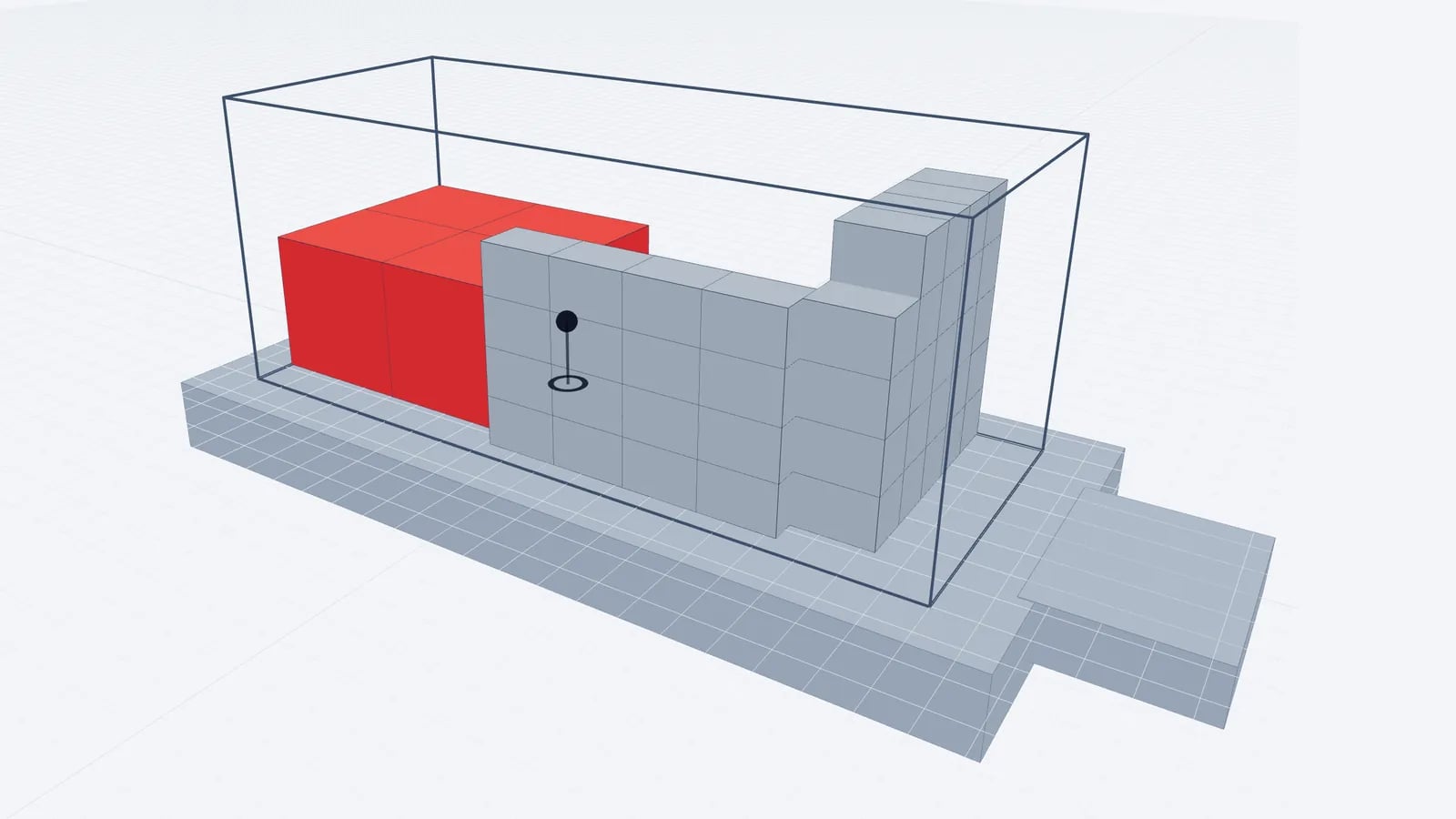
Loading dangerous goods means following the dangerous goods code for the mode of transport: ADR for road, RID for rail, the IMDG Code for sea and the IATA Dangerous Goods Regulations for air. Each code says which goods may travel together, how far apart they must be, how the vehicle or container is marked and secured, and which documents go with it.
This article explains how those rules shape a load plan. It is general guidance, not legal advice. The codes change every one or two years, and a dangerous goods safety adviser (DGSA) or another qualified person must check every real consignment against the current edition.
Which code applies
All the codes build on the UN Recommendations on the Transport of Dangerous Goods (the 'Orange Book'), so classes, UN numbers and packing groups are the same everywhere.
Mode: Road (Europe and beyond)
- Code
- ADR
- Published by
- UNECE
- How often it changes
- Every two years (odd years)
Mode: Rail (Europe)
- Code
- RID
- Published by
- OTIF
- How often it changes
- Every two years, in step with ADR
Mode: Inland waterways
- Code
- ADN
- Published by
- UNECE / CCNR
- How often it changes
- Every two years
Mode: Sea
- Code
- IMDG Code
- Published by
- IMO, mandatory under SOLAS chapter VII
- How often it changes
- Every two years (numbered amendments)
Mode: Air
- Code
- IATA DGR
- Published by
- IATA, based on the ICAO Technical Instructions
- How often it changes
- New edition each year from 1 January
| Mode | Code | Published by | How often it changes |
|---|---|---|---|
| Road (Europe and beyond) | ADR | UNECE | Every two years (odd years) |
| Rail (Europe) | RID | OTIF | Every two years, in step with ADR |
| Inland waterways | ADN | UNECE / CCNR | Every two years |
| Sea | IMDG Code | IMO, mandatory under SOLAS chapter VII | Every two years (numbered amendments) |
| Air | IATA DGR | IATA, based on the ICAO Technical Instructions | New edition each year from 1 January |
A shipment that moves by more than one mode must meet each code for its leg: a container trucked to a port and shipped needs ADR on the road and the IMDG Code at sea.
The nine classes
Every dangerous substance or article is assigned to a class by its main hazard, and given a four-digit UN number and a proper shipping name. Many also get a packing group: I for high danger, II for medium and III for low.
Class: 1
- Hazard
- Explosives
- Typical examples
- Fireworks, ammunition, airbag inflators (some)
Class: 2
- Hazard
- Gases (2.1 flammable, 2.2 non-flammable, 2.3 toxic)
- Typical examples
- Aerosols, LPG cylinders, oxygen
Class: 3
- Hazard
- Flammable liquids
- Typical examples
- Paints, solvents, fuels, alcohol
Class: 4
- Hazard
- Flammable solids (4.1), spontaneously combustible (4.2), dangerous when wet (4.3)
- Typical examples
- Matches, activated carbon, sodium
Class: 5
- Hazard
- Oxidisers (5.1) and organic peroxides (5.2)
- Typical examples
- Pool chlorine, hydrogen peroxide, resin hardeners
Class: 6
- Hazard
- Toxic (6.1) and infectious (6.2) substances
- Typical examples
- Pesticides, clinical samples
Class: 7
- Hazard
- Radioactive material
- Typical examples
- Medical isotopes, gauges
Class: 8
- Hazard
- Corrosives
- Typical examples
- Acids, alkalis, wet batteries
Class: 9
- Hazard
- Miscellaneous
- Typical examples
- Lithium batteries, dry ice, environmentally hazardous substances
| Class | Hazard | Typical examples |
|---|---|---|
| 1 | Explosives | Fireworks, ammunition, airbag inflators (some) |
| 2 | Gases (2.1 flammable, 2.2 non-flammable, 2.3 toxic) | Aerosols, LPG cylinders, oxygen |
| 3 | Flammable liquids | Paints, solvents, fuels, alcohol |
| 4 | Flammable solids (4.1), spontaneously combustible (4.2), dangerous when wet (4.3) | Matches, activated carbon, sodium |
| 5 | Oxidisers (5.1) and organic peroxides (5.2) | Pool chlorine, hydrogen peroxide, resin hardeners |
| 6 | Toxic (6.1) and infectious (6.2) substances | Pesticides, clinical samples |
| 7 | Radioactive material | Medical isotopes, gauges |
| 8 | Corrosives | Acids, alkalis, wet batteries |
| 9 | Miscellaneous | Lithium batteries, dry ice, environmentally hazardous substances |
Segregation basics
Segregation keeps goods that react dangerously with each other apart. A ship has holds and decks, a truck has one load space, so each code does it differently.
Sea: the IMDG segregation terms
The IMDG Code (chapter 7.2) uses a segregation table by class, plus extra rules for individual entries in column 16b of the Dangerous Goods List. The table gives one of four terms, or an X meaning 'see the individual entry'.
Code: 1
- Term
- Away from
- What it means in practice
- Can be in the same compartment or on deck, with a minimum distance between them (typically 3 m horizontally in break-bulk stowage)
Code: 2
- Term
- Separated from
- What it means in practice
- In different holds when under deck; on deck, a larger distance (typically 6 m horizontally)
Code: 3
- Term
- Separated by a complete compartment or hold from
- What it means in practice
- A full hold or compartment between them, vertically or horizontally
Code: 4
- Term
- Separated longitudinally by an intervening complete compartment or hold from
- What it means in practice
- A full hold or compartment between them along the ship; vertical separation alone is not enough
| Code | Term | What it means in practice |
|---|---|---|
| 1 | Away from | Can be in the same compartment or on deck, with a minimum distance between them (typically 3 m horizontally in break-bulk stowage) |
| 2 | Separated from | In different holds when under deck; on deck, a larger distance (typically 6 m horizontally) |
| 3 | Separated by a complete compartment or hold from | A full hold or compartment between them, vertically or horizontally |
| 4 | Separated longitudinally by an intervening complete compartment or hold from | A full hold or compartment between them along the ship; vertical separation alone is not enough |
For container ships, chapter 7.4 turns these terms into container positions: how many bays or container spaces must be between two containers. That is the ship planner's job, not the shipper's. What matters to the shipper is chapter 7.3: goods that must be segregated from each other may not be packed in the same container. The only exception is goods that need 'away from', and only with the approval of the competent authority. In practice, one container usually carries only compatible goods.
Road: ADR mixed loading prohibitions
ADR has no distances inside a vehicle. Instead, section 7.5.2 lists which danger labels may be loaded together in the same vehicle or container. If two packages carry labels that the table in 7.5.2.1 marks as incompatible, they cannot go on the same vehicle at all, however far apart they are placed. Points that often catch planners out:
- Class 1 explosives can be loaded with very few other classes, and different compatibility groups within class 1 have their own table (7.5.2.2).
- Organic peroxides (5.2) and self-reactive substances (4.1) have restrictions on what they travel with.
- Foodstuffs: packages with toxic (6.1) or infectious (6.2) labels, and some class 9 entries, must be kept apart from food, animal feed and other items meant for consumption (7.5.4).
Air: IATA segregation
The IATA DGR (section 9.3) has its own segregation table for packages on aircraft, and extra rules for some goods: toxic and infectious substances away from food and live animals, and radioactive material at minimum distances from people and film. Packages marked Cargo Aircraft Only cannot go on a passenger flight, and many of them must be loaded so the crew can reach them in flight.
Marking, labels and placards
- Packages carry the UN number (with the letters 'UN'), the hazard labels (normally 100 × 100 mm diamonds), the environmentally hazardous substance mark where needed, and orientation arrows for liquids in combination packagings.
- Road vehicles under ADR show rectangular orange plates (typically 40 × 30 cm) at the front and rear. Vehicles carrying packages need large placards only for classes 1 and 7; tanks and containers carry placards (250 × 250 mm) on the sides and, for containers, the ends too.
- Containers at sea under the IMDG Code carry placards on both sides and both ends, plus the marine pollutant mark and, in some cases, the UN number.
- ULDs in air carry a tag showing that dangerous goods are inside, and the pilot gets a written notification (NOTOC) of what is loaded where.
Limited and excepted quantities
Small inner packagings of many dangerous goods can travel as limited quantities (LQ), under ADR and IMDG chapter 3.4, with fewer requirements. The package carries the black-and-white diamond LQ mark instead of hazard labels. Typical limits:
- A combination package may weigh at most 30 kg gross; shrink-wrapped trays at most 20 kg gross.
- Each inner packaging has its own limit, given per UN number in the Dangerous Goods List (for example 5 L for many flammable liquids in packing group III).
- Under ADR, a transport unit over 12 tonnes maximum mass carrying more than 8 tonnes of LQ goods must show the LQ mark front and rear, unless it already shows orange plates.
- Air transport accepts limited quantities under its own rules (packing instructions with a 'Y' prefix and a mark with a Y), and the quantities are lower.
Excepted quantities (chapter 3.5) are smaller again, such as laboratory samples, and carry their own mark.
Worked example: the ADR small load exemption
ADR 1.1.3.6 lets small loads in packages travel with fewer requirements (no orange plates, for example) if the total of 'points' stays at or below 1,000. Each entry has a transport category, and the quantity is multiplied by a factor for that category: 50 for category 1, 3 for category 2, 1 for category 3. Quantity is measured per the 1.1.3.6 rules (litres of receptacle capacity for most liquids, kg for solids).
- 1Paint, UN 1263, packing group III, transport category 3: 300 L × 1 = 300 points.
- 2A flammable solvent in packing group II, transport category 2: 150 L × 3 = 450 points.
- 3Total: 300 + 450 = 750 points, under 1,000, so the exemption can apply.
- 4Add another 100 L of the solvent: 100 × 3 = 300 more, total 1,050 points. The exemption no longer applies, and the vehicle needs orange plates, equipment and a driver with an ADR certificate.
The transport document, packaging and labelling rules and mixed loading prohibitions still apply under the exemption.
Securing and packing the cargo transport unit
Dangerous goods packages must not move in transport. ADR 7.5.7 requires packages to be secured with suitable means, and notes that stowage in line with EN 12195-1 is deemed to meet it. At sea, the IMO/ILO/UNECE Code of Practice for Packing of Cargo Transport Units (CTU Code) is the reference for packing containers, trailers and swap bodies, and its annexes cover blocking, lashing and friction.
- Inspect the unit first. No holes, sound floor, sealing doors, no old placards or residue.
- Packages upright. Liquids with orientation arrows stay that way up.
- Heavy and liquid low. Drums and IBCs on the floor, lighter cartons above them. No heavy packages on fragile ones.
- No gaps. Block or fill voids so packages cannot slide, and keep the load against the front wall or the next row.
- No leaking or damaged packages. Set them aside; do not load them.
The basic methods are in load securing basics with EN 12195-1 and dunnage and container securing.
Documents
| Mode | Main documents |
|---|---|
| Road (ADR) | Transport document with UN number, proper shipping name, labels, packing group, tunnel restriction code, number and type of packages and quantity (5.4.1); instructions in writing in the cab (5.4.3); driver ADR training certificate when required |
| Sea (IMDG) | Dangerous goods declaration (5.4.1) and the container or vehicle packing certificate signed by the person who packed the unit (5.4.2) |
| Air (IATA) | Shipper's Declaration for Dangerous Goods, plus the operator's NOTOC to the pilot in command |
Whoever signs the packing certificate confirms the unit was packed, segregated and secured correctly, so a written load plan is worth keeping on file.
Who is responsible
ADR 1.8.3 requires every undertaking that sends, packs, loads, fills, carries or unloads dangerous goods by road to appoint a dangerous goods safety adviser, with a few exemptions for small quantities. Everyone involved must have training for their role (chapter 1.3 in ADR and IMDG). In air, shippers and handlers need training under the IATA DGR and the ICAO Technical Instructions.
Compatibility comes from the classification, the safety data sheet and the DGSA, not from the load planner. The planner turns those decisions into an arrangement the loading team can follow.
What a load plan can do for dangerous goods
Once the DG specialist has said what may travel together, a 3D plan handles the physical side:
- 1Split incompatible goods onto separate vehicles or containers. If two groups cannot share a unit, plan them as two loads from the start.
- 2Place packages so they cannot move: rows against the front wall, no voids, heavy and liquid low.
- 3Respect stacking limits from the UN packaging marking and the supplier's data: maximum weight on top, no stacking on IBCs that are not marked for it.
- 4Keep access to packages delivered first or needing inspection.
- 5Check weight against payload, axle loads and the centre of gravity before the vehicle reaches the scale.
For drums and IBCs in particular, see IBC and drum transport, and for a full container plan, the container stuffing plan.
Plan it in EveryLoading
In EveryLoading each cargo row can be marked floor only, not stackable, or limited by maximum weight on top and maximum loads on top, and you can set which items it may stand on (see cargo settings). The weight estimate shows axle loads and the centre of gravity, and the delivery order keeps first-stop goods by the doors.
Tip
EveryLoading does not check dangerous goods rules. It knows nothing about classes, segregation or mixed loading prohibitions. Decide with your DGSA what may share a vehicle, plan incompatible goods as separate loads, then use the 3D plan, the stacking rules and the PDF or share link to show the loading team exactly how each unit is built.
Frequently asked questions
Can incompatible dangerous goods go on the same truck if they are far apart?
Not under ADR. The mixed loading prohibitions in 7.5.2 apply to the whole vehicle or container, so distance inside the load space does not help. Incompatible goods need separate vehicles.
What does 'away from' mean in the IMDG Code?
It is the mildest segregation term. The goods may be in the same compartment or on deck, with a minimum distance between them. Goods that need segregation may only share one container in limited cases with the competent authority's approval.
Do limited quantities need placards?
No hazard placards or orange plates are needed for limited quantities alone. Packages carry the LQ mark, and under ADR a transport unit over 12 tonnes carrying more than 8 tonnes of LQ goods shows the LQ mark front and rear.
Who signs the container packing certificate?
The person responsible for packing the container or vehicle signs it. It confirms the unit was packed, segregated and secured according to the IMDG Code, and it goes with the dangerous goods declaration.
Does load planning software check dangerous goods compatibility?
Some specialist tools do, but a general load planner such as EveryLoading does not. Compatibility must be checked by a DGSA or another qualified person; the planner then arranges the approved loads.
Keep reading
Operations & software · · 5 min read
Loading Plan for Drivers: What the Paper and the Link Need
What drivers and the warehouse need in a loading plan: manifest, loading sequence, top/side/rear drawings, stop order and weights, on paper or a phone link.
Read article
Operations & software · · 5 min read
Load Planning in Excel vs a 3D Planner: When to Switch
Where load planning in Excel works, where it breaks (stacking, mixed sizes, axles, sequence) and how to keep your spreadsheet as input for a 3D planner.
Read article
Operations & software · · 5 min read
Goodloading Alternative: What to Compare Before Switching
Looking for a Goodloading alternative? What to compare when switching load planners: trial, file import, sequence, multi-stop, axles, vehicles and cost.
Read article