Shipping Crate Design: Sizing Crates to Fit the Container
How to design a shipping crate: size it to the container door and inside, skids, ISPM 15, weight and CoG marks, stacking, with a worked 40' HC example.
Sea containers · · 10 min read
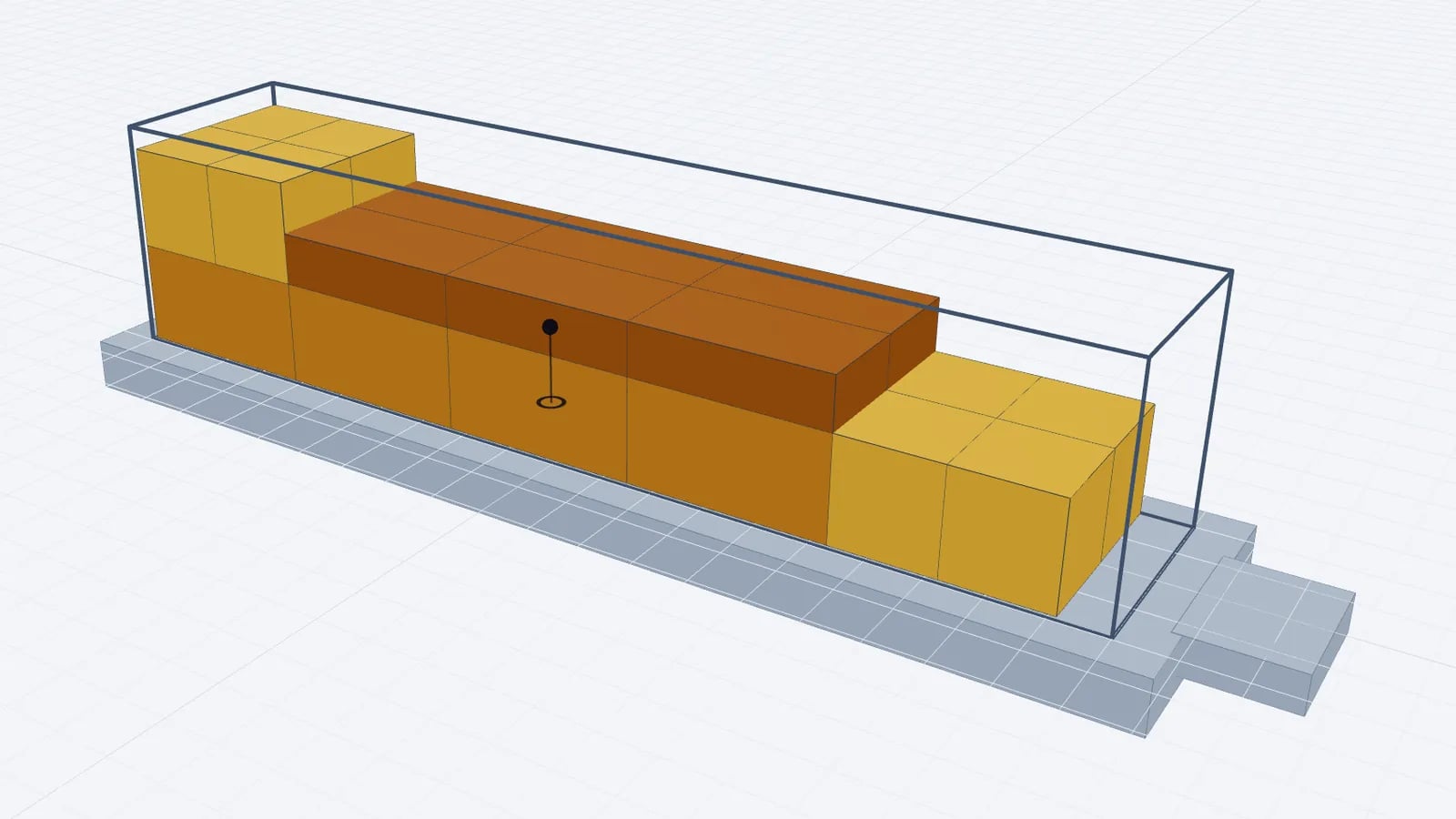
Good shipping crate design starts from the container, not the product: work out how many crates should fit across, along and up, then size the crate to those numbers with enough clearance to pass the door and be handled by forklift. Inside that outer size you then fit the product, its cushioning and a frame strong enough for lifting, stacking and the voyage.
This article covers the container limits, the base and forklift entry, ISPM 15 for the timber, marking, stacking strength and a worked example in a 40' high cube. It is general guidance. For heavy or valuable goods, follow a crate specification such as ASTM D6039 (open and covered wood crates), ASTM D6251 (wood-cleated panelboard boxes) or the HPE packaging guidelines used in Germany, and check the actual container you are given.
Start with the container limits
Three sets of numbers matter: the inside dimensions, the door opening and the payload. The door is smaller than the inside, so a crate that fits the box may not pass the door.
Container: 20' standard
- Inside L × W × H (typical)
- 589 × 235 × 239 cm
- Door W × H (typical)
- 234 × 228 cm
- Max payload (typical)
- about 28,000 kg
Container: 40' standard
- Inside L × W × H (typical)
- 1,203 × 235 × 239 cm
- Door W × H (typical)
- 234 × 228 cm
- Max payload (typical)
- about 26,500 kg
Container: 40' high cube
- Inside L × W × H (typical)
- 1,203 × 235 × 269 cm
- Door W × H (typical)
- 234 × 258 cm
- Max payload (typical)
- about 26,500 kg
| Container | Inside L × W × H (typical) | Door W × H (typical) | Max payload (typical) |
|---|---|---|---|
| 20' standard | 589 × 235 × 239 cm | 234 × 228 cm | about 28,000 kg |
| 40' standard | 1,203 × 235 × 239 cm | 234 × 228 cm | about 26,500 kg |
| 40' high cube | 1,203 × 235 × 269 cm | 234 × 258 cm | about 26,500 kg |
These are typical figures for steel dry containers; door heights on high cubes range from about 256 to 260 cm depending on the builder. The payload on the CSC plate of your own container is the real limit. Full tables are in shipping container dimensions.
- Height through the door. A crate carried in on forks is lifted a few centimetres off the floor. Allow 5–10 cm, so about 220 cm in a standard box and about 250 cm in a high cube for a crate loaded at floor level.
- Width. The door and the inside are both about 234–235 cm. Two crates side by side should be no wider than about 115 cm each; one crate across, no wider than about 230 cm so it can be pushed in without scraping the door posts.
- Length. Divide the inside length by the number of crates you want in a row, then take off a few centimetres for clearance and bracing.
Design the crate sizes backwards
The idea is simple: pick the number of crates per row, per layer and per stack, then size the crate to fill the space. That way the container is full by design, not by luck.
- 1Across the width (235 cm). Choose 1, 2 or 3 across. Two across gives up to about 115 cm per crate; three across about 76 cm.
- 2Along the length. Choose N crates per row and divide: 1,203 ÷ 7 = 171 cm, 1,203 ÷ 8 = 150 cm (40'); 589 ÷ 3 = 196 cm, 589 ÷ 4 = 147 cm (20'). Round down to leave 5–15 cm per row for bracing.
- 3Height. Decide whether crates will be stacked inside the container. Two tiers in a high cube means each crate no taller than about 120–125 cm, so the pair stays well under the 269 cm roof and the top crate can be lifted into place.
- 4Check the product fits inside. Outer size minus walls, frame and cushioning must still take the product. If not, change N and try again.
- 5Check the weight. Crates per container × gross weight must stay within the payload, and within the road weight limit for the truck leg at each end.
The container size calculator and CBM calculator help with the first rough check before you draw anything.
Base, skids and forklift entry
The base is the most important part of an export crate. It carries the product, takes the forks and spreads the weight on the container floor.
- Skids (runners) are the timbers under the base. Use at least two, and three or more for wide or heavy crates. They lift the base so forks can go in, typically 8–12 cm of clearance.
- Entry direction. A crate going into a container is normally carried in lengthwise, so the forks enter from the short end. Two-way entry from the ends is the minimum; four-way entry (notched skids or a block base) helps in the warehouse.
- Fork spacing. Space the skids so a standard forklift's forks sit inside them and under the centre of gravity, not at one end.
- Sling points. If the crate will be crane-lifted, reinforce the base at the sling points and mark them. Sling loads go into the base, never into the lid.
- Floor loading. Narrow skids concentrate the weight. Container floors are tested to ISO 1496-1 for forklift wheel loads, but a very heavy crate on two narrow runners may still need bedding timbers to spread it. The CTU Code (annex 7) explains how to check concentrated loads.
Tip
Make the skids run along the container's length. Then the crate rests across many floor cross-members, and the forklift can push it to the front wall without turning.
ISPM 15 for the timber
Solid wood packaging crossing borders, including crate frames, skids and dunnage, must meet ISPM 15, the International Standard for Phytosanitary Measures No. 15 published by the IPPC. In short:
- The wood must be debarked and treated, most often by heat treatment (HT): a core temperature of at least 56 °C for 30 minutes. Methyl bromide (MB) fumigation is also listed, but it is restricted or not accepted in many countries.
- Each piece of packaging carries the ISPM 15 mark: the IPPC symbol, the country code, the producer or treatment provider number, and the treatment code (for example HT). The mark should be visible, ideally on at least two opposite sides.
- Processed wood such as plywood, OSB and particleboard is outside the standard, as is wood 6 mm thick or less. A plywood crate on solid-timber skids still needs treated, marked skids.
- Repairs and dunnage must be treated material as well. Untreated blocking added at the dock can get the whole shipment held or sent back.
Weight and centre-of-gravity marking
Markings tell the handler how to lift and stow the crate safely. The pictograms are standardised in ISO 780.
- Gross weight (and often net weight and outer dimensions) on at least two sides.
- Centre of gravity symbol, placed where the CoG actually is, especially when it is off-centre. Machines with a motor at one end are the usual case.
- Sling here and this way up symbols, and do not stack or a stacking limit mark where it applies.
- Shipping marks: consignee, destination, crate number (1 of 28, 2 of 28 and so on) and the order reference.
The total of all crate weights also feeds the container's verified gross mass, which must be declared before loading on the ship. See VGM under SOLAS.
Stacking strength
If crates will be stacked in the container or in a warehouse, the lid and frame must carry the crates above. The lid boards alone are rarely strong enough. The load has to run down through the posts or side panels to the base.
- Static load is the weight of everything above. For a bottom crate under one other crate of 640 kg, that is 640 kg.
- Dynamic load is higher. Ships roll and pitch, and trucks brake and hit potholes. Crate specifications add a safety factor; designing the top for at least twice the static load is a common starting point, but follow your specification.
- Footprint. Stack crates corner to corner. A smaller crate on a bigger lid puts the load on the unsupported middle of the lid.
Mark the maximum load on top on the crate, and tell the planner. A crate that cannot take a load on top should be marked do not stack.
Worked example: crates for a 40' high cube
A manufacturer ships 28 machines a month, each 100 × 150 × 100 cm (W × L × H) and 550 kg. They want one 40' high cube per month, full, with crates stacked two high.
- 1Across: two crates across the 235 cm width means at most 117 cm each. Choose 115 cm, leaving 5 cm in total.
- 2Along: 28 crates ÷ 2 across ÷ 2 high = 7 per row. 1,203 ÷ 7 = 171 cm. Choose 170 cm, so 7 × 170 = 1,190 cm and 13 cm is left for a door bracing frame.
- 3Height: two tiers under the 269 cm roof, and a pair that can still pass a 258 cm door if loaded together. Choose 120 cm, so the stack is 240 cm.
- 4Inside the crate: 115 cm outer width − 2 × 2.5 cm walls − 2 × 5 cm cushioning = 100 cm. That just fits the 100 cm machine. Length: 170 − 5 − 10 = 155 cm for 150 cm of machine. Height: 120 − 12 cm skids and base − 3 cm lid − 5 cm cushioning = 100 cm. Tight but workable.
- 5Weight: 550 kg + about 90 kg of crate = 640 kg gross. 28 × 640 = 17,920 kg, well within a typical 26,500 kg payload. Check the truck leg at both ends too.
- 6Stacking: each bottom crate carries one 640 kg crate. Design the top for at least about 1,300 kg, with posts running down to the skids.
Now compare it with a crate sized from the product alone, without the container in mind:
Crate (W × L × H): 115 × 170 × 120 cm (designed)
- Across
- 2
- Per row
- 7
- Tiers
- 2
- Crates per 40' HC
- 28
Crate (W × L × H): 120 × 170 × 120 cm
- Across
- 1, turned 170 cm across (2 × 120 = 240 cm is too wide)
- Per row
- 9 (10 × 120 = 1,200 cm leaves no room to brace)
- Tiers
- 2
- Crates per 40' HC
- 18
Crate (W × L × H): 115 × 175 × 120 cm
- Across
- 2
- Per row
- 6 (7 × 175 = 1,225 cm, too long)
- Tiers
- 2
- Crates per 40' HC
- 24
Crate (W × L × H): 115 × 170 × 135 cm
- Across
- 2
- Per row
- 7
- Tiers
- 1 (2 × 135 = 270 cm, too tall)
- Crates per 40' HC
- 14
| Crate (W × L × H) | Across | Per row | Tiers | Crates per 40' HC |
|---|---|---|---|---|
| 115 × 170 × 120 cm (designed) | 2 | 7 | 2 | 28 |
| 120 × 170 × 120 cm | 1, turned 170 cm across (2 × 120 = 240 cm is too wide) | 9 (10 × 120 = 1,200 cm leaves no room to brace) | 2 | 18 |
| 115 × 175 × 120 cm | 2 | 6 (7 × 175 = 1,225 cm, too long) | 2 | 24 |
| 115 × 170 × 135 cm | 2 | 7 | 1 (2 × 135 = 270 cm, too tall) | 14 |
Five centimetres too wide loses 10 crates; 15 cm too tall halves the load. Turning the crate does not win the space back. That is why crate sizes are best fixed together with the load plan, before the carpenter cuts timber.
Good to know
Loading the top tier needs care. Either the pair is built outside and lifted in together (240 cm plus lift clearance under a 258 cm door), or the top crate is placed inside with a forklift whose mast fits the container. Check what your warehouse can actually do before choosing two tiers.
Plan crate sizes in EveryLoading
Try your candidate crate sizes against the container before they are built. The cartons in container calculator gives a quick count, and the sea freight planner shows the full load in 3D. For the ocean leg in general, see the container stuffing plan.
Tip
In EveryLoading, pick the 20', 40', 40' HC, 45' HC or reefer preset, enter the door size, and add each crate size as a cargo row. Set stackable, maximum weight on top or not stackable per crate (see cargo settings), then optimize. The plan shows how many fit, the total weight and the centre of gravity. Change a dimension by a few centimetres and optimize again to see the effect, then send the plan as a PDF or share link. EveryLoading plans the outer crate sizes; it does not design the crate itself.
Frequently asked questions
What is the maximum crate height for a 40' high cube?
The door is typically about 258 cm high, against an inside height of about 269 cm. Allowing for forklift lift, a single crate loaded at floor level should be no taller than about 250 cm. Check the door of the actual container.
How wide can two crates side by side be in a container?
The inside width is about 235 cm, so two crates should be about 115 cm wide each or less, leaving a little room to push them in. Three across means about 76 cm each.
Does a plywood crate need ISPM 15?
Plywood itself is processed wood and outside ISPM 15. Any solid timber in the crate, such as skids, battens or dunnage, still needs to be treated and marked.
Where should skids go on a shipping crate?
Along the length of the crate, at least two and often three, spaced so forks fit between or under them close to the centre of gravity. They should give about 8 to 12 cm of fork clearance.
How strong does a crate lid need to be for stacking?
Strong enough for the weight of everything above it plus a margin for vibration and motion. A common starting point is at least twice the static load, carried through posts to the base, but follow your crate specification.
Keep reading
Sea containers · · 5 min read
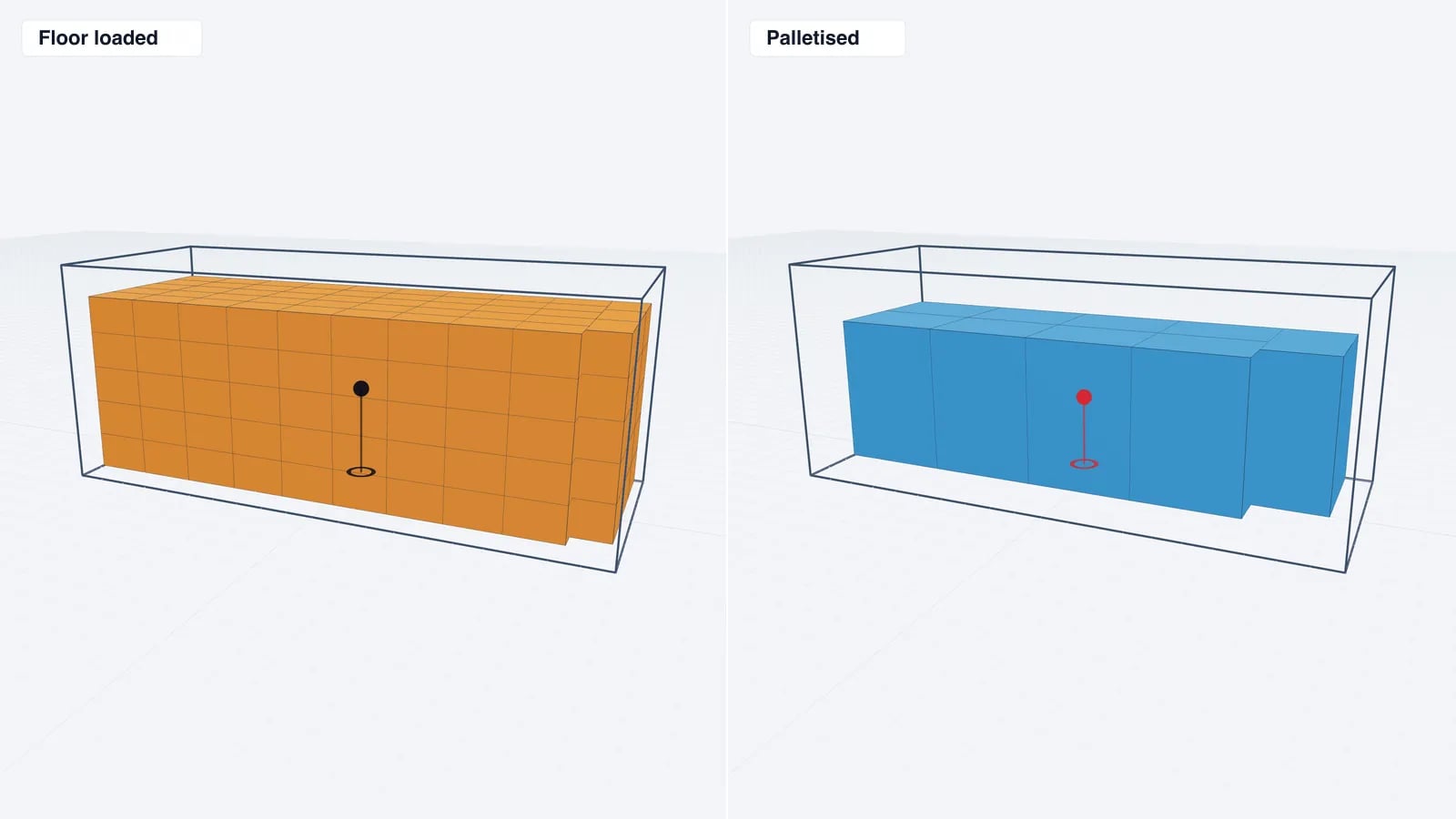
Floor Loading Cartons in a Container vs Palletised Loads
When to floor load cartons instead of palletising, how to orient and stack them, how to check carton strength, and a worked 40ft high cube comparison.
Read article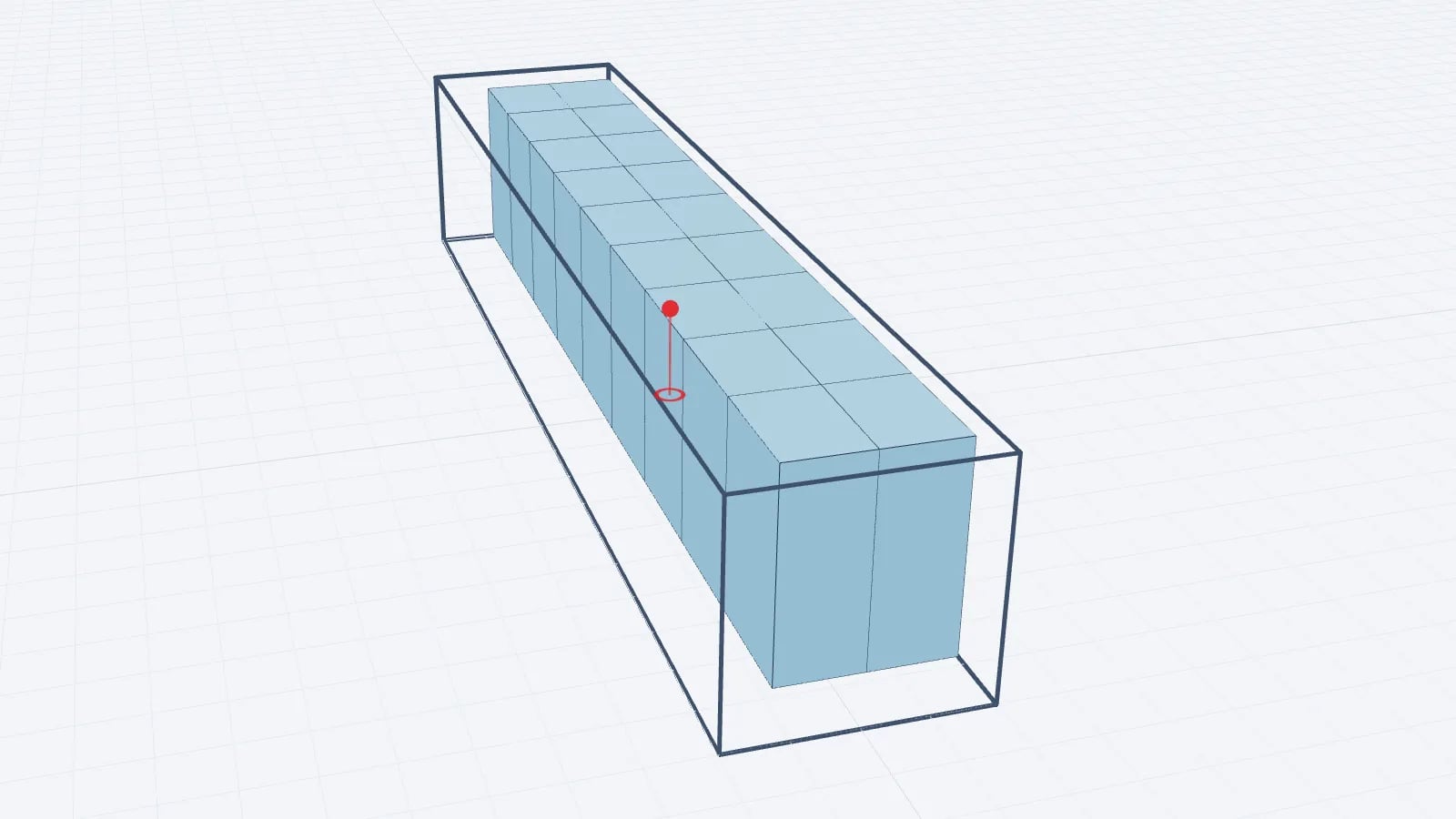
Sea containers · · 6 min read
Reefer Container Loading: Airflow, Red Line and Pallet Plans
How reefers move air, why the T-floor and red load line limit your plan, chilled vs frozen stowage, pre-cooling, and a worked 40ft reefer pallet plan.
Read article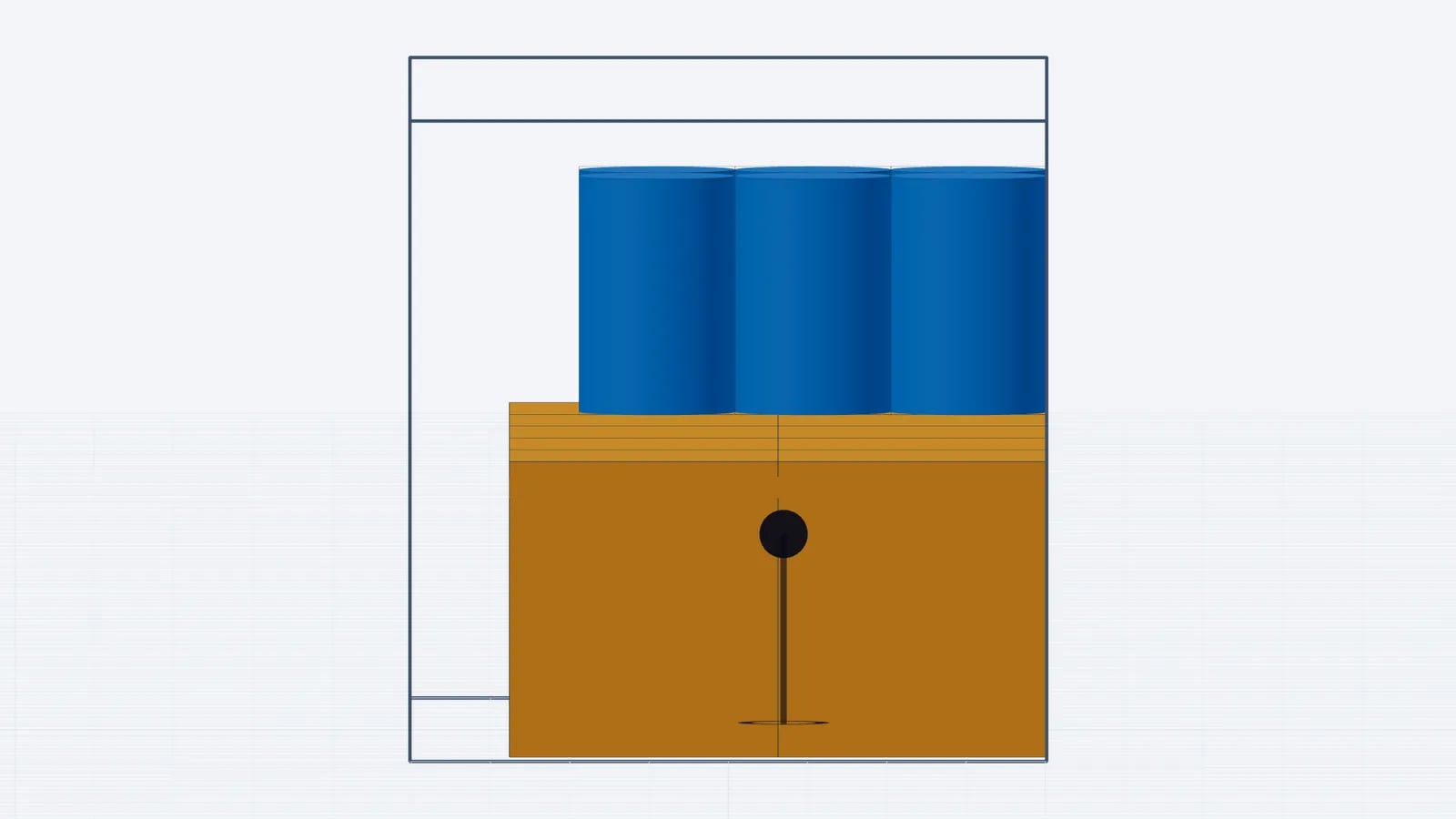
Sea containers · · 6 min read
Container Dunnage: Airbags, Blocking, Bracing and Void Fill
How to secure container cargo with airbags, timber blocking, bracing, lashing and void fill, and how to plan the load so there are fewer gaps to fill.
Read article