What Does a Load Planner Do? Daily Work, Skills and KPIs
What a load planner does day to day: tasks, skills, tools, KPIs and the career path, plus how the person differs from the load planner software they use.
Operations & software · · 7 min read
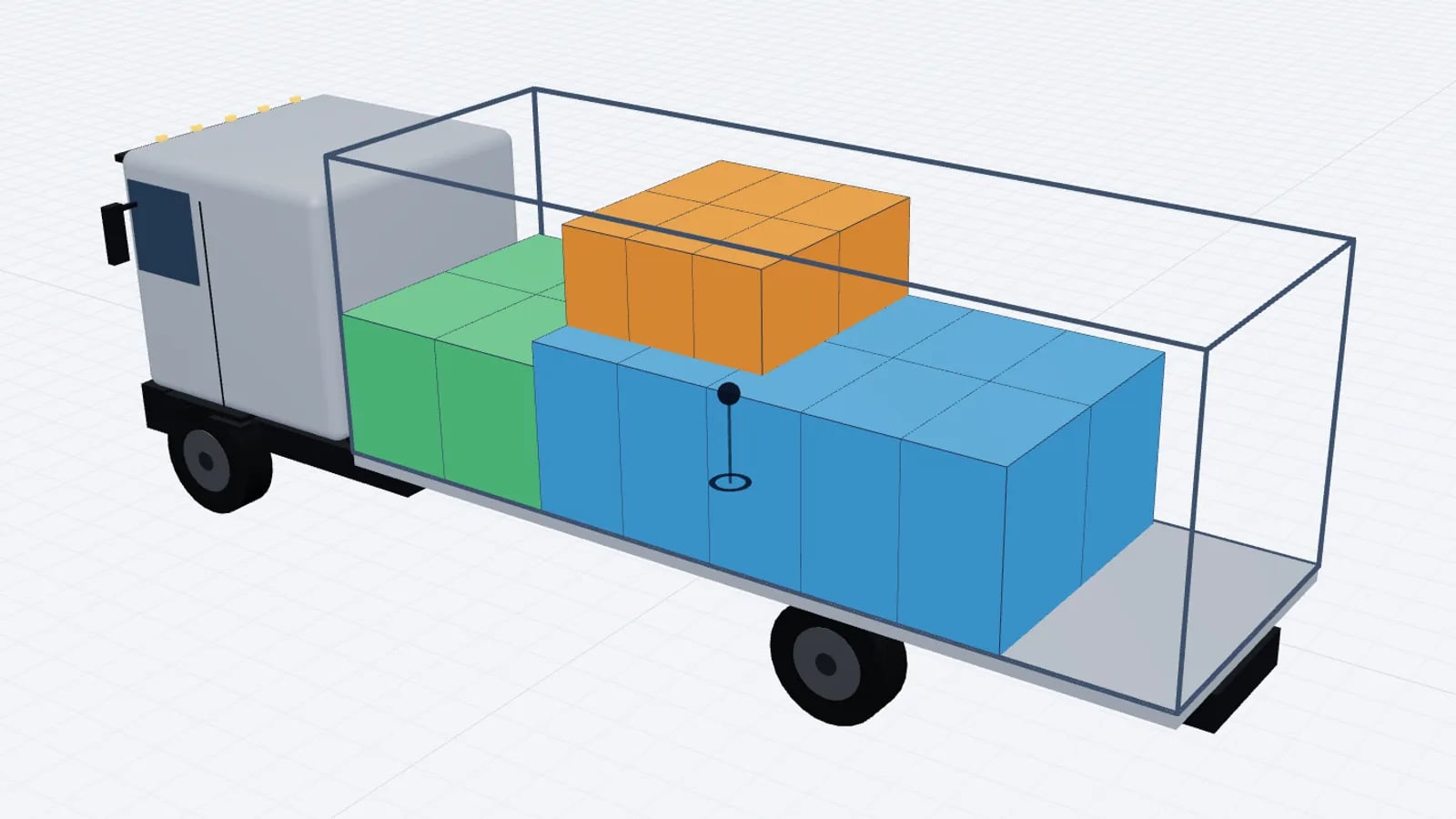
A load planner decides which goods go on which vehicle or container, how they are arranged inside, and in what order they are loaded, so that each shipment is legal, safe, undamaged and as full as it can be. The job sits between sales, the warehouse and the carriers: the load planner takes confirmed orders, turns them into loads, books or assigns the vehicles and hands the dock a plan it can follow.
The title covers several roles. This article describes the work as it looks in a shipper's warehouse, a haulier and a freight forwarder, the skills and tools behind it, how the job is measured, and where it leads. For the discipline itself, start with what load planning is.
One title, several jobs
Where: Shipper's warehouse or DC
- Usual title
- Load planner, shipping planner
- Main focus
- Outbound trucks per day, staging, dock slots, carrier booking
Where: Haulier
- Usual title
- Transport planner, dispatcher
- Main focus
- Fleet utilisation, combining customers' loads, driver hours
Where: Freight forwarder
- Usual title
- Load planner, operations
- Main focus
- Container stuffing for FCL, groupage consolidation, documents
Where: Air cargo handler
- Usual title
- Build-up planner
- Main focus
- Building ULDs to aircraft contours and weight limits
Where: Airline
- Usual title
- Load controller
- Main focus
- Weight and balance of the aircraft, load sheet, trim
| Where | Usual title | Main focus |
|---|---|---|
| Shipper's warehouse or DC | Load planner, shipping planner | Outbound trucks per day, staging, dock slots, carrier booking |
| Haulier | Transport planner, dispatcher | Fleet utilisation, combining customers' loads, driver hours |
| Freight forwarder | Load planner, operations | Container stuffing for FCL, groupage consolidation, documents |
| Air cargo handler | Build-up planner | Building ULDs to aircraft contours and weight limits |
| Airline | Load controller | Weight and balance of the aircraft, load sheet, trim |
Good to know
In aviation, "load planner" or "load controller" often means the person responsible for the aircraft's weight and balance, a regulated role with its own training. This article is mainly about cargo load planning for trucks and containers.
A load planner's day
The rhythm depends on cut-off times, but a planner in a distribution centre with afternoon departures typically works like this:
- 1Early morning: check what changed overnight. New orders, cancellations, vehicles that broke down, drivers who called in sick, and yesterday's loads that came back with a problem.
- 2Morning: allocate orders to vehicles. Group orders by route and delivery window, choose the vehicle size, and make a first plan for each load. Spot problems early: an item that is too tall for the curtain-sider, a customer who only accepts tail-lift deliveries.
- 3Late morning: book capacity. Confirm own fleet, book carriers for the rest, and agree collection times. A load that needs a second truck is cheaper to book now than at 16:00.
- 4Around cut-off: freeze the plans. Add late orders where capacity is left, re-check weights and axle loads, and release the pick sequence to the warehouse.
- 5Afternoon: support the dock. Answer questions, handle short picks and damaged pallets, re-plan when something does not fit, and issue the final loading list and plan sheet.
- 6End of day: close and feed back. Confirm departures, record what went wrong and why, and correct the master data (a product's real height, a trailer's real width) so tomorrow starts cleaner.
In a warehouse the link between the plan and the pick waves is the part outsiders underestimate. Load planning in the warehouse walks through that timeline from cut-off to departure.
What a load planner is responsible for
- Fit. Every item on the order gets a place, or the planner knows early which do not and what happens to them.
- Weight and balance. Gross weight within payload, axle loads within limits, the centre of gravity low and central. In the EU the usual limit for an international articulated vehicle is 40 t gross (44 t for some intermodal journeys); in the US the federal Interstate gross limit is 80,000 lb. Check the rules for your country and route.
- Cargo safety. Stacking rules respected, fragile goods protected, dangerous goods segregated and declared, and a load that can be secured.
- Sequence. Multi-drop loads unloaded in stop order without re-handling.
- Cost. The fewest vehicles of the right size, with as much paid freight per vehicle as the rules allow.
- Information. A plan the dock and driver can read, and documents (loading list, CMR or bill of lading data, the verified gross mass for sea containers under SOLAS) that match it.
Skills that make a good load planner
The technical part is learnable: inside dimensions of common vehicles, pallet patterns, loading metres, axle arithmetic and the securing basics. The load planner training guide sets out a four-week plan for it. What separates good planners is mostly elsewhere:
- Spatial judgement. Seeing that two rows turned crosswise free up a metre, or that a long item fits diagonally only on paper.
- Numeracy under time pressure. Checking at a glance that 14 pallets at 650 kg is 9.1 t, not 91 t.
- Knowing the floor. How long a forklift takes per pallet, which door has a working leveller, which driver needs the plan printed.
- Negotiating. Telling sales that an order will not make the truck, and offering the next best option.
- Habit of checking. A release check before every plan, every time, even on the hundredth identical load.
Tools of the trade
A load planner typically works with the WMS or ERP for orders and stock, a transport management system or carrier portal for bookings, a spreadsheet for quick sums, and a 3D load planner for the arrangement itself. Smaller companies often run on the spreadsheet alone until mixed loads, multi-drop routes or container work make that too slow.
Free calculators cover the quick questions during a phone call: the CBM calculator for volume and the pallet fit calculator for floor counts. For the full plan, see what a good cargo planner app should do.
How a load planner is measured
KPI: Fill rate
- What it measures
- Used loading metres, volume or weight as a share of capacity
- Why it matters
- Directly sets cost per pallet. See freight KPIs and fill rate
KPI: Vehicles per volume shipped
- What it measures
- Trucks or containers per 100 pallets or per 100 m³
- Why it matters
- Shows whether consolidation works
KPI: Items left behind
- What it measures
- Pieces that did not fit on the planned vehicle
- Why it matters
- Every one is a split delivery or extra trip
KPI: Plans changed after release
- What it measures
- Re-plans once picking started
- Why it matters
- Shows how early and stable planning is
KPI: Damage claims from loading
- What it measures
- Claims traced to stacking, gaps or securing
- Why it matters
- Cost and customer trust
KPI: Weight incidents
- What it measures
- Overweight or axle findings at scales or checks
- Why it matters
- Fines, delays, liability
KPI: On-time departure
- What it measures
- Trucks leaving in their slot
- Why it matters
- The whole outbound chain depends on it
| KPI | What it measures | Why it matters |
|---|---|---|
| Fill rate | Used loading metres, volume or weight as a share of capacity | Directly sets cost per pallet. See freight KPIs and fill rate |
| Vehicles per volume shipped | Trucks or containers per 100 pallets or per 100 m³ | Shows whether consolidation works |
| Items left behind | Pieces that did not fit on the planned vehicle | Every one is a split delivery or extra trip |
| Plans changed after release | Re-plans once picking started | Shows how early and stable planning is |
| Damage claims from loading | Claims traced to stacking, gaps or securing | Cost and customer trust |
| Weight incidents | Overweight or axle findings at scales or checks | Fines, delays, liability |
| On-time departure | Trucks leaving in their slot | The whole outbound chain depends on it |
Fill rate alone rewards overloading and risky stacking, so it should always sit next to damage and weight incidents.
Career path
Many load planners start on the warehouse floor, as forklift drivers, dock supervisors or shipping clerks, and bring that practical knowledge to the desk. Others come from logistics studies or customer service. A common path is:
- 1Shipping clerk or junior planner: single-drop loads, standard vehicles, checked by a senior.
- 2Load planner: multi-drop routes, mixed cargo, carrier booking, own release decisions.
- 3Senior or lead planner: containers, special vehicles, out-of-gauge or dangerous goods, training others, master data owner.
- 4Transport or logistics manager: responsible for the fleet or carrier contracts, budgets and the planning team.
Formal qualifications depend on the direction. In the EU and UK, hauliers need a transport manager with a Certificate of Professional Competence (CPC). Planners handling dangerous goods usually take ADR training for road or IATA DGR training for air, and airline load controllers follow their own regulated courses.
The load planner and the load planner software
"Load planner" is also the name for the software. The two are not competitors. The software is good at the arithmetic; the person is responsible for the decision.
| The software does | The person does |
|---|---|
| Tries thousands of arrangements and orientations in seconds | Decides whether a part load goes today or waits for tomorrow |
| Checks collisions, stacking rules, door size and payload | Knows which product is more fragile than its master data says |
| Estimates axle loads and centre of gravity | Decides what to do when the estimate is over the limit |
| Produces the loading sequence, PDF and share link | Makes sure the dock uses the current version |
| Repeats the same rules on every load | Changes the rules when a load goes wrong |
In EveryLoading, for example, the optimiser places the cargo, and the planner can drag, stack and rotate any item in 3D with collision checks, set stop numbers and stacking rules per row, and check the centre-of-gravity estimate (and axle loads on Pro) before sending the plan. You can try it on your own loads with a free account.
Frequently asked questions
What is the difference between a load planner and a dispatcher?
A dispatcher mainly assigns vehicles and drivers and follows them on the road. A load planner decides what goes in each vehicle and how. In small companies one person often does both.
Do you need a degree to become a load planner?
Usually not. Many planners come from the warehouse floor or customer service and learn on the job; logistics qualifications help for senior and management roles.
What software do load planners use?
Typically a WMS or ERP for orders, a TMS or carrier portal for bookings, spreadsheets for quick sums, and a 3D load planning tool for arranging cargo in trucks and containers.
Is a load planner the same as an aircraft load controller?
Not quite. A cargo load planner arranges goods in trucks or containers; an airline load controller calculates the aircraft's weight and balance and signs the load sheet, which needs specific regulated training.
Keep reading
Operations & software · · 6 min read
Load Planner Training: Skills, Checklists and Common Mistakes
A practical load planner training plan: the skills a new planner needs, a four-week programme, checklists, common mistakes and teaching with 3D tools.
Read article
Operations & software · · 7 min read
Load Planning Software Integration with ERP, WMS and TMS
Load planning software integration explained: what data flows between ERP, WMS or TMS and the planner, file import vs REST API, and a step-by-step approach.
Read article
Operations & software · · 7 min read
Load Planning Software Implementation: A 30-Day Plan
A 30-day load planning software implementation plan: vehicle and cargo master data, pilot loads, training for planners and the dock, and how to measure results.
Read article