Booking Cargo Space: Pallet Places, LDM, CBM and Weight
How to work out and book cargo space with a carrier or forwarder: pallet places, LDM, CBM, chargeable weight, and what the booking needs to avoid re-quotes.
Operations & software · · 7 min read
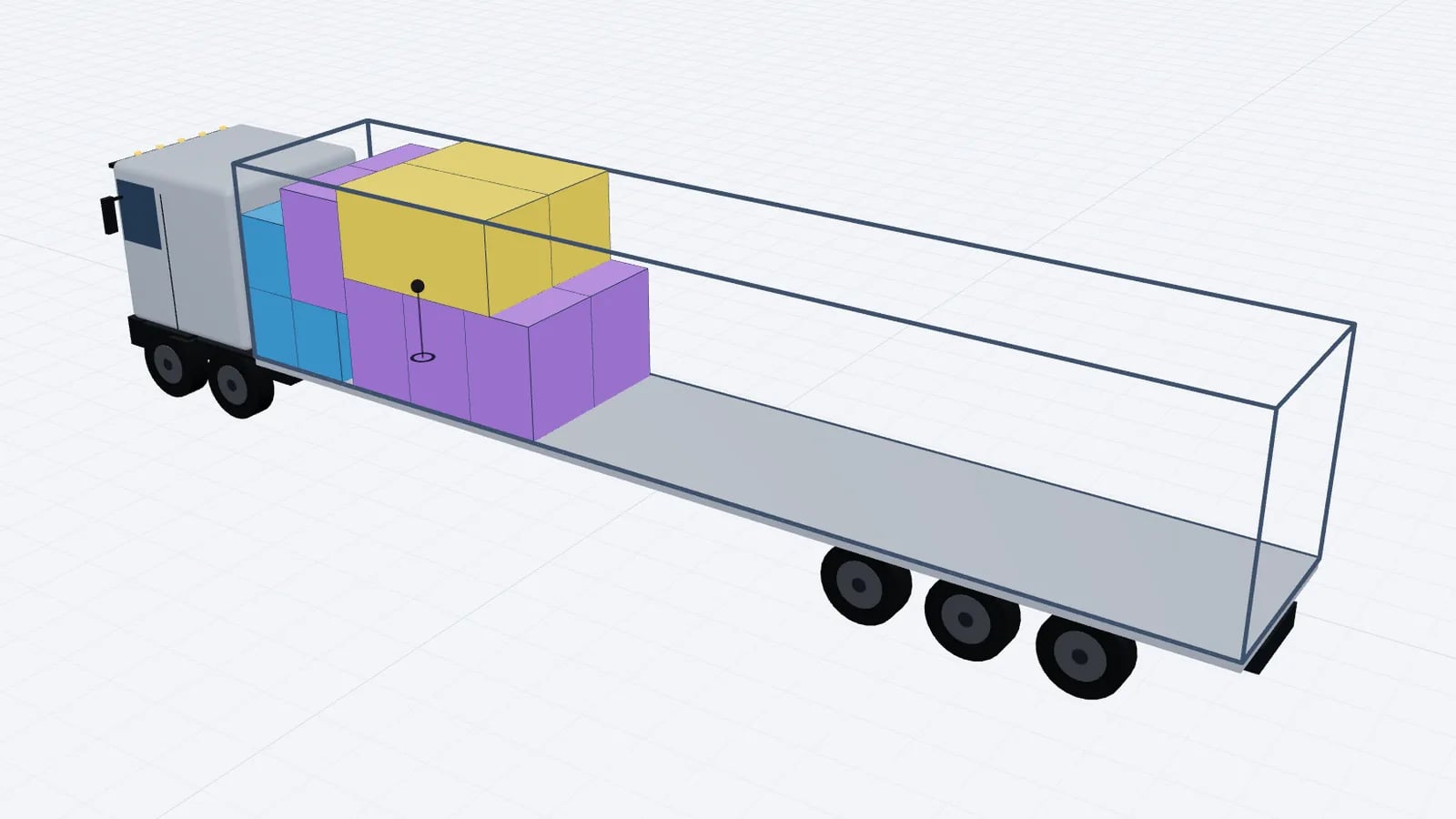
To book cargo space, you first measure what you ship in the unit the carrier sells: pallet places or loading metres (LDM) for road, cubic metres (CBM) for sea groupage, and chargeable weight for air and most part loads. Then you send a booking with exact piece counts, dimensions, gross weights, stackability and handling needs. Most re-quotes and surprise invoices come from a booking that said less than the cargo did.
This guide is for shippers and forwarders who buy space from someone else. The maths behind each unit has its own article, such as loading metres explained and air cargo chargeable weight; here the focus is on getting the right number into the booking and the details that keep the price from changing on the day.
The units carriers sell cargo space in
Unit: Pallet place
- Used for
- European road groupage, pallet networks
- How it is worked out
- One floor position for one pallet, often with a height and weight cap per place
Unit: Loading metre (LDM)
- Used for
- Road part loads and FTL in Europe
- How it is worked out
- Floor length the goods use at full trailer width: L x W / 2.4 (in metres)
Unit: Cubic metre (CBM)
- Used for
- Sea LCL, some road and courier
- How it is worked out
- L x W x H in metres, summed over all pieces
Unit: Chargeable weight
- Used for
- Air freight, most groupage
- How it is worked out
- The higher of actual weight and a volume-based weight
Unit: Whole vehicle or container
- Used for
- FTL, FCL
- How it is worked out
- A flat price for the space, within its payload
| Unit | Used for | How it is worked out |
|---|---|---|
| Pallet place | European road groupage, pallet networks | One floor position for one pallet, often with a height and weight cap per place |
| Loading metre (LDM) | Road part loads and FTL in Europe | Floor length the goods use at full trailer width: L x W / 2.4 (in metres) |
| Cubic metre (CBM) | Sea LCL, some road and courier | L x W x H in metres, summed over all pieces |
| Chargeable weight | Air freight, most groupage | The higher of actual weight and a volume-based weight |
| Whole vehicle or container | FTL, FCL | A flat price for the space, within its payload |
The conversion from volume or floor space to chargeable weight differs by carrier and market. Common examples are 1 LDM charged as about 1,750 to 1,850 kg on European road groupage, 1 CBM charged as 333 kg in some road and courier tariffs, 1 CBM as 1,000 kg (one revenue tonne, weight or measure) in sea LCL, and a divisor of 6,000 cm³ per kg in air freight. Always read the ratio in your carrier's tariff rather than assuming one.
Working out your cargo space: one shipment, four answers
Take a typical shipment: 6 EUR pallets of 120 x 80 x 100 cm, 475 kg each gross, stackable two high. Total actual weight 2,850 kg.
- 1Pallet places. Stacked two high, the 6 pallets use 3 floor positions. Many pallet networks still count 6 places, because each pallet is a handling unit; ask whether stacked pallets are counted per position or per piece.
- 2Loading metres. One EUR pallet uses 1.2 x 0.8 / 2.4 = 0.4 LDM. Stacked: 3 x 0.4 = 1.2 LDM. Not stacked: 6 x 0.4 = 2.4 LDM. At 1,850 kg per LDM, that is 2,220 kg or 4,440 kg of chargeable weight, against 2,850 kg actual.
- 3CBM. 1.2 x 0.8 x 1.0 = 0.96 m³ per pallet, 5.76 m³ in total. At 333 kg per m³ that is 1,918 kg, so a road tariff using that ratio would charge the actual 2,850 kg. In sea LCL at 1 CBM = 1,000 kg, you pay for 5.76 revenue tonnes, because 5.76 is more than 2.85 tonnes.
- 4Air chargeable weight. 120 x 80 x 100 / 6,000 = 160 kg volumetric per pallet, 960 kg for six. Actual weight is 2,850 kg, so the chargeable weight is 2,850 kg.
The same six pallets are 1.2 or 2.4 LDM, 5.76 m³ and 2,850 kg. Which one you pay on depends on the mode and the tariff, and whether the pallets may be stacked changes the road price by half. That is why stackability belongs in every booking. The loading metre calculator and CBM calculator do these sums quickly; for a mixed shipment, see cargo space calculation.
What to put in a cargo space booking
A good booking leaves the carrier nothing to guess. Send this, in writing:
- Piece count and type: 6 pallets, 2 crates, 40 cartons. Say which pieces are on pallets.
- Dimensions per piece, including the pallet and any overhang, measured after wrapping. Round up, not down.
- Gross weight per piece and in total, including pallets and packaging.
- Stackability: stackable, not stackable, or stackable with a limit such as max 500 kg on top. Fragile tops count as not stackable.
- Loading and unloading: dock, forklift, tail lift needed, side or top loading, crane. A missing tail lift is one of the most common reasons for a failed collection.
- Addresses, time windows and references for collection and delivery, plus any booking slot at the warehouse.
- Special handling: dangerous goods with UN numbers and class, temperature range, high value, food-grade vehicle.
- Commercial and customs details for cross-border loads: Incoterms, who pays, export or transit documents, and the cargo value if insurance is wanted.
Tip
Attach a load plan when the shipment is more than a handful of pallets. A drawing that shows the footprint, stacking and LDM makes it clear what space you are asking for, and the carrier can check it against the vehicle. From EveryLoading you can export a PDF or send a read-only share link.
Why bookings get re-quoted
Carriers price on what you tell them and invoice on what turns up. The difference shows up as a correction on the invoice or a refused collection. Typical causes:
What happened: Pallets measured before wrapping, or overhanging
- What it costs
- More LDM or a higher volume weight
- How to avoid it
- Measure the finished unit at its widest point
What happened: Pallets declared stackable that are not
- What it costs
- Twice the floor space, sometimes a second vehicle
- How to avoid it
- Declare stackability honestly, including fragile tops
What happened: Weight given without pallets and packaging
- What it costs
- Weight correction, possible overload
- How to avoid it
- Always send gross weights
What happened: Tail lift or side loading not requested
- What it costs
- Failed collection, second attempt charge
- How to avoid it
- State the equipment at both ends
What happened: Long or tall item not mentioned
- What it costs
- Vehicle change, special rate
- How to avoid it
- List every piece over 2.4 m long or 1.8 m high separately
What happened: Waiting time at a slow dock
- What it costs
- Waiting charges per hour
- How to avoid it
- Book slots and have the goods ready on time
| What happened | What it costs | How to avoid it |
|---|---|---|
| Pallets measured before wrapping, or overhanging | More LDM or a higher volume weight | Measure the finished unit at its widest point |
| Pallets declared stackable that are not | Twice the floor space, sometimes a second vehicle | Declare stackability honestly, including fragile tops |
| Weight given without pallets and packaging | Weight correction, possible overload | Always send gross weights |
| Tail lift or side loading not requested | Failed collection, second attempt charge | State the equipment at both ends |
| Long or tall item not mentioned | Vehicle change, special rate | List every piece over 2.4 m long or 1.8 m high separately |
| Waiting time at a slow dock | Waiting charges per hour | Book slots and have the goods ready on time |
For sea containers there is one more trap: the verified gross mass. Under SOLAS, the shipper must provide the VGM of a packed container before it is loaded on the ship, and a container without one does not sail. VGM and SOLAS explains the two methods.
Part load or full vehicle?
On European road freight, prices per LDM fall as the load grows, and at some point a dedicated vehicle is cheaper than a part load. Many shippers ask for an FTL quote once a load passes roughly a third to half of a 13.6 m trailer, but the break-even depends entirely on your rates and lanes. The same applies at sea: once LCL volume reaches somewhere in the mid-teens of cubic metres, compare it with a 20 ft container. Plan both options before you book, because a full vehicle also means one collection, no hub handling and less risk of damage.
If the shipment is small, the right answer may be a van rather than a truck: van cargo space compares the classes by volume, pallets and payload.
A booking routine that holds up
- 1Get the packing list with final dimensions and gross weights per piece, not estimates from the order.
- 2Mark each line stackable or not, and any weight limit on top.
- 3Work out pallet places, LDM, CBM and actual weight, so you can read any carrier's quote.
- 4Plan the load in 3D when there are more than a few pieces, mixed sizes or stacking rules, and check that it fits the vehicle you are booking, by size and payload.
- 5Send the booking with every item from the checklist above, and the plan attached.
- 6On collection day, check what is actually loaded against the booking, and send corrections before the truck leaves rather than after the invoice arrives.
In EveryLoading you paste the packing list from Excel into the cargo table, choose the vehicle or container you are booking, and press Optimize. The stats bar shows volume, weight, loading metres and anything that did not fit, which is the number to put in the booking. You can start with a free account; the freight forwarder guide shows how forwarders use plans when they buy space for their customers.
Frequently asked questions
How do I calculate how much cargo space I need?
Measure each piece including its pallet, then work out the floor space in loading metres for road, the volume in cubic metres for sea, and the volumetric weight for air. The unit your carrier prices in is the one that matters.
What is a pallet place?
It is one floor position for one pallet, usually a standard EUR or industrial pallet, often with a maximum height and weight set by the carrier or pallet network.
Why did my freight invoice come in higher than the quote?
Usually because the cargo arrived bigger, heavier or less stackable than booked, or because extra services like a tail lift or waiting time were needed. Exact gross dimensions and weights in the booking prevent most of it.
Should I tell the carrier whether my pallets are stackable?
Yes, always. Stackable pallets can share a floor position, which can halve the loading metres you pay for, while non-stackable goods declared as stackable may not fit the vehicle at all.
Keep reading
Operations & software · · 7 min read
Load Planning Software Integration with ERP, WMS and TMS
Load planning software integration explained: what data flows between ERP, WMS or TMS and the planner, file import vs REST API, and a step-by-step approach.
Read article
Operations & software · · 7 min read
Load Planning Software Implementation: A 30-Day Plan
A 30-day load planning software implementation plan: vehicle and cargo master data, pilot loads, training for planners and the dock, and how to measure results.
Read article
Operations & software · · 7 min read
Cargo Loading Software for Freight Forwarders
How freight forwarders use cargo loading software for quoting, consolidation, LCL and groupage, choosing containers and sharing load plans with shippers.
Read article