Van Cargo Space by Size: Volume, Pallets and Payload
Van cargo space by size, from small vans to Luton and box vans: typical load length, volume, pallet count and payload, with worked examples of the payload trap.
Road freight · · 7 min read
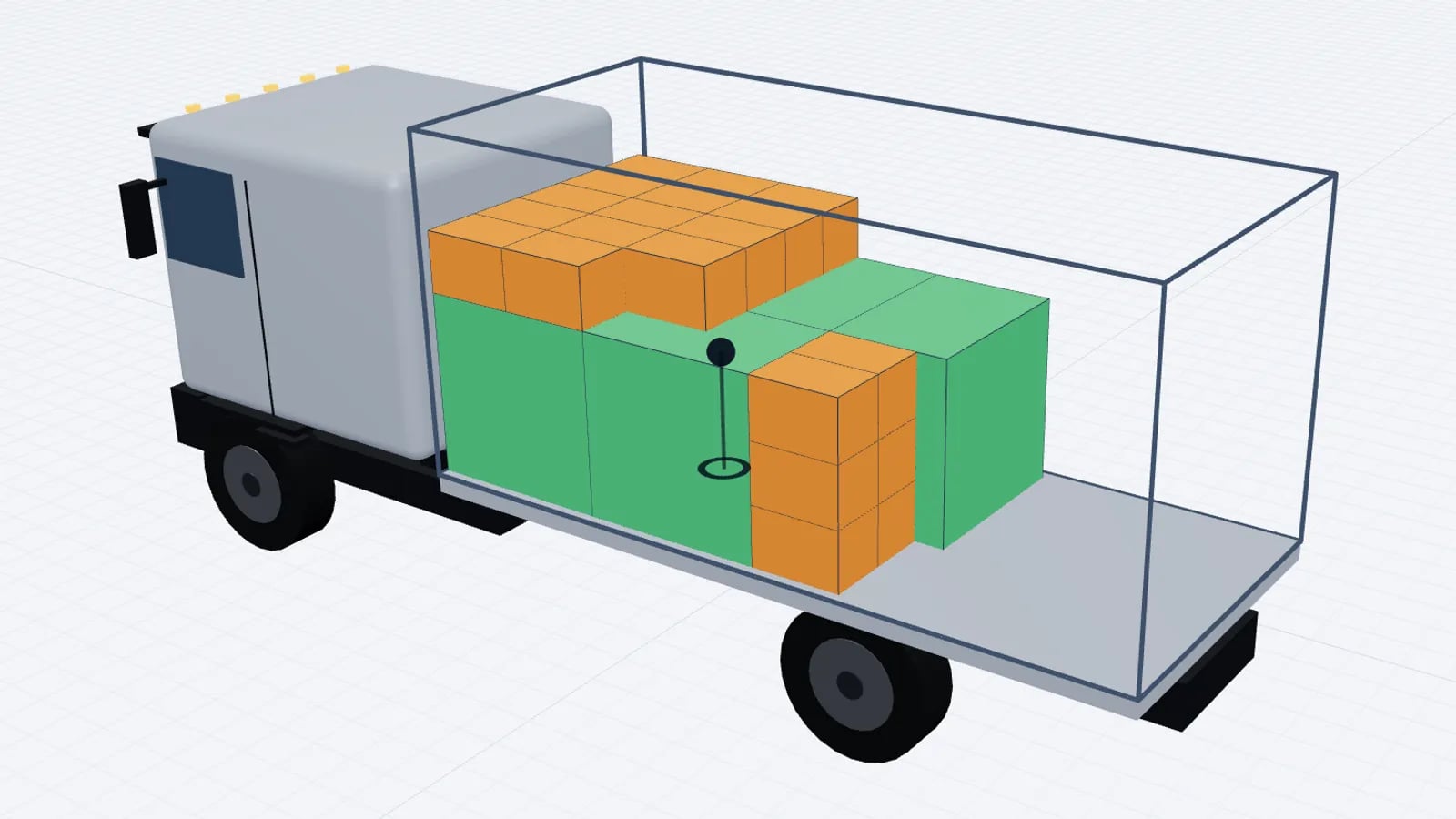
Van cargo space ranges from about 3 m³ and one pallet in a small van to over 20 m³ and 8 to 10 EUR pallets in a box van on a 3.5 t chassis. But volume is rarely the real limit: most vans under 3.5 t carry only about 600 to 1,300 kg, so dense cargo runs out of payload long before it fills the space. Choose a van on both numbers, cubic metres and kilograms, not on the floor alone.
This guide compares the van classes side by side and shows how to check whether a given load fits. The figures are typical; every model, wheelbase, roof height and body builder is different, so confirm with the actual vehicle's documents. For loading and securing a large panel van, see the Sprinter-size van loading guide.
Van cargo space by size
Van class: Small van (Caddy, Berlingo class)
- Typical load length
- 1.8 to 2.2 m
- Typical width (between arches)
- about 1.5 m (about 1.2 m)
- Typical height
- about 1.2 to 1.3 m
- Volume
- 3 to 4.5 m³
- EUR pallets
- 1, sometimes 2 in long versions
- Typical payload
- 600 to 900 kg
Van class: Medium van (Transit Custom, Trafic class)
- Typical load length
- 2.5 to 3.2 m
- Typical width (between arches)
- about 1.7 m (1.25 to 1.4 m)
- Typical height
- 1.4 m, high roof 1.8 m+
- Volume
- 5 to 9 m³
- EUR pallets
- 2 to 3
- Typical payload
- 900 to 1,300 kg
Van class: Large van (Sprinter, Crafter class)
- Typical load length
- 3.1 to 4.8 m
- Typical width (between arches)
- about 1.75 m (1.25 to 1.4 m)
- Typical height
- 1.8 to 2.0 m
- Volume
- 9 to 17 m³
- EUR pallets
- 3 to 5
- Typical payload
- about 1,000 to 1,400 kg at 3.5 t
Van class: Luton / box van, 3.5 t
- Typical load length
- 4.0 to 4.9 m
- Typical width (between arches)
- 2.0 to 2.15 m (no arches inside)
- Typical height
- 2.0 to 2.25 m
- Volume
- 17 to 24 m³
- EUR pallets
- 8 to 10
- Typical payload
- about 900 to 1,200 kg
| Van class | Typical load length | Typical width (between arches) | Typical height | Volume | EUR pallets | Typical payload |
|---|---|---|---|---|---|---|
| Small van (Caddy, Berlingo class) | 1.8 to 2.2 m | about 1.5 m (about 1.2 m) | about 1.2 to 1.3 m | 3 to 4.5 m³ | 1, sometimes 2 in long versions | 600 to 900 kg |
| Medium van (Transit Custom, Trafic class) | 2.5 to 3.2 m | about 1.7 m (1.25 to 1.4 m) | 1.4 m, high roof 1.8 m+ | 5 to 9 m³ | 2 to 3 | 900 to 1,300 kg |
| Large van (Sprinter, Crafter class) | 3.1 to 4.8 m | about 1.75 m (1.25 to 1.4 m) | 1.8 to 2.0 m | 9 to 17 m³ | 3 to 5 | about 1,000 to 1,400 kg at 3.5 t |
| Luton / box van, 3.5 t | 4.0 to 4.9 m | 2.0 to 2.15 m (no arches inside) | 2.0 to 2.25 m | 17 to 24 m³ | 8 to 10 | about 900 to 1,200 kg |
Panel vans lose width at the wheel arches, which is why the second width figure matters for pallets. A box or Luton body sits on a chassis cab, so the floor is flat and full width from wall to wall, but the body and tail lift are heavy, which takes payload away. Heavier versions above 3.5 t exist for most large vans and carry more, but in the EU they need a different driving licence (above the standard car licence) and may fall under tachograph and other truck rules.
EveryLoading's van presets
The planner has two van presets for box-bodied vans with typical values. They are a starting point, not a model's specification; you can edit the size and payload to match your own vehicle.
Preset: Van, 8 pallets
- Inside L x W x H
- 420 x 215 x 220 cm
- Volume
- 19.9 m³
- Payload
- 1,000 kg
- EUR pallets
- 8
- Weight per m³ at full payload
- about 50 kg/m³
Preset: Van, 10 pallets
- Inside L x W x H
- 490 x 215 x 225 cm
- Volume
- 23.7 m³
- Payload
- 1,200 kg
- EUR pallets
- 10
- Weight per m³ at full payload
- about 51 kg/m³
| Preset | Inside L x W x H | Volume | Payload | EUR pallets | Weight per m³ at full payload |
|---|---|---|---|---|---|
| Van, 8 pallets | 420 x 215 x 220 cm | 19.9 m³ | 1,000 kg | 8 | about 50 kg/m³ |
| Van, 10 pallets | 490 x 215 x 225 cm | 23.7 m³ | 1,200 kg | 10 | about 51 kg/m³ |
The pallet counts come from a mixed pattern. At 215 cm wide, one column of pallets turned lengthwise (80 cm wide) fits beside one column turned crosswise (120 cm wide), using 200 cm of the width. In 420 cm that gives 3 lengthwise + 5 crosswise = 8 pallets; in 490 cm, 4 + 6 = 10 pallets. Measure your own body: 5 cm less length or width can cost a pallet.
The last column is the important one. Divide payload by volume and you get the density at which the van is full by weight and by volume at the same time. Here it is about 50 kg per cubic metre. Almost everything shipped on pallets is denser than that, so these vans usually fill up by weight first.
The payload trap
A van's payload is its permitted maximum weight (for most vans 3,500 kg) minus what it weighs ready to drive. That kerb weight grows with every option: a box body, a tail lift, racking, a second row of seats, a towbar, a full tank and the driver. The brochure payload is often for the lightest version, and the van in your yard may carry 150 to 300 kg less.
- Weigh the van empty, as it actually drives (fuel, driver, equipment), and subtract that from the permitted maximum on the plate. That is your real payload.
- Count everything you load, including pallets, wrapping and any tools that live in the van.
- Watch the axles. A van can be under its total limit and still overload the rear axle if the weight sits behind it, especially with a long rear overhang on box bodies.
Overloaded vans are common at roadside checks across Europe; how to avoid overloading fines explains how checks work and what the penalties look like. Rules differ by country, so check the limits that apply to your route.
Worked example 1: pallets in a box van
A wholesaler wants to send 8 EUR pallets of bottled sauces, each with 240 kg of goods, in the 8-pallet box van (420 x 215 x 220 cm, 1,000 kg payload).
- Gross per pallet: 240 kg goods + 25 kg pallet + about 2 kg film = 267 kg.
- Total: 8 x 267 = 2,136 kg against a 1,000 kg payload.
- What fits by weight: 1,000 / 267 = 3.7, so 3 pallets, with 199 kg spare.
The floor takes 8, the payload takes 3. This load belongs on a 7.5 t truck (the 12-pallet 7.5 t preset in the planner has a 3,000 kg payload) or split across three vans. For when a rigid truck is the better buy, see solo truck vs articulated lorry.
Worked example 2: cartons for a courier round
A parcel round has 60 cartons of 60 x 40 x 40 cm at 18 kg each.
- Volume: 0.6 x 0.4 x 0.4 = 0.096 m³ per carton, so 5.76 m³ in total.
- Weight: 60 x 18 = 1,080 kg.
- Density: 1,080 / 5.76 = about 188 kg/m³.
A medium van with 6 to 7 m³ looks right on volume, but at a typical 1,000 kg payload it is 80 kg over before the driver gets in. The 8-pallet box van (1,000 kg) is over too. The 10-pallet van at 1,200 kg takes it with 120 kg to spare, and a Sprinter-class panel van with at least 1,100 kg real payload would also work, with less empty space to secure. Use the CBM calculator for the volume and always check the kilograms next to it.
Tip
For light cargo (bedding, insulation, empty packaging) the opposite happens: a box van fills its 20 m³ and still has payload left. That is when the bigger body earns its extra weight.
Usable space is less than total volume
The volume in a brochure is the empty box. Real loads use less of it, for several reasons:
- Wheel arches take a band of floor on each side in panel vans, so pallets and long boxes go between them or on top of them.
- Door openings are smaller than the load space. A tall or wide item may fit inside but not through the rear or side door.
- Stacking limits. Fragile, non-stackable or uneven items leave air above them.
- Securing. Straps, nets and blocking need space, and gaps must be filled or blocked.
- Delivery order. On multi-drop rounds, the first drop must be near the door, which rarely gives the tightest pack.
A cubic-metre figure is good for a first answer; a load plan tells you what really fits. In EveryLoading you can pick a van preset or type your own inside size, add Wheel arches in the vehicle settings, enter cartons or pallets with their real weights, and press Optimize. The stats bar shows used volume and weight against payload, and items that did not fit are left outside the van so you can see them. Free accounts include vans and trucks.
Choosing the right van for a load
- 1Add up the total gross weight, including pallets and packaging.
- 2Add up the volume, and the floor footprint of anything that cannot be stacked.
- 3Divide weight by volume. Above about 100 kg/m³, pick the van with the most real payload; below about 50 kg/m³, pick the one with the most volume.
- 4Check the longest and tallest item against the door opening and inside length.
- 5Check the delivery order and leave access for the first drop.
- 6If it is close on either number, step up a class or split the load rather than gamble at a roadside check.
If you hand the load to a carrier instead of driving it yourself, the same figures go into the booking; see booking cargo space for what to tell the carrier. For pallet counts in larger vehicles, the box truck pallet guide is the next step up.
Frequently asked questions
How many pallets fit in a van?
A small van takes about one EUR pallet, a medium van two or three, a long Sprinter-class van three to five, and a 3.5 t box or Luton van about eight to ten. Check the weight too, because the payload often allows fewer.
What is the payload of a 3.5 tonne van?
Usually somewhere between about 900 and 1,400 kg, depending on body, equipment and options. Subtract the weight of the van as it drives from 3,500 kg to get the real figure.
How many cubic metres is a Luton van?
A typical Luton or box body on a 3.5 t chassis has roughly 17 to 24 m³ of load space, but its payload is often only about 1,000 kg, so it suits light, bulky goods.
Is volume or weight the limit in a van?
Most of the time weight. A box van with 20 m³ and 1,000 kg is full by weight once the cargo is denser than about 50 kg per cubic metre.
Keep reading
Road freight · · 10 min read
Van Loading: Payload, Pallets and Securing in Large Vans
How to load a Sprinter-size van: payload vs the 3.5 t limit, typical load space by length, Euro pallets between the wheel arches, weight placement and lashing.
Read article
Road freight · · 7 min read
Truck Loading Time: How Long Loading and Unloading Take
Truck loading time by method: pallets, floor-loaded cartons and side loading, with worked minute estimates, what slows docks and how planning cuts it.
Read article
Road freight · · 8 min read
Truck Loading Checklist: Before, During and Before Departure
A printable truck loading checklist for docks and drivers: what to check before loading, while loading and before departure, and why each check matters.
Read article